


In early March, "The Bride!" landed in U.S. theaters without a pulse. It’s ironic to write that about a film whose protagonists are dead, but sometimes reality has its own phrasing.
Warner Bros. invested around $90 million in Maggie Gyllenhaal’s film and got back just under $13 million. Even adding its global earnings brings the total to a dismal roughly $23 million. True, there have been bigger box office flops — including "Joker: Folie à Deux," which cost more than twice as much and barely recouped its production budget — but it’s hard to imagine Warner investing tens, let alone hundreds, of millions of dollars in films that look like "The Bride!" anytime soon. That’s without mentioning the trend that accompanied its initial screenings and went viral online, summed up in one sentence: “How I walked out halfway through 'The Bride!'”
Even before that, the signs were not encouraging. Test screenings were very poor, raising questions about how Warner had been convinced to pour such a large sum into an ambitious project by a director who had previously made only one film, "The Lost Daughter" — albeit one that earned three Oscar nominations, including one for Gyllenhaal herself for adapted screenplay. She was also reportedly required to cut several scenes of sexual violence and grotesquery that proved too much for audiences. It’s hard to say no one saw it coming.
The “dead on arrival” label applies in Israel as well. Gyllenhaal’s film was supposed to open in theaters about a month ago. Then the war broke out, and all that remained were forlorn posters at bus stops. Earlier this week, as cinemas reopened at limited capacity, screenings began here too — though it’s doubtful many people currently care about a story of Frankenstein’s monster searching for a mate. On the other hand, consider this a companion piece to Guillermo del Toro’s recent Oscar-winning film. And here’s the surprise: "The Bride!" is not at all what it has been made out to be. A cinematic corpse, perhaps — but also an entertaining and unexpectedly effective film.
Gallery
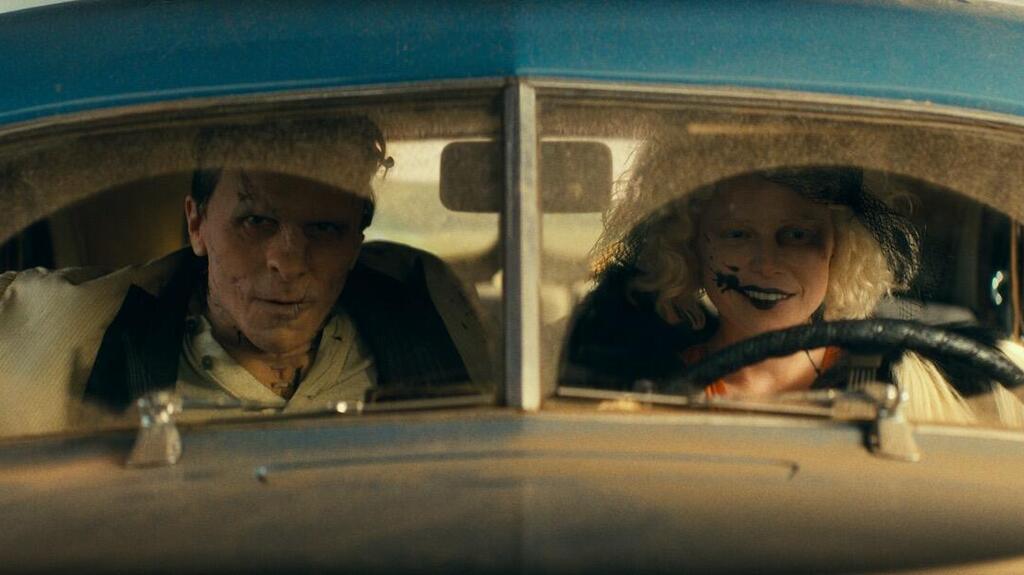
Don't believe the negative hype: scene from 'The Bride!'
(Photo: Courtesy of Tulip Entertainment)
That happens sometimes, when expectations are so low that the odds tilt toward pleasant surprise. The film’s first 20 minutes are indeed unpromising. It’s not that the aesthetics are extreme or particularly unsettling, but it initially feels like shrill, pseudo-feminist nonsense in which the spirit of Mary Shelley possesses a young woman in 1930s Chicago, sending her into a frenzy. Through her, the “possessed” Shelley vows she has a sequel to Frankenstein that is even more extreme and frightening than the original.
The young woman is Ida (Jessie Buckley), one of the girls kept by a gangster named Lupino. The reference — perhaps a joke — to actress-director Ida Lupino, one of the few female directors in classical Hollywood, may be meant to signal something. But when another character named Myrna (Levy) appears — a police agent played by Penélope Cruz whose name is clearly meant to evoke Myrna Loy, one of the stars of that era — it begins to feel like one wink too many.
Meanwhile, at the door of a scientist carrying on Frankenstein’s legacy (Annette Bening) appears the creature (Christian Bale), who has wandered since the previous century as a lost figure, without an author to tell his story and without a partner. She agrees to his entirely reasonable request, and together they exhume Ida’s body — her earlier possession having led to her being killed by the gangster Lupino. What does it really mean when your last name kills you? With wavy white hair, pale corpse-like skin and black lipstick smeared across her cheeks, the bride from hell — now going by the name Penelope (Ginger) Rogers — creates an image that fuses victimhood and violence.
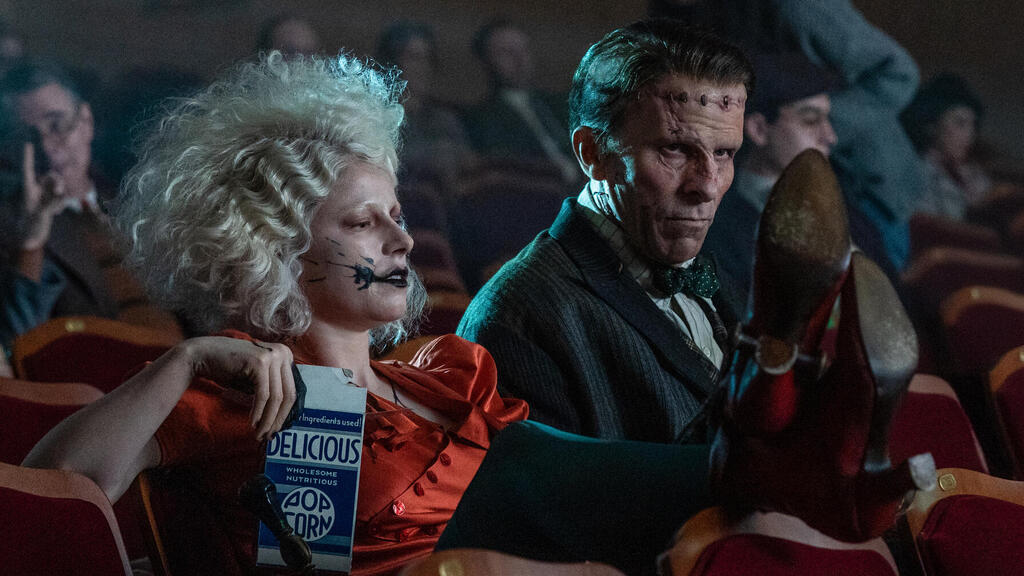
They go on a romantic date to the movies: scene from 'The Bride!'
(Photo: Courtesy of Tulip Entertainment)
The romantic pair go on a date to the movies, where a film starring the creature’s idol, Ronnie Reed (Jake Gyllenhaal, the director’s brother), is playing. He appears as an archetypal 1930s Hollywood star. Often, the creature imagines himself on screen in Reed’s place, in a tuxedo and top hat. It’s yet another element "The Bride!" throws into the mix — and not just for fun.
When the creature and his partner become involved in a violent incident, they turn into romantic fugitives from the law. This is where "Bride of Frankenstein" meets "Bonnie and Clyde," along with other films that inspired Arthur Penn’s classic and were indeed made in the 1930s, including Fritz Lang’s 1937 "You Only Live Once."
Above all, Gyllenhaal’s film feels like a cinematic fantasy paying homage to Hollywood films of that era — chief among them "Bride of Frankenstein," James Whale’s 1935 sequel to the Boris Karloff classic, in which Elsa Lanchester played both Mary Shelley and the Bride. (In 1985, Sting starred in a successful remake directed by Franc Roddam, with Jennifer Beals as the creature’s love interest.)
To Gyllenhaal’s credit, the film is shaped by a coherent vision, and despite what sometimes seems like aesthetic chaos (at times it looks like a tribute to "The Rocky Horror Picture Show"), it manages to maintain pace and interest — provided you get past the tedious exposition. Yes, even Mel Brooks’ classic parody makes an appearance, in a particularly bizarre and very amusing musical sequence.
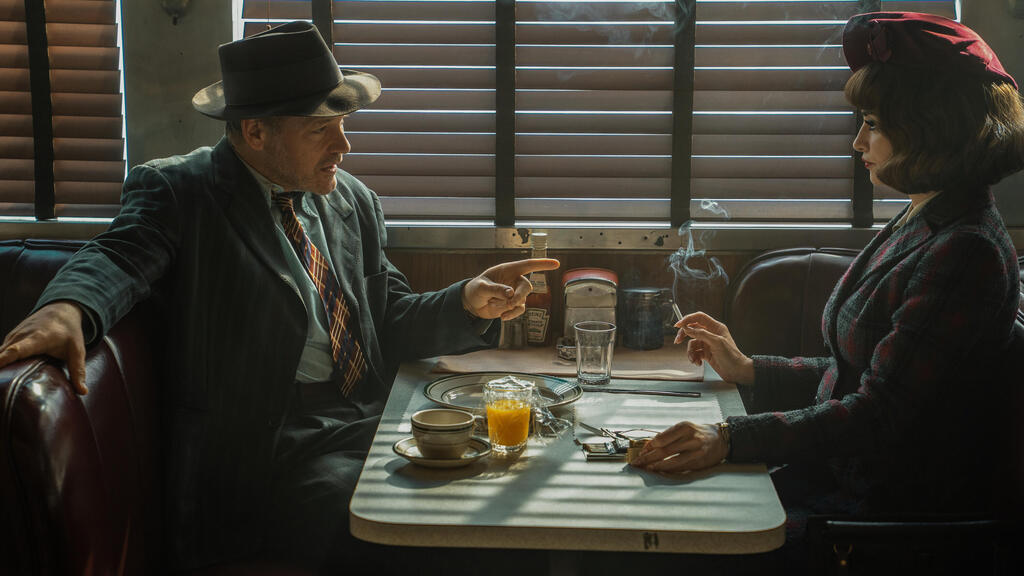
'The Bride!' is almost contemporary political cinema
(Photo: Courtesy of Tulip Entertainment)
Beyond its references, "The Bride!" — and we will return to that exclamation mark — is a film that reflects our own era. One could almost call it contemporary political cinema. (Notably, Warner’s two most prominent Oscar-winning films this year, "One Battle After Another" and "Sinners," each incorporated a current political dimension alongside their aesthetic achievements.) When the explicit term “MeToo” is invoked and the punkish bride becomes “viral” — in 1930s terms — it reads as an exaggerated parody of an age in which exclamation marks dominate; an age where authentic anger turns into slogans and “woke” becomes a trend. It also comments on the contemporary genre of female revenge films, with "Poor Things" among its more notable and interesting examples.
Equally intriguing is the film’s take on the resurrected woman as a puppet controlled from beyond the grave by Mary Shelley. After all, there are two creators of the bride: the writer and the scientist — both, ultimately, extensions of Gyllenhaal herself. Each brings her into being in her own way. With so many adaptations of Shelley’s novel made by men, "The Bride!" asks what it means for a woman to create such an adaptation — what it means to be a woman shaped, almost unconsciously, by female forces and politics.
It takes no small amount of daring to make a film like "The Bride!" — a big-budget production that makes no attempt to cater to any clear audience, assuming anyone even knows who that audience might be. It is chaotic, scattered and not always sure what it wants to be, and it features two highly exaggerated performances — Bale’s and Buckley’s, the recent Oscar winner for "Hamnet", who delivers a thrilling turn in what is nearly an impossible role.
One more note: among the film’s producers are Osnat Handelsman-Keren and Talia Kleinhendler — giving this unlikely match a small Israeli connection as well.