


Argentine Jewish writer Marcelo Birmajer, who will take part this week in the International Writers Festival in Jerusalem, has long explored the emotional, political and spiritual ties between Israel and the Jewish Diaspora.
In his novel Three Musketeers, Birmajer created the character of Elias Traum, a former Argentine and current Israeli who returns to Buenos Aires after more than 20 years to say Kaddish for two friends. In doing so, he joined a long line of Jewish writers who have found literary power in Israeli characters, and in the tensions and bonds between Jews in Israel and Jews abroad.
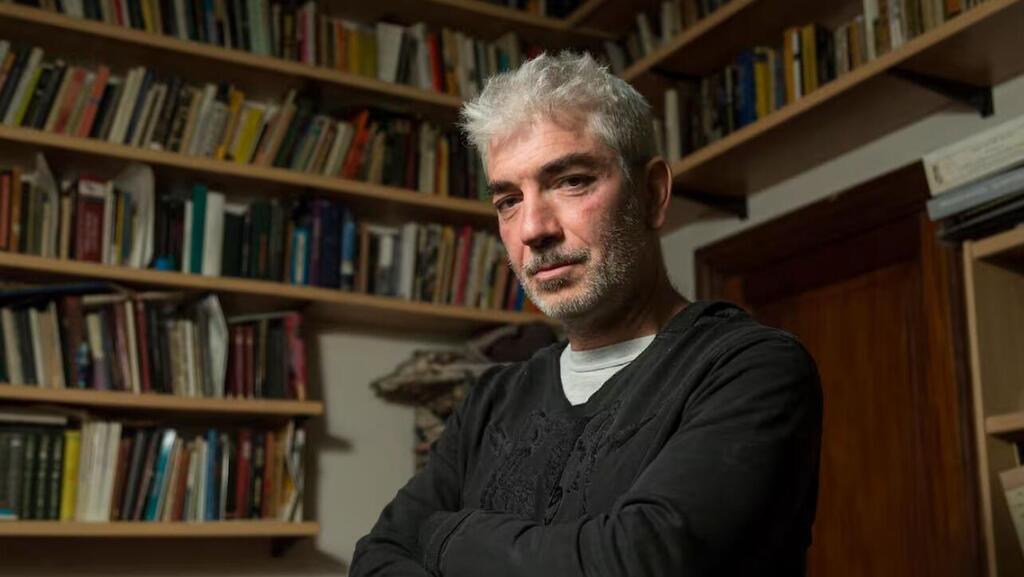
But Birmajer resists the idea that he is “fascinated” by Israelis as literary figures.
“I don't think I am ‘fascinated’ by the Israeli as a character,” he says. “In fact, the verb ‘to fascinate’ does not strike me as particularly pleasant. Fascination carries with it a certain element of adoration, something to which Judaism is averse.”
Instead, he defines himself differently.
“I prefer to define myself as a Diaspora Zionist who considers Israel one of the greatest achievements of the Jewish people in their entire history, and the most significant social advancement of the 20th century,” he says. “No other political or geopolitical phenomenon in the 20th century represented the redemption of the idea of freedom, and of the sanctity of life, quite like the founding of the Jewish State.”
For Birmajer, the old distinction between Israeli Jews and Diaspora Jews has become less important than another divide.
“As for the differences between Diaspora Jews and Israeli Jews, the gap has narrowed over the decades,” he says. “Nowadays, it seems to me that what truly distinguishes Jews is whether they are Zionists or anti-Zionists.”
The tension, he argues, is no longer mainly geographic.
“The tension lies between anti-Zionist Jews who would have voted for Mandani, and Zionist Jews like myself, who uphold Jewish freedom and sovereignty as an integral part of freedom itself,” he says. “There are Jewish intellectuals in Israel who would have voted for Mandani, just as there are those in the Diaspora who warned against Mandani, viewing him as an unacceptable danger. That, to my mind, constitutes the primary division and tension of the present day.”
Birmajer’s comments come as the International Writers Festival opens Monday, May 25, and runs through Thursday, May 28, at Mishkenot Sha’ananim in Jerusalem, with support from the Jerusalem Foundation. The festival has drawn writers from abroad, including Joseph Finder and Dara Horn, but has also faced boycott calls and protest.

South African Nobel laureate J.M. Coetzee
(Photo: Gustavo Valiente/Europa Press via Getty Images)
South African Nobel laureate J.M. Coetzee, one of the most prominent figures in contemporary English-language literature, declined to participate, writing that the process of “cleansing Israel’s name and reestablishing it in the international community will take many years.”
Birmajer speaks about such criticism against the backdrop of a global debate over Jews and antisemitism that has changed dramatically since the Hamas-led attack on Israel on October 7.
Since October 7, the conversation around Jews and antisemitism has changed dramatically across the world. In your view, has the world fundamentally changed, or have recent events simply exposed realities that were already there?
“October 7 served to amplify latent antisemitism, for it represented the most devastating blow suffered by the Jewish people anywhere in the world since the end of the Shoah,” he says.
Not because of the number of victims, he adds, but because of what he describes as their total vulnerability during the first hours of the massacre.
“Not because of the death toll, for both Israel’s War of Independence and the Yom Kippur War claimed more lives than the events of October 7, but rather because of the utter defenselessness of the victims during the initial hours of the massacre,” he says.
His language then becomes sharper.
“Nazi antisemitism receded following the decisive Allied victory of 1945 and the founding of Israel in 1948. Nazis retreat when they are unconditionally defeated,” he says. “But when they score a victory, when they catch the scent of defenseless Jewish blood, they become emboldened. The Nazis of the universities, the Leftist Nazis, the woke Nazis, they smelled blood, and they went into a frenzy.”
For Birmajer, Israel is not an abstract subject. His connection to the country long predates the personal tragedy that later tied him to Jerusalem in the most painful way.
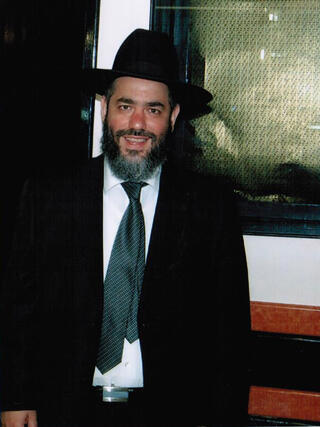 Eduardo Reuven
“My connection to Israel is experiential, political, and spiritual, dating back long before I suffered my personal tragedy: the murder of my brother, Eduardo Reuven, at the hands of two Palestinian ‘Islamofascists’ on December 23, 2015, at the Jaffa Gate of Jerusalem’s Old City, the millennia-old capital of the Jewish people,” he says.
Birmajer first lived briefly in Israel as a child.
“Back in 1971, when I was five years old, my parents divorced, and my mother moved to Israel with my brothers and I,” he says. “We stayed for only a few months before returning to live in Argentina. However, I never stopped visiting Israel. My trips were always deeply committed ones. Now, whenever I travel there, it also is one way for me to reconnect with my brother Edu.”
Birmajer’s writing often deals with secular Jewish identity, terrorism and the tensions of Jewish life in Latin America. Those themes also shape how he views Argentina’s current political alignment with Israel under President Javier Milei, who has emerged as one of Israel’s strongest international supporters.
Argentina’s president has emerged as one of Israel’s strongest international allies. Do you see this as genuine ideological support and affection for Israel, or more as a convergence of political and strategic interests?
“It represents genuine support for Israel as the sole democracy in the Middle East,” Birmajer says. “Argentina’s geopolitical and strategic interests are objectively aligned with the defense of democracy and freedom worldwide.”
He points to Argentina’s own history of Iranian-backed terror attacks.
“The Islamic Republic of Iran has attacked Argentina on two occasions: a suicide bombing against the Israeli Embassy in Argentina in 1992, and a suicide bombing against the Argentine Israelite Mutual Association, AMIA, in 1994,” he says. “In total, acting through Hezbollah terrorists, the Iranian officials murdered more than one hundred people on Argentine soil.”
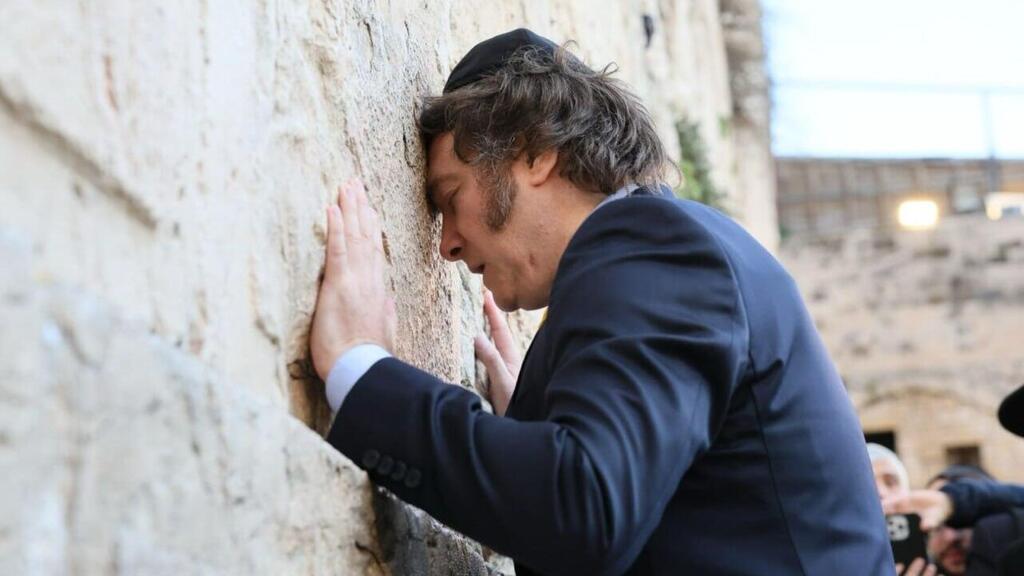
Argentine President Javier Milei
(Photo: Western Wall Heritage Foundation)
For that reason, he says, Milei’s stance is both moral and strategic.
“It is both logical and just for Milei to align himself with Israel and the United States to confront this global threat, the very entity responsible for the worst terrorist attacks my country has ever endured.”
Birmajer believes Israeli readers may find particular resonance in his writing because of the way it moves between Diaspora anxieties and Israel’s wars for survival.
He points to one of his recent novels, El rescate del Mesías (The Rescue of the Messiah), published in 2018.
“It tells the story of an Argentine-Jewish stand-up comedian in the year 1973, a man who cracks jokes in an Argentina torn apart by armed leftist terrorism and violent paramilitary squads, all while Israel is being invaded by Egypt and Syria during the Yom Kippur War,” he says.
The protagonist, José Mifkad, has parents who made aliyah. Through him, Birmajer returns to a subject that has occupied him for decades.
“The novel depicts the tensions experienced by Jews, caught between the anxieties of life in the Latin American Diaspora and Israel’s wars for survival,” he says. “It revisits, and I believe, with greater maturity, a theme I had previously explored in literature back in 2001, in my novel Tres Mosqueteros (Three Musketeers), the only one of my works to have been translated into Hebrew.”