


Hot yoga, Bikram yoga and even "hot Pilates" have become a growing wellness trend in recent years. On the one hand, it promotes flexibility, detoxification and stress relief. On the other hand, it poses risks of dehydration and loss of salts and minerals. Between the benefits and the risks, what really happens when the body willingly faces heat?
A machine that generates heat
Bikram yoga, one of the most popular yoga methods worldwide, was founded in the 1970s by Indian teacher Bikram Choudhury. It is a precise, structured practice with a fixed sequence of postures, always performed in a heated room. Each class lasts 90 minutes, with 26 postures and two breathing exercises, done in the same order every time, with no exceptions.
Gallery
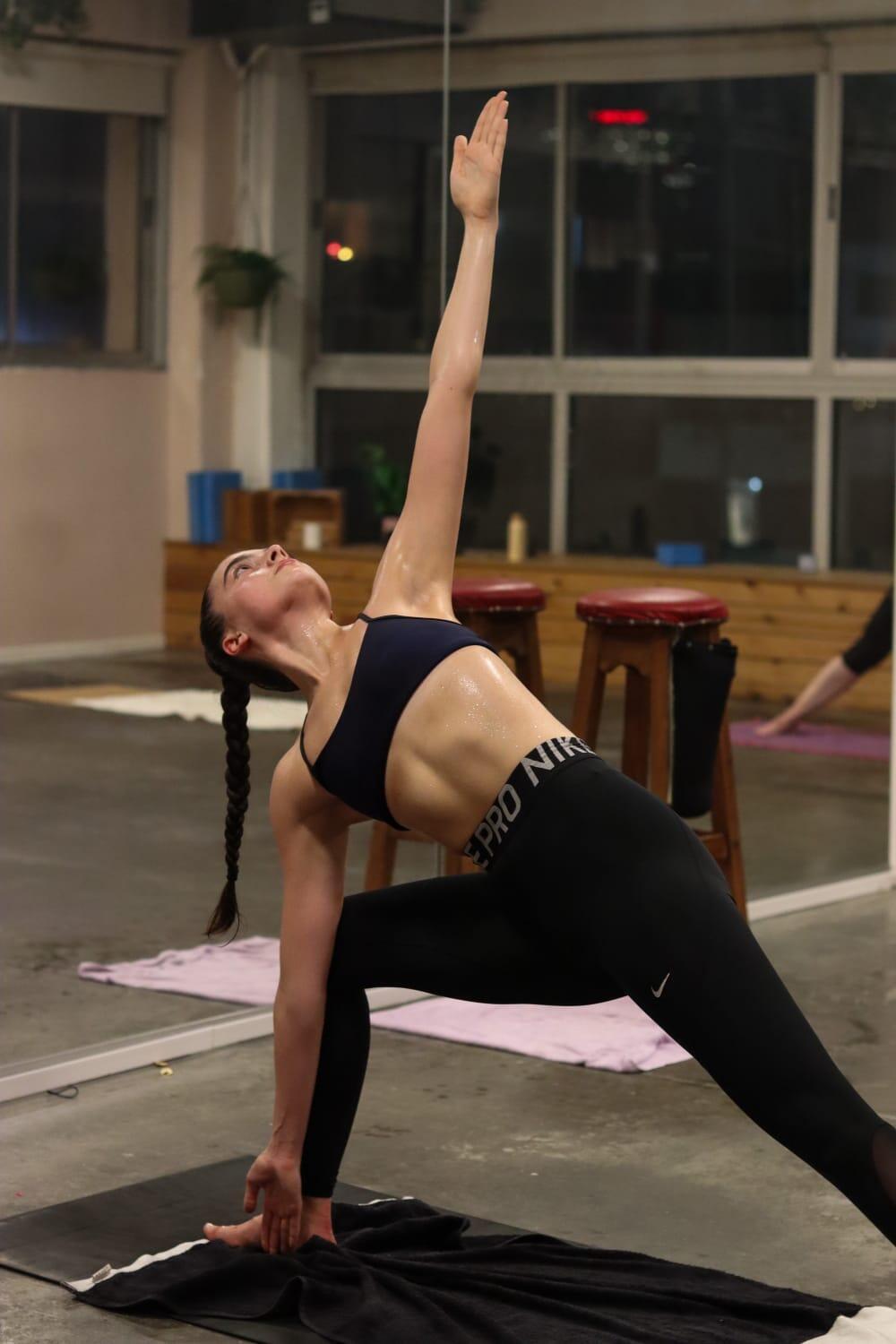
Bikram yoga. 'The studio uses two machines, one that generates heat and the other humidity'
(Photo: Porat Ganon)
“When you practice a fixed sequence of exercises, you enter a kind of meditative state while in motion; that’s the essence of Bikram yoga,” says Noa Leibusher, founder of Bikram Yoga Israel in Tel Aviv. “It’s based on the principles of Hatha yoga, with a methodical flow from head to toe. That way, you’re working therapeutically on the entire body, from beginning to end. It’s especially suitable for people who struggle with seated meditation because here the meditation is active, through repetition, listening and deep familiarity with your body."
But it’s not just the strict sequence that makes Bikram unique; it’s also the heat. “The class is held at a constant 38 degrees Celsius (100 F) with 50 percent humidity, all year long,” Leibusher explains. “No matter the weather outside, the studio uses two machines, one that generates heat and the other humidity, that work together to create exact conditions."
In addition to Bikram classes, the studio also offers mat Pilates, which is practiced under the same heated conditions. “It’s the same familiar Pilates practice, just intensified. You burn more, sweat more and your body becomes more flexible. A posture that feels normal in a regular room suddenly feels twice as demanding in the hot room,” states Leibusher.
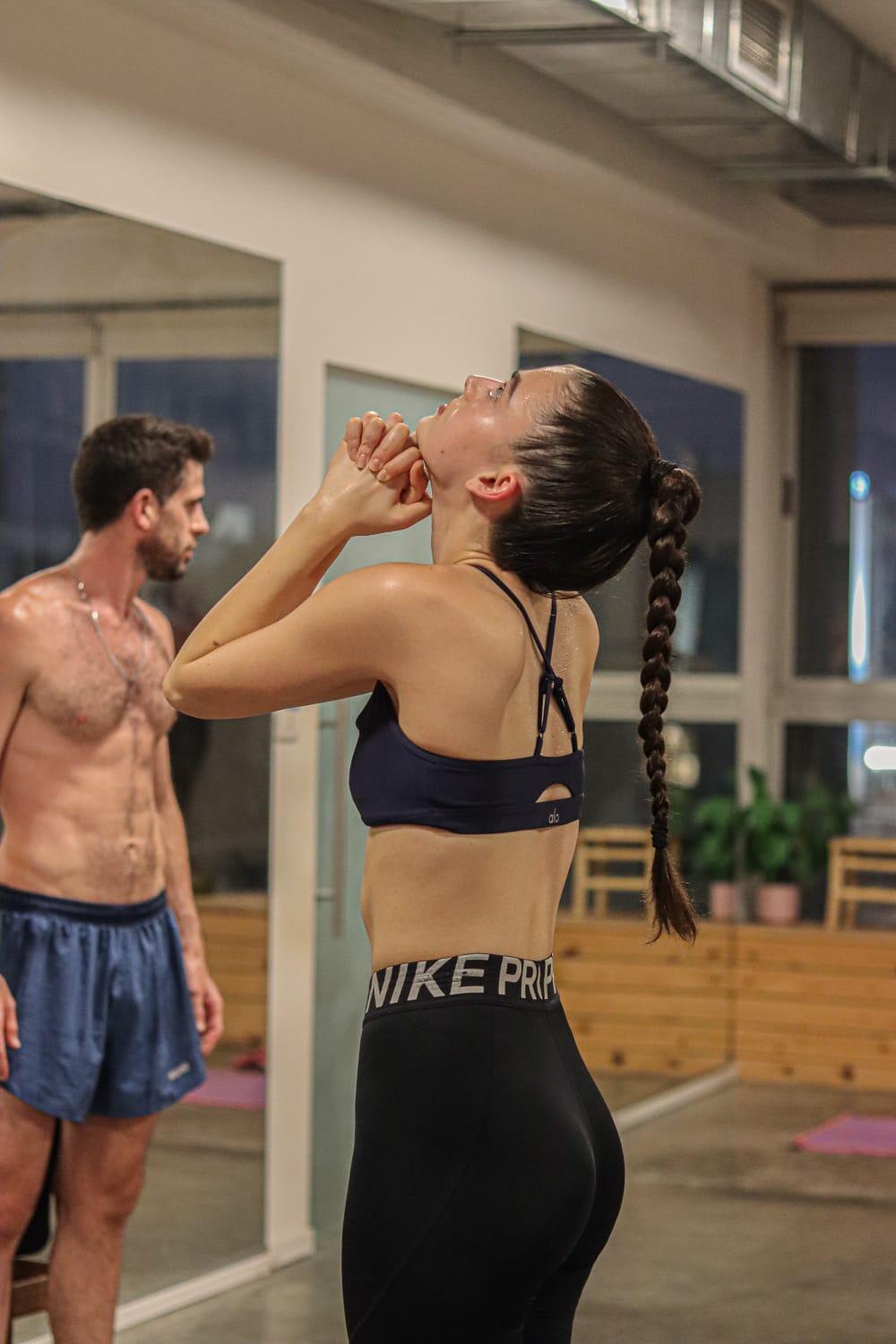
Bikram yoga. 'You burn more, sweat more'
(Photo: Porat Ganon)
Beyond the atmosphere, she emphasizes the health benefits of training in high temperatures. “The warmth raises your heart rate, which speeds up calorie burn,” she explains. “You sweat heavily, which boosts metabolism and helps flush out toxins. In addition, muscles loosen, tissues soften and mobility improves, allowing for deeper postures."
Over time, the changes in the body are noticeable. “Flexibility increases significantly, and breathing completely transforms,” she says. “Working in humidity strengthens the diaphragm, and that carries over to other activities - running, speaking, even singing. We have an opera singer who comes daily and says it has changed her vocal abilities."

Bikram yoga. 'Flexibility increases and breathing transforms'
(Photo: Porat Ganon)
She also sees improvements in chronic pain. “The systematic work boosts circulation, softens tissues, releases joints and helps people with muscle pain, fibromyalgia and even diabetes,” she says. “And above all, the practice relieves stress. You leave the class differently. The softness, the quiet, the relief, they’re all integral to the experience."
Sauna-like atmosphere
At another studio, 'Meital Hot Yoga' in Bat Hefer, founder Meital Goldin offers a different and gentler approach to heated practice. “It’s a boutique studio, intimate, up to eight people per class,” she says. “We follow the Vinyasa style, a dynamic, flowing practice, in a warm room. But unlike artificial heat from an AC unit, the warmth here is natural, subtle."
Every detail of the space was carefully designed to create calmness. “The temperature never goes above 34 degrees Celsius (93°F). We use two ceiling heaters, a water fountain for humidity, and the feeling is of a soft sauna; the heat wraps around you instead of hitting your respiratory system. That was very important to me when I opened the studio, so that the body can relax without tensing up."

Meital Hot Yoga. 'The temperature never goes above 34 degrees Celsius'
(Photo: Shani Atias)
Unlike Bikram’s rigid sequence, Vinyasa allows flexibility from class to class, depending on the group's physical and emotional state. “There’s no fixed order of postures,” Goldin said. “The practice from one class to another, and the connection is more personal. My training was in Vinyasa, and ever since, my focus has been on presence, listening and creating a practice that adapts to the student, not the other way around."
For Goldin, the benefits of training in heat go far beyond physiology. “I turned to hot yoga because it simply saved me mentally,” she says straightforwardly. “Heat has the power to soften stuck energies in the body, to release mental blockages. When we practice, we’re really moving the prana (the Sanskrit word for 'life force'), letting it flow through the body. Walking out of the warm space feels like being reborn. It’s an experience you don’t leave behind; most people who start simply don’t stop. It’s healing for both heart and soul."
The heat, she notes, also has clear physical effects. “It dilates the blood vessels, improves circulation and increases oxygen supply to tissues. That’s the main point, everything is about the tissues. When we give them oxygen, we allow them to heal from within."
In her view, training in hot conditions also places the body in a kind of natural survival mode, which she believes strengthens the immune system. “The body almost thinks it has a fever, and that activates its defense mechanisms. It supports inner resilience.”

Meital Goldin
(Photo: Shani Atias)
Mental resilience is also trained, she adds. “Being in a hot room isn’t always pleasant, and that’s exactly why it’s important. Humans tend to run away from discomfort, but when we stay in a place that isn’t comfortable and deal with what comes up, that’s where change happens. It’s not just about yoga, it’s about life. If you can stay, breathe and relax even when it’s uncomfortable, you build real inner stability."
Don’t forget the water bottle: The risks of hot training
Still, alongside the benefits, experts stress that training in heat carries limitations that require caution, especially when conditions are not ideal or the effort is too intense.
“Not every yoga class is the same, and the effect of heat depends on intensity,” says Sharon Vosco, an exercise physiologist at the Levinsky-Wingate Academic Center. “There’s a big difference between a moderate practice and yoga that requires high effort", he explains. "With low-intensity yoga or Pilates, there usually aren’t major risks. But as the workout becomes more intense, the risks rise.”
Even in relatively moderate sessions, he stresses, heat exhaustion can occur when the body’s core temperature rises above normal, around 37 degrees Celsius (98.6 F). “When core temperature goes up, the central nervous system signals fatigue. You feel drained, the effort feels harder, and it becomes difficult to continue. When the environmental conditions are uncomfortable, the likelihood of sticking with long-term training decreases."
Another issue is impaired thermoregulation, i.e., the body’s ability to shed heat during exertion. “During exercise, muscles generate a lot of heat,” Vosco explains. “When the environment is hot, the body struggles to release it, and the core temperature keeps climbing. That increases fluid loss and raises the risk of dehydration or even life-threatening heatstroke. That’s why you need more water, more breaks and time to cool down the body. You can’t treat it like a regular workout; you have to respect the body’s limits."

The body needs more water
(Photo: Shutterstock)
Hydration is critical, agrees Leibusher. “You have to bring a water bottle, as you can’t get through the class without it,” she says. “There’s also a loss of salts, especially magnesium, so people who practice very frequently, say five times a week, need to make sure their diet is balanced. Sometimes supplements are necessary, but usually not for people who practice once a week."
Heat improves flexibility but also promotes injury risks, Vosco cautions. “People think range of motion depends on muscles, but that’s not entirely accurate. It’s connective tissues that limit us. Heat makes tissues more elastic, which lets you go deeper, but if you push beyond your capacity, you risk damage. You have to work with sensitivity, listening to the body, moving slowly and precisely, rather than with sudden or ballistic movements."
Leibusher agrees. “Heat is a double-edged sword; it makes you very flexible, but if you don’t work carefully, it’s easy to overdo it,” she says. “That’s why we always tell students: leave your ego outside. You don’t need to be the most flexible in the room or lift your leg the highest. Reaching 75 percent of a posture is enough to feel all the benefits. That’s the beauty of it, it works for all levels, even if you never reach 100 percent. Some people practice for ten years and still don’t get there, and that’s perfectly fine."
Who should avoid it?
According to Vosco, some risk groups need to be especially cautious or avoid hot training altogether. “Pregnant women, for example, must be careful that core temperature doesn’t rise too high,” he says. “People with high blood pressure face added strain from the heat. And anyone with risk factors for cardiovascular disease should be careful. Heat creates an extra load on the cardiovascular system. For people with heart problems, or at increased risk, even if they are not aware of it, heat could trigger dangerous events, including a heart attack."

Bikram yoga. Not for everyone
(Photo: Vered Adir)
The reason is that when exercising in hot conditions, the heart must pump blood not only to working muscles but also to the skin to cool the body, he explains. “That creates increased cardiac demand. If someone already has a cardiac problem, they are exposed to a greater risk. Therefore, I wouldn’t recommend hot training for people with health problems, at least not at the start. Maybe later, when they’re fitter and can handle the stress."
Others who should be cautious include people with a history of heatstroke, children, who are more sensitive to heat, and untrained individuals who struggle more than experienced practitioners.
Still, for many, hot training is not just exercise but a tool for balance, release and strength. As long as participants listen to their bodies, respect their limits and remember to hydrate, sweating it out can be done safely.