

Many people are startled when they encounter the coin-marked snake (Hemorrhois nummifer), a relatively common species in Israel named for the coin-shaped markings that decorate its back. Its intimidating reputation is far removed from reality and stems mainly from its resemblance to the Palestine viper (Daboia palaestinae). In fact, it is harmless to humans: a nonvenomous snake that hunts a variety of vertebrates, is active mainly at night and adapts well to a wide range of habitats.
Aviad Bar, who holds a master's degree in reptile ecology from Ben-Gurion University of the Negev, lectures on herpetology for a wide range of audiences, leads reptile-focused tours in Israel and abroad and is one of the authors of Hebrew and English field guides to Israel's reptiles and amphibians, explains more about the coin-marked snake.
Gallery
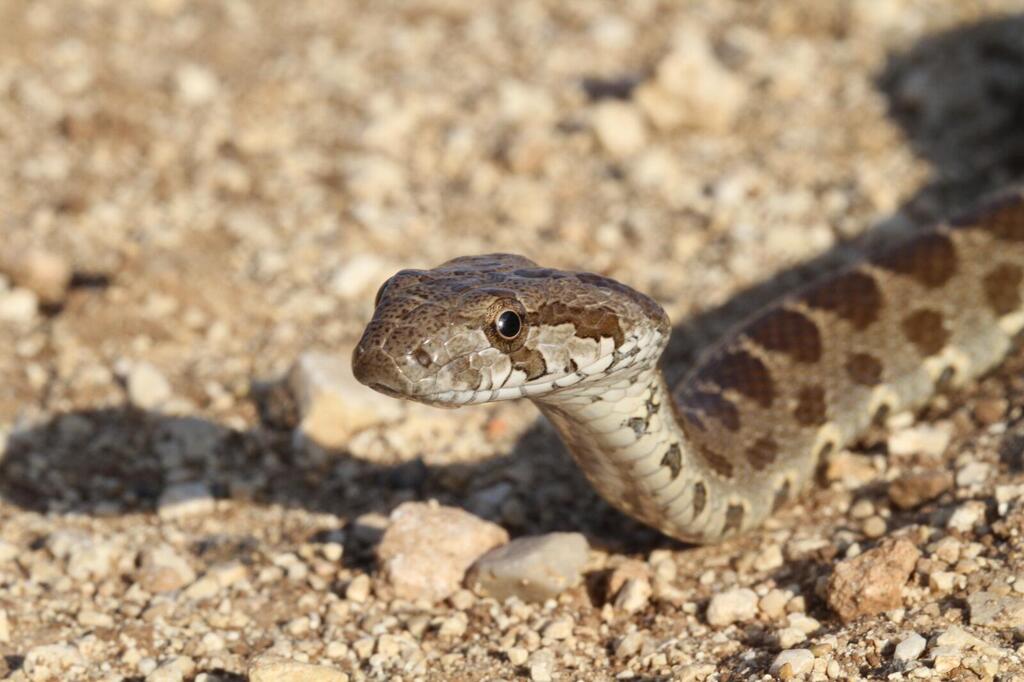
The coin-marked snake (Hemorrhois nummifer), a relatively common species in Israel
(Photo: Aviad Bar)
Where can the coin-marked snake be found in Israel and around the world and what makes it unique compared to other snakes?
"The coin-marked snake is a common species that inhabits Mediterranean habitats in Israel, from the Beersheba area northward to the slopes of Mount Hermon and the Lebanese border. Unlike many other snake species, it is also active near people and is often found searching for prey in yards and homes, especially in rural communities. Its body pattern, particularly while moving, reminds some people of the Palestine viper, a resemblance that sometimes proves fatal for the snake."
"Coin-marked snakes are among the few snake species in Israel that remain active during the winter. Their activity level is lower than in spring, summer and fall, but they can still be encountered even when temperatures are too low for most other snake species to emerge."
"The coin-marked snake is an outstanding climber and is frequently seen scaling stone walls or tall vegetation. Its climbing ability and flexibility allow it to enter bird cages and rodent enclosures, where it may prey on pets. After swallowing its prey, the snake often becomes trapped inside the cage, much like the fox in the fable The Fox and the Vineyard."
What role does it play in the ecosystem?
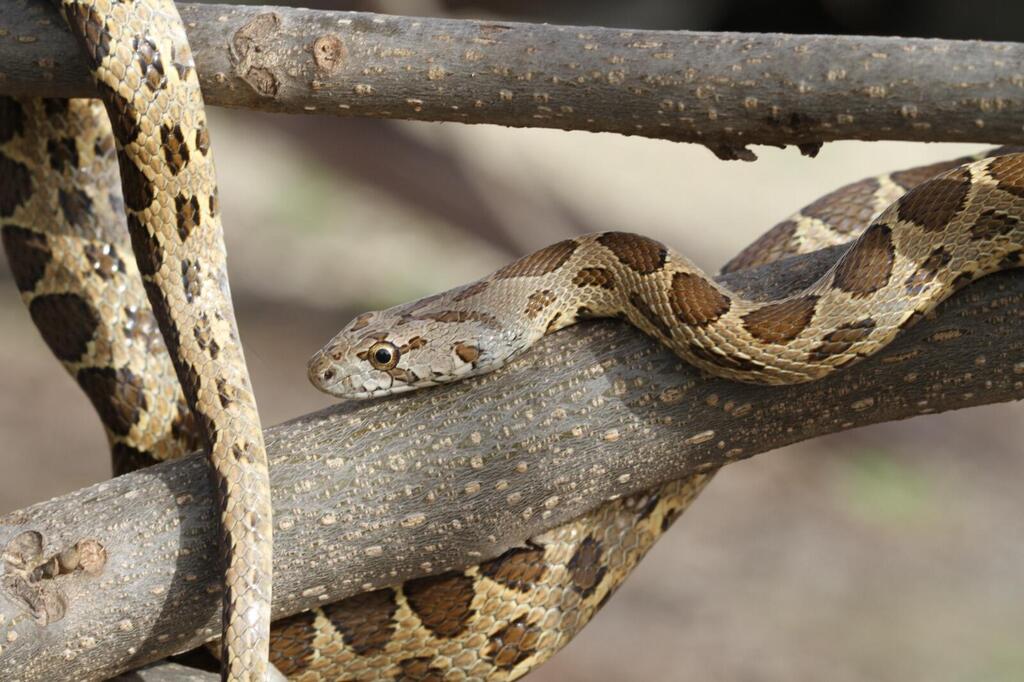
'Unlike many other snake species, it is also active near people'
(Photo: Aviad Bar)
"Like many reptiles, the coin-marked snake is considered a mesopredator. On the one hand, it preys on a variety of small vertebrates. On the other, it serves as prey for larger predators such as birds including the short-toed snake eagle, the long-legged buzzard and several falcon species, as well as mammals such as the Egyptian mongoose and the European hedgehog."
"Near human settlements, coin-marked snakes are viewed as helping regulate rodent populations. Observations show, however, that in addition to rodents they also feed on lizards such as the starred agama and the Mediterranean chameleon, as well as many species of songbirds. During the nesting season, they actively search for nests and prey on nestlings."
What are the biggest threats facing the coin-marked snake today and how are they affecting its population in Israel and elsewhere?
"The greatest threat to all snake species in Israel, including the coin-marked snake, is the ongoing loss of open spaces. Population growth, along with expanding development, is steadily reducing the habitats suitable for these snakes, causing their numbers to decline."
"At present, the coin-marked snake is not considered an endangered species. However, continued population declines, particularly in Israel, due to habitat loss could eventually place it in a threatened category."
How could climate change affect it?
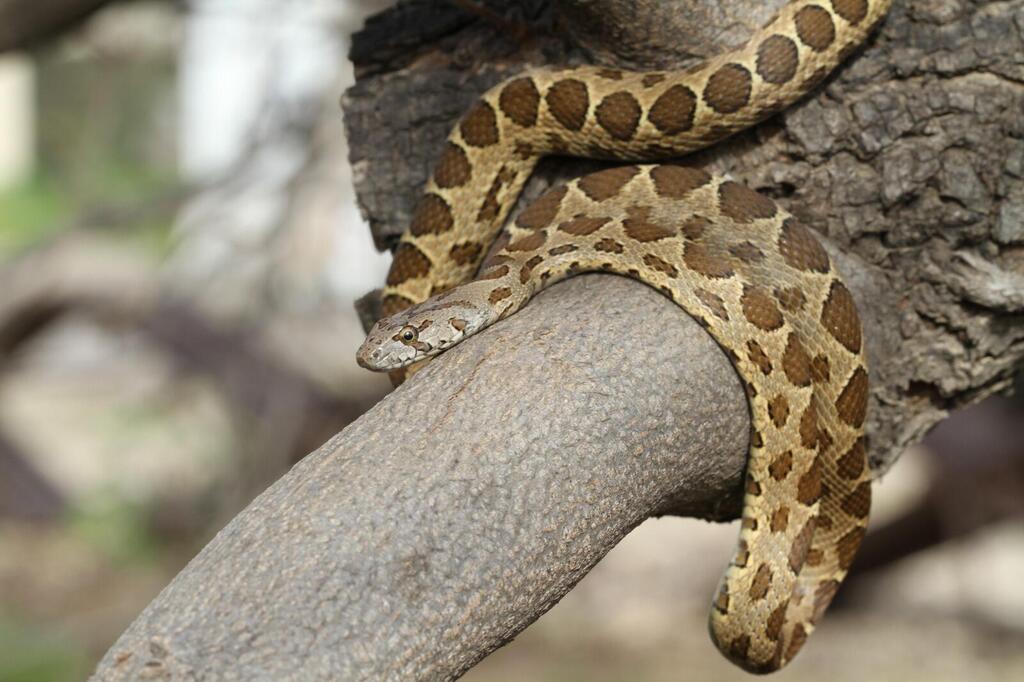
'During the nesting season, they actively search for nests and prey on nestlings'
(Photo: Aviad Bar)
"The coin-marked snake is a Mediterranean species that occupies a wide range of habitats with different soils and climates. Its ability to thrive under varied environmental conditions reduces the immediate threat posed by global warming."
"Of course, extreme habitat changes caused by severe climate shifts will affect it as well, but it is unlikely to be among the first species to suffer."
What challenges do researchers face when studying the coin-marked snake and other snakes?
"One of the greatest challenges in collecting data on snakes in their natural habitat is simply finding them and tracking them. Snake activity varies greatly between seasons and even during periods when a species is active, daily fluctuations can make fieldwork difficult."
"Even going into the field under what appear to be ideal conditions does not guarantee that a particular species will be found, let alone in numbers sufficient for meaningful scientific analysis."
"Ultimately, snakes are relatively uncommon animals and sightings are usually isolated. In recent years, the digital world, with large numbers of reports from enthusiasts on Facebook and Instagram, has opened new opportunities for collecting data through citizen science."
"Systems designed to gather reports from the public now provide valuable information about distribution, feeding and breeding, data that until recently were difficult to obtain because sightings were so limited, especially for rare snake species."
What conservation efforts are being made to protect the coin-marked snake? What can the public do?
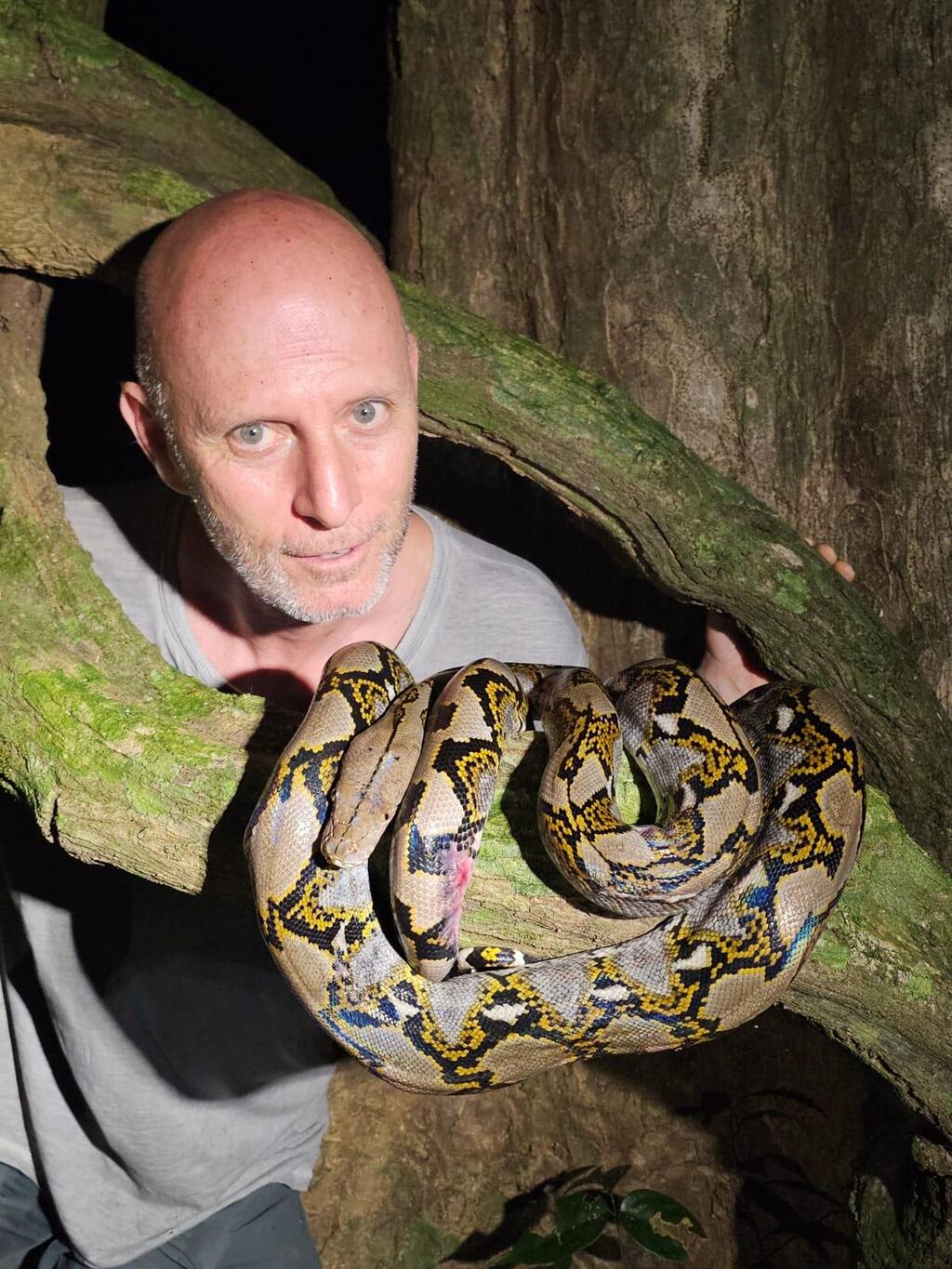
'Like many reptiles, the coin-marked snake is considered a mesopredator'
(Photo: Courtesy of Aviad Bar)
"At present, there are no conservation programs dedicated specifically to the coin-marked snake. A lack of familiarity with reptiles, and snakes in particular, has led many people to fear them unnecessarily."
"Educational programs in a variety of settings are helping shed light on this fascinating group of animals. In recent years, there has been a growing public recognition that these remarkable creatures deserve protection and that they provide valuable pest control and sanitation services while living alongside us."
"Beyond education and public outreach, it is important to remember that all reptile species in Israel, including snakes, are protected by law and harming them is a criminal offense. The Israel Nature and Parks Authority trains licensed snake catchers who assist both with public education and with safely removing snakes found in yards and homes. A list of licensed catchers is available on the authority's website and they are generally available around the clock."
"Although the coin-marked snake is nonvenomous and lacks the venom-delivery mechanisms found in venomous and mildly venomous snakes, there have been a small number of reported bites that caused significant local symptoms, including swelling, redness and pain. Therefore, despite the fact that it is nonvenomous, the standing recommendation is to avoid unnecessary contact with the snake and, when needed, seek assistance from a licensed snake catcher."
This article was prepared by Zavit, the news agency of the Israel Society of Ecology and Environmental Sciences.