

Walking into Amber, a new steakhouse overlooking Lake Ram in the Golan Heights, it is difficult not to stop for a moment and take in the view.
The polished, ambitious restaurant, opened by Rabiah Abu Saleh, is hoping to help bring travelers back to the Druze villages of the Golan after years of war and fighting battered tourism across northern Israel.
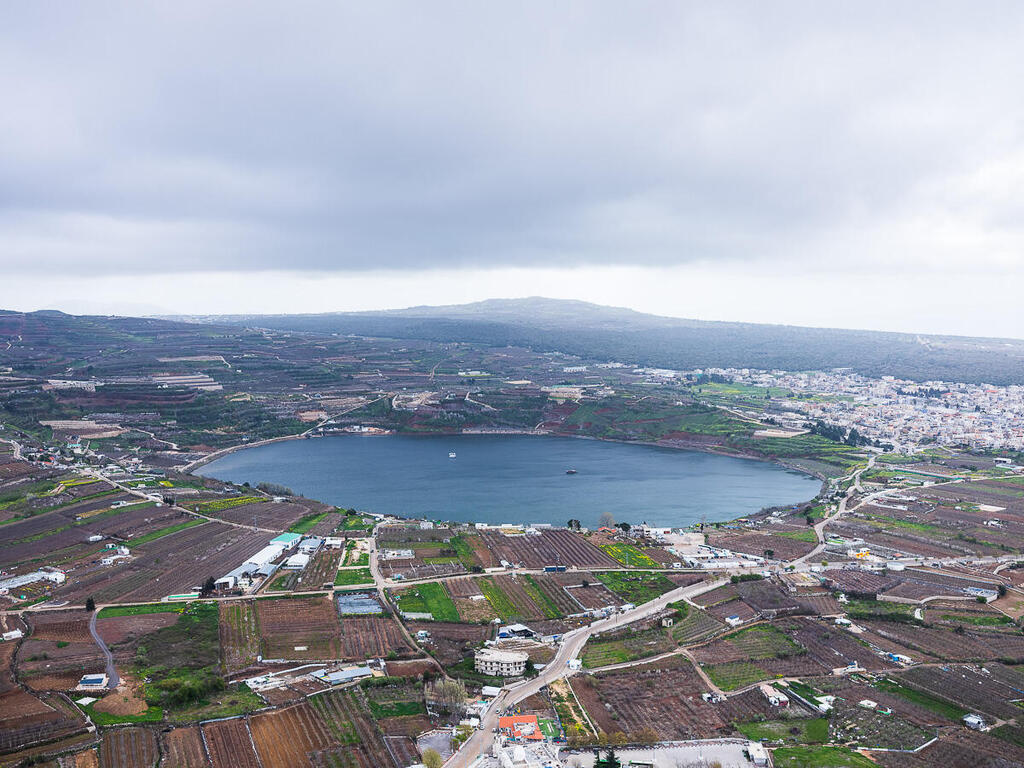
Amber stands on the site of what was once a café used by Syrian officers before the 1967 Six-Day War. Chef Shadi Sabbagh, who created the menu, says the restaurant draws inspiration from “the beauty of the lake.”
Lake Ram and its surroundings certainly stimulate the appetite. We answer it with excellent Druze salads, steaks and skewers befitting the Golan’s reputation for meat, accompanied by alcohol. And the presence of restaurant manager Yazan Khater, who returned to the region where he grew up after building a career in the wine world in Israel and abroad, makes clear that the drinks menu deserves attention as well.
The smiling Khater, from the nearby Druze town of Majdal Shams, is emblematic of the modernization visible among many younger Druze. He wears jewelry and tattoos and dresses stylishly. Like many members of his community, he is also grappling with questions of identity.
“Like many Druze families, ours is divided,” he says. “My grandmother lives in Syria, as do all my aunts on my mother’s side. My mother did not see her sister for 40 years, and only recently did they meet. It is hard to change the opinions of the older people in our village. Among the younger generation, it is changing.”
The 2025 massacres of Druze in Syria’s Sweida province and the 2024 Hezbollah rocket strike that killed 12 children and teenagers in Majdal Shams helped accelerate a shift in attitudes.
“For many years, there were problems with how we defined ourselves. We were considered pro-Syrian,” says Saleh Nahle, who owns a vacation accommodation complex. “Today we are Israeli in every sense.”
Teacher and cheesemaker Rabah Safadi makes the same point. “My father served in Syria, and I grew up in a pro-Syrian home,” he says. “Over the years, people of my generation were worried that the Golan would be returned to Syria, so we had to maintain loyalty to that side. But after all the problems on the Syrian side, suddenly the truth came out, and the only place we want to live is the State of Israel. Even if they moved Israel to America, I would go with it.”
Close to the land and the family
To better understand Druze life in 2026, I set out on a two-day journey with Mika Shimonov, who runs the Mika FoodArt culinary tour company, through Mas'ade, the youngest of the Druze villages in the Golan Heights.
After two days with the village’s warm and welcoming residents, I understood what Shimonov means when she talks about the “quiet generosity that characterizes this place so strongly. Maybe that is why the food here is so good,” she says. “Everything is still close to the land, the seasons, the family and memory.”
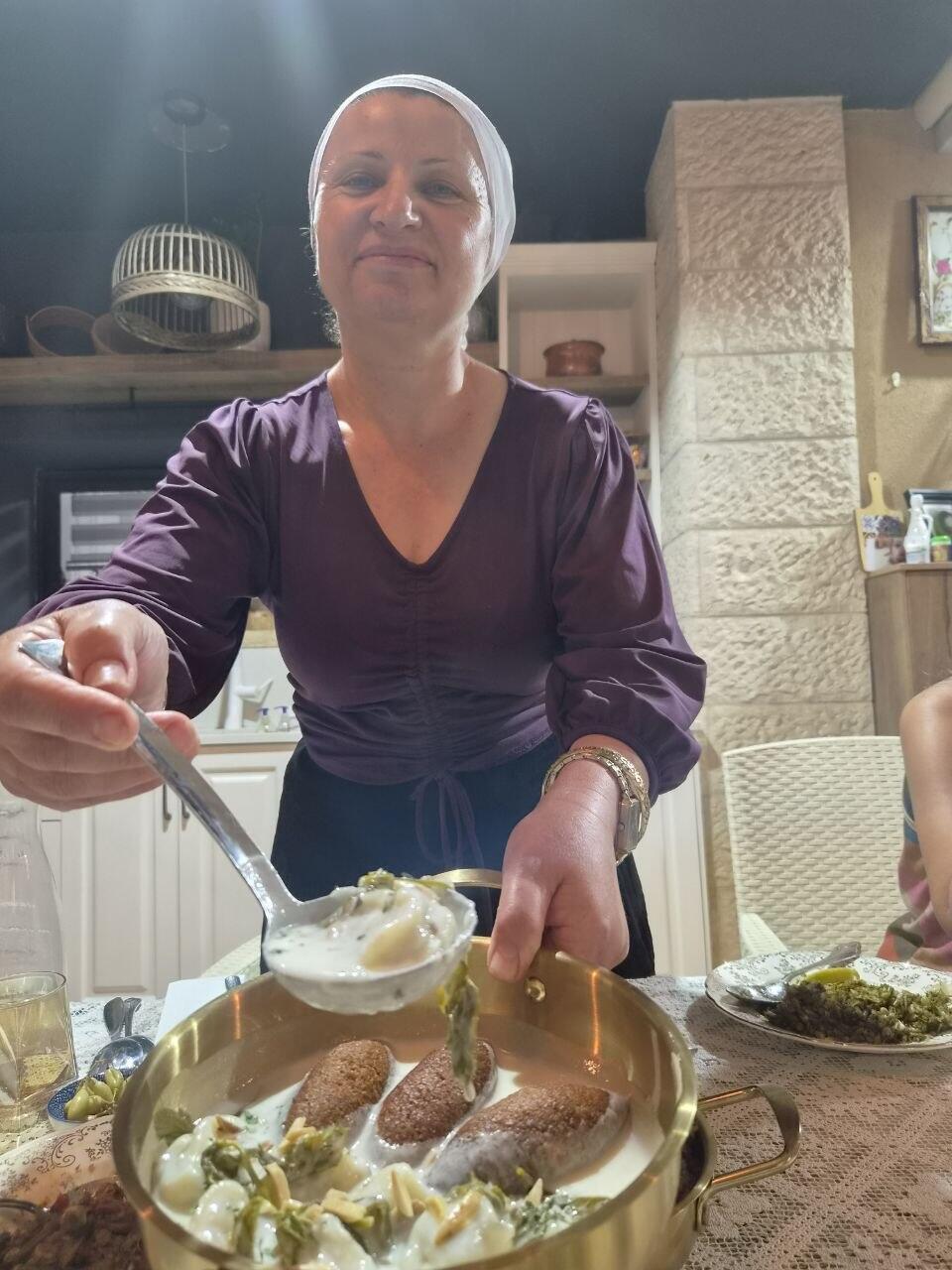
Safaa Ibrahim
(Photo: Amir Kaminer)
After eating Safaa Ibrahim’s remarkable food, many assumptions about Druze cuisine begin to fall away. The dishes she piles onto the table are worlds apart from the familiar clichés of Druze pita and stuffed grape leaves often found at food fairs and shopping malls.
Under the name “The Little Kitchen,” Ibrahim hosts groups in her immaculate home by advance reservation, from five people to as many as 30, showcasing the Lebanese and Syrian influences on the Druze cuisine of the Golan Heights.
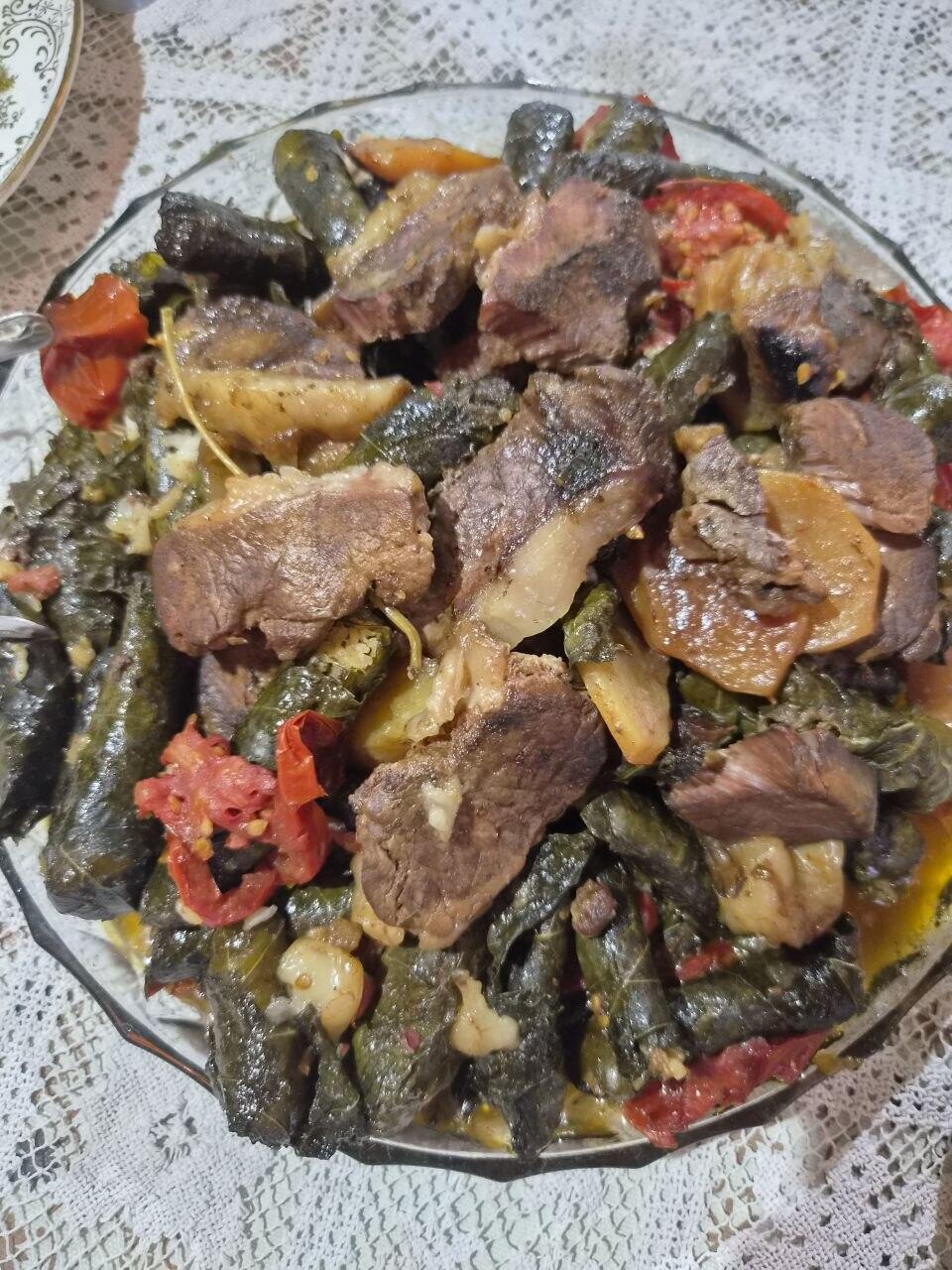
Grape leaves cooked with meat
(Photo: Amir Kaminer)
(Photo: Amir Kaminer)
“My mother, who died two years ago, was the village cook for weddings,” she says. “She was always proud of me and would tell people, ‘My daughter is a chef.’”
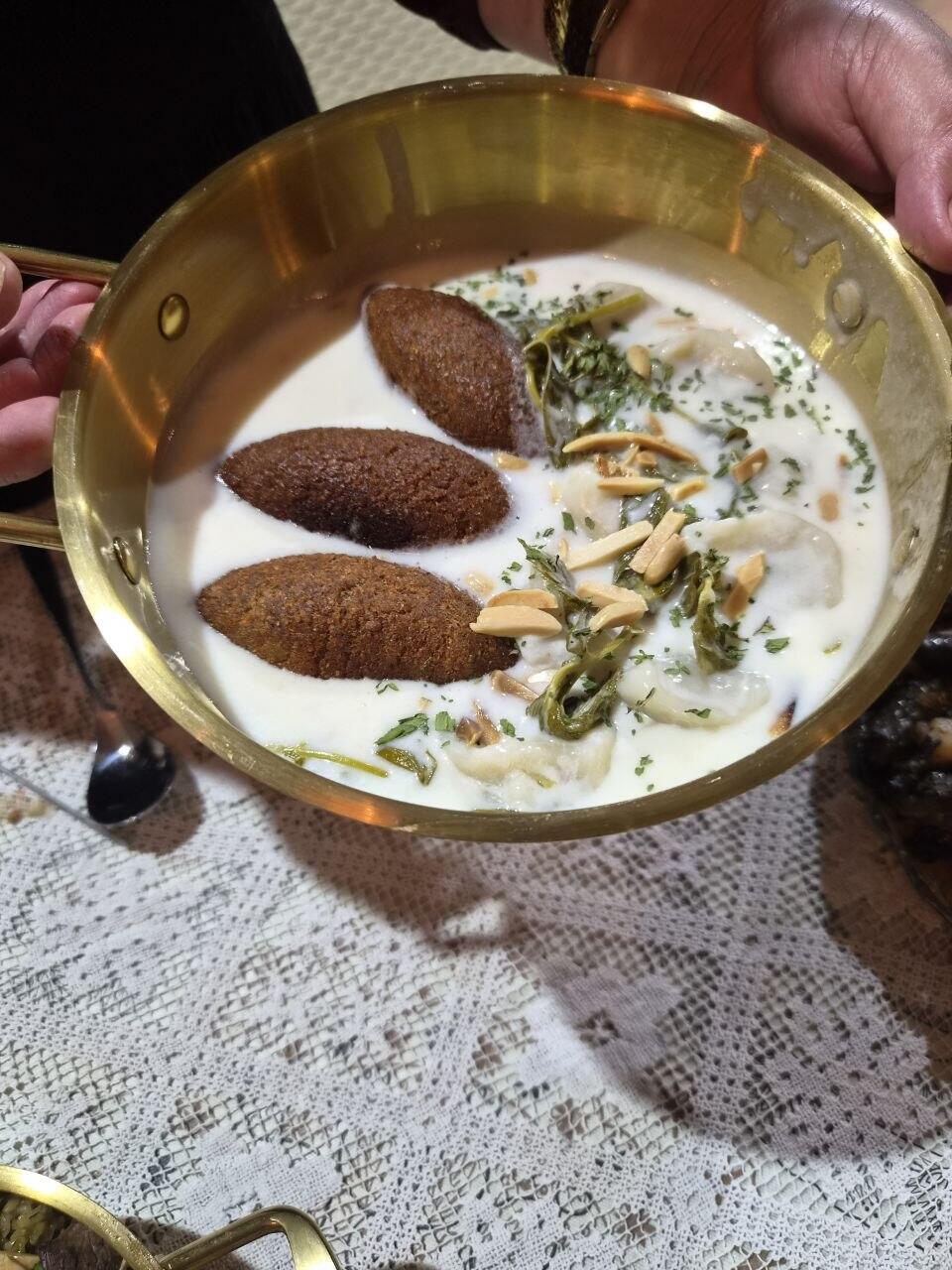
The menu includes grape leaves cooked with meat, mansaf, salads, bulgur mujaddara, tashweh, a rice dish with ground meat and almonds, and basha wa asakro, which combines kibbeh with shish barak dumplings. In winter, she serves a thick, warming kishk soup. A meal costs 180 to 200 shekels per person.
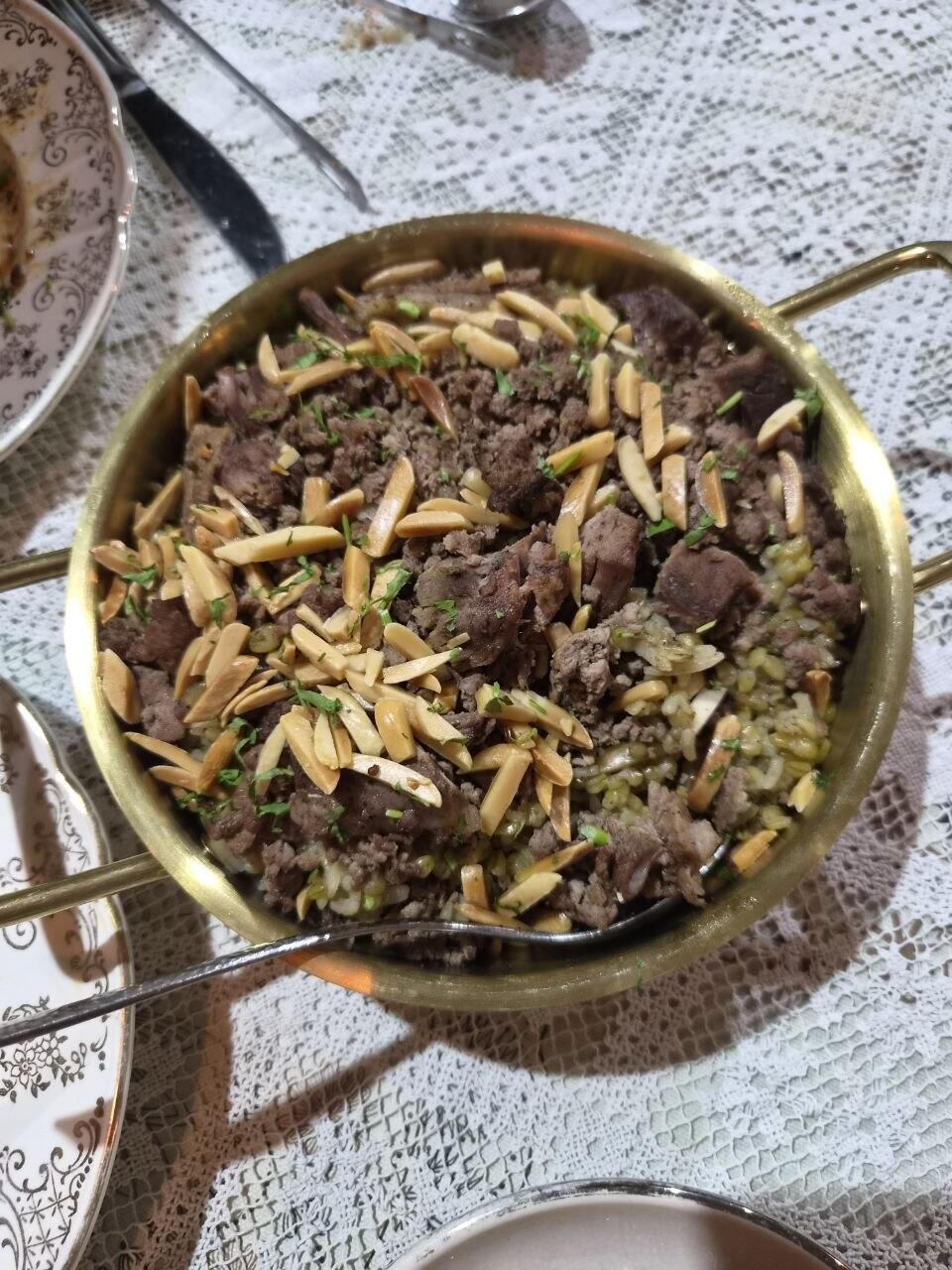
Rice dish with ground meat and almonds
(Photo: Amir Kaminer)
Rabah Safadi is also preserving culinary traditions inherited from his mother. Although he studied software engineering and works as a high school teacher, maintaining his family’s cheesemaking heritage is important to him. Under his Gvinot HaEla brand, he sells products including bryndza-style cheese, ricotta, halloumi and yogurt with mint and garlic from his premises in the center of the village.
“Tradition represents our roots,” Safadi says. “Many of our customs have already changed. On the one hand, we need to preserve important things, and on the other, bring in new and creative things that fit the era we live in.”
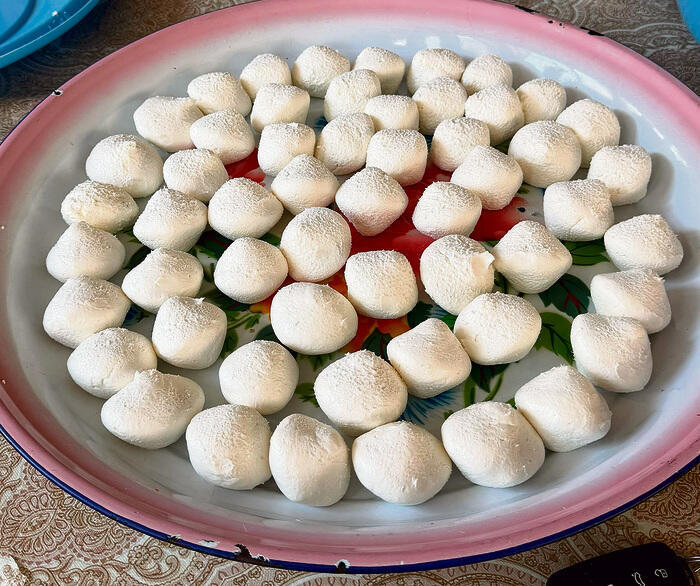
Gvinot HaEla
(Photo: Mika FoodArt)
Safadi is the third generation of his family to make cheese. His grandmother taught his late mother the secrets of making their delicate cheeses.
“My mother’s cheeses became well known throughout the villages,” he says. “When I studied at the Technion, everyone asked me to bring her labneh. After she died, things lost their meaning. My wife, Ruwayda, suggested that we start making my mother’s cheeses.”
Ruwayda, who works as a special education kindergarten teacher, also helps make the cheese. “We buy goat and cow milk from farmers in the village to support them,” she says. “We don’t put preservatives or additives in the cheeses, so you can taste the original flavor.”
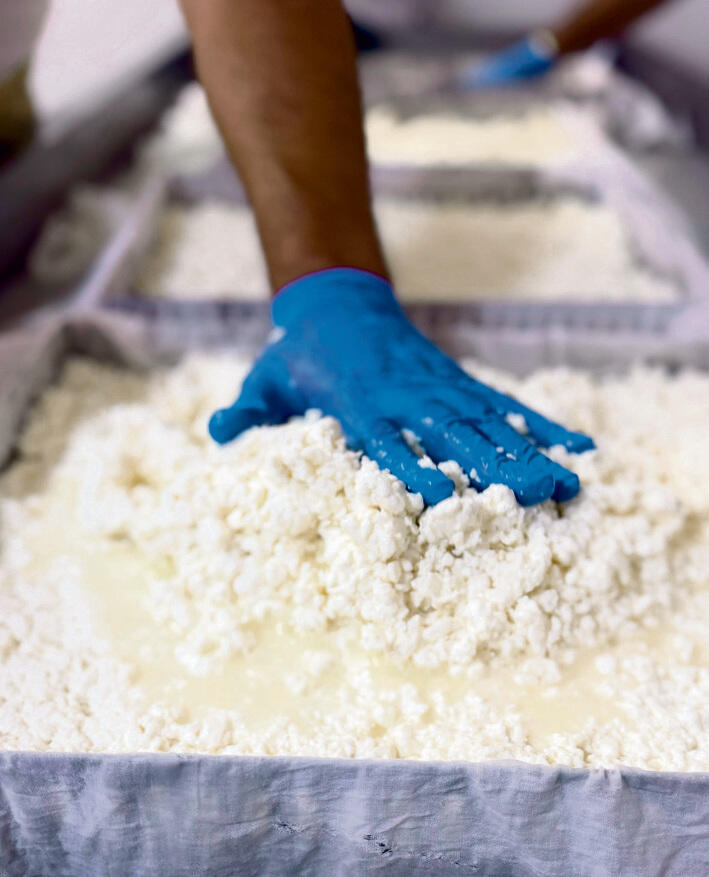
(Photo: Mika FoodArt)
A belief in reincarnation
Tourism in Mas'ade is not limited to food. Sixteen years ago, Abir Masoud and her sister went shopping in Majdal Shams. As they walked past a ceramics studio, Masoud saw a woman working at a pottery wheel.
“We kept walking, but I felt that my soul had stopped and gone into that woman’s studio,” she recalls. “It was as if only my body was still on the road, while all of me was with her. I had to turn around and go inside. We Druze believe in reincarnation, and I felt that maybe in a previous life I had worked with ceramics.”
Masoud entered the shop. “I told the woman, ‘I want to be like you.’ I asked her to teach me. I was already a mother by then. I began saving money and went to study with her.”
Nine years ago, Masoud opened her own shop and studio on Mas'ade’s main street. There she displays and sells cups, hamsas, wind chimes, dishes, evil-eye decorations, pitchers and other pieces. “Women have taken over ceramics,” she jokes. “It used to be men’s work. I also run workshops.”
One of Masoud’s most popular products is a ceramic set used for the ritual of drinking maté, the South American herbal infusion that occupies a surprisingly important place in Druze life. Druze generally drink their coffee black, strong and bitter, without sugar or spices. But despite coffee’s importance, maté is the dominant social drink.
“For us, maté is like bread and butter,” Masoud says as she teaches me the rules of the ritual and pours the drink. “It is a drink for every age. They say it is calming and healthy. If you serve a wonderful meal but do not offer maté at the end, then you have not shown your guest proper respect. We say, ‘Are you coming over for maté?’”
So how did a drink associated with South America become so deeply rooted in Druze culture? “The Druze, who follow a secretive religion, repeatedly had to flee enemies and conquerors,” Shimonov explains. “They emigrated, among other places, to South America, including Brazil, Argentina and Venezuela.”
Some later returned to Syria, Lebanon and Jordan, bringing the custom of drinking maté with them. The tradition proved particularly well suited to the region’s cold mountain climate.
Outstanding fatayer and manakish
At a small stand on the outskirts of Mas'ade, on the road to Majdal Shams, two sisters-in-law, Madiha and Radania, prepare excellent fatayer, filled yeast pastries, and manakish, thin, crisp flatbreads topped with herbs and spices. “We make them with a special dough,” they say.
The two opened their stand, which they named “From the Saj With Love,” just three months ago to supplement their income, and their pastries have already developed a following. “During harvest season, people come and take the pastries to the orchards,” they say. “Tourists also stop and buy them.”
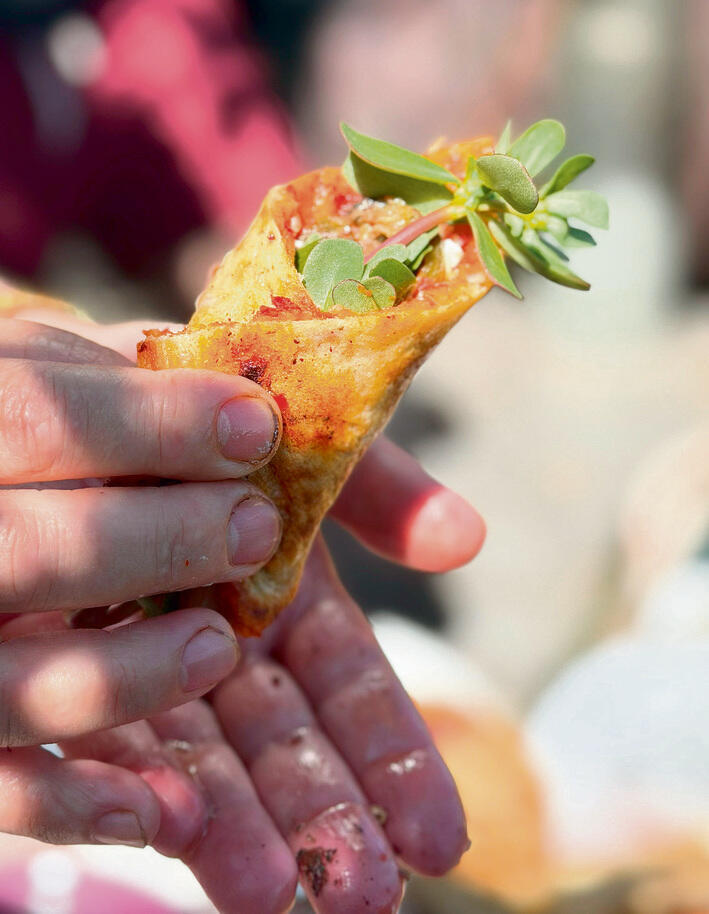
Manakish, thin, crisp flatbreads topped with herbs and spices
(Photo: Mika FoodArt)
I particularly enjoyed the potato fatayer, the labneh version and, of course, the herb-filled pastry. Their manakish, topped with za’atar, sumac or hot pepper, provide exactly the kind of comforting carbohydrates a traveler wants.
For the residents of Mas'ade, preserving agriculture is also a matter of principle. “Everyone here is a doctor, professor, engineer or other professional, and they still maintain the agriculture and work their plots and apple and cherry orchards,” Shimonov says. “They do not do it because they are making millions from farming. They do it because it is important to remain close to the land and to the family.”
A visit to the area is also a good opportunity to buy fresh vegetables from Akram Mahmoud, whose greenhouses flourish between Mas'ade and Majdal Shams. Mahmoud, a former building contractor, established the greenhouses after uprooting an apple orchard that had been losing money.
“I saw tomato prices rising, so I decided to build a greenhouse,” he says. “Older people told me, ‘Have you gone crazy? You are destroying an apple orchard for vegetables?’ The beginning was difficult.”
Mahmoud mainly grows cucumbers and tomatoes, alongside parsley and hot and green peppers. “In winter you can’t grow tomatoes, so I grow cabbage and chicory,” he says. And after buying his produce, ask Mahmoud to share his famous shakshuka recipe.
Businessman Saleh Nahle went in the opposite direction, moving from agriculture into hospitality. Thirteen years ago, he uprooted a cherry orchard about a 10-minute drive from Mount Hermon and replaced it with what was then a pioneering luxury accommodation complex. People around him were skeptical.
“They called my wife and said, ‘Your husband has gone crazy. Why is he uprooting cherry trees to build guest suites?’”
His White Suites complex, with sweeping views, a carefully landscaped row of dwarf cypress trees, a swimming pool, hot tub and sauna, became a success. A night for two, including breakfast, costs 1,200 shekels.
For Nahle, however, the project was not only a business decision. “We live together, and I wanted to encourage coexistence and get more Israelis to come visit us,” he says.
Want to visit the places featured in the article?
- Amber Restaurant: 052-4588922
- Safaa Ibrahim’s Little Kitchen: 050-4488279
- Gvinot HaEla: 052-6347983
- Abir Ceramics Studio: 050-3379094
- From the Saj With Love: 052-2690819
- Akram’s Greenhouses: 050-5956885
- White Suites: 050-5200222
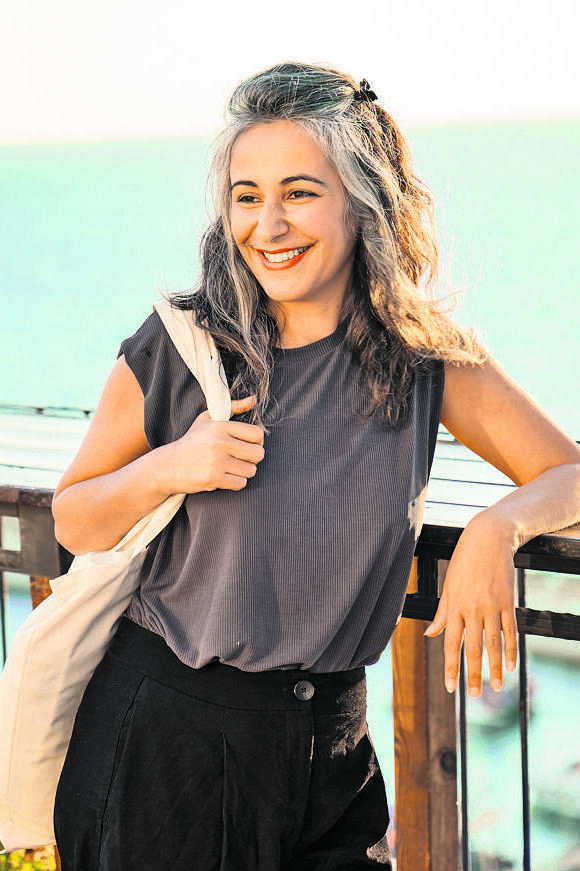
Mika Shimonov
(Photo: Anatoly Krinitsky)
A tour through the flavors
Mika Shimonov, a former Jerusalem resident, has a passion for travel, people and food. Through her culinary-tour venture, Mika FoodArt, she offers informative and flavorful tours in Israel and abroad.
Three years ago, she gave up her apartment in Jaffa and began traveling from place to place. More recently, she chose to settle in the Druze village of Mas'ade. “I fulfilled an old dream of living in the Golan Heights,” she says.
The village residents have warmly embraced her, and she now leads a tour introducing visitors to Druze culture and cuisine. “It is a delicious, nostalgic and unusual journey that tells the story of the traditions of the mountain people,” she says.
Tour price: 390 shekels per person | Phone: 050-8432843