


When researchers planted a heritage vineyard at the ancient city of Avdat in September 2023, they could only imagine what its wine might taste like. Now, for the first time, they have produced a modern version of the Negev wine that was prized across the Byzantine world 1,500 years ago.
The grapes were harvested by hand last year using cultivation methods modeled on ancient practices. The experimental vineyard was established by the Israel Nature and Parks Authority in cooperation with the University of Haifa.
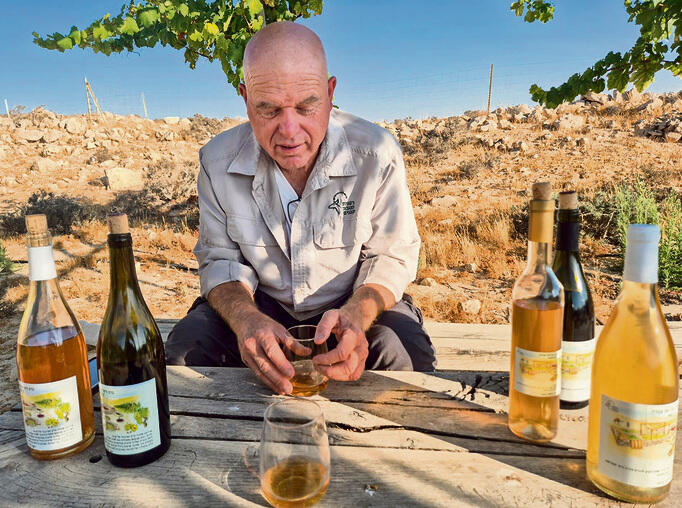
Dr. Lior Schwimmer, the authority’s heritage director for the Southern District, said the project quickly attracted interest from wine enthusiasts, researchers and curious members of the public. “I received dozens of requests, and everyone asked for the same thing: ‘Save me a bottle,’” he said.
The initiative grew out of a University of Haifa study examining the collapse of the Byzantine Empire. During the research, grape seeds were discovered in a sealed cave at the Avdat archaeological site. Researchers analyzed the seeds, identified the genetic characteristics of the ancient vines and set out to revive the famed Negev wine, which was regarded in its time as one of the finest wines in the world.
The team planted several heritage grape varieties, including Dabouki, Beer and Sariki. The vines flourished despite the harsh desert environment.
To reconstruct the vineyard as faithfully as possible, researchers also drew on descriptions of ancient agricultural practices found in the Mishnah and other rabbinic literature.
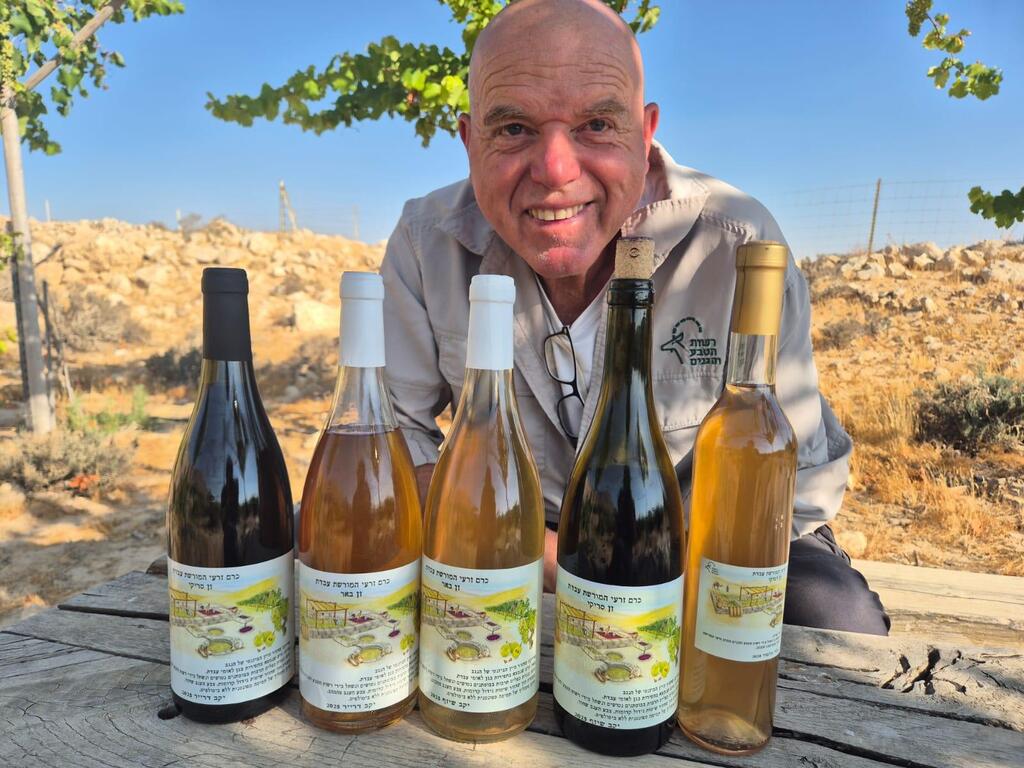
Wine produced from Avdat’s heritage vineyard
(Photo: Ilana Curiel)
After the harvest, the grapes were sent to small wineries in the Negev. Three winemakers participated in the experiment and were instructed to produce an entirely natural wine, without industrial yeast, sulfur, bisulfite or other additives.
“It is a kind of miracle,” Schwimmer said. “We used ancient cultivation methods and ancient grape varieties. This is desert soil, and no one had farmed here for 1,500 years. The vines grew at an extraordinary rate.”