

A child carved drawings into a table. Another broke a teacup. A third knocked over a payment device and caused hundreds of dollars in damage. One California restaurant decided it had enough of children running between tables, shouting and damaging property, and added a blunt warning to its official menu, complete with a list of fines.
“This is not an anti-children campaign. It is about respect for the restaurant and the diners,” the owner said.
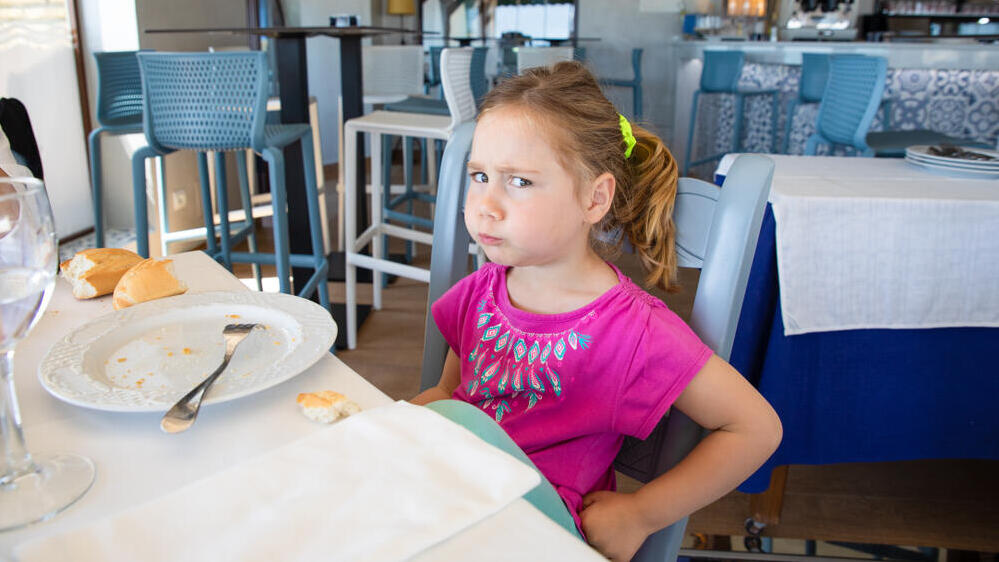
At Chez Xue, a Chinese restaurant in Foster City in the San Francisco Bay Area, an unusually direct message now appears among the dishes, prices and regular notes to customers: “Please control your children.”
This is not a polite request hidden in small print at the bottom of the page, but a formal restaurant policy that has gone viral in recent days and reignited one of the most sensitive debates in the dining world: Should restaurants tolerate children in every situation, or are owners entitled to draw a clear line?
The restaurant itself lists three cases in which parents were charged. In April 2025, a customer’s child picked up a payment device, dropped it on the floor and broke the screen. The parents were charged $327.03. In December, another child carved two drawings into a table using utensils, and the parents were charged $109.38. In January 2026, a child playing on the restaurant’s bench seating knocked over and broke a tea cup. That bill was far smaller: $5.47.
The policy had appeared on the menu for some time, but the story exploded in late June after a photo of the warning was posted on X and spread quickly. According to local reports in the United States, the post reached more than 1 million views and drew hundreds of comments.
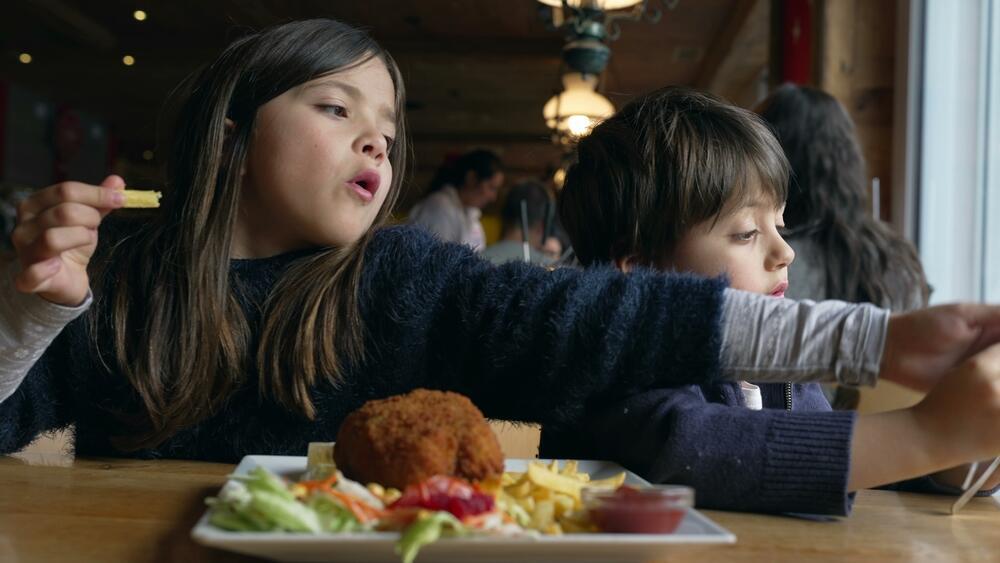
Children at a restaurant. Sometimes, it can be a real challenge
(Photo: Bricolage/ Shutterstock)
From there, the debate widened. Some parents argued that children are children, and cannot be expected to behave like adults in a restaurant. Many other diners, including quite a few parents, wrote that the policy was entirely legitimate and that a restaurant is not a playground.
The owner, Yu Yu Xue, told U.S. media that he was surprised by the uproar but does not regret the policy. He said the goal is not to punish children or drive families away, but to protect the dining experience for all guests.
In recent years, he said, he has seen unusually disruptive behavior in the restaurant: children running between tables, shouting, banging on dishes and utensils, and parents who do not always intervene. In one case, he said, he even saw a parent changing a child’s diaper on a restaurant seat near other diners.
“It is not just about children and parents,” Xue explained in interviews with U.S. media. It is also about other families celebrating birthdays, couples going out for a rare meal after a busy week and diners who pay good money and expect a pleasant evening. Restaurant employees, he said, should not have to discipline other people’s children while trying to serve food and run the dining room.
Xue also stresses that the restaurant does not charge parents for every small accident. A child who accidentally drops a glass or plate will not necessarily trigger a fine. The charges, he said, are meant for cases in which damage is caused by unruly behavior or obvious lack of supervision.
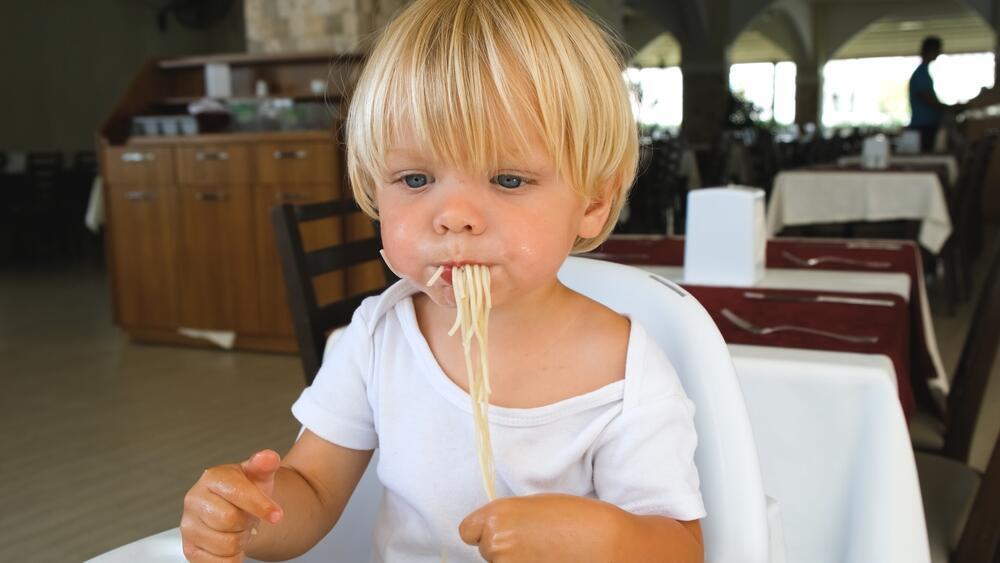
'Please control your kids'
(Photo: Voyagery/ Shutterstock)
That is why, he says, the policy is not about the money. Even the $5.47 charge for the broken tea cup was not meant to recover a meaningful amount for the restaurant, but to send a message: when a child runs, climbs or misbehaves in a restaurant and causes damage, the parents are responsible.
The restaurant insists it is not against families. On the contrary, it describes itself as family-friendly. But the next sentence explains why the story became so explosive: the restaurant is not a playground.
According to the policy posted on the restaurant’s official website, children must remain seated, respect other diners and the dining environment, and refrain from running, shouting or making noise with utensils. Guests who do not follow the rules may be asked to leave, and parents will be held financially responsible for damage caused by their children to restaurant property.
Xue says the number of incidents has dropped significantly since the policy was added to the menu. Sometimes, he said, he hears parents reading the notice to their children and using it as a reminder of proper behavior. In other words, he sees the policy not only as a punishment tool, but also as a preventive one.
Not just California: More restaurants are setting limits for parents
The Chez Xue case may sound extreme, but it did not emerge in a vacuum. In recent years, more restaurants in the United States and elsewhere have been grappling with the same question: How much should a private business that hosts diners be expected to tolerate children who disrupt the atmosphere?
One prominent case involved Toccoa Riverside Restaurant in Georgia, which drew attention after its menu included an unusual surcharge for adults “unable to parent.” According to U.S. reports, the clause caused an uproar after families claimed they were charged dozens of dollars because of their children’s behavior. The owner said the fee was not always actually collected, but the message was clear: as far as the restaurant was concerned, responsibility for children’s behavior belonged not to the waiter, the host or other diners, but to the parents.
(Photo: Drazen Zigic/Shutterstock)
In New Jersey, Nettie’s House of Spaghetti went a step further in 2023 and announced that children under 10 would no longer be allowed. The owners said at the time that they loved children but could no longer handle the noise levels, lack of space for high chairs, mess and safety risks created when children ran around the restaurant. The decision angered some parents, but also drew support from diners who argued that not every restaurant has to suit every age.
In California, Old Fisherman’s Grotto in Monterey has long enforced a particularly strict policy: no strollers, no high chairs and no loud children in the dining room. The owners have said over the years that the policy is first and foremost about safety and preserving the dining experience for all guests. The U.S. restaurant group Hillstone also states in its official policy that it does not provide high chairs and does not allow strollers in the dining area.
The debate has long since moved beyond frustrated restaurateurs and exhausted parents. A survey published this year by Lightspeed Commerce found that 75% of U.S. consumers support some form of adults-only dining area in restaurants. The more surprising figure was that support was also high among parents, at 79%.
Many respondents did not necessarily want children banned entirely, but preferred softer solutions: certain adults-only hours, quiet areas, restrictions in romantic restaurants or limits in venues focused on alcohol and evening entertainment.
Still, the other side of the debate has not disappeared. Critics of such policies argue that children learn how to behave in restaurants precisely through experience, and that if they are excluded from every “serious” setting, they will never learn. Others warn against turning restaurants into hostile spaces for families, especially at a time when a family meal out is already expensive and complicated.