

A few weeks ago, chef, restaurateur and former basketball player Michal Epstein decided to make production at her pastry kitchen kosher. On the face of it, it was a business and logistical decision: Over the years, companies and customers had approached Epstein, the owner of the Eats chain and Schmearz bagel restaurant, wanting to place orders but were prevented from doing so because of kosher requirements. Since the pastry kitchen is dairy, making it kosher did not require her to overhaul the kitchen, and the process was even invisible to customers. But in Israel in 2026, even a cake can no longer manage to remain just a cake.
"I posted that we were making the pastry kitchen kosher and got a lot of responses, most of them amazing, but there were also responses that showed people had absolutely no reading comprehension and decided that Eats was now kosher and that they were going to boycott us," Epstein says. "I explained that it isn't kosher and that it's open on Saturday, and that the whole reason for making the pastry kitchen kosher was that over the years we had received requests from companies that wanted to order from us for corporate events, for example, but the kosher issue got in the way. Since the pastry kitchen is dairy, there is no dramatic change. We felt it could be a good business move and, in my view, also something very connecting and unifying. If I can also be accessible to another segment of the population that keeps kosher, then why not? It didn't help how much I explained that Eats remains nonkosher and that nothing had changed."
Gallery
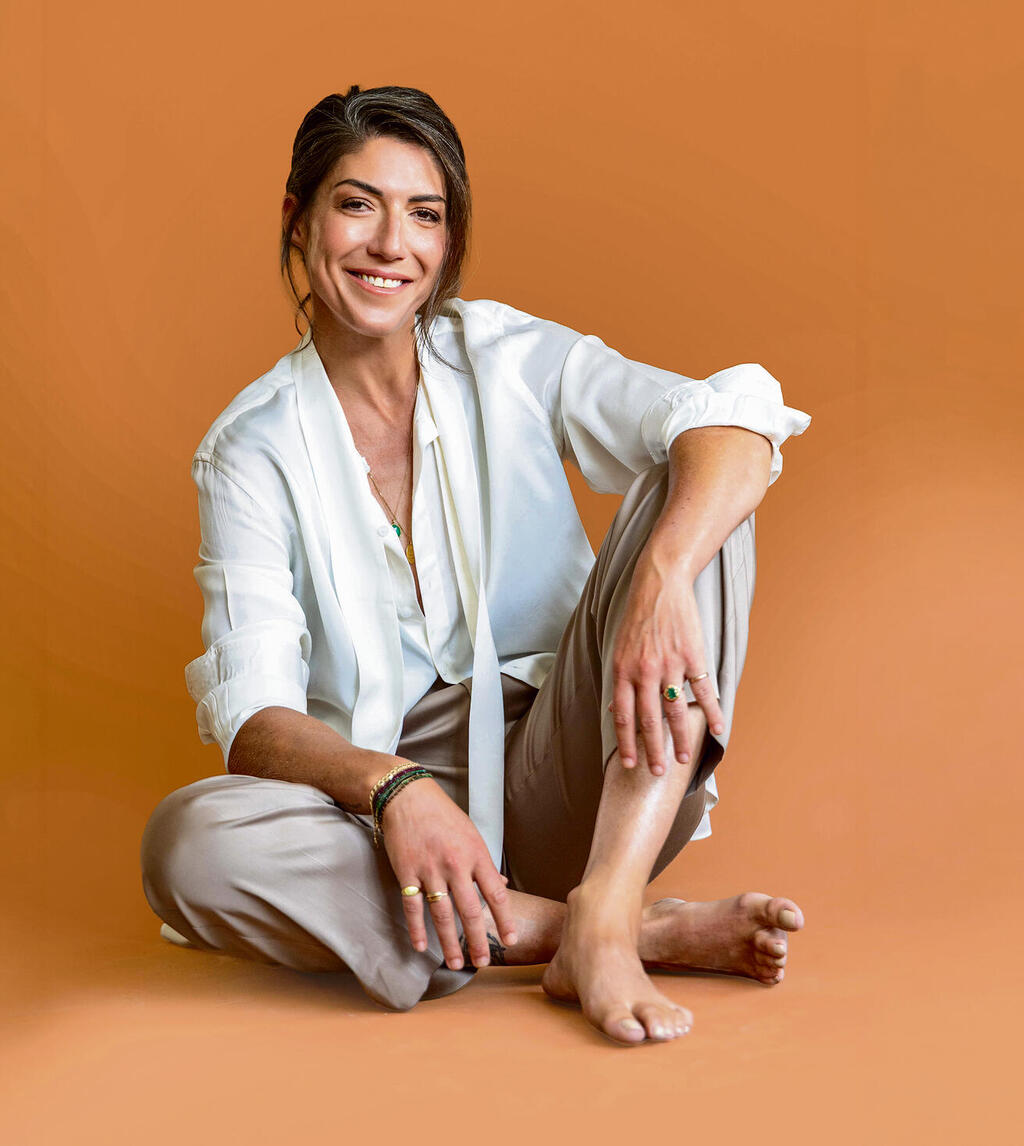
'It's important to me to be the sane voice that shows there is another way.' Michal Epstein
(Photo: Tal Shahar)
What kind of responses did you get?
"Someone wrote to me that I was surrendering to religious coercion. There were also messages like, 'Money isn't everything in life.' Whoever wrote that doesn't know me, because I wish I were more focused on making money and surviving in this industry. Israel in 2026 is moving to the right, and today you don't have to be religious to keep kosher. I felt that the word 'kosher' had become a political word: If you eat kosher, you support draft dodgers, and if you don't eat kosher, you're a left-wing traitor. I couldn't believe how on edge everyone here is and how everything ultimately becomes political. Some people even apologized and wrote to me that they weren't going to boycott us after all. But the instinctive response of a significant number of commenters was to divide, spew hatred and make generalizations. I didn't connect with that."
And what did you say to the extremists?
"I tried to remain calm and responded to everyone who wrote to me, except for the crazies who cursed at me, whom I blocked. I also live in this country and I'm affected by what is happening in the government, and I'm furious with the Knesset. My place to influence things is at the ballot box on Election Day. How will your boycott help the state of Israel's situation? But I'm at peace with myself."
Epstein, who entered the food world after a long career as a professional basketball player, knows the competitive instinct well. Before becoming a chef, restaurateur and reality TV star, she was one of Israel's most prominent basketball players. After 18 years, she retired and decided to turn to her old passion: food. She appeared on "MasterChef," including winning first place in the VIP season, established the Eats cafes and opened Schmearz bagel restaurant. So far, it seems she has been hitting the mark. Her partner, Adva, joined her as a business partner, and together they are raising three children, one from Adva's previous relationship and two they have together.
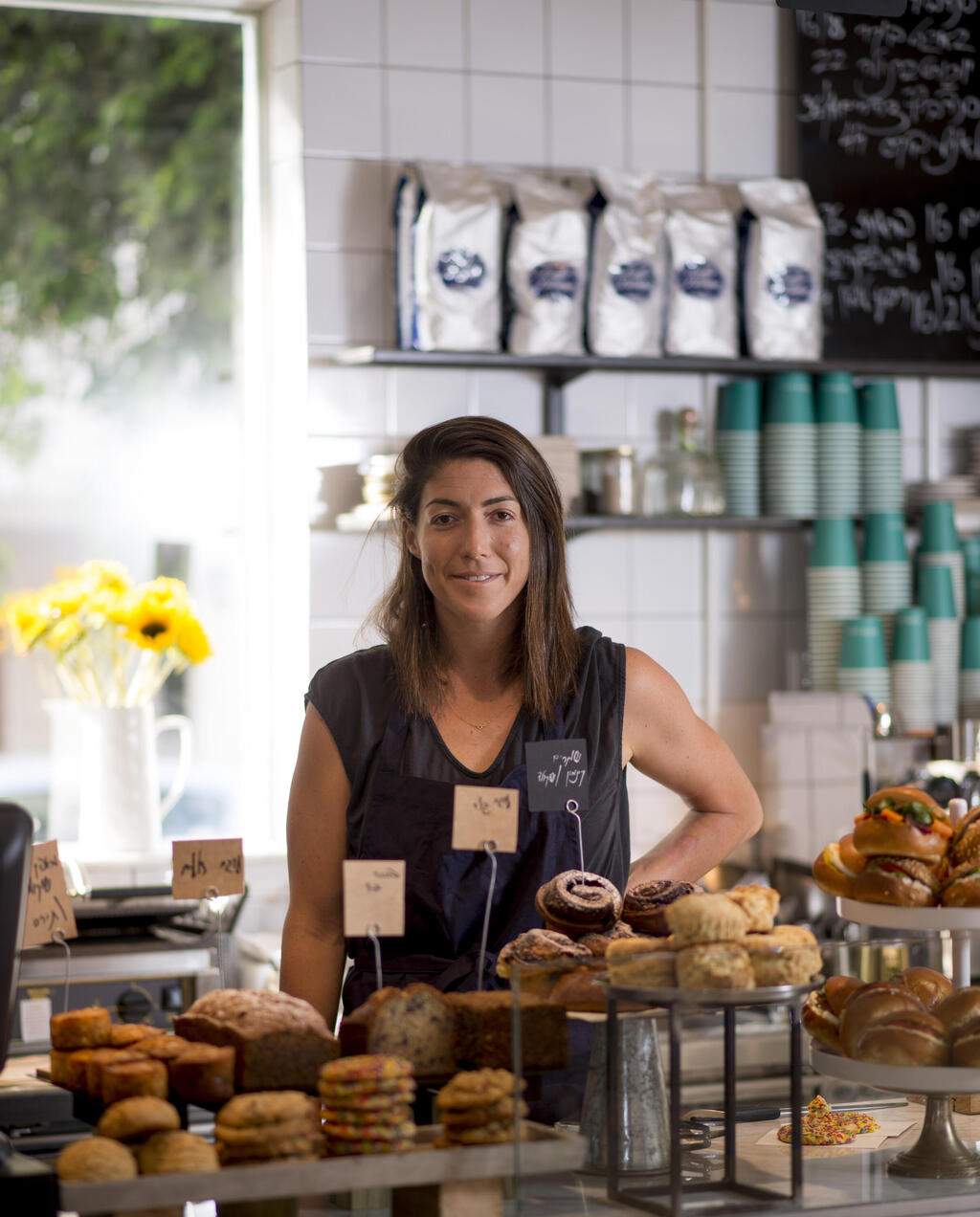
Epstein at an Eats branch
(Photo: Yuval Chen)
So why not make Eats kosher too?
"Eats wasn't kosher and I don't want it to be kosher. I didn't take away anyone's coffee and pastry on Saturday morning. That still happens. Schmearz was kosher from day one, and I can tell you that the customers there are beautiful Israel at its best. I have Tel Aviv hipsters there and women who cover their hair, men wearing knitted kippahs and Tel Aviv families. People come from all over the country. I feel a sense of mission in bringing people closer through my food, which is meant for everyone — whether you're right-wing, left-wing, Haredi or secular. It's a great privilege to be able to do that. It's important to me to be the sane voice that shows there is another way. I think the responses I received are a mirror of what's happening in the country, of the tolerance we have for others and of how even a conversation about cakes becomes political."
Running a business with a baby in her arms
Epstein, 45, entered the restaurant business at 36, and when her eldest son was 1, she opened Eats with a baby in her arms. "On the day I signed the lease on Ben-Gurion Boulevard, my water suddenly broke and I became a mother. I didn't give up on myself in any way, even when it was hard. Two years after opening the first branch on Ben-Gurion, I opened the second branch on Shenkin, and three months later COVID-19 broke out. At the same time, I gave birth to my second daughter. That's me — giving birth to children while running a business."
Sounds like you've cracked the formula.
"I had a lot of guilt that I wasn't seeing my son enough. I remember chopping vegetables and crying. It was tough for me, but my parents helped, and what helped me most was knowing that it was temporary and that right now we were going all out. I believed in myself and in that decision, and above all, I trusted that he would be OK. Today I've managed to find a balance between work and life. When people say today that it's either a career in the kitchen or motherhood, that's simply not true. It's outdated. You can do both, but there is a price and you have to understand what that price is. I refused to be the career woman who gives up having children, and I also refused to be the mother who gives up her career. My greatest achievement is being able to be a mother and juggle my career and motherhood. At the end of the day, I see my children more than my friends who work in high-tech."
'I taught myself everything'
Epstein says her experience in sports has carried over into her work in the culinary world. "I'm now entering my fourth year in the restaurant business and in my new career. Until recently, my whole identity was sports. I bring a lot of values with me from sports, and that helped me. At first I ran Eats like a basketball team. I put my ego aside and did whatever was necessary to win. I didn't know how to write a menu, what a professional kitchen was or how to run a business. I taught myself everything, and I strive for excellence and perseverance, just as I did in sports. Taking first place in a game is the best feeling there is."
And self-awareness?
"After I entered the restaurant business, I made an internal personal change and went through a process in which I tried to connect with myself, and I learned a lot there. I feel that the restaurant world and this career are my chance to make amends for my time in sports, because I don't think I had the emotional and mental tools back then to fulfill my potential as a basketball player."
Her basketball career also exposed her to some of the less attractive sides of the sports world. Sometime in the early 2000s, while attending college in the United States, something happened that has scarred her to this day.
"I experienced emotional, psychological and verbal abuse at the most severe level possible," she says. "I was 22 and the best player on the team, but one of the coaches made my life miserable. I was ashamed of what was happening and afraid that people wouldn't understand me. I was far from home, family and friends, and I was very lonely and humiliated. It was as bad as it could get. She belittled and humiliated me. It was awful. An athlete strengthens the body and muscles, but we ignore the psyche, and that's more important than anything."
What did you do?
"I came back in the middle of the season and didn't tell anyone what had happened to me or what I was dealing with. I acted as if everything was fine, but my psyche came back scarred. It affected my ability and everything I did afterward. It created a huge emotional detachment in me, and the way I dealt with it was not to deal with it. I had post-traumatic stress. You can't see it and from the outside everything looks normal, but inside it's hard. I went through hell there, but it shaped me. I went through a good process, which I'm still in, and I started to understand many things about myself and what triggers me, including behavioral patterns I developed because of the incident. I dealt with them in the basketball world and simply carried them over into the restaurant world."
You yourself appeared on a food reality show. Isn't it strange that there are no female judges on these programs?
"Of course I think there should be female representation there, because I think there are amazing and talented female chefs who have done and continue to do things and deserve to sit alongside these chefs. I don't know why they're so afraid to make changes and give a female professional the platform to stand alongside the male chefs. I read everything that happened around the judges being replaced on 'The Chef Games' and I chuckled. But regardless of that, we need more women everywhere in the country, in senior positions in politics and business. Maybe they're afraid to put women front and center."

'I read everything that happened around the judges being replaced on 'The Chef Games,' and I chuckled'
(Photo: Reshet 13)
How have things been in business lately?
"Very complicated. The difficulty started with COVID, then the protests and military operations, then Oct. 7 and Operation Rising Lion. I felt that from one war to the next, we were more defeated, more exhausted and poorer. The recovery is difficult. It's one complete madhouse, and people don't understand how hard it is for businesses to recover from this. A question like 'When is the next war?' is now part of the business plan. Today I don't sign a contract without a force majeure clause. As a mother of children, I'm also trying to understand what will happen here. I'm optimistic and want to believe that things will be good and that after every darkness comes light."
What's next?
"I have a lot of dreams. We know how to replicate Schmearz, and we'll open a branch outside Tel Aviv. I also want to develop Eats. And I hope I can continue creating and feeding people, because that's the greatest privilege there is."
With all that, do you still have time for sports?
"I exercise two or three times a week. I'd like to do it every day, but I'm not there because I don't have the time, not because I don't want to. Body and mind are the strongest things a person has, and it's important to me to work out and take care of myself. At the end of the day, I'm a chef, a restaurateur, a mother, a partner and a former athlete. I don't have to choose, and I can be many things at the same time. The new world is about doing both. Yes, it's hard, but I don't give up. Over the years I've learned to be forgiving of myself, and I understand that right now, even exercising twice a week is perfectly fine."