

Sourasky Medical Center in Tel Aviv once again tops the preferences of interns who graduated from recognized foreign institutions, according to data published this week.
At the bottom of the ranking are the EMMS Hospital in Nazareth, Baruch Padeh Medical Center in northern Israel and Barzilai Medical Center in Ashkelon.
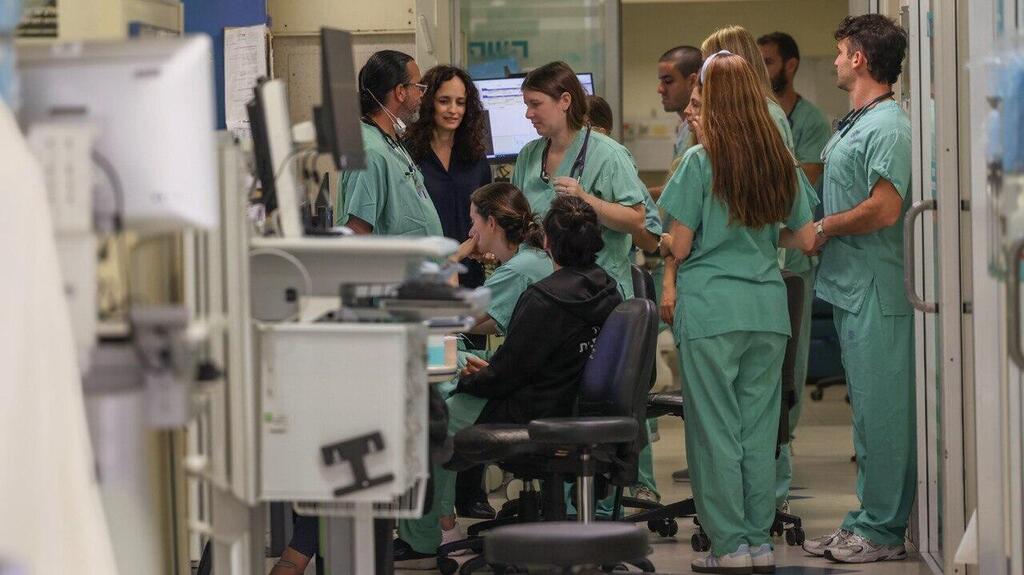
Sourasky Medical Center in Tel Aviv once again tops the preferences of interns who graduated from recognized foreign institutions
(Photo: Jenny Yerushalmi)
Among graduates of non-recognized foreign institutions, under the Yatziv reform, Soroka in Beersheba is the top choice for internship placement. This highlights that graduates from unapproved overseas medical schools are largely directed toward hospitals in peripheral regions.
A total of 422 interns were placed in the lottery, including 278 graduates of recognized institutions and 144 graduates of non-recognized ones. This marks a reversal of previous years, when the number of graduates from non-recognized institutions was higher.
Sourasky also maintained its first-place ranking among graduates of recognized institutions, with 45 interns selecting it as their first choice. Beilinson ranked second with 28 interns, maintaining its position. Sheba Medical Center ranked third, chosen as first preference by 24 interns. This represents an improvement from last year, when Sheba ranked sixth in the June 2025 lottery.
Emek Medical Center, which ranked third in June 2025 among graduates of recognized foreign institutions, fell to seventh place in the current results. Hadassah Medical Center also declined, dropping from fifth last year to ninth place now.
Among graduates of non-recognized institutions, Soroka once again holds first place. Emek Medical Center, part of Clalit Health Services, remained in second place as in the June 2025 lottery. Rambam Health Care Campus and Carmel Medical Center in Haifa ranked third and fourth respectively.
The Ministry of Health noted that alongside implementation of the Yatziv reform, it continues to expand recognized medical training tracks. As part of this effort, the number of medical students in Israel has grown from about 900 to more than 1,400 in recent years, with a target of 1,700 students per year as part of strengthening the national healthcare workforce.
According to the data, 73 percent of graduates from recognized institutions were placed in their first choice, 13 percent in their second choice and 97 percent received one of their top five preferences. Among graduates of non-recognized institutions, 58 percent were placed in their first choice, 17 percent in their second and 94 percent received one of their top five preferences. These figures indicate a stable and balanced placement process alongside structural changes.