

In 1947, the Baltic Sea froze over. An exceptionally harsh winter covered the entire sea with ice, from Poland and Germany in the south to Finland and Sweden in the north. It was the last time this happened, and there is a good chance it will not happen again in the foreseeable future.
Over the past century or so, the Baltic Sea’s maximum winter ice cover has shrunk by about 30 percent. In 2020, ice cover reached its lowest level since measurements began in the 19th century: only 37,000 square kilometers out of 420,000 — less than one-tenth of the sea’s area — were covered in ice.
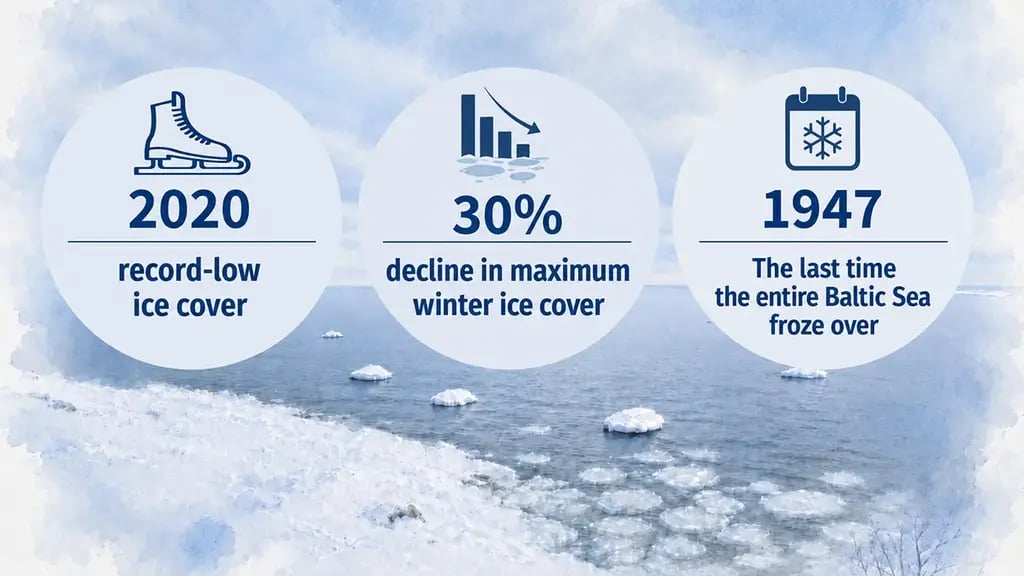
Severe winters, which produce unusually extensive ice cover, have also become much less frequent, and none have occurred in the past 20 years. The ice season itself is growing shorter: ice now forms later in the year and melts earlier than it did in the previous century. The underlying cause, of course, is the rising concentration of greenhouse gases in the atmosphere.
At first glance, this may not seem like a problem. A cold, ice-covered region is becoming somewhat less icy — why should that matter? The answer, as with many effects of the climate crisis, is that both the ecosystem and human activity in the region have developed around a particular set of conditions. When those conditions change, the consequences can be harmful. Shrinking ice cover, for example, affects ringed seals (Pusa hispida), which depend on sea ice for reproduction. Females give birth in the spring in dens they dig into the ice. If the ice melts too early, the pups may not survive.
A natural laboratory for climate change
The climate crisis is being felt everywhere on Earth, but its effects are especially clear in the Baltic Sea. Its waters are warming faster than the world’s oceans, and faster than other seas such as the Mediterranean and the Red Sea. Combined with decades of long-term monitoring, this rapid warming has turned the Baltic Sea into a kind of natural laboratory, one that helps researchers understand what may lie ahead for marine and coastal environments around the world.
Like the Mediterranean Sea, the Baltic Sea is almost entirely surrounded by land. It is connected to the Atlantic Ocean through several narrow passages known as the Danish straits, which run between mainland Denmark, the Danish islands and Sweden. Along its shores lie Denmark, Sweden, Germany, Poland, Lithuania, Latvia, Russia, Estonia and Finland.
The Baltic Sea is home to many fish species, including commercially important species such as cod, Atlantic salmon and Atlantic herring. Because of the sea’s low salinity, freshwater fish such as pike are also found along the coast. Several species of seals live there as well, along with the harbor porpoise, a small marine mammal closely related to dolphins. All of these species are threatened by the climate crisis, and some face additional pressures, including overfishing.
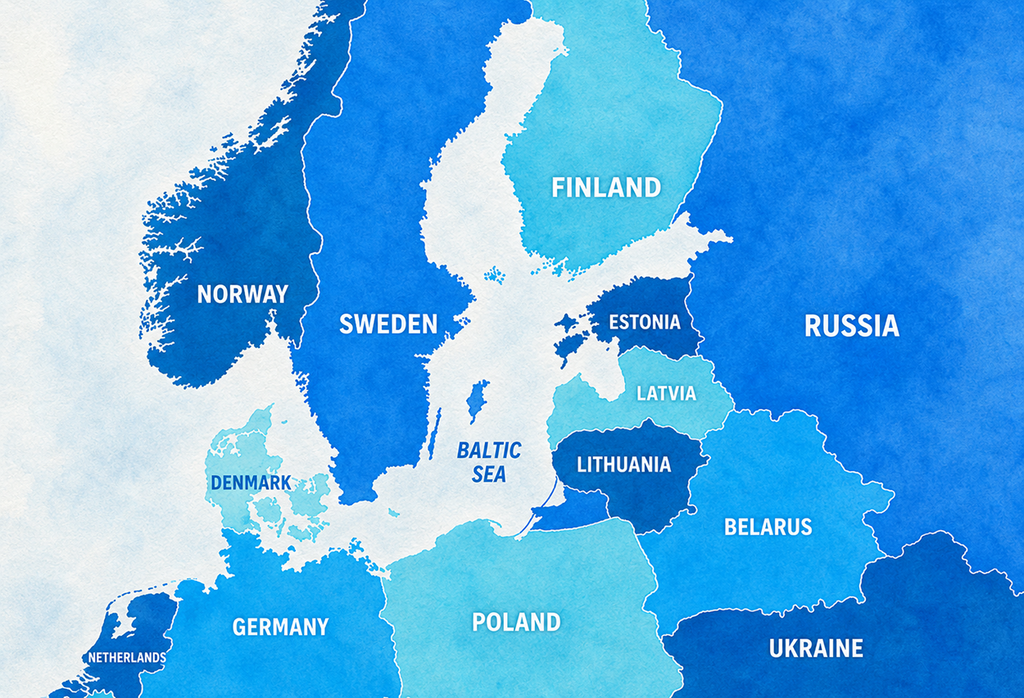
The Baltic Sea is almost entirely surrounded by land and connected to the Atlantic Ocean by a series of narrow passages known as the Danish straits. Map of the Baltic Sea
(Photo: Shutterstock, PorcupenWorks)
The Baltic Sea is also one of the busiest shipping regions in the world. Thousands of vessels sail through it each year, carrying goods between countries. At first, it might seem that a warmer sea — especially one with less winter ice — would make shipping easier. In practice, however, milder winters can be more dangerous than severe ones. Fluctuations between cold spells and warmer days can break the ice into floating pieces whose paths are difficult to predict.
The Baltic Sea region is also a major tourist destination, and its tourism industry employs hundreds of thousands of people. Coastal communities also earn income from fishing and, to a lesser extent, from aquaculture, including salmon farming in sea cages.
Since the 1990s, a new industry has developed in the region: offshore wind power. Wind turbines installed in the Baltic Sea generate electricity, and their role is expected to grow substantially in the coming decades. In 2021, offshore wind capacity in the region stood at two gigawatts. Plans call for increasing it to 22.5 gigawatts by 2030 and nearly 47 gigawatts by 2050.
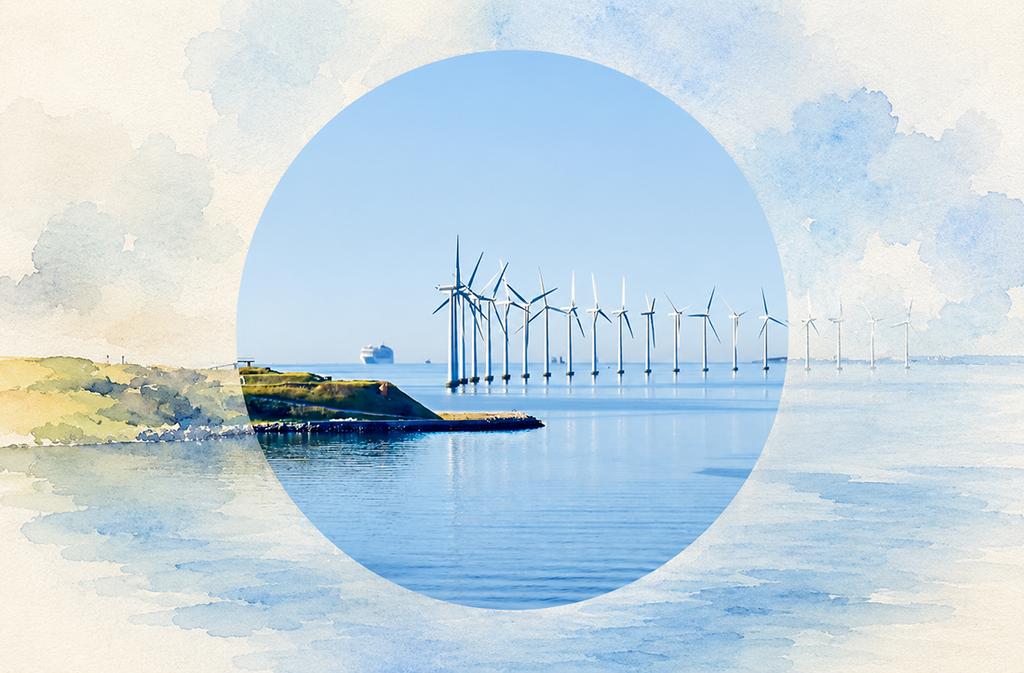
In the 1990s, offshore wind power became a new industry in the Baltic Sea. Turbines near Copenhagen, Denmark
(Photo: Shutterstock, balipadma)
From a freshwater lake to a somewhat salty sea
The Baltic Sea is relatively young. Until about 11,600 years ago, it was a closed freshwater lake. With the end of the last ice age, melting glaciers and rising sea levels opened the Baltic to the North Sea and, through it, to the Atlantic Ocean. Today, water flows in both directions: from the Baltic Sea out to the ocean, and from the ocean into the Baltic. But the stronger flow is outward, because the Baltic receives large amounts of freshwater from the many rivers that empty into it. This is the opposite of what happens in the Mediterranean Sea, which loses far more water to evaporation than it receives from rivers and therefore depends on a steady inflow of water from the Atlantic.
As a result, the Baltic Sea receives more freshwater from rivers than saltwater from the ocean, and its salinity is very low. In many areas, its water is considered brackish – saltier than freshwater, but less salty than seawater, like the water found in river estuaries. In the Atlantic Ocean, salt concentrations range from 3.3 to 3.7 percent. In the Baltic Sea, the average is only about 0.7–0.8 percent. In the northernmost part of the sea, between Sweden and Finland and far from the Danish straits, the salt concentration falls below 0.2 percent — not far from freshwater, which is defined as having a salt concentration below 0.05 percent.
A sea of layers
What causes the Baltic Sea to warm faster than many other seas? One factor is its limited exchange with the Atlantic Ocean. Because only relatively small volumes of water enter the Baltic through the Danish straits, heat exchange with the open ocean is restricted. Another contributing factor is the loss of seasonal ice cover, which creates a positive feedback similar to processes observed in polar regions. In winter, parts of the Baltic Sea are covered by ice, which reflects a substantial fraction of incoming solar radiation and therefore helps limit warming. As the region warms and ice cover declines, darker seawater is exposed. This water reflects less sunlight and absorbs more heat, reinforcing further warming.
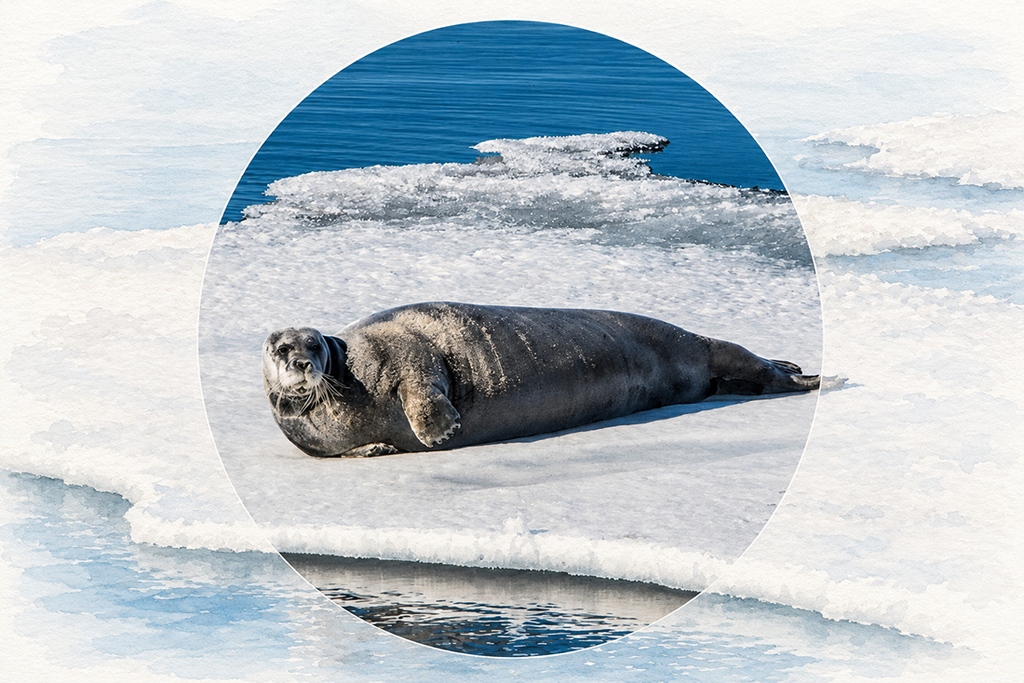
Shrinking ice cover harms ringed seals, which depend on sea ice to reproduce. A ringed seal on an ice floe
(Photo: Shutterstock, Robert Harding Video)
Another factor is related to the Baltic Sea’s low salinity — or, more precisely, to the way salinity changes with depth. Saltwater is denser than freshwater and tends to sink, while freshwater from rivers remains in the sea’s upper layers. This creates a boundary between the two layers, where salinity increases sharply with depth. This boundary is called the halocline. It is not unique to the Baltic Sea, but it is common in systems where seawater mixes with freshwater from rivers — a defining feature of the Baltic. In the Baltic Sea, the halocline lies about 40 to 80 meters below the surface.
A second separation zone, the thermocline, forms only during the summer. It separates the colder water below from the upper layer warmed by the Sun, and is typically found at a depth of about 10 to 20 meters.
Together, the halocline and thermocline limit mixing between the sea’s water layers, reducing the cooling of the upper layer. During warm periods, heat can therefore become trapped near the surface, causing surface temperatures to rise sharply. During heat waves recorded in recent years, temperatures at the surface of the Baltic Sea have reached up to ten degrees above the seasonal average.
When the sea dies
These separation zones not only influence the warming of the Baltic Sea; they are also being altered by it. As summers become warmer, the thermal separation between the upper warm layer and the colder deeper water becomes stronger and persists for longer. In 1991, this thermal stratification lasted for about three months of the year. Today, it can last for around five months.
The halocline – the boundary between water layers with different salinity levels – is also affected by climate change. In the northern Baltic Sea, one consequence is increased precipitation, which causes rivers to carry more freshwater into the sea than they did in the past. Melting glaciers contribute to the same trend. This greater freshwater input increases the contrast between the sea’s upper and lower layers.
The effects of these changes extend beyond the warming of the upper water layer. They also contribute to one of the most damaging phenomena in marine environments: dead zones.
In dead zones, oxygen levels in the water are so low that most marine animals cannot survive. Hundreds of these zones exist around the world, especially along the east coast of the United States, in the Gulf of Mexico, off the coasts of Japan and Korea, and along the Baltic Sea coast. The largest dead zone is in the Gulf of Oman.
Dead zones form through a process known as eutrophication: the buildup of nutrients in the water, mainly phosphates and nitrates, that are carried from land by rivers. Cyanobacteria feed on these nutrients and multiply rapidly, producing what is commonly known as an algal bloom. When the cyanobacteria die, they sink through the water column, where other microscopic organisms decompose them. As these microorganisms multiply, they consume much of the dissolved oxygen in the water.
At this point, a vicious cycle can begin. Low oxygen levels alter the chemistry of the seabed, causing phosphates and other substances to be released from seafloor sediments. These nutrients can then return to the upper water layers and fuel additional algal blooms, further worsening oxygen depletion.
Eutrophication can occur naturally, for example when floods wash nutrient-rich soil into the sea. Today, however, most cases are driven by human activity. Fertilizers from agricultural fields, manure from livestock and industrial waste all contain phosphates and nitrates. When these substances reach the sea, they can trigger algal blooms. This is why dead zones tend to form near coasts, where most nutrient input enters the water.
Over the past 30 years, stricter controls on fertilizer use have reduced the flow of nutrients into the Baltic Sea, and in some coastal areas the dead zones have shrunk. Nevertheless, as of 2016, the total area of dead zones in the Baltic Sea was still estimated at about 70,000 square kilometers — roughly 18 percent of the sea’s total area.
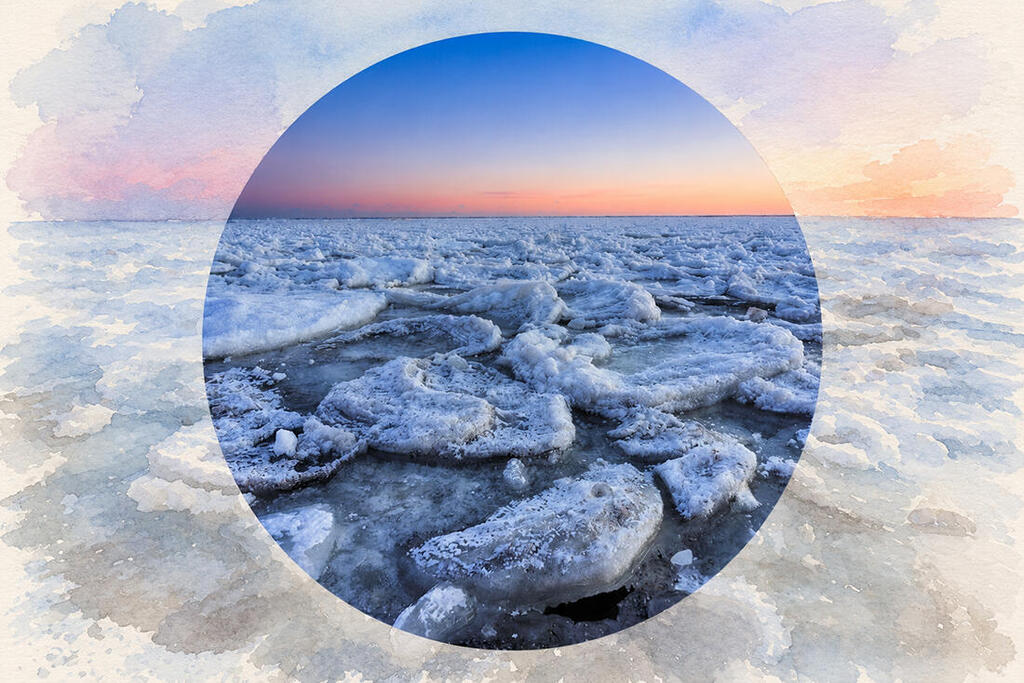
The separation zones both influence the warming of the Baltic Sea and are altered by it. Ice on the Baltic Sea coast in Poland
(Photo: Patryk Kosmider, Shutterstock)
Dead zones also affect fish populations in the Baltic Sea. Cod, for example — one of the sea’s most commercially important fish species — have declined sharply as a result of both overfishing and environmental change. Dead zones now cover areas that cod once used for reproduction, while warming waters have altered the behavior and distribution of fish species that cod prey on.
Sea waves, heat waves
The climate crisis is worsening this phenomenon in several ways. First, as discussed above, it strengthens the separation between the sea’s layers, limiting the mixing of oxygen-rich surface water with oxygen-poor water in the deeper layers. Warmer water also holds less dissolved oxygen, meaning that oxygen levels are lower even before cyanobacteria multiply and consume much of what remains. Higher temperatures also promote the growth of various bacteria, including those involved in algal decomposition, accelerating oxygen consumption and further contributing to oxygen depletion.
The climate crisis is also making marine heat waves more frequent and more intense. Marine heat waves are periods of unusually high seawater temperatures – at or above the 90th percentile of temperatures recorded for that season in the past – that last for at least five consecutive days. As the planet warms, seas and oceans warm as well, but that is only part of the process. In summer, heat waves in the Baltic Sea are often associated with high-pressure systems over the region, which bring clear skies, strong solar radiation and, just as importantly, very weak winds. Without wind, there is less mixing between the sun-warmed surface layer and the deeper, cooler water below, allowing sea-surface temperatures to rise even further.
Marine heat waves can also occur in winter. These events are often driven by strong westerly winds that carry warmer, more humid air from the Atlantic Ocean into the Baltic Sea region, preventing the water from cooling as it normally would. Data from 1980 to 2016 show that Baltic Sea heat waves – in both summer and winter – became more frequent, lasted longer and covered larger areas.
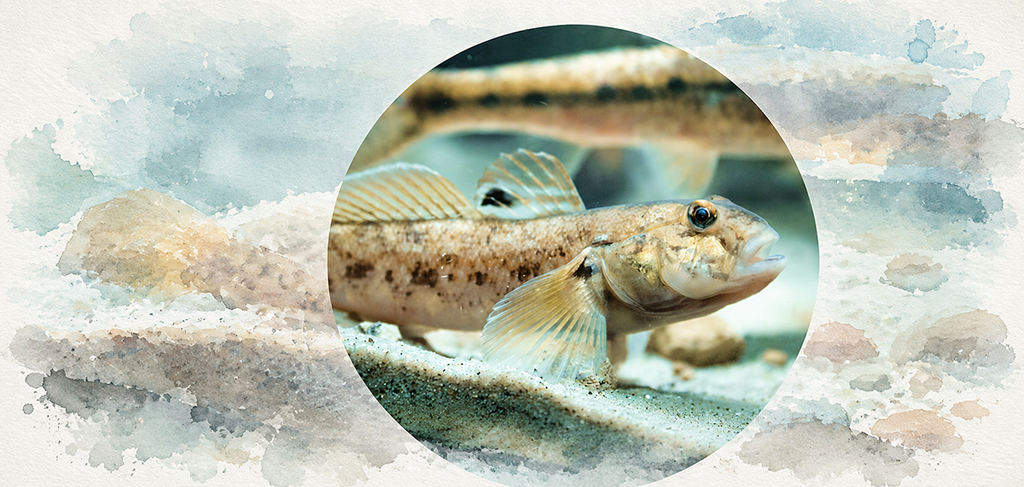
Warming encourages the spread of invasive species from warmer southern waters, such as the round goby
(Photo: Shutterstock, vadviz.studio)
Heat waves worsen dead zones and affect the ecosystem in other ways as well. Brown algae such as Fucus and seagrasses such as Zostera are sensitive to heat, and heat waves can impair their growth. This, in turn, reduces habitat quality for fish and other marine organisms. At the same time, warmer conditions encourage the spread of invasive species from warmer southern waters, such as the round goby (Neogobius melanostomus), which originates in the Black Sea and the Caspian Sea. More than 130 invasive species have already been recorded in the Baltic Sea, rapidly altering its ecosystem.
Preparing for a changing sea
In recent years, countries in the Baltic Sea region, like countries elsewhere in the world, have invested substantial resources in efforts to mitigate the climate crisis and reduce its impacts. The governments of the countries surrounding the sea, together with the European Union and international organizations, are funding programs to promote renewable energy, reduce pollution entering the sea and address other environmental pressures.
The transition to renewable energy also includes the offshore wind turbines being built in the Baltic Sea itself. The electricity they generate is expected to replace some of the power currently produced from fossil fuels — mainly oil, as well as coal, which remains a major source of energy in Poland. Plans also include electrifying large parts of transportation and heating, which today still rely heavily on fuel combustion, and using electricity from offshore wind farms to produce hydrogen and synthetic fuels, or e-fuels, that could be used to power ships.
Alongside efforts to reduce greenhouse gas emissions, the countries bordering the Baltic Sea are also preparing for climate impacts that now appear unavoidable. One of the most significant is sea-level rise. The expected change varies greatly from one part of the sea to another. In the north, the land in Finland and Sweden is still rising as a result of post-glacial rebound – a process that began at the end of the last ice age, when retreating glaciers removed the enormous weight that had pressed down on the land. The rate of uplift varies by location, but it is fastest in the Gulf of Bothnia, the northernmost part of the Baltic Sea, where the land is rising by about eight to nine millimeters a year. As a result, sea level relative to the land is rising much more slowly there, and in some places is even falling.
In the southern part of the Baltic Sea, however, the land is not rising in the same way, making sea-level rise a much greater concern. It increases coastal erosion and greatly raises the risk of flooding. Wetlands and open areas near the sea may become permanently submerged, leading to the loss of important habitats. Grey seals (Halichoerus grypus) and harbor seals (Phoca vitulina) are especially vulnerable, because rising seas may flood the beaches where they breed. Low-lying populated areas, including parts of Gdańsk in Poland and the nearby Hel Peninsula, are also at risk of flooding.
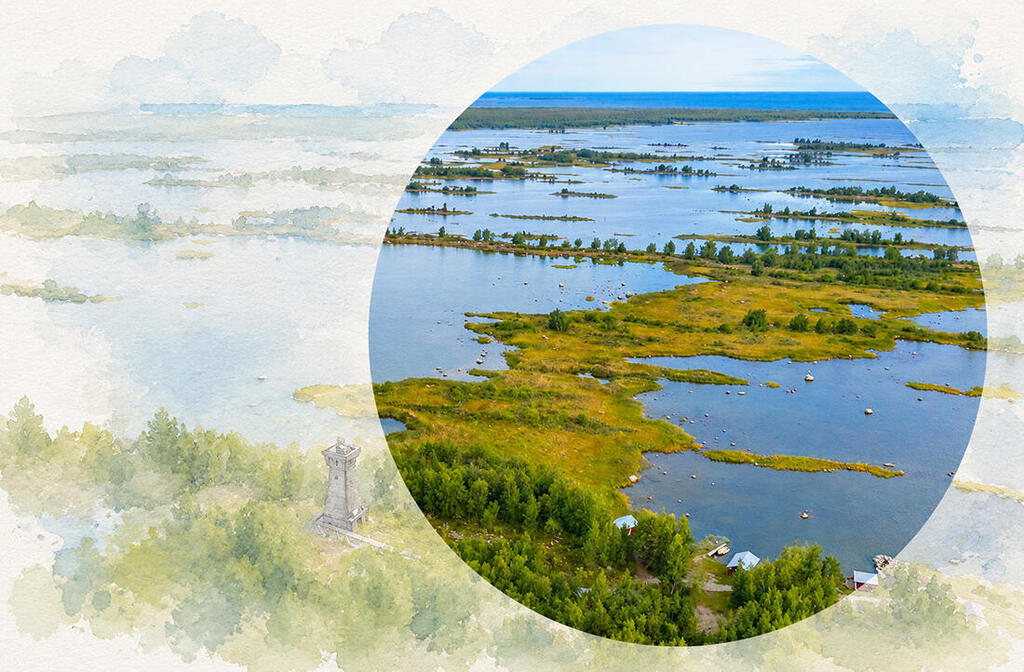
The land in Finland and Sweden is still rising steadily through post-glacial rebound, a process triggered by the retreat of the glaciers at the end of the last ice age. The Kvarken Archipelago in Finland, which is rising at a rate of about nine millimeters a year
(Photo: Shutterstock, trabantos)
In response, several countries along the Baltic Sea coast are planning flood barriers and other coastal defenses, and are revising development plans along the coast according to projections of future sea-level rise. Time will tell whether these measures will be enough to prevent the expected damage.
The Baltic as a time machine
In 2018, researchers published an article titled “The Baltic Sea as a Time Machine for the Future Coastal Ocean.” The authors, from countries around the Baltic Sea, argued that environmental pressures on its marine ecosystem – including warming, acidification, nutrient pollution and oxygen depletion – are unusually intense compared with those affecting other seas and coastal ocean regions. Together with the extensive research conducted in the Baltic Sea and more than a century of continuous data collection, this makes the Baltic a valuable case study. It can help researchers understand how other seas may change in the future: how dead zones may develop, how warming can increase acidification, and more. It also makes it possible to evaluate the effects of measures designed to reduce these pressures.
The countries surrounding the Baltic Sea are industrialized and relatively wealthy, which meant that the sea began suffering from pollution earlier than many other bodies of water. At the same time, these countries were also among the first to take measures to limit pollution and restore the ecosystem, beginning in the 1970s. Controls on overfishing helped some species recover, while restrictions on fertilizer use and waste discharge reduced nutrient pollution.
The Baltic Sea region also demonstrates the importance of international cooperation and binding agreements. The Helsinki Convention on the Protection of the Marine Environment of the Baltic Sea Area, signed in 1974 and updated in 1992, was the first agreement of its kind and has served as a model for other regions. All the countries surrounding the Baltic Sea are parties to the convention, which requires them, among other things, to address sources of pollution. The convention also led to the establishment of HELCOM, an intergovernmental body that monitors national policies affecting the Baltic Sea environment and carries out environmental conservation projects. Within just a few years of the convention’s signing, a significant reduction in pollutants entering the sea was already evident.
Studies of the Baltic Sea suggest that investing in ecosystem restoration can also be economically beneficial. Reducing the flow of nutrients into the sea, for example, requires investment, but it can also reduce algal blooms and dead zones, benefiting fisheries and tourism. In some cases, these benefits may outweigh the initial costs.
“Although, ideally, ecosystem deterioration should be prevented from the onset by suitable management,” the researchers wrote in the 2018 article. “One lesson from the Baltic Sea for other regional seas facing severe environmental perturbations (for example, the Black Sea) and for many coastal areas for which perturbations are mounting is that science-based management was able to reverse the decline of a severely degraded system.”
This article was produced as part of the “Eco Bridge Poland–Israel” educational delegation, a collaborative scientific and environmental project organized by Polish Institute Tel Aviv. Representatives from the Davidson Institute of Science Education and the Clore Garden of Science took part in the delegation. Since 2000, Polish Institute Tel Aviv has worked to promote contemporary Polish culture, literature, heritage and creativity in Israel, as part of the Polish Ministry of Foreign Affairs’ network of institutions.