

A second Israeli man suspected of having Ebola was hospitalized at Sheba Medical Center near Tel Aviv, two days after another suspected case was reported at Rambam Health Care Campus in Haifa.
The Health Ministry said the man had returned two days earlier from the Democratic Republic of Congo and sought medical treatment after developing fever, headache and diarrhea. Officials said the case remains only suspected, with tests underway and results expected in the coming days.
Disinfection procedures at Rambam Health Care Campus after the transfer of a patient suspected of having Ebola


The man is being treated in isolation under protocols for high-risk infectious diseases and was transferred to Sheba, one of the few hospitals designated to handle such suspected cases.
On Friday, the Health Ministry reported the first suspected case, involving an Israeli who returned from Congo, developed fever and headache and was treated in full isolation at Rambam. Test results in that case have not yet been received.
The ministry stressed that no confirmed Ebola cases have been diagnosed in Israel. Separate epidemiological investigations are underway to identify relevant contacts and examine possible links between the two suspected cases. Anyone deemed relevant will be contacted directly by the ministry, officials said.
The Interior Ministry has temporarily barred entry to foreign nationals arriving from Congo, Uganda and South Sudan.
Ebola is a severe viral disease that can be fatal. It spreads through direct contact with bodily fluids of infected people or the deceased, including blood, vomit and semen, or through contaminated objects. It is not airborne, and people exposed to the virus are not considered contagious unless they develop symptoms.
Prof. Tal Brosh, head of the infectious diseases unit at Assuta Ashdod Public Hospital and coordinator of the Health Ministry’s epidemic response team, said the virus likely originates in animals, probably bats, and can cause “fever, flu-like pain, diarrhea and vomiting, and in some patients bleeding and multi-organ failure.”
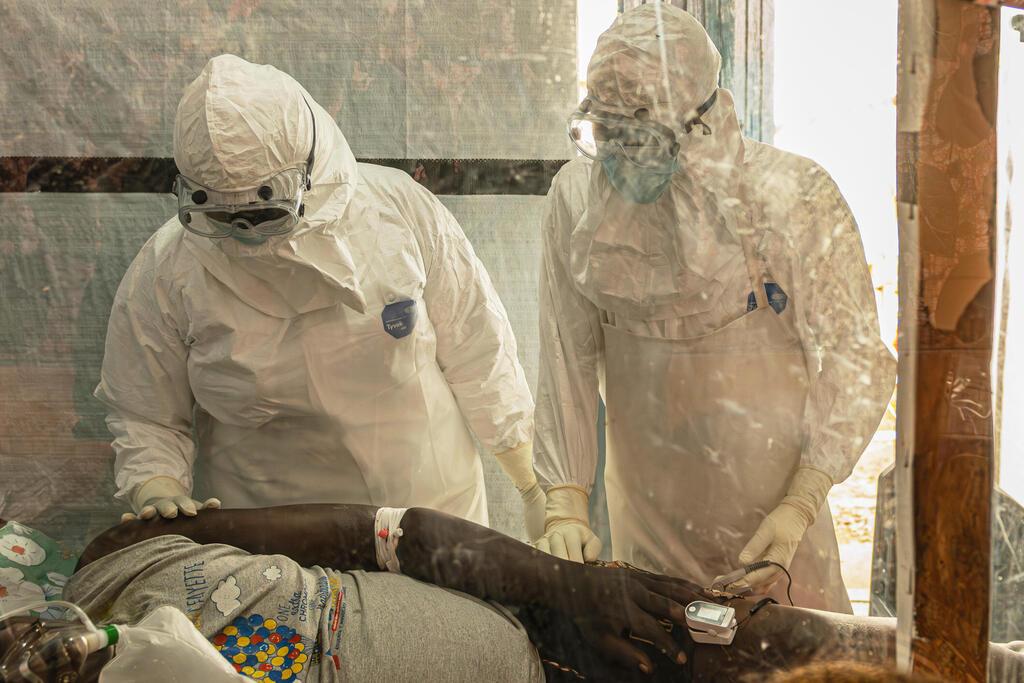
Medical personnel treat an Ebola patient in a dedicated treatment tent established in Ituri province in the Democratic Republic of Congo
(Photo: AP Photo / Moses Sawasawa)
Brosh said the current outbreak in eastern Congo is not under control because authorities in the region have limited capacity. “The forecasts for controlling the event are currently grim,” he told ynet.
Still, Brosh said the risk to Israelis traveling to Africa remains extremely low because Ebola requires close, direct contact with a sick person and does not spread through the air like measles or COVID-19.
Because of the seriousness of a potential imported Ebola case, Israel is applying strict precautions. Brosh said anyone who was in a country with Ebola cases in the past 21 days — currently Congo and Uganda — and develops any fever should remain isolated at home and notify the Health Ministry. Suspected patients will be evacuated by a protected Magen David Adom team to a hospital for testing.
“There is no concern about an Ebola epidemic outbreak in Israel, only the arrival of isolated cases from Africa and then potential limited transmission,” he said. “Only someone who was in Congo or Uganda is at any risk. There is no risk to Israelis in Israel of contracting Ebola at this stage.”
The current outbreak began in May 2026 in Ituri, northeastern Congo. It is Congo’s 17th outbreak since the virus was first identified in 1976 and involves the Bundibugyo strain, a rarer type for which there is no approved vaccine or dedicated treatment. Congo’s Health Ministry has reported 956 confirmed cases and 247 deaths, mostly in Ituri. Cases have also been confirmed in Uganda.
The Health Ministry urged the public to avoid nonessential travel to affected areas, especially Congo and Uganda. Travelers returning from either country who develop fever or unusual symptoms within 21 days are asked to remain home, avoid contact with others and call the ministry hotline at *5400.