

She asked us to call her "T.," and it quickly becomes clear why. On Oct. 7, a Qassam rocket struck her home in Sderot. When she fled into the street, a terrorist cell appeared in front of her and opened fire. T. was not physically injured, but she has since been dealing with symptoms of PTSD, including panic attacks, episodes of freezing and difficulty leaving the house.
"On the outside, I project strength. I'm the person people come to talk to and unload on, the one who holds everything together. But inside, I felt so lonely and didn't want to expose myself or show weakness, until this project came along and allowed me to process the experience with people like me while remaining anonymous."
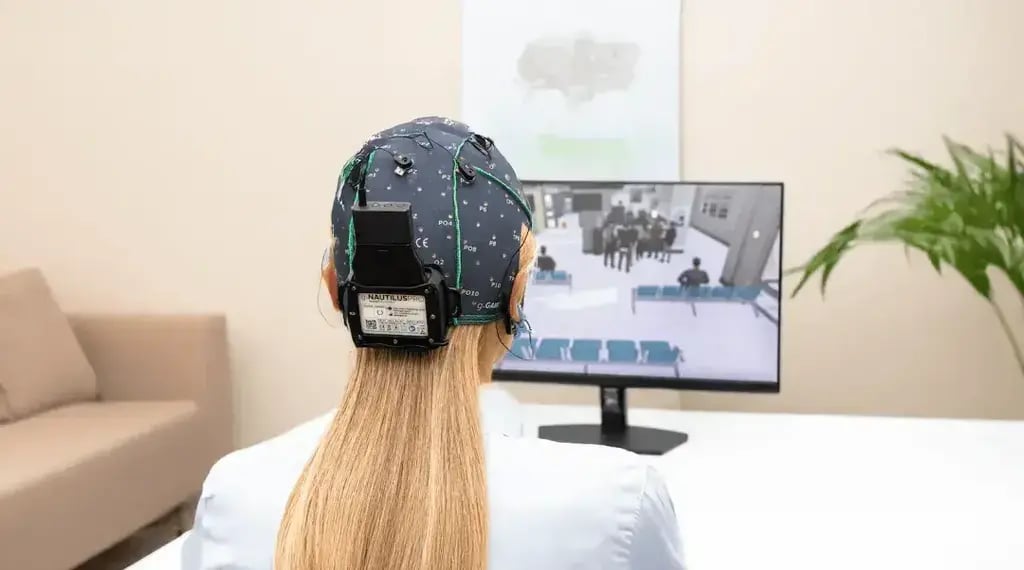
The project she is referring to is a platform based on virtual reality and artificial intelligence that allows people suffering from anxiety to participate remotely in group sessions.
The therapy where no one knows who you are
Participants in the weekly sessions, which are led by a professional, choose an avatar to represent them, allowing them to remain anonymous. "'T.' is the name I gave my avatar," explains the 34-year-old, who is coping with post-traumatic symptoms. The other eight participants in her group were all students, each of whom chose to remain anonymous for their own reasons.
"You enter a virtual room that feels so real. There's a facilitator waiting for you there who talks to you as an equal."
The facilitator knows the participants' real identities, but the other members of the group see only their avatars' names.
The facilitator helps participants process their experiences and sometimes takes them on tours through different virtual worlds, such as a forest, a space station or a campfire.
"Every time it's something different, depending on the vibe," T. says. "It's also very convenient. You don't have to get ready or anything. You sit at home in your pajamas, put on the virtual reality glasses and escape somewhere for about an hour."
Despite the lack of physical interaction and human body language, T. makes clear that the sessions do not feel detached. In her view, the format sharpens the senses and teaches participants to notice subtleties such as a change in someone's behavior or a silence indicating that one of the participants is in distress.
"One day, one of the participants was silent throughout the entire session. I sensed that she was in distress and just threw out, 'So, what's going on with you?' She started crying in front of the whole group," she says.
The project by Israeli startup Neao, in partnership with the Sderot Municipality, Sheba Medical Center and National Insurance funds, is part of an initiative to integrate technology into the mental health system. The initiative is promoted by ClearSky, founded by Prof. Ehud Davidson, Adi Yoffe and Ami Ben-Ayon.
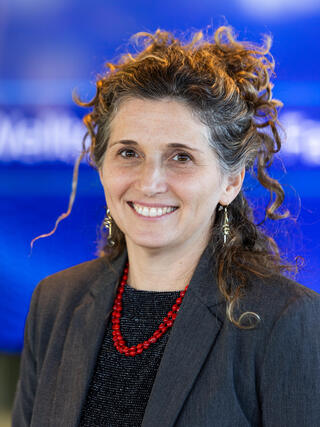 Yael Aberman, CEO of ClearSkyPhoto: Dor Artzi
Yael Aberman, CEO of ClearSky, explains that as the mental health treatment crisis has deepened with the continuation of the war, the organization's goal is to connect the growing need with the advanced technologies being developed at the same time.
Alongside Neao, other virtual communities are operating, including "Dugri" and "Toko." What they have in common are human sessions supervised and guided by professionals, along with a bot that accompanies and analyzes the process.
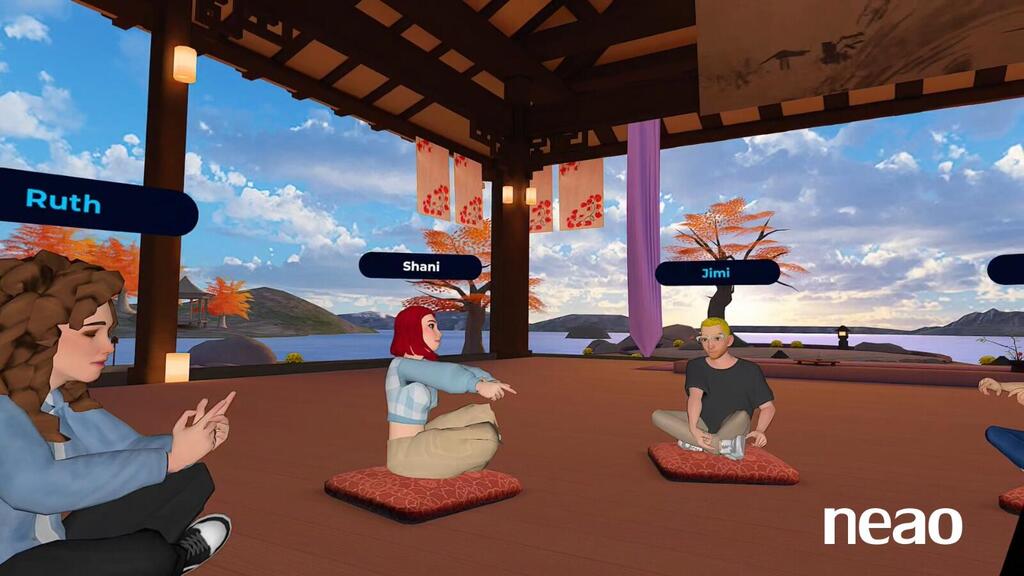
Everyone has their own avatar
(Photo: Screenshot from the treatment)
"It knows how to help us ask questions and also raise a red flag when the intervention of a professional is needed. The bot is a kind of facilitator, but the human connection takes place among us, the human beings," Aberman says.
Aberman explains that the initiative is particularly suited to the wives of reservists who are raising their children alone and have difficulty leaving home to attend in-person sessions. Connecting from home through VR glasses allows them to establish a supportive human connection with women in similar circumstances.
ClearSky is a public-benefit company whose main activities include connecting technology companies with needs on the ground, streamlining government regulation and raising funds. Its partners include Google, Teva, National Insurance funds, the Rehabilitation Department, the Directorate of Defense Research and Development, the Health Ministry, health maintenance organizations, hospitals and others.
Aberman believes that just as Israel turned major challenges such as water and cybersecurity into areas of technological strength, it should now do the same in mental health. Given the growing needs and waiting lists, she says, only a combination of technological innovation will make it possible to address the scale of the crisis.
From VR to AI: Technology enters mental health care
Among the technologies promoted by ClearSky is PRISM, developed by GrayMatters Health, a system for treating post-traumatic stress through a brain-computer interface, AI and neurofeedback.
The treatment allows patients to regulate brain activity in response to stress, without medication and without having to recreate the traumatic event. The device translates brain waves and the state of the amygdala, which is responsible for processing fear and anxiety, into a video. Over the course of 15 sessions, patients receive tools to help regulate and calm the amygdala and help the brain move out of emergency mode.
Aberman emphasizes that the technology has received FDA approval and is currently being implemented at 16 resilience and treatment centers in northern and southern Israel, which will allow about 2,000 people to receive treatment that could improve their lives.
Like the virtual reality sessions, this treatment is supervised by a professional. At the same time, there are technologies in which AI tools are given greater freedom to act, raising ethical and professional questions. One is a technology called Behavideance, which can identify depression and anxiety through monitoring a person's cellphone.
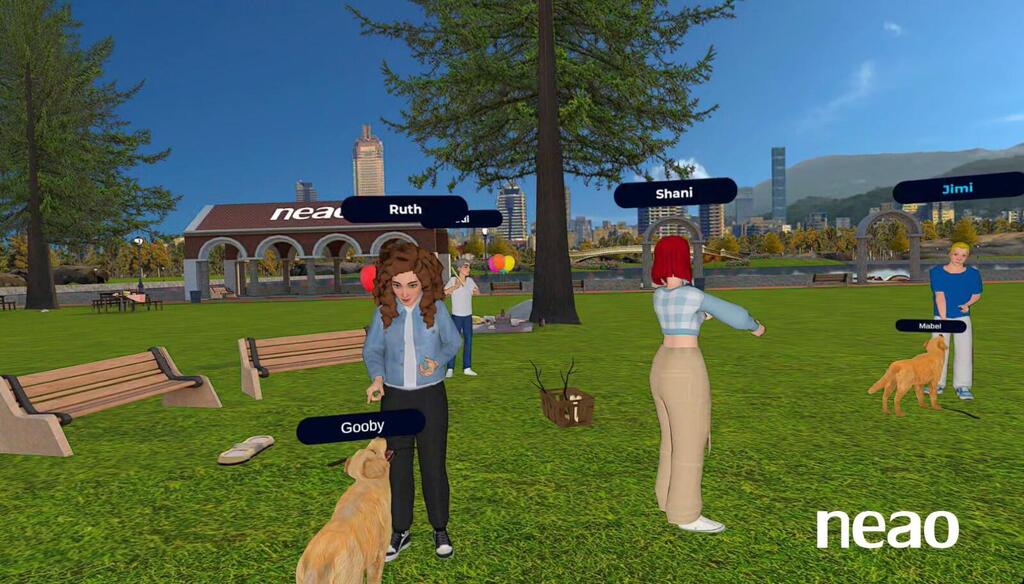
The sessions are supervised and guided by professionals
(Photo: Screenshot from the treatment)
In mild cases, a chatbot presents a series of questions designed to promote relief and well-being. In cases of distress, it immediately refers the person to a health maintenance organization's professional through an expedited pathway. The technology is currently being piloted by one of the health maintenance organizations.
Aberman explains that today, of 10 patients who see a psychiatrist, only two or three actually need the psychiatrist's intervention.
"The problem is that we don't know which ones they are. In other words, the psychiatrist has to see all 10. When there are long waiting lists, that's simply neither efficient nor smart."
When the machine enters the therapy room
Prof. Yair Bar-Haim, head of the National Center for Trauma and Resilience at Tel Aviv University, is skeptical about monitoring patients through their phones. He warns about violations of privacy and the possibility that a patient's consent could be given out of distress.
Prof. Bar-Haim questions the impact of interaction between the human mind and a machine, while noting that this does not contradict the fact that advanced AI models can indeed successfully diagnose mental disorders. Studies have even shown that in simulated conversations, AI can be perceived as more sensitive, gentle and empathetic than a human being.
However, he says, once patients know they are interacting with AI, they often become wary and refuse treatment.
Prof. Bar-Haim notes that treatment and human relationships rely on "empathic failures."
"The people closest to you aren't available 24/7. When they're unavailable to you during times of distress and later apologize for it or manage to repair those empathic failures in some other way, it creates psychological development. Maybe advanced AI models will be able to fake that too — not always respond, not always be empathetic. It could happen. But that's not what's being promoted now."
Aberman responds to the criticism by saying that a human element is always maintained in the process. The goal of the technology, she says, is not to replace the human element but to shorten the bottlenecks that currently exist.
"Today, because of the waiting times, there's an incredible deterioration. This is actually a problem all over the world, not just in Israel, except that everything is more extreme here. Ideally, thanks to technology, in 10 years there won't be any waiting at all because we'll know how to identify the problem better and we'll be better able to match effective solutions with the help of technology."
One of ClearSky's projects, incidentally, helps therapists write summaries of their sessions.
"The therapists' time and resilience are so important. If they can save writing time after every 50-minute treatment, it gives them some breathing room, and we believe that over time this will have an impact."
Back to the virtual sessions. A month after the sessions ended, T. says she learned to see "one-fifth of the glass as full," accept less successful days and allow herself "to escape for an entire day, disconnect the phone and binge-watch something or whatever. It's OK if you didn't manage to do everything today. Wednesday is a new day."