


They left behind comfortable lives and their families to start anew in Israel. Some arrived alone, serving as lone soldiers without the comfort of a mother’s hug or a home-cooked Shabbat meal. When war broke out, they did not hesitate. They went to the front.
Ninety-five soldiers and members of the security forces who fell in the Iron Swords War were new immigrants, or Israelis who had lived abroad and returned to enlist. They made up about 10 to 15 percent of the fallen. Ahead of National Aliyah Day, which is marked Wednesday, a memorial ceremony will be held at Tel Aviv’s Enav Cultural Center to honor their memory.
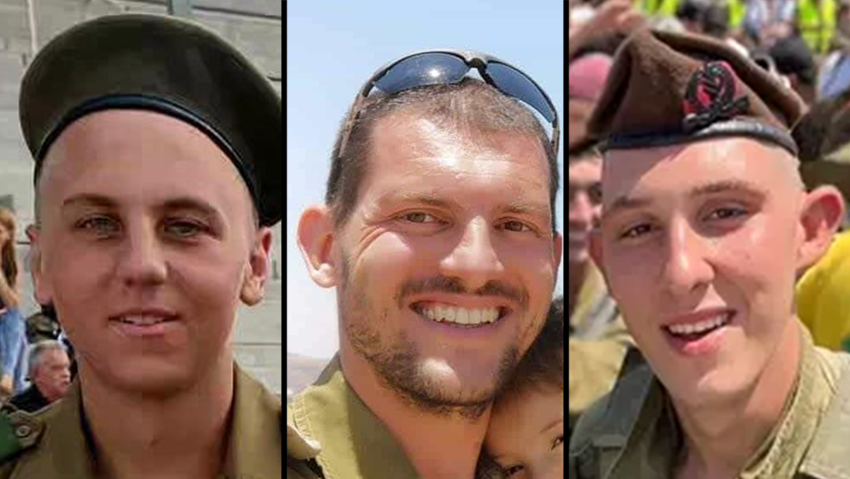
The event, initiated by the “Lobby of the Million” organization and attended by the president and the family of fallen and abducted soldier Omer Neutra, is being held for the second year in a row. Families of the fallen will receive a memorial book collecting their stories and personal remembrance stickers dedicated to each soldier. Here are three of those stories.
The motivator of his team
Sgt. Nathanael Abraham Shalom Young, 20, fell in the first battles of the “Black Shabbat” at the Yiftach base near Kibbutz Zikim. He and several fellow soldiers left the base to rescue a female soldier when they were ambushed by terrorists.
From a young age, Nathanael dreamed of moving to Israel. Born in London to parents Chantelle and Nicky, he was the youngest of five siblings. When his older brother made aliyah and enlisted in the Paratroopers Brigade, Nathanael came to visit during summer vacations and fell in love with the country. At age 11, he told his family he would one day follow in his brother’s footsteps and enlist in the IDF.
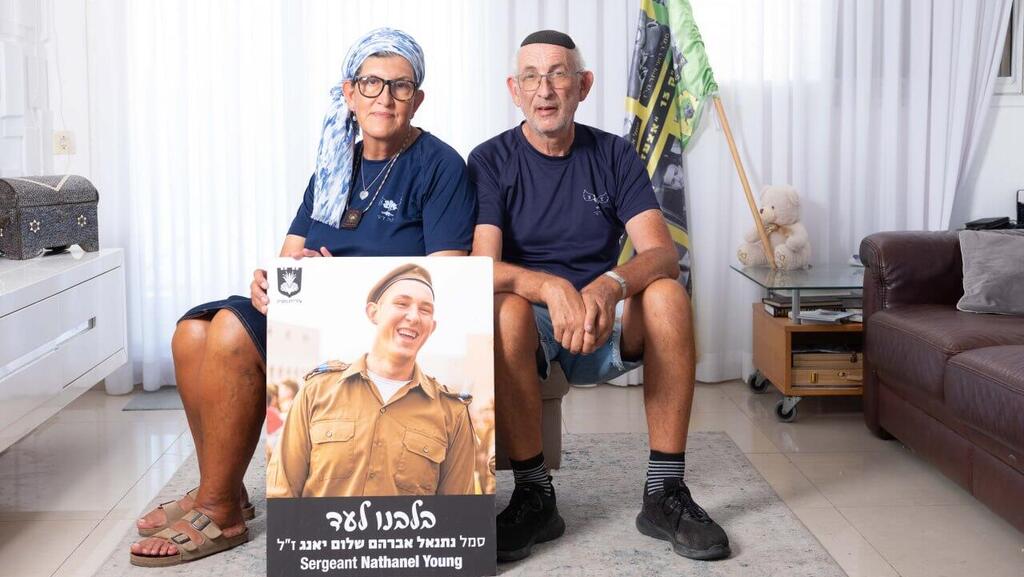
“A good boy,” said Chantelle and Nicky, the parents of the late Nathanael Abraham Shalom Young
(Photo: Yuval Chen)
In October 2021, two years before the war, the aspiring DJ fulfilled his dream. A year later, he joined the Nahal Brigade’s Gideon Battalion. His heroism on October 7 helped delay the terrorists’ advance and saved many soldiers’ lives.
“He was a good boy,” his mother, Chantelle, said. “He became a motivator for his team and always told them, ‘We can do more.’ Many of them told me they stayed in the unit because of him".
"As a Jewish mother, of course I was afraid when the war began, but he always told me not to worry. Now I know that even if I had tried to stop him from enlisting, I couldn’t have. It was his destiny.”
His parents, now living in Israel, said they began considering aliyah after his enlistment. Nicky recalled being in synagogue on Simchat Torah when the attack began. “When I got home, I didn’t know how to tell my wife, but she immediately understood something was wrong,” he said.
Chantelle remembered the thousands who attended the funeral—friends, comrades, and strangers alike. “It was incredible,” she said. Recently, the couple met a young man who told them he plans to name his first son Nathanael, in his memory. “That moved us deeply,” Chantelle said.
“I packed his bag, and he left”
Maj. Yaakov Nadlin, 36, immigrated from Kazakhstan at age 17 through the SELA program. After studying Hebrew at the Nitzana absorption village, he enlisted in the Duchifat Battalion, became an officer, and served as a platoon commander at the Kfir training base.
In 2008, he met his wife, Maayan. The couple had four children. When war broke out, Yaakov was called up for reserve duty in Samaria. On October 13, while responding to reports of stone-throwing near Kedumim, his unit misidentified an IDF vehicle and opened fire. Yaakov was fatally wounded by friendly fire.
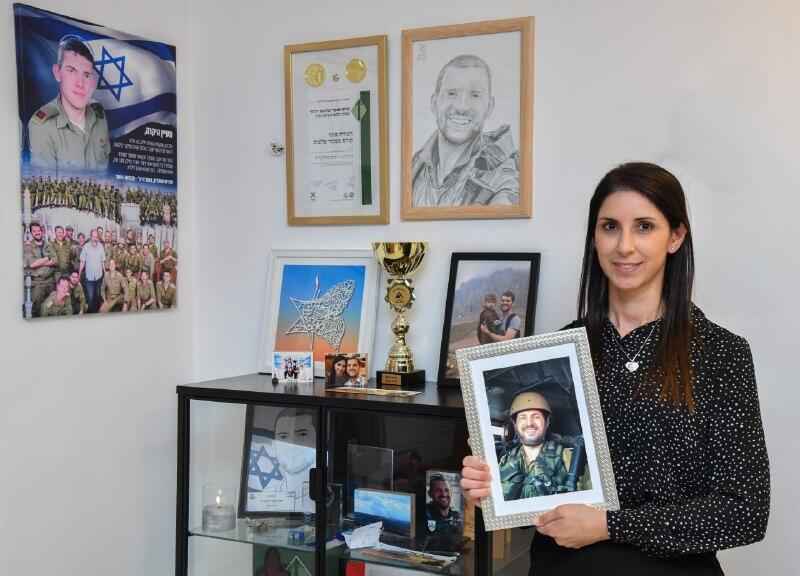
He went out to defend our home,” said Maayan, the wife of the late Yaakov Nadlin
( Photo: Nahum Segal)
Maayan recalled their final moments together on that fateful Saturday. “He was at prayer when his phone kept ringing. I didn’t understand who didn’t know he wouldn’t answer on the holiday. Finally, it was his commander. I went to the synagogue to tell him, and when we returned home, we packed his bag and he left.”
Later that day, she and their children spoke to him by phone before Shabbat. “He told us he had to hang up because there was an incident. But our eight-year-old daughter insisted on calling again to tell him she loved him because she hadn’t said it before. That was the last time we spoke.”
That evening, as the family sat down for Shabbat dinner at her parents’ home, the officers came to the door. “When my nephew opened it, I already knew. The week before I had felt calm, he was in Samaria, after all but that day, I started to worry.”
The officers had found Maayan because Yaakov had written her father’s name as the emergency contact. “They opened a binder, and I saw the words ‘Yaakov Nadlin, killed,’” she said. “I screamed.
"He came to Israel because he was the only Jew in his school. Once he got here, he realized he wanted to protect this country—his home.”
“The light of our home”
Sgt. Alexander (Sasha) Yakiminsky, 19, had a nightly routine with his mother, Olga. Every evening, they would speak for an hour. “He’d tell me about his day, and I’d tell him about mine,” she recalled. “The night before he was murdered in Karmiel, he wrote to me that he was going to sleep early because he had to drive to Karmiel at six in the morning.”
The family immigrated from Ukraine in 2005. Sasha, known for his diligence and love of animals, enlisted in August 2023 and served as a driver in the 188th Armored Brigade. He had taken part in complex missions along the northern border in the early days of the war.
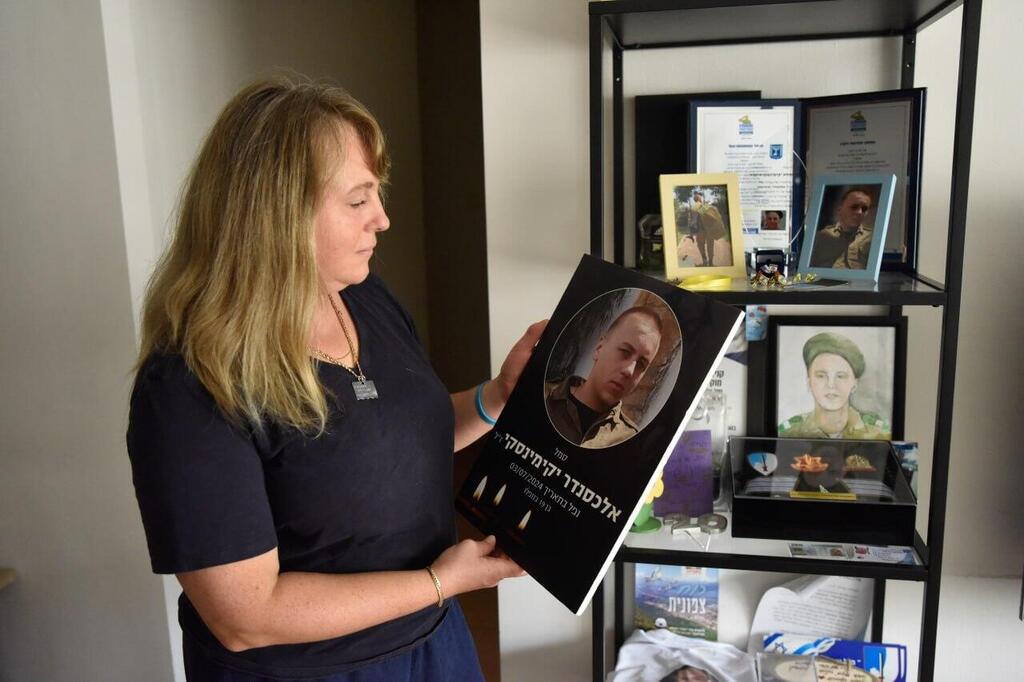
“I called him, and he didn’t answer,” Olga, mother of the late Alexander Yakiminsky
(Photo: Sharon Zur)
On July 3, 2024, while in Karmiel, a terrorist armed with a knife attacked Sasha and another soldier. Though gravely wounded, Sasha managed to shoot and neutralize the terrorist before succumbing to his injuries. He was buried at the Nahariya military cemetery.
That morning, Olga was at work as a nurse when she heard there had been a terror attack in Karmiel. “At first, I wasn’t paying attention, but then his message came to mind,” she said. “I called him, but he didn’t answer. Then I got a message from the Nahariya hospital saying he was in treatment. I knew right away.”
Doctors later told her that he had not survived. “After his death, my husband struggled with guilt over our decision to immigrate,” Olga said. “But I see it differently. It was our shared choice. We lost a wonderful son, the light of our home and now we must find a way to live with that.”
Honoring their legacy
Alex Riff, CEO of the “Lobby of the Million,” said families of immigrant soldiers often find it harder to memorialize their loved ones. “You rarely see a lookout point or sports hall named after an immigrant soldier,” she said. “Sometimes not even a street sticker. That’s why this year, we are producing a remembrance sticker for every immigrant soldier who fell in the war.”