

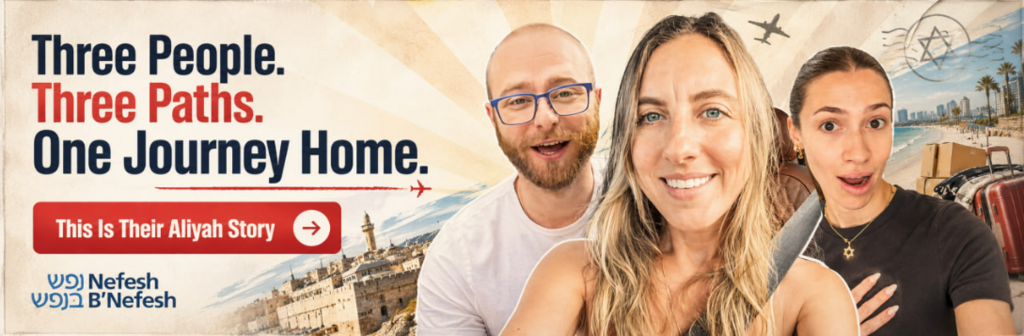
When Arielle, Daniel and Dani began documenting their aliyah journeys, each was confronting a different version of the same question: What happens after you decide to make Israel home? Over the course of the Aliyah Vlog series, the answer unfolded in three very different ways.
All three made aliyah with the help of Nefesh B’Nefesh, in partnership with Israel’s Ministry of Aliyah and Integration, the Jewish Agency for Israel, Keren Kayemeth LeIsrael, and Jewish National Fund-USA.
For Arielle, aliyah meant moving an entire family, unpacking a new home and helping her children begin lives of their own in Israel. For Daniel, it meant creating a future largely from scratch, balancing questions of career, spirituality, family and identity. For Dani, it meant discovering what everyday Israeli life actually feels like after years of imagining it from abroad.
Now, the series reaches its final chapter at a fitting point in the Jewish calendar. All three spend their final vlogs celebrating the High Holidays in Israel, experiencing Rosh Hashanah, Yom Kippur and Sukkot not as visitors looking in from outside, but from within the Israeli lives they have spent the series trying to build.
The holidays do not make their stories suddenly identical. If anything, they reveal just how different those stories have become.
Dani: experiencing a Jewish country from the inside
For Dani, the High Holidays bring some of the clearest reminders yet that she is no longer living in Toronto.
Dani: experiencing a Jewish country from the inside


Yom Kippur in Tel Aviv transforms the city around her. “Yom Kippur in Tel Aviv was absolutely magical,” she says. “It was so quiet in the streets. The only people that were out were people on bikes.” What strikes her is not simply the absence of traffic, but the sense of collective participation. “Everyone was coming together for the same purpose,” she says.
Sukkot offers another contrast. Back in Toronto, Dani says, the holiday was much less visible unless someone belonged to a more observant community. In Israel, it is part of the landscape. “It was really exciting to get to experience Sukkot here for the first time,” she says.
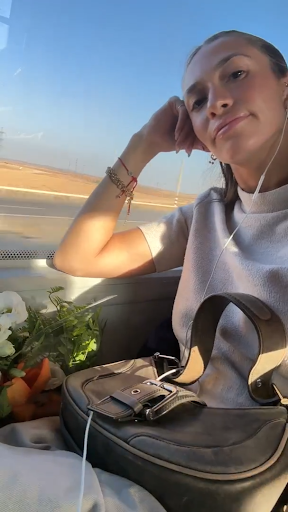
By the end of the holiday season, the experience has become part of what she had hoped aliyah might offer. “The High Holidays in Israel are just so incredibly magical and special,” Dani says. “I’m so happy to have been able to finally be here to experience them for the first time, and I can’t wait for many more years of experiencing these holidays in a Jewish country.”
Her final vlog captures a version of becoming Israeli that is rooted in discovery: familiar traditions suddenly operating on the scale of an entire country.
Daniel: a new year as a moment to decide what comes next
Daniel approaches the same holiday season differently. For him, Rosh Hashanah becomes a chance to consider not only where he now lives, but who he wants to become there.
Daniel: a new year as a moment to decide what comes next
“To me it’s a time of renewal,” he says while reflecting on the holiday with family in Israel. He also thinks about his late grandmother Cynthia, who is buried in Israel, connecting the beginning of his own Israeli chapter with a family history that preceded it.
“Rosh Hashanah to me is the ability for us to take the time to reflect and focus on the things that we’re trying to become, the people we’re trying to be,” he says. That question runs throughout Daniel’s aliyah story.
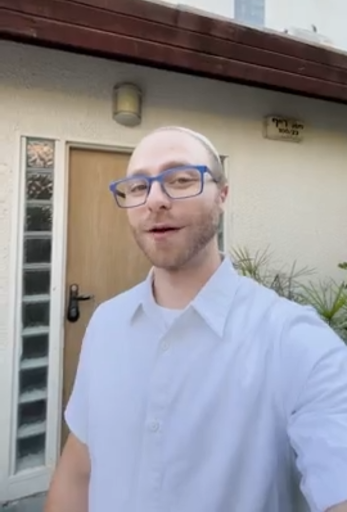
Daniel
His life in Israel remains very much in formation. He meets with a career counselor and the international school at Tel Aviv University, while at the same time exploring his religious life, spending time with relatives and thinking about what his future should look like.
Yom Kippur deepens that reflective tone. “It’s a beautiful time of reflection,” Daniel says, describing calling friends, relatives and people he feels he may have wronged to ask for forgiveness. “I think it’s really important to do that so that you move into the coming year with a fresh slate.”
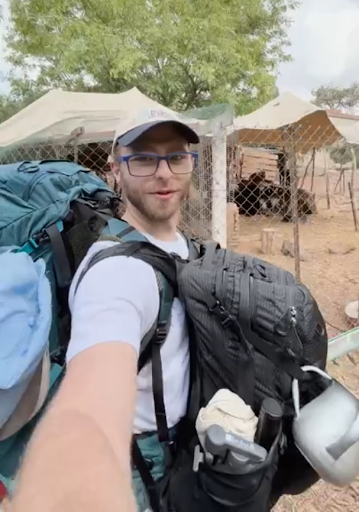
Daniel
For Daniel, the High Holidays arrive while the larger questions raised by aliyah are still open. His Israeli life is not settled, and that is part of his story.
Arielle: from being hosted in Israel to hosting family at home
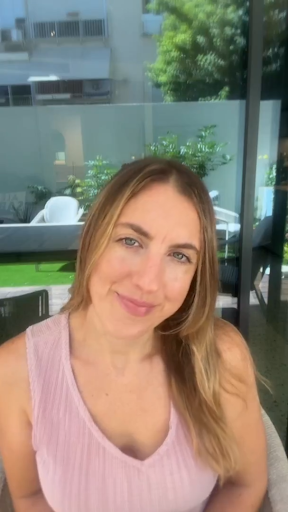
Arielle reaches the holidays at a very different stage. Her aliyah has been measured in family milestones: boxes arriving, a mezuzah going up, her daughter starting gan and a house gradually becoming a home. “It feels so surreal to end this vlog series in the exact place we were trying to get all along,” she says.
Arielle: from being hosted in Israel to hosting family at home
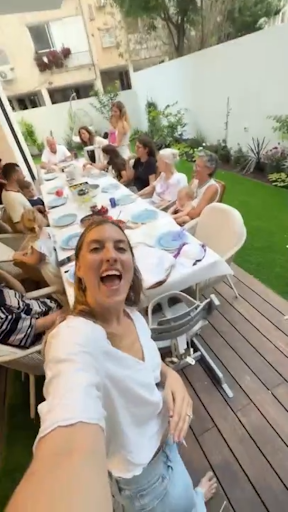
Rosh Hashanah makes that change tangible. After spending much of her life visiting relatives in Israel and being welcomed into their homes for holidays, Arielle finds herself on the other side of that relationship. “After my entire life of coming to Israel and having my family host me, I am hosting my family,” she says. “My family and I are hosting our family for the first time basically ever.”
Arielle
It is an ordinary family moment that quietly marks a major shift. Israel is no longer where Arielle’s relatives live. It is where her own family now lives too. That sense of permanence becomes more profound during a visit to relatives on a northern kibbutz around the anniversary of October 7. After hearing a family member describe his experiences that day, Arielle reflects on what choosing to become Israeli after the attack has come to mean for her. “And I think for me, becoming Israeli after October 7th is, in part, my answer to what’s going on in the world,” she says. “This is our home.”
Arielle
Standing in a place where generations of her family have built their lives, she describes her own move as a kind of full circle, “putting down my roots here.”
Three journeys to becoming Israeli
The High Holidays provide a natural ending to the Aliyah Vlog because they bring the three stories together without pretending that aliyah has brought the three participants to the same place.
Dani experiences the wonder of Jewish holidays becoming part of public life around her. Daniel uses them to reflect on the person and the life he is still trying to build. Arielle celebrates them inside a home that only months earlier existed largely as a destination she was trying to reach.
One is building as an individual, another is discovering the country through new eyes, and another is putting down roots with a young family. All three are Israeli.
That may ultimately be the clearest lesson of the series. There is no single moment in which aliyah is finished and a person becomes fully settled. Nor is there one model of what an Israeli life is supposed to look like.
Aliyah gets them to Israel. What comes next is more personal. The series began with movement: flights, suitcases, boxes, bureaucracy, uncertainty and the question of how to begin again. It ends with a different image.
Three new Israelis enter a new Jewish year from three different places in their lives, celebrating the same holidays in the same country they chose to call home. The holidays will return next year, but by then their lives will have changed again.
For now, the vlog ends.
The journey continues.
- All three made aliyah with the assistance of Nefesh B’Nefesh, in partnership with Israel’s Ministry of Aliyah and Integration, the Jewish Agency for Israel, Keren Kayemeth LeIsrael, and Jewish National Fund-USA.