

Colombia was for decades a key ally of the United States and a stable source of support for Israel in Latin America, but the current president Gustavo Petro — the first left-wing leader ever to hold the office — has reversed course. Not only has he repeatedly clashed with President Donald Trump, he has also become one of Israel’s harshest critics on the international stage.
Since the October 7 massacre and the war in Gaza, he has not only severed diplomatic ties with Israel, claiming “genocide” against the Palestinians, but also imposed sanctions including a ban on coal sales, joined South Africa’s case against Israel at the International Court of Justice in The Hague, and even called for the creation of a “large army to liberate Palestine.”
Gallery
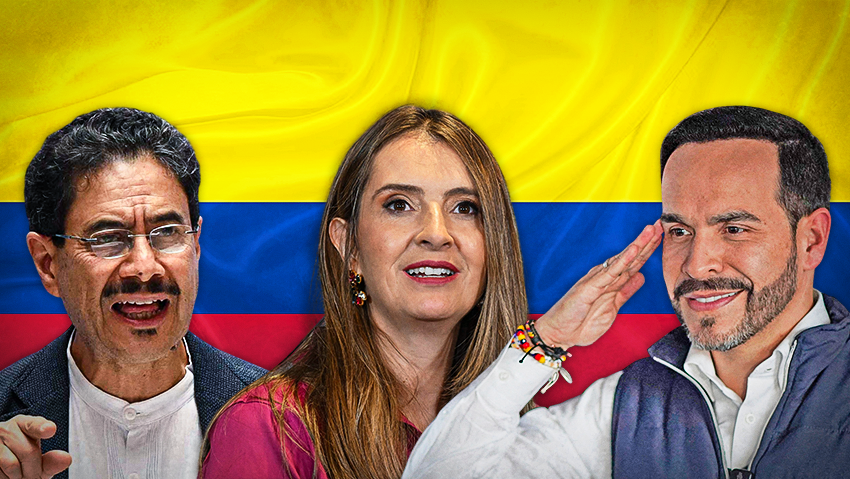
The first round of elections will be held to decide his successor. The vote will determine Colombia’s future stance toward Israel
(Photo: Luis ACOSTA / AFP, shutterstock, Sergio Yate / AFP, Raul ARBOLEDA / AFP)
After four years in office, Petro is set to complete his term in August and is barred by the constitution from running for re-election. On Sunday, the first round of elections will be held to decide his successor. The vote will determine Colombia’s future stance toward Israel, with one leading candidate seeking to continue Petro’s anti-Israel line while his two right-wing rivals promise to restore ties. It is also viewed as a key test for the “conservative wave” sweeping Latin America, following right-wing victories in countries including Bolivia, Honduras, Chile and Costa Rica.
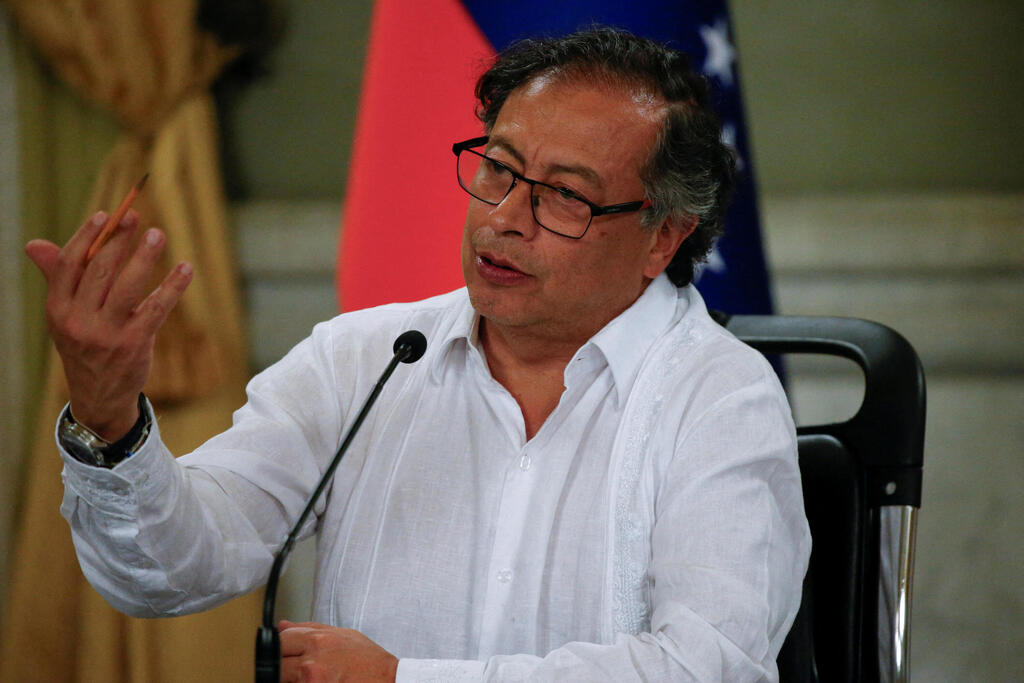
Current Colombian President Gustavo Petro
(Photo: REUTERS / Leonardo Fernandez Viloria)
The race is also unfolding against the backdrop of growing regional involvement by Trump, including billions in aid to support his ally Javier Milei in Argentina’s elections last year and, in January, a high-profile operation to capture Venezuelan president Nicolás Maduro.
Three main candidates are competing. Polls predict a first-round win for the far-left senator Iván Cepeda, an ally of the outgoing president, who promises an even more “radical” version of Petro’s agenda.
However, Cepeda is not expected to surpass 50% of the vote, meaning a decisive second round on June 21, where he would face one of two leading right-wing candidates. In second place is populist candidate Abelardo de la Espriella, a 47-year-old criminal lawyer and businessman who calls himself an outsider, describes himself as “the tiger that has awakened” and promises a military alliance with the United States and Israel to fight insurgent and criminal groups.
In third place is Senator Paloma Valencia, a 48-year-old representative of the more moderate establishment right, who also promises to restore relations with Israel if elected.
Colombia, with 53 million residents, is the third-largest country in Latin America by population. The central issue troubling voters is escalating violence from guerrilla groups and drug cartels, whose activity has increased during Petro’s four years in office.
The country has faced a 60-year insurgency by communist-oriented groups. Despite the historic 2016 peace deal with the FARC (The Revolutionary Armed Forces of Colombia), breakaway factions and other groups such as the ELN (National Liberation Army Colombia) continue armed operations, heavily financed by drug trafficking, alongside right-wing militias and criminal organizations.
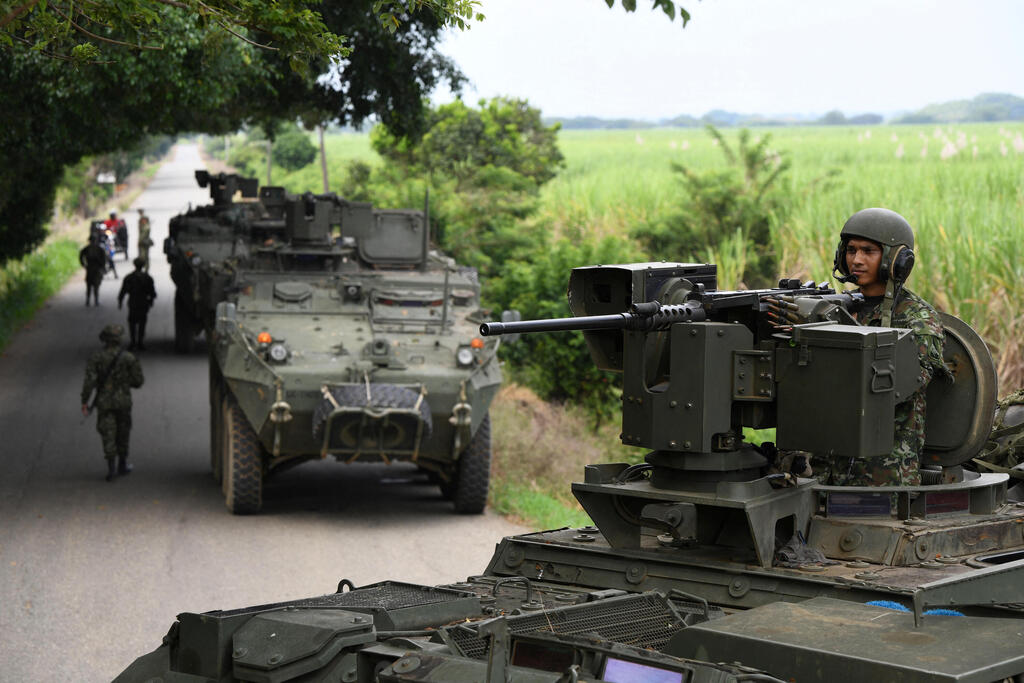
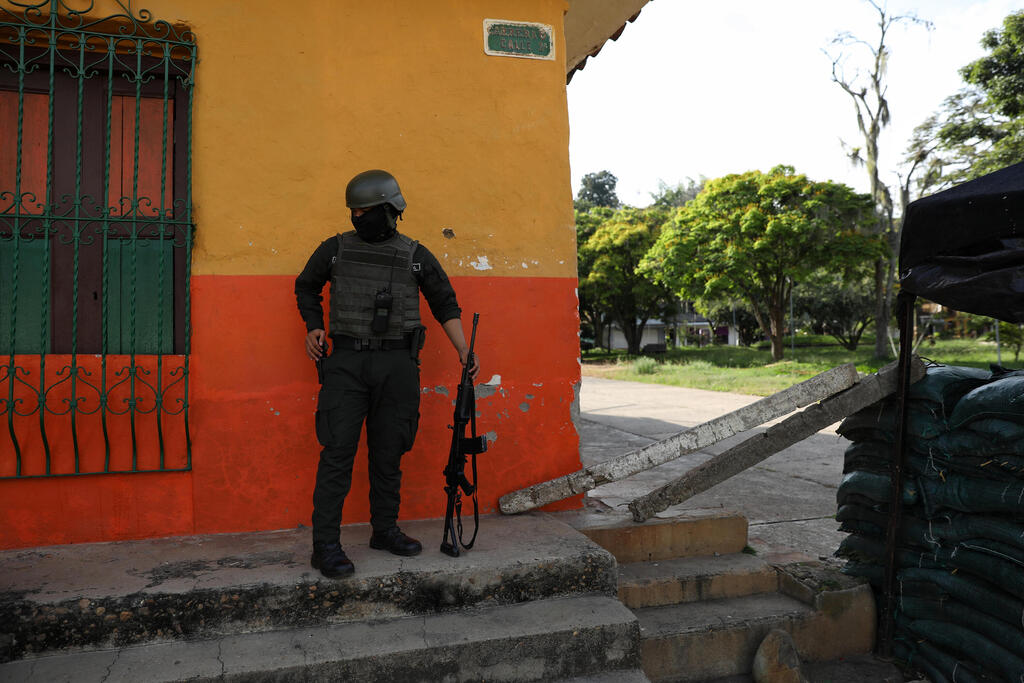
Colombian soldiers on patrol in the west of the country. A decade-long record in murders, the number of kidnappings has tripled
(Photo: REUTERS/Jair Coll)
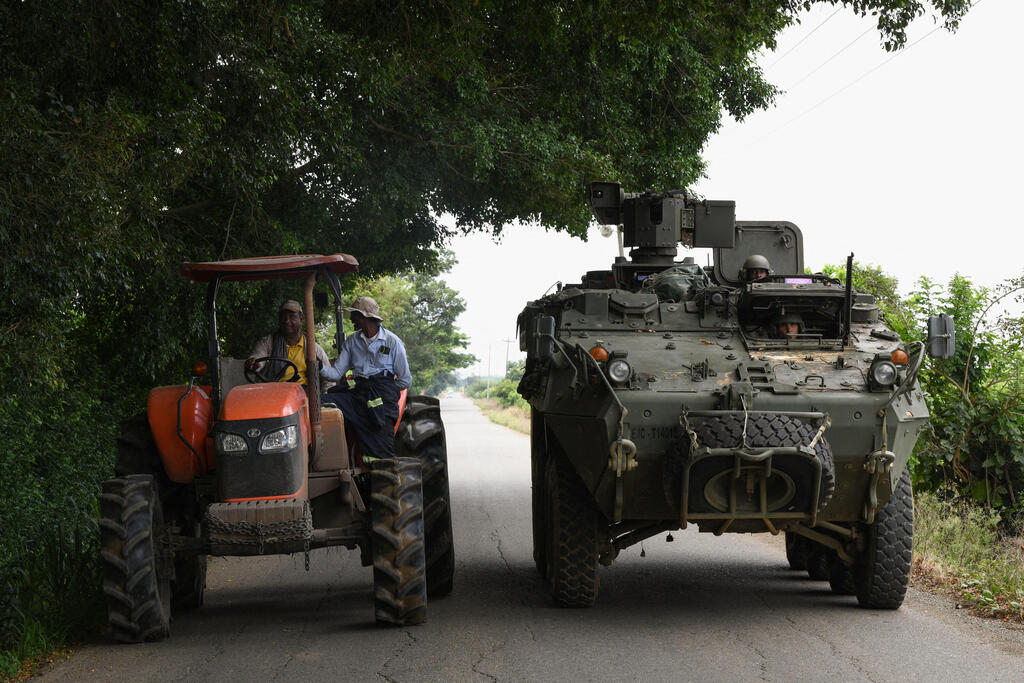
חייל צבא קולומביה סיור ב ג'מונד שבמערב המדינה לקראת בחירות לנשיאות
(Photo: REUTERS/Jair Coll)
Petro, elected in 2022 as Colombia’s first left-wing president, launched a policy called “Total Peace”, promising to end the conflict through negotiations with all armed groups. But the policy has largely failed: armed groups have grown stronger and cocaine production has surged to record levels. Colombia now accounts for two-thirds of global cocaine supply.
Estimates suggest the number of fighters in these organizations has doubled over the past four years to around 25,000, with activity spreading across hundreds of municipalities. According to election monitoring groups, about 386 municipalities — roughly one-third of the country — are now under threat from armed groups.
In recent years, insurgents and criminal networks have increasingly used drone-borne explosives. According to Colombia’s defense ministry, there were 333 drone attacks last year, up sharply from 61 the year before. Since the beginning of 2026, 107 such attacks have already been recorded, killing two soldiers.
Violence has also surged in general. In the first three months of the year alone, 3,391 people were murdered, the highest figure in a decade. Kidnappings have tripled, and the election campaign is taking place amid a wave of violence.
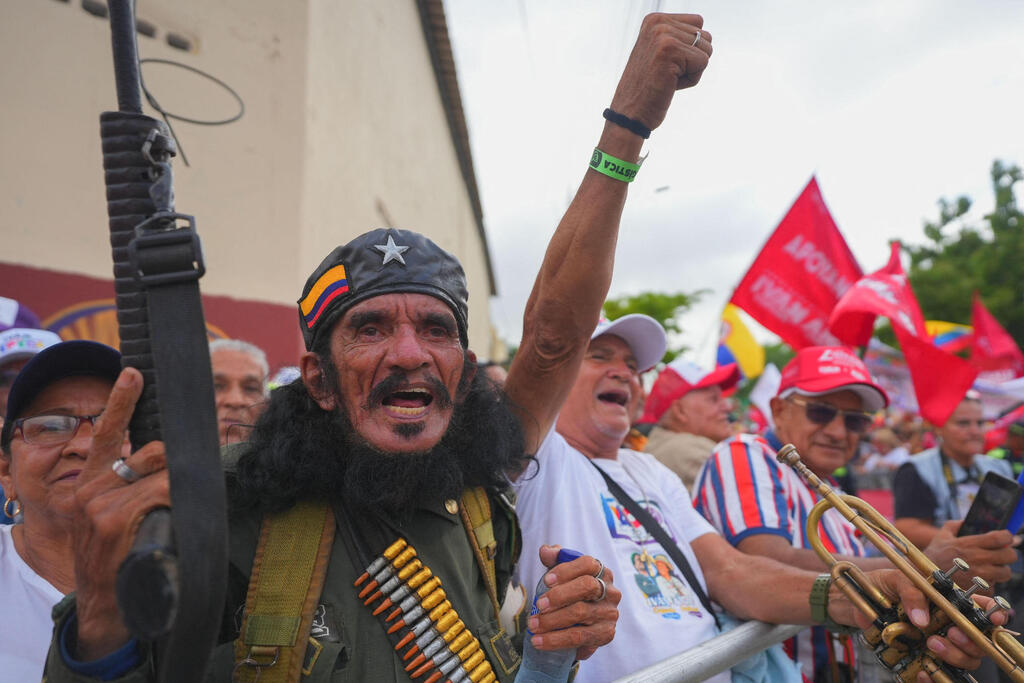
Supporter of leftist Cepeda disguised as "revolutionary" gunman at election rally. Sepada denied connection to FARC underground
(Photo: Vanessa ROMERO / AFP)
Supporter of leftist Cepeda disguised as "revolutionary" gunman at election rally. Sepada denied connection to FARC underground
(Photo: AP Photo/Santiago Saldarriaga)
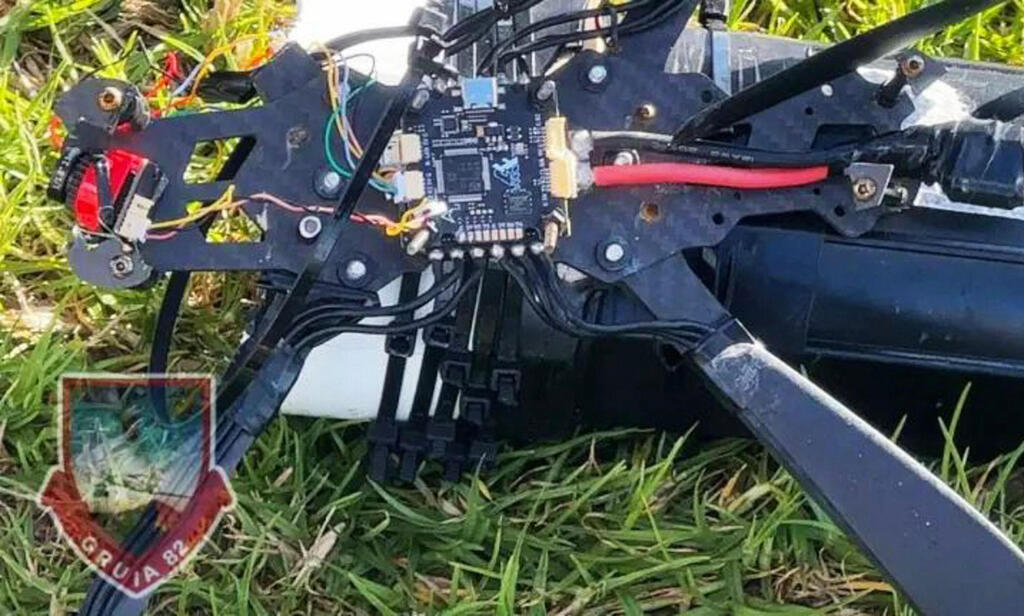
A FPV drone was found this month near an airport in the capital Bogota. 'Drone swarms' have also become a common phenomenon
(Photo: Handout / COLOMBIA'S NATIONAL POLICE PRESS OFFICE / AFP)
Just last weekend, two campaign workers for right-wing candidate de la Espriella were killed by masked assassins on motorcycles. De la Espriella now travels with a bulletproof vest. Last year, Senator Miguel Uribe, also a right-wing candidate, was shot dead at a campaign rally in Bogotá.
Sergio Jaramillo, who took part in negotiations leading to the 2016 FARC peace deal, said Petro’s “Total Peace” policy failed because it treated criminal gangs and politically motivated insurgents alike, even though criminals are driven solely by profit from drug and gold trafficking and extortion.
Despite failures in dealing with armed groups, Petro remains relatively popular, with approval ratings around 50%, partly due to economic measures benefiting the poor, including higher minimum wages and welfare programs. This popularity is expected to benefit Cepeda.
Cepeda, however, faces criticism for his role in the failed peace strategy and is accused by rivals of links to the FARC, which he denies. He has called for land redistribution and expanded public spending and says reforms must be “not only deeper but in some cases radical”. If elected, he is expected to continue Petro’s hostile stance toward Israel.
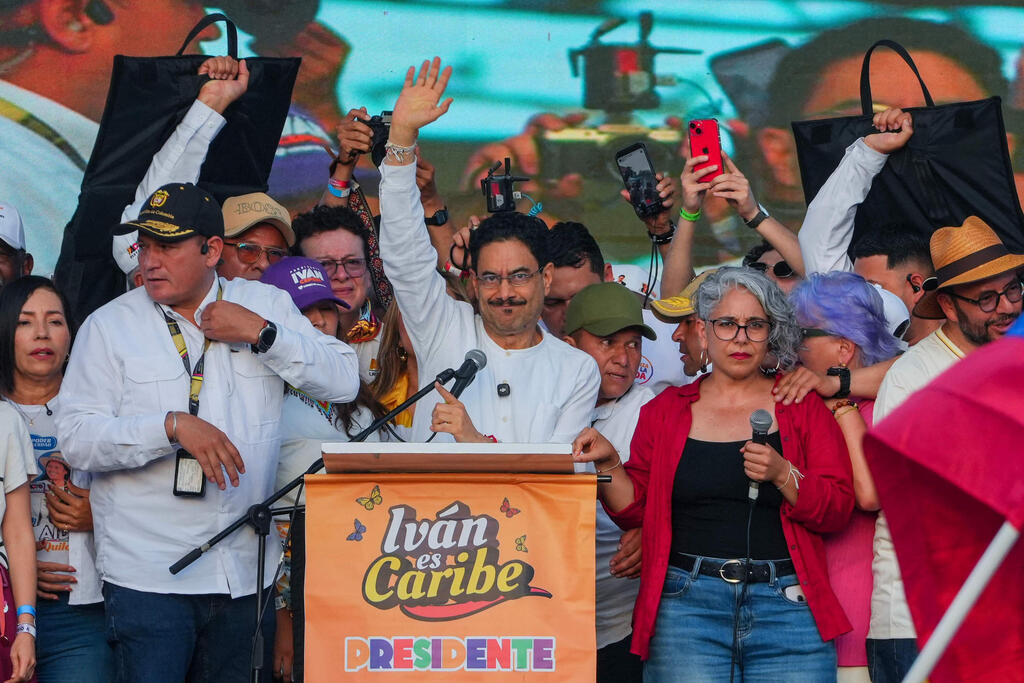
Cepeda said he was “proud” that Petro severed ties with Israel over what he called genocide in Gaza, and argued that international responses must be stronger and more forceful
(Photo: Vanessa ROMERO / AFP)
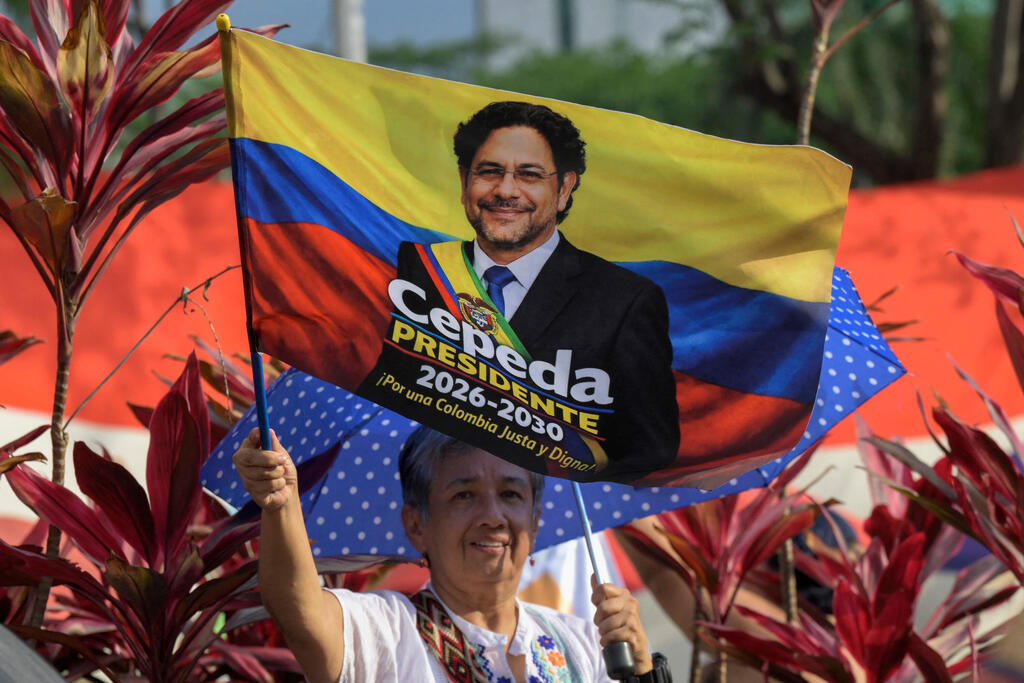
Polls predict a first-round win for the far-left senator Iván Cepeda
(Photo: JOAQUIN SARMIENTO / AFP)
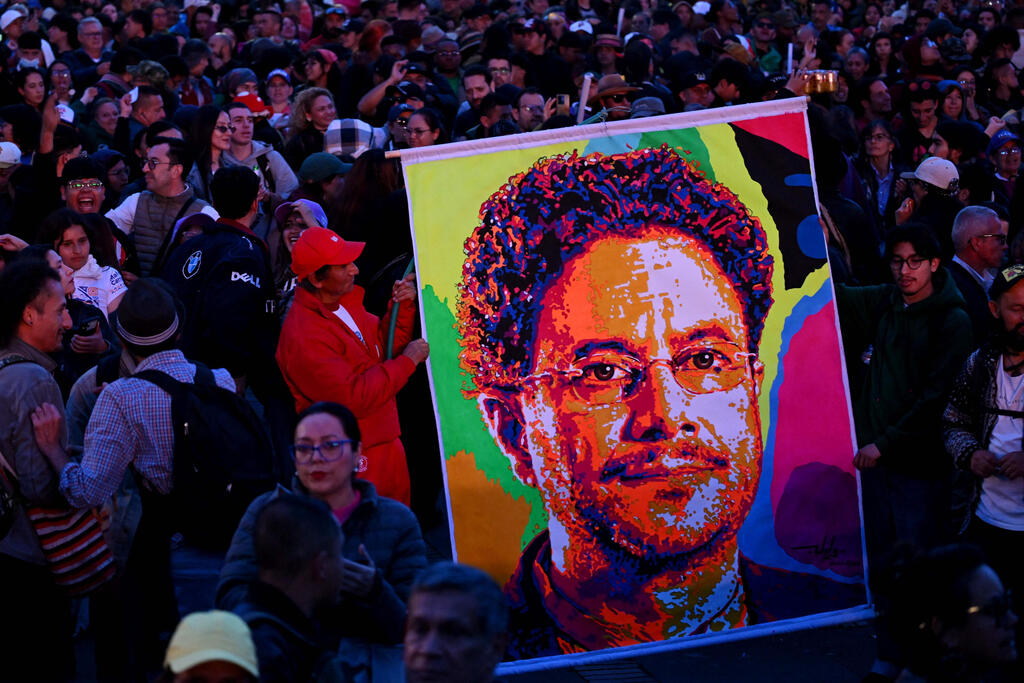
Iván Cepeda poster
(Photo: Raul ARBOLEDA / AFP)
In August last year, Cepeda said he was “proud” that Petro severed ties with Israel over what he called genocide in Gaza, and argued that international responses must be stronger and more forceful, especially from Europe, Canada and the United States. He also criticized Colombia’s elites, saying they are used to “being submissive and kissing the hands of those who despise them”.
At the other end of the spectrum, de la Espriella has positioned himself as a hardline right-wing populist. A millionaire businessman who recently lived in Florence, Italy, he owns private jets and a Miami estate and holds US citizenship. He advocates a military escalation against guerrillas and drug cartels, including bombings and aerial spraying of coca crops, in cooperation with the United States and Israel.
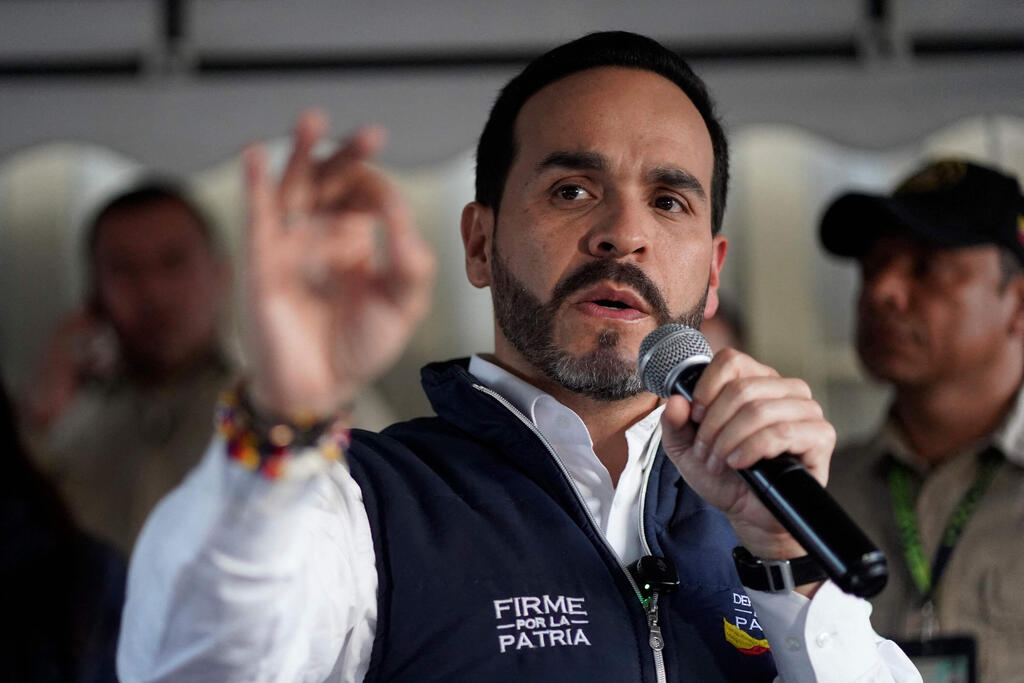
Abelardo de la Espriella has positioned himself as a hardline right-wing populist
(Photo: JOAQUIN SARMIENTO / AFP)
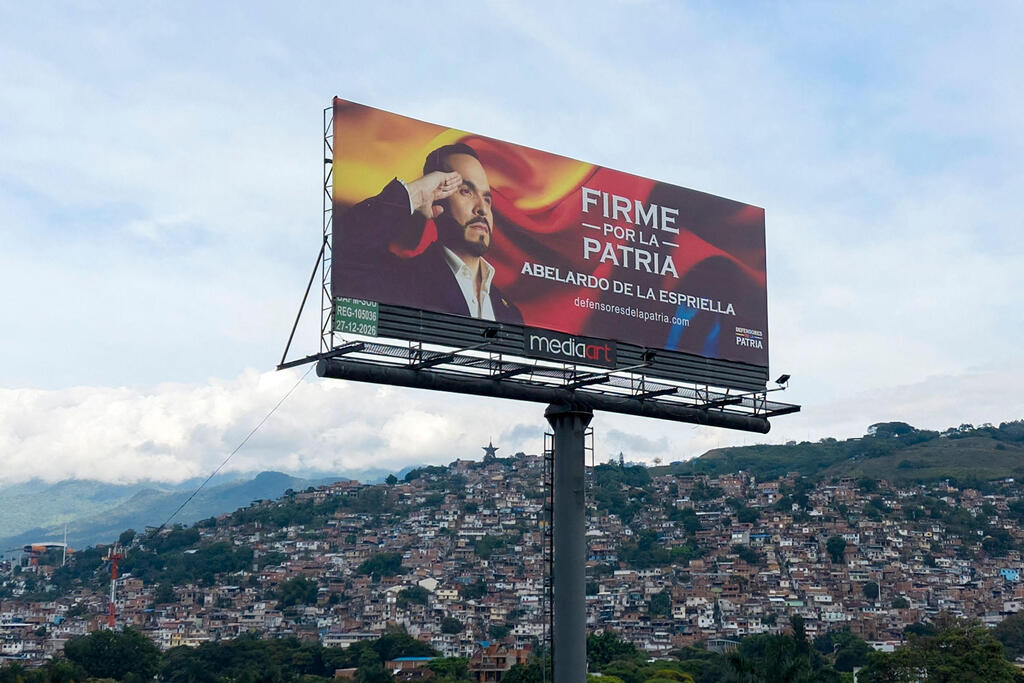
Banner promoting Abelardo de la Espriella
(Photo: JOAQUIN SARMIENTO / AFP)
He has promised to immediately launch attacks on “narco-terrorist camps” and says such operations require an “strategic alliance with the United States and the State of Israel”. In November he met Israel’s foreign minister Gideon Sa’ar and called for urgent restoration of ties with Israel.
He also promises to move Colombia’s embassy to Jerusalem.
De la Espriella has faced criticism for representing controversial clients as a lawyer, including militia members and drug traffickers, as well as Alex Saab, a close associate of Maduro. He says these were purely professional relationships.

Israeli flags were also raised at de la Espriella's rallies, who promised to establish an embassy in Jerusalem
(Photo: Vanessa ROMERO / AFP)
He has expressed admiration for El Salvador’s president Nayib Bukele and has pledged to replicate Bukele’s hardline anti-crime policies, including emergency powers and the construction of ten “mega-prisons”. He has said that any criminal who refuses to surrender will be “eliminated as the law permits”.
Paloma Valencia, representing the more moderate establishment right, could become Colombia’s first female president. She comes from one of the country’s most influential political families and is the granddaughter of former president Guillermo León Valencia, who led anti-guerrilla efforts in the 1960s.
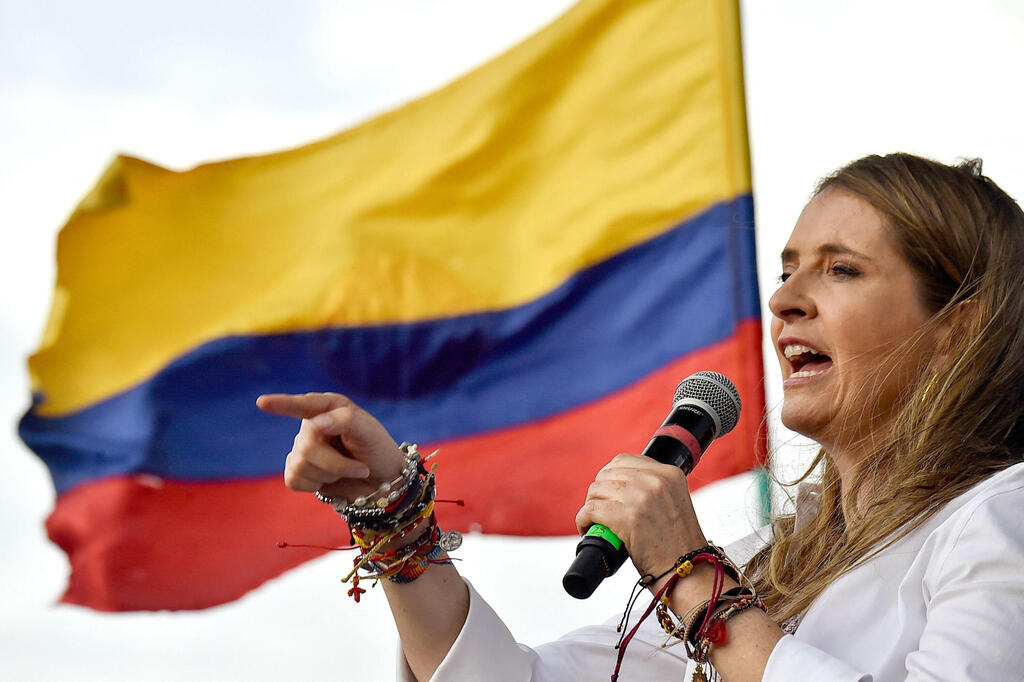
Paloma Valencia, representing the more moderate establishment right, could become Colombia’s first female president
(Photo: Schneyder Mendoza / AFP)
Valencia has been a vocal critic of the 2016 peace deal and of Petro’s negotiations with armed groups. She promises to end “Total Peace” and impose “Total Security”, expand the security forces and cut public spending. She also supports restoring relations with Israel.

Valencia has been a vocal critic of the 2016 peace deal and of Petro’s negotiations with armed groups. She promises to end 'Total Peace' and impose 'Total Security'
(Photo: Raul ARBOLEDA / AFP)
She is considered more likely than de la Espriella to defeat Cepeda in a potential second round. She has chosen as her running mate Juan Daniel Oviedo, an openly gay former head of Colombia’s national statistics agency.
Valencia says she represents “the long road, the road of work and knowledge. No magical realism or miracles”. She has pledged to restore ties with Israel “out of respect for the Palestinian people and hope for peace in the Middle East”, while continuing to sell coal to Israel and other buyers.