

A group of children who survived the Hamas massacre, abduction and captivity decided to hold a young talent contest at their hotel in Orlando, Florida. Dinner was finished and everyone was exhausted from a long day at the theme park, but the kids refused to let a little thing like that stop them. They took turns, appointed judges and gathered center stage inside a room allocated to them. The adults, who had earlier gone out to the hotel courtyard with a drink to clear their minds, hurried back inside one after the other to watch the magic.
The audience was made up of adults and youth who returned from the hands of Hamas and Islamic Jihad: women held underground in tunnels; parents who spent two years fighting for any glimmer of hope; families that lost a brother, mother or father; a partner; parents who lost children. They were all standing together watching the contest as if it were the most important thing in the world: the darbuka played by Rotem Calderon (21), the sweet cover by Almog Levy (4.5), the singing of Emily Hand (11), the rolling laughter of Abigail Edan (6). Small moments of life after a long stretch of death, fear and uncertainty.
Former hostages in the U.S. organized by “Lehosheet Yad”
(Photo: Nir Davidzon)


After two agonizing years of waiting, I joined 44 released hostages and 136 of their family members who traveled with Lehosheet Yad (Lend a Hand) on a journey far away from everything they had known since the October 7 massacre; two weeks in Orlando, Florida, filled with visits to numerous amusement parks by day, and soul‑baring conversations until their eyes closed at night.
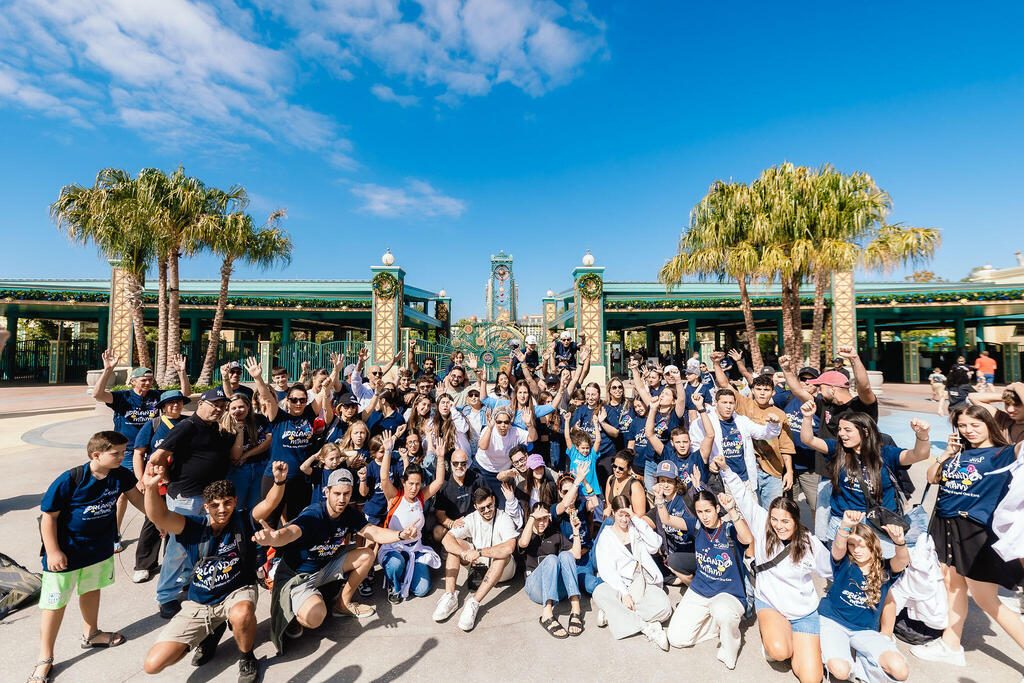
The fear was still noticeable, but there were many true moments of joy. Along the way a family was born — not a family of “hostages,” “returnees” or “orphans,” but of people who, due to tragic circumstances, were the only ones who truly understood each other and who are trying to learn and teach one another how to live again.
So, thousands of kilometers from the Gaza Strip, hostages freed since November 2023 shared experiences with those left behind in Gaza for two years; those released in October 2025 discovered new things from people who were rescued in June 2024, and so on. “Community” is the word that came up again and again in conversations with them. Their shared disaster had forged a bond that likely will never break.
Freedom is medicine / Elkana Bohbot
One evening, Elkana Bohbot and I sat beside the hotel pool. “It is not obvious at all that I would be here,” he said. “But every person knows what is good for him, what helps his spirit heal. For me, freedom is medicine. This trip is the best medicine I could have ever asked for."
The trip took place just two weeks after he returned from Hamas captivity, after two years of hell, and now he is here with his wife, Rivka, and their son, Re'em David. “This is the best opportunity I have to reconnect with my son,” he said. “Here I spend time with him from morning until morning."
This journey, he says, was the dream he imagined while in the tunnel. He had been to Orlando before, and during those two years he imagined a trip just like this among the amusement parks with Re'em David. “This was the first destination I wanted to go to, and it worked out just perfectly,” he said.
Singing, dancing, drinking and having fun — Ben Ami, Bohbot and Ohana in the U.S
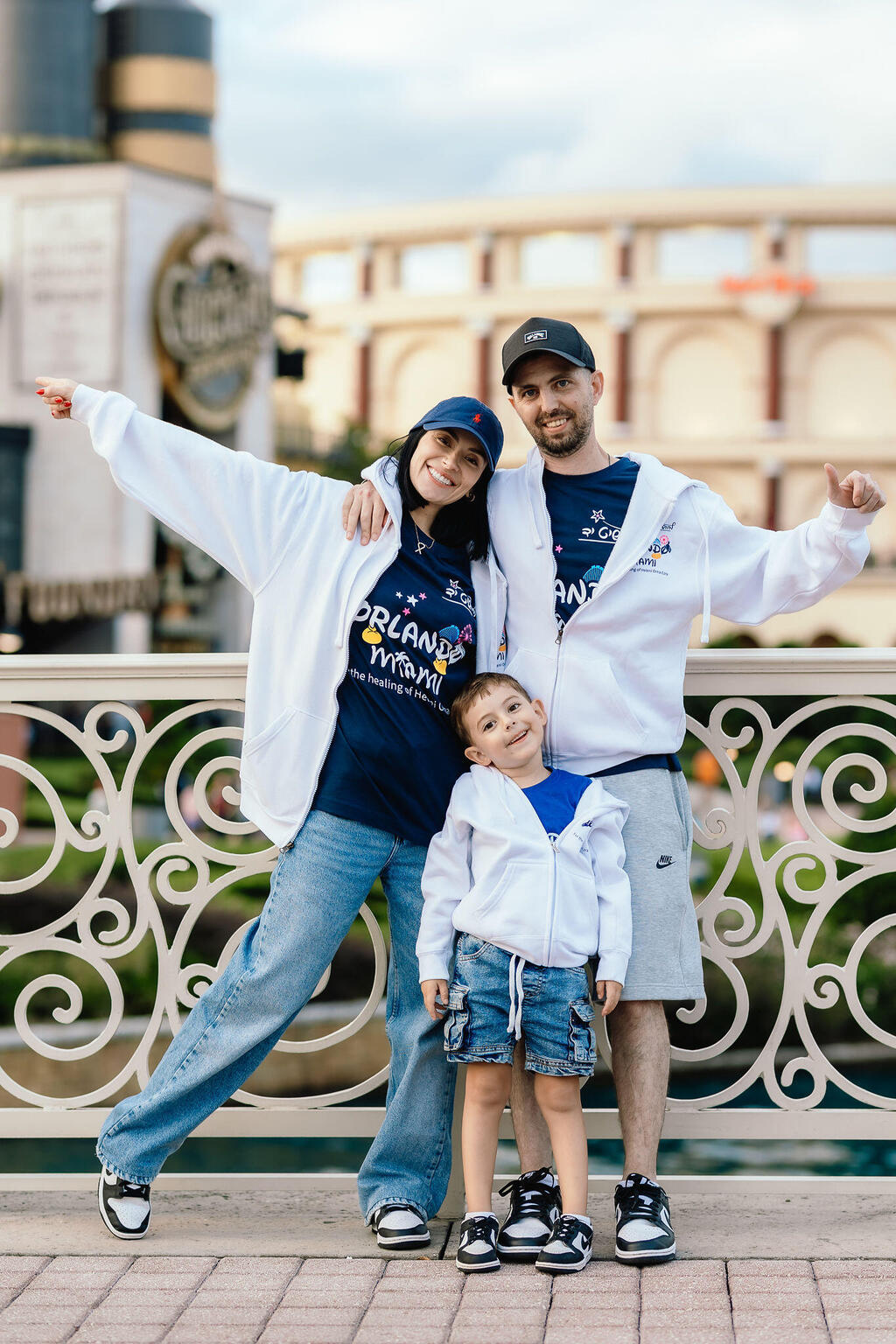
“There's no routine, so we may as well enjoy ourselves”. Elkana, Rivka, and Re'em David Bohbot
(Photo: Nir Davidzon)
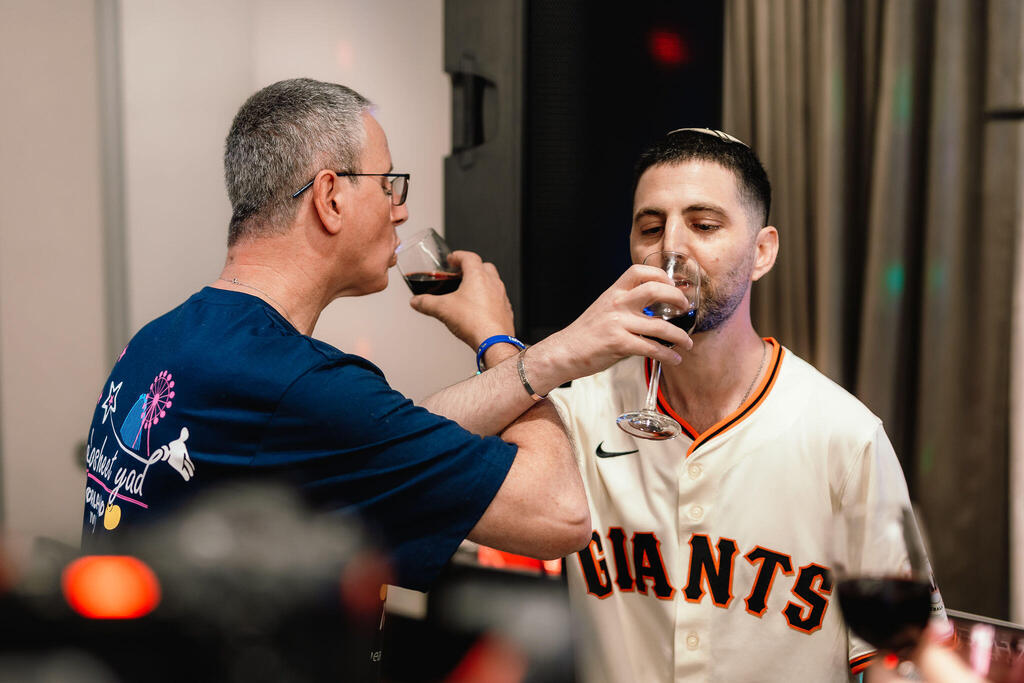
Bohbot and Ben Ami
(Photo: Asaf Angel)
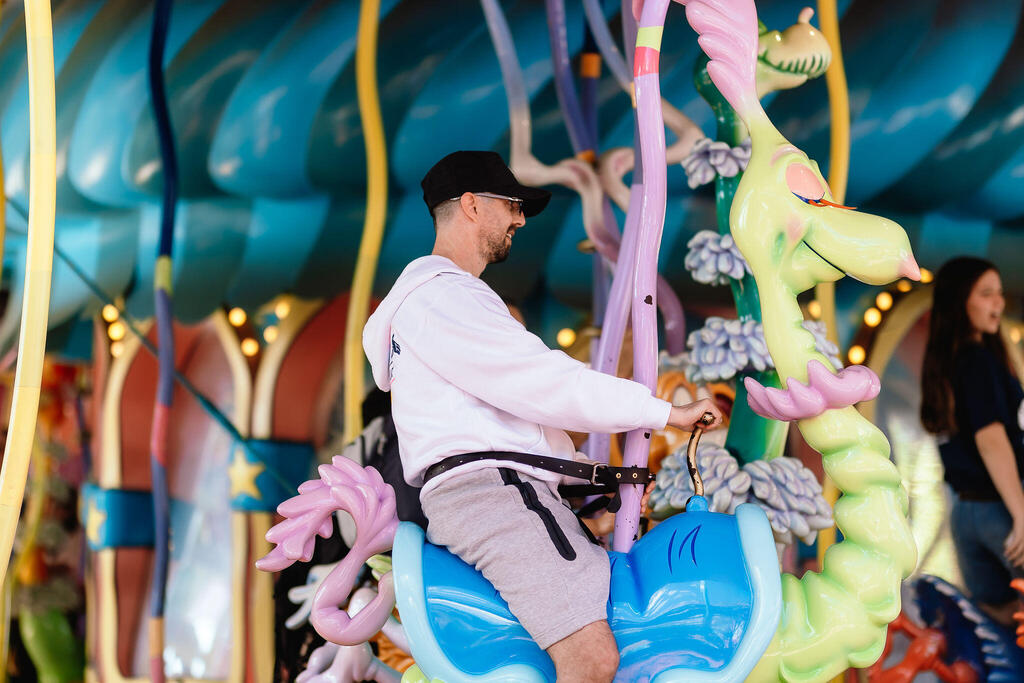
Elkana Bohbot
(Photo: Nir Davidzon)
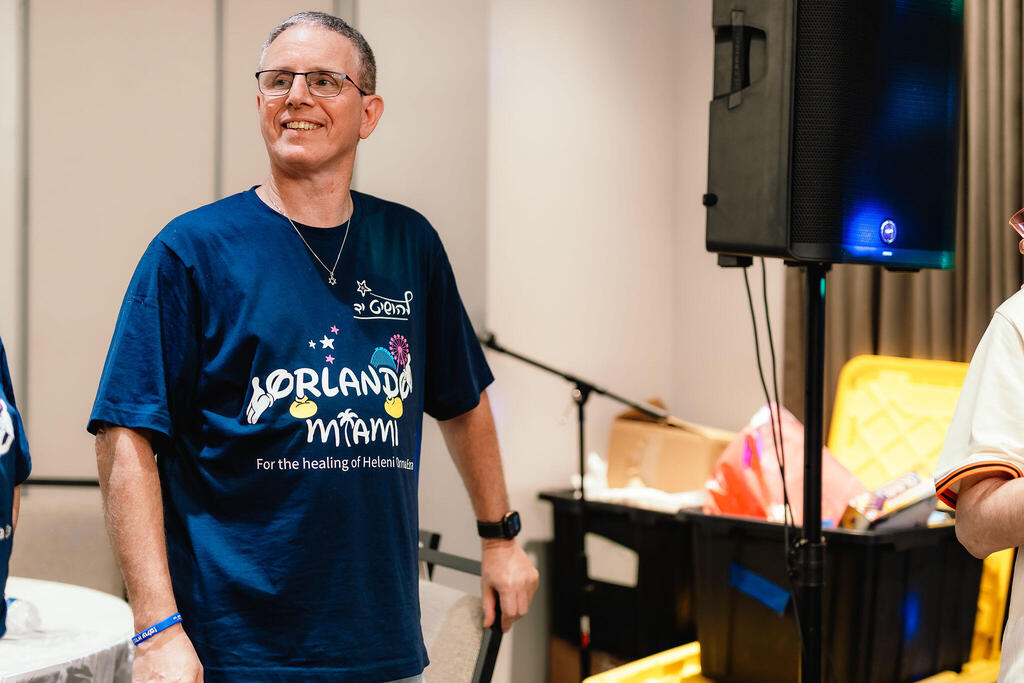
Ohad Ben Ami
(Photo: Asaf Angel)
“The association is doing a tremendous kindness,” he continued. “They brought me to a place far beyond my expectations. This is the craziest thing I have ever been through, and it is all thanks to them — the volunteers, the service members. There are not enough words to describe it. I didn't know people were waiting for me like this and it's heartwarming. I look at Ohad (Ohad Ben Ami) and Yosef (Yosef-Haim Ohana, who was held with him in the tunnel) as if we were just there yesterday. It’s amazing to be together now."
Slowly, Bohbot is also learning new details about what happened on October 7. For example, that Almog Meir Jan was in the same car with him en route to Gaza after the abduction. “Everyone returned with their own story,” he said “and here we can truly understand each other."
What about home?
“I don’t really have a routine yet. So better enjoy, right? What’s life worth if you are not with your family where you are happy. To see Re'em David carrying his suitcase, to board a ride with him, to swim, to slide, I can’t describe this happiness. After two years of separation, to smell and hug him, to hear his voice, his laughter, means more than anything to me. It's an indescribable happiness."
Redefining good / Yosef-Haim Ohana
We sit by a quiet lake, watching boats go by over the water. Yosef Haim Ohana looks at them and at the skies. “Two weeks have passed since I returned home from Gaza; my family and professionals told me it was not the right time for me to go on this trip, that I should wait, there is no reason to rush," he said. “But I thought and felt that this is what I wanted. The hardest thing in captivity was losing control. You can’t decide what to do or where to go. That liberty was taken from us. When I came out, I knew that from that moment on I had to decide for myself."
“For two years all you dream of is to receive your life back as a gift; then it happens, and so many emotions surge, from zero to 100 in seconds. So many things, offers, people waiting for you, planning for you, and they all mean good, but I needed some space to think, to have time for myself, to process what I've been through, to grasp and to understand what actually happened, and what I want to do," he said.
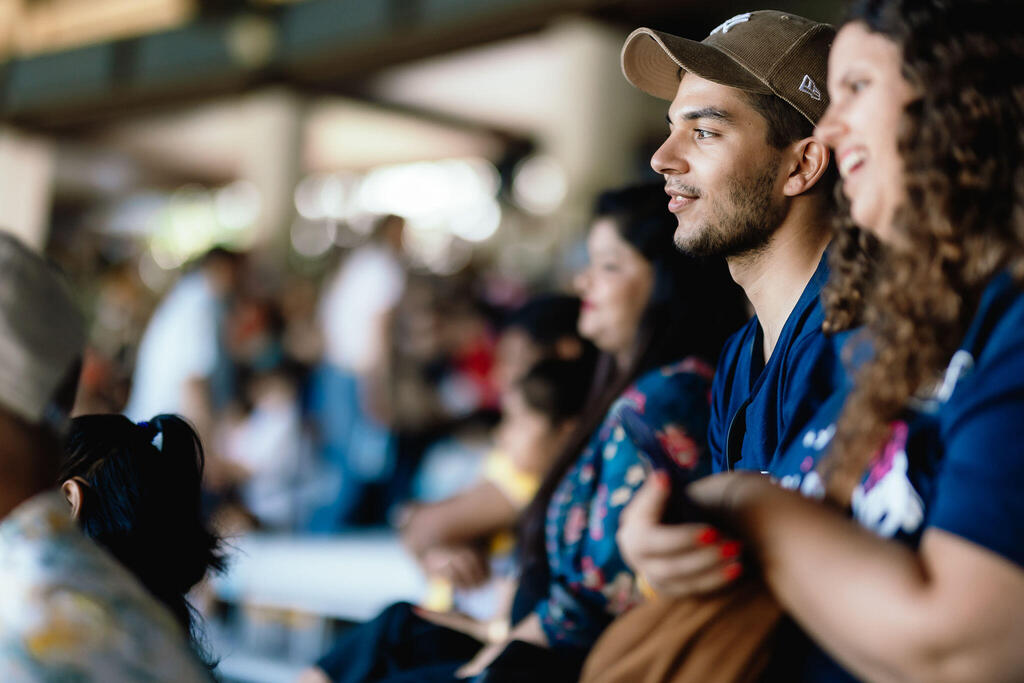
Decide for myself. Yosef-Haim Ohana
(Photo: Nir Davidzon)
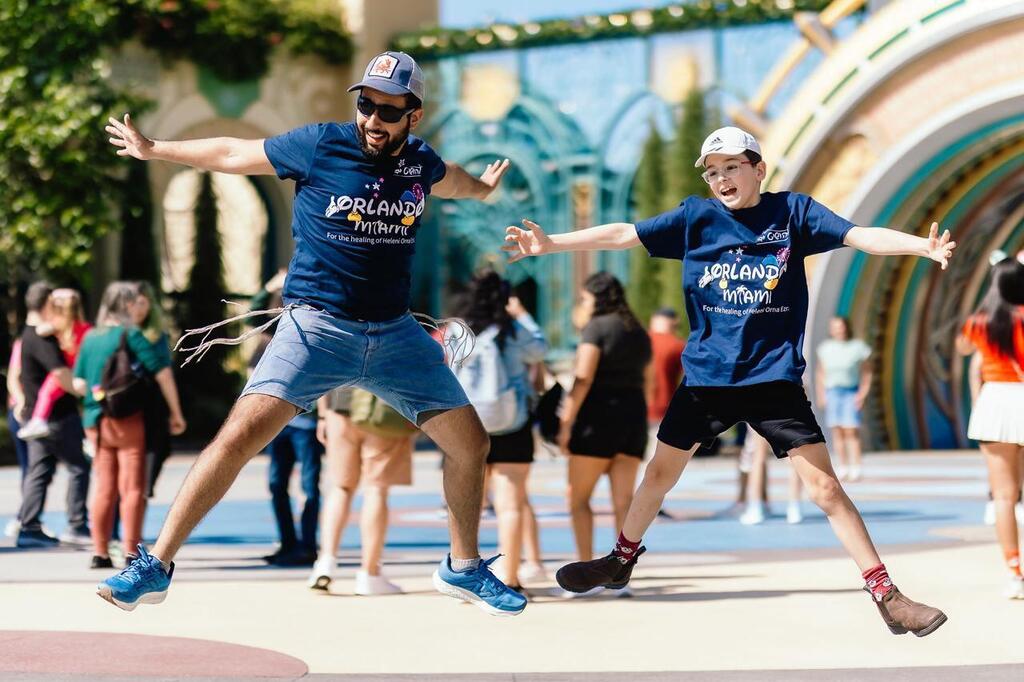
Ohad Munder, having fun
(Photo: Asaf Angel)
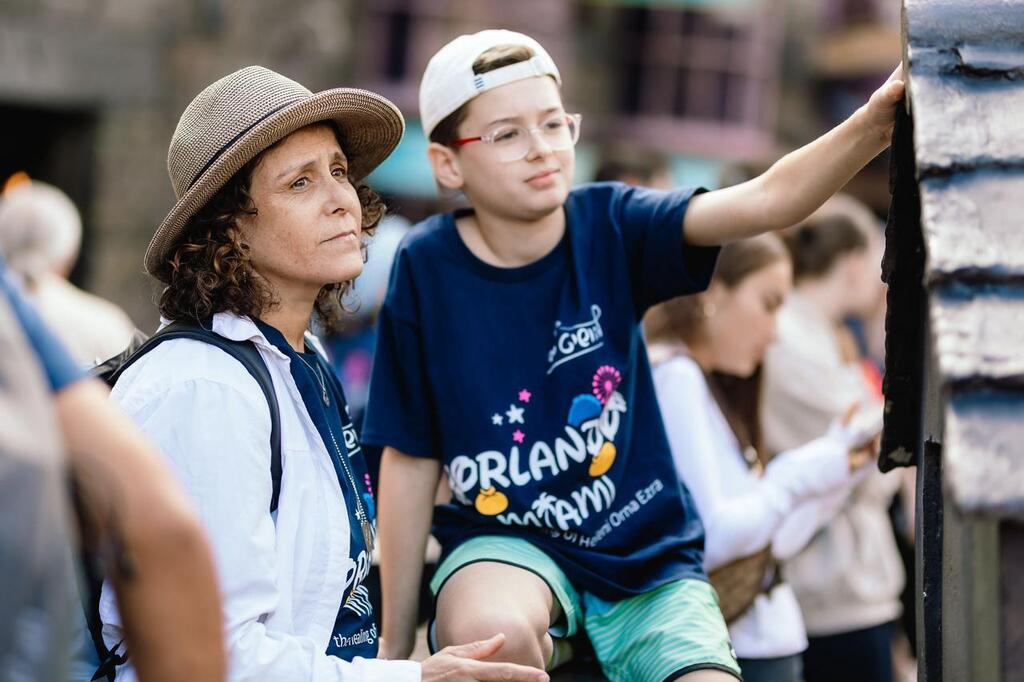
Ohad Munder and mother Keren
(Photo: Asaf Angel)
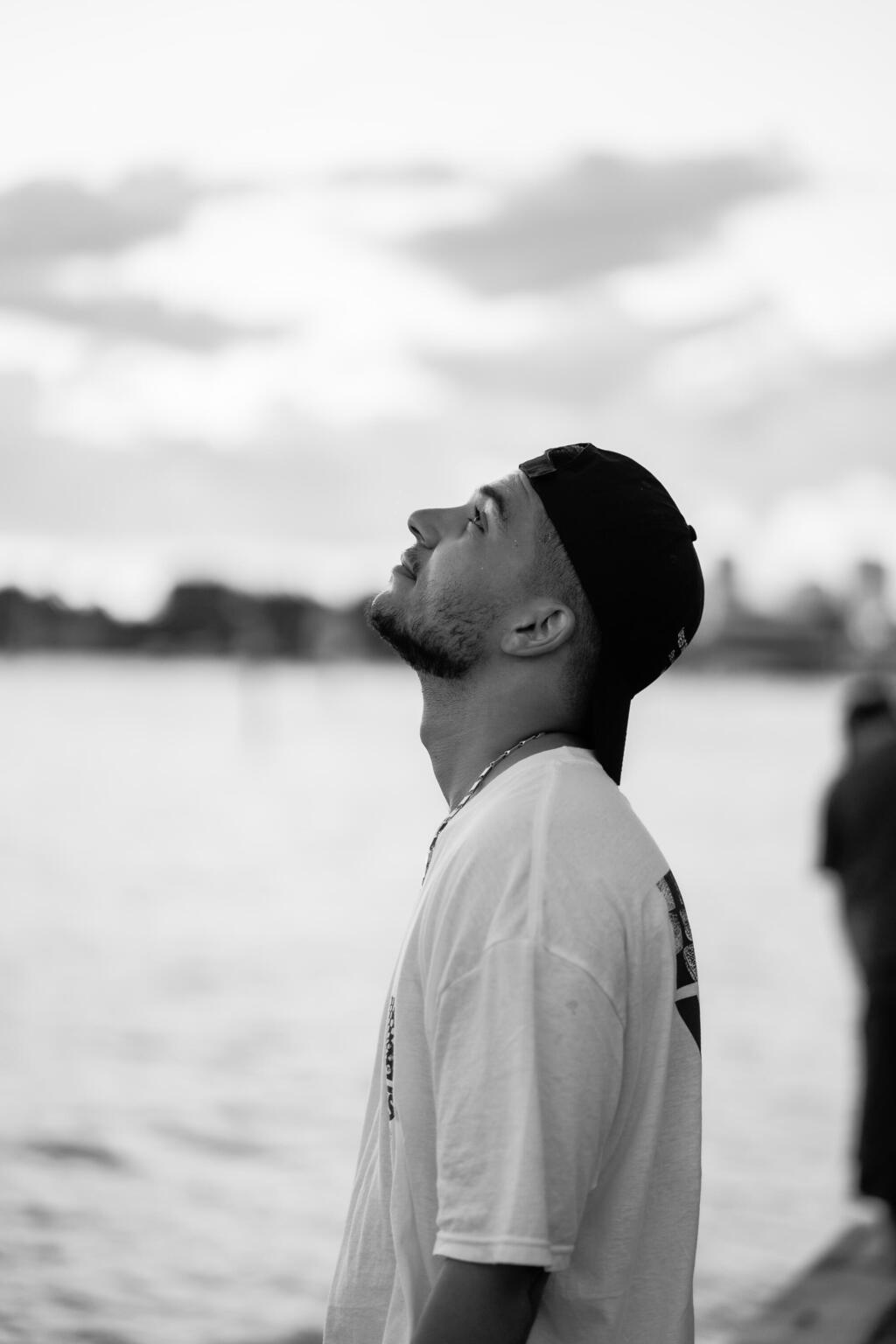
Yosef-Haim Ohana
(Photo: Asaf Angel)
He says that this journey gave him something he did not expect: “There is so much goodness and joy here, care and concern. At first I didn't understand how that could be, but soon I saw that these people cared about one thing — to bring a smile. How many people smiled here, how many times did I smile, they succeeded big time. I am doing fine, getting better day by day. But I am learning again what good is, redefining to myself what good is."
He looks at Bohbot and Ben Ami walking nearby and says: “To see them here is joy beyond words. As Ohad’s daughters said — he was freed eight months ago but his soul was freed only now, seeing us here together. Only then did he start enjoying the trip, the food, and being truly happy."
I asked what he carries with him at this moment. “Something big I will take for life. There was much soul‑searching during captivity. You want to be a better person. In my conversations with God, I asked Him, 'why should I request that You keep me alive?' I learned that, to truly know how to give, you must learn how to receive. And when they come together, it is most genuine,” he said.
When night fell over Orlando and the roar of the parks subsided, the most exposed part of the journey began. Youth, parents and children settled in the hotel courtyard, drink in hand, exhausted legs, hearts awake. There, in the hours after midnight, came out the conversations that had no place any other moment: the fears the body still wakes up with, memories that come without warning, dreams about those who returned and those who didn't.
There were no big solutions or healing words, only simple painful truth. A mother describing how her daughter still jumps at every sound, a father shaking when hugging his son after two years, a teenager who feels the tunnel closes in on her every time she goes on a dark ride. In that quiet night a new sense of togetherness was born — in a place where there is no longer need to hide the pain.
Freedom / Karina Ariev and Naama Levy
In May 2024, when another trip by the association took place, the abduction videotape of Karina Ariev, Naama Levy and other lookouts from the Nahal Oz outpost was released. That video shocked the entire country and reverberated around the world. Those were the minutes that became a symbol, the moment when all of Israel felt the start of a nightmare. Now, a little more than a year later, but a lifetime apart, they are free, together, surrounded by their families, who arrived with them to this trip. To see them sitting together, laughing and singing is a closure hard to put into words.
In the evening, in the hotel hall, Ariev, Levy and Agam Berger sang together a song that symbolizes all they went through. “It was written by Daniella Gilboa together with Aviv and Yam (the lookouts Aviv Hajaj z"l and Yam Glass z"l who were killed on Oct. 7) before we were abducted, and we composed it in captivity,” Ariev said. “We sang it here without Daniella and Liri, but it was amazing, especially because Abigail was sitting here with us. We knew Abigail only from stories. Seeing her laughing and enjoying herself with us — that is a gift."
IDF lookouts, survivors of Hamas captivity - Naama Levy, Karina Ariev, and Agam Berger, in Orlando.
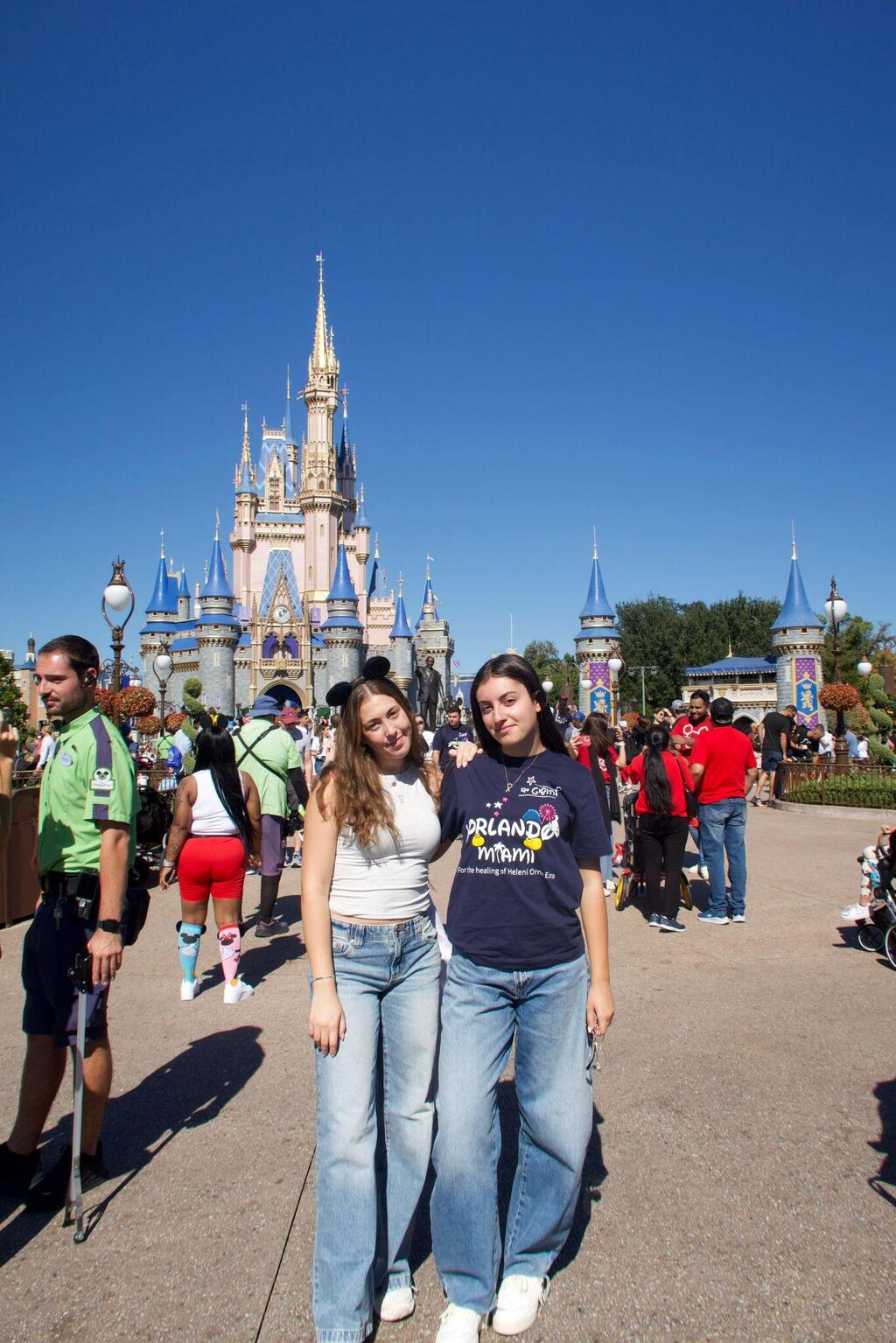
Naama (left) and Karina
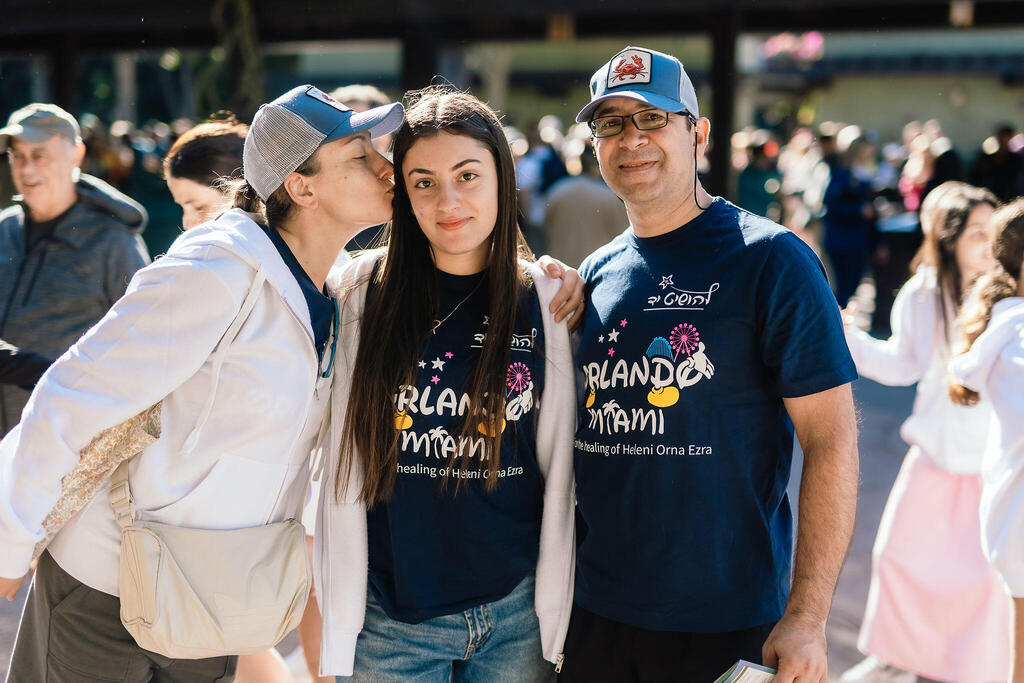
Karina Ariev and parents
(Photo: Nir Davidzon)
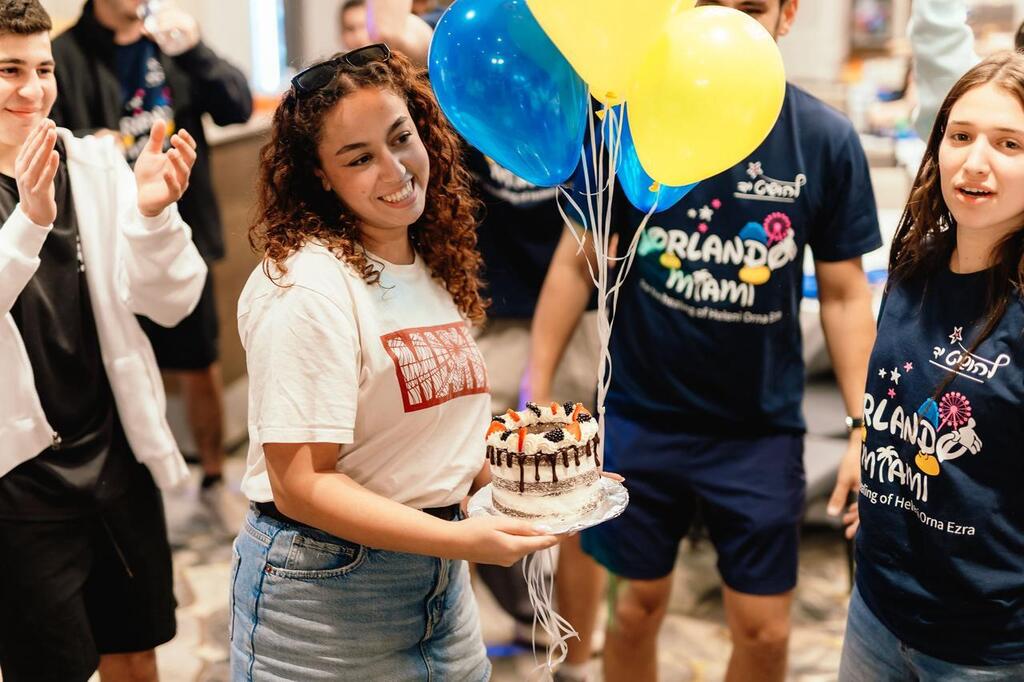
IDF lookout Ori Magidish, rescued in October 2023
(Photo: Asaf Angel)
Levy added: “Some of the people here are ones I last saw in a tunnel in Gaza. Now we are together in the U.S., having fun. This is healing. This trip came at a moment with great relief as the living hostages have returned. This is the first time you know nobody is suffering now in a tunnel. You can breathe. It is an opportunity to thank the volunteers, the service members, the donors. The association listens and supports and just wants us to be okay. We truly appreciate it."
Ariev said, “To see us enjoying here by the pool, rather than in the abduction video, is closure. It's an immense relief, and not just for us; you see how much the parents and siblings needed this too. To sit and have a normal, good conversation that does not revolve around captivity or struggle. It feels good.” Levy added, “It is like we came back to life. This trip is really a return to life."
And what about the future?
Ariev: “I’m continuing to commemorate my friends and working on my recovery. Slowly, I’ll start exploring new directions and regain a routine."
Levy: “Until now, we were focused on bringing home the living and dead hostages. We did things we didn’t necessarily want to, as part of the struggle. Now that nearly everyone is home, we can start thinking about ourselves."
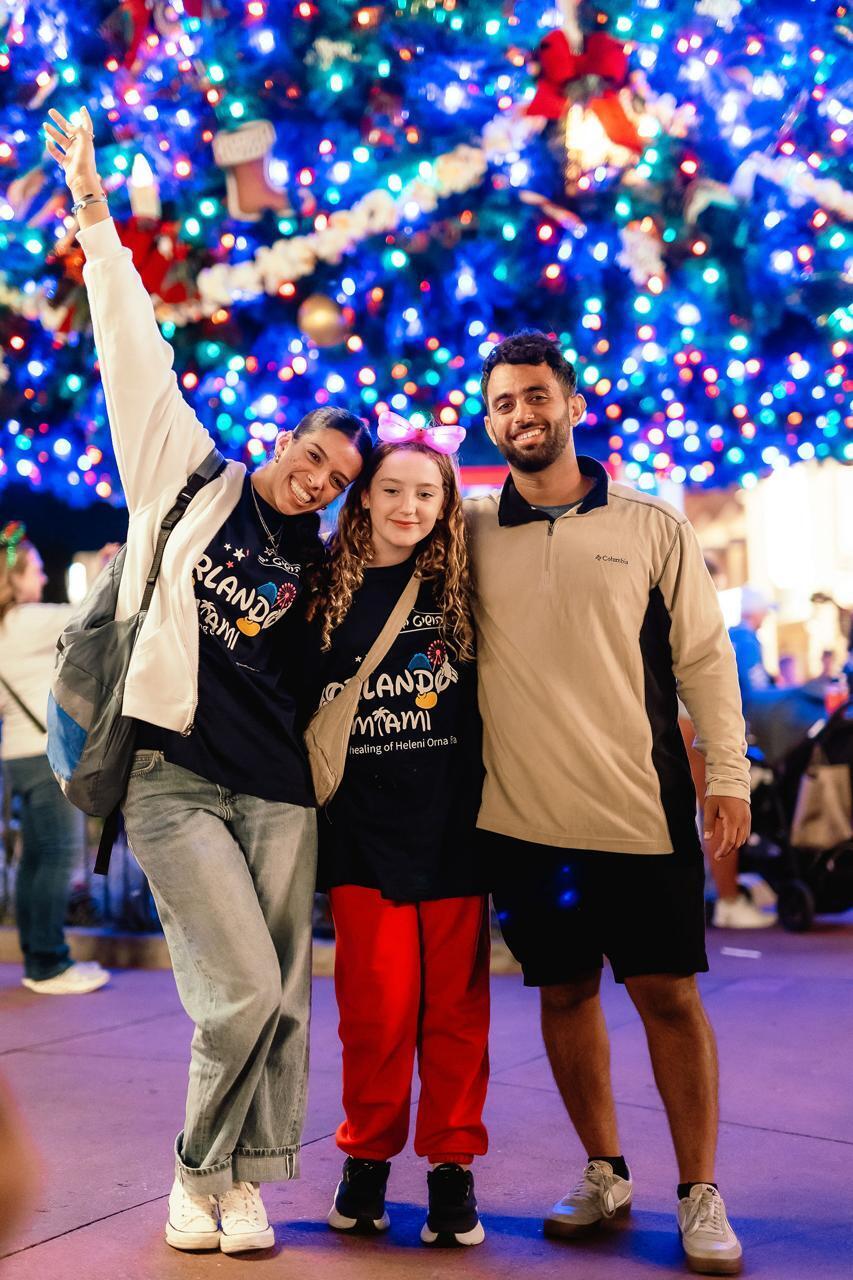
Emily Hand (center)
(Photo: Asaf Angel)
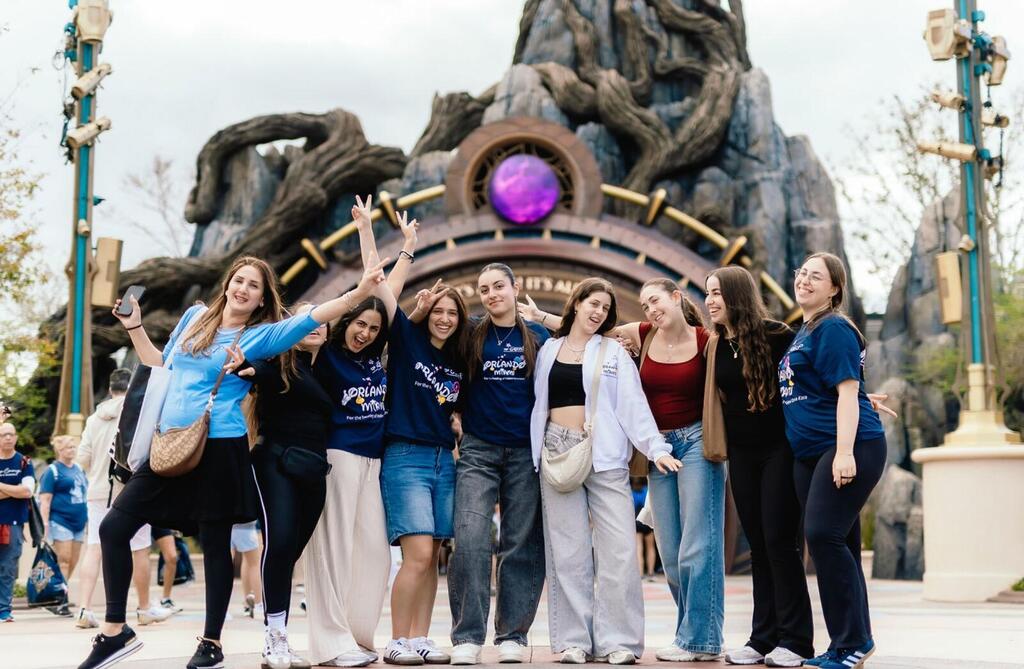
Hila Rotem Shoshani, IDF lookouts and volunteers
(Photo: Asaf Angel)
Protected together / Or Levy
“Almog? Did anyone see Almog?” asked the youth counselor, Shreiber, into the microphone as laughter spread through the bus. “I’m here!” called the 4‑and‑a‑half‑year‑old Almog Levy from one of the seats. “Is Almog here? I can’t see him,” replied Shreiber, teasing as he does every morning before embarking on the day’s activities. Almog responded excitedly, “I’m here!” After a few more rounds, the two finally “find” each other. Almog jumped up from his seat, ran to the front, grabbed the microphone and announced the day’s planned schedule while everyone applauded.
Nine months had passed since his father, Or Levy, was freed from Hamas captivity. He spent 491 days in dark tunnels not knowing the fate of his wife Einav, who was killed in a bomb shelter in Re’im. He learned of her death only when he returned this February. He hugged his son Almog in the hospital and since then they are inseparable.
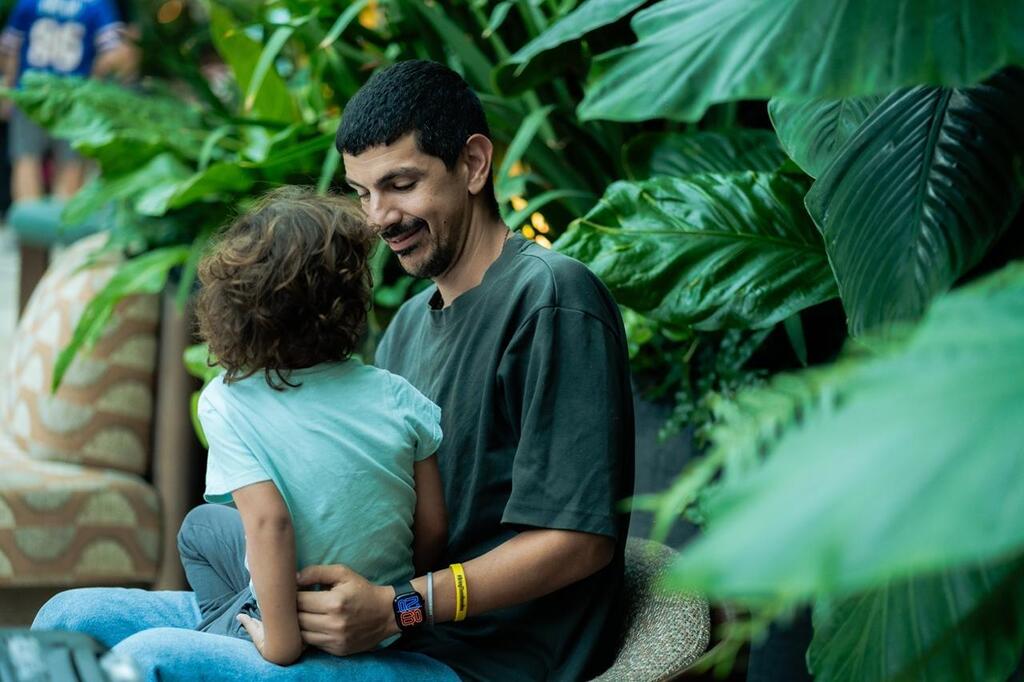
Or and Almog Levy. "I'm growing with him"
(Photo: Nir Davidzon)
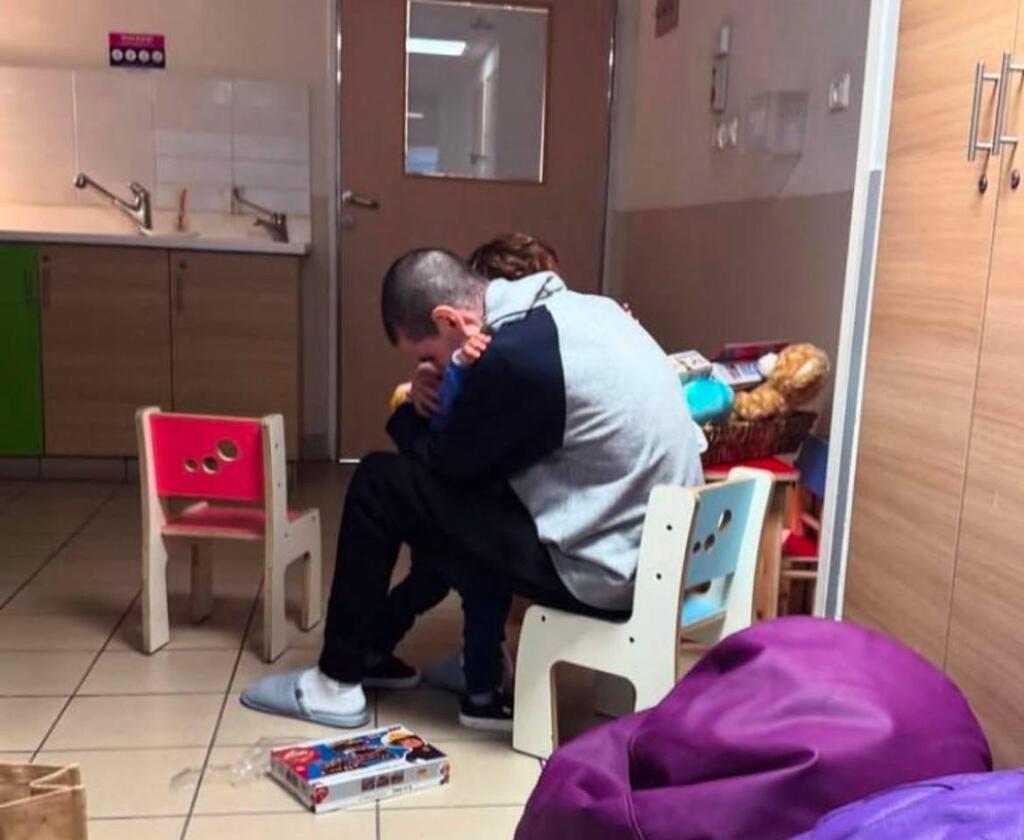
Or Levy reunites with 3-year-old Almog after being released from Hamas captivity
(Photo: Yoav Weinfeld)
“When we're together, we feel safe,” Or Levy says. “Even when we’re surrounded by loved ones, there’s always that look we share. When I returned, he was 3 and a half. Now he’s nearly 4 and a half, and I see the process he’s going through. He’s growing up in front of my eyes, and I’m growing with him. We cry, talk, share. We’re grieving together," he says.
Or recounts something Almog said suddenly, out of nowhere, about his mother. “That makes me happy. It shows he’s a healthy child who talks about things, who acknowledges the difficulties that will always be a part of his life. But at the same time, seeing him happy and laughing, dancing and playing, it’s incredible."
“This is our second trip with the association Lehosheet Yad,” he says. “People have formed a real community. I connected with so many people - parents of abducted children, children who were hostages themselves. Hearing their stories, seeing how much we share despite our differences, it’s overwhelming.
"Everyone went through a different kind of hell. For me, this is a rare chance to speak openly with people like me. That’s the true essence of this trip - every evening when we all sit together, every bus ride, every conversation that couldn’t happen anywhere else. And the kids run around between us, playing, and it feels like the most natural thing in the world. “You’d think that after a long day like today, everyone would head to their rooms and sleep. But the opposite happens — everyone stays. Together.”
“In everyday life, it’s hard for me to face details from October 7. Not just emotionally, but practically. But here, I listen, I understand more. It’s the first time I’ve allowed that for myself. I heard stories of captivity, some similar to what I experienced, but here I’ve also heard stories of survivors — from the Nova festival, from kibbutzim, from families who spent 20 hours locked in a safe room. Horrifying stories no less shocking than mine. To hear a child talk about his own abduction, it’s unimaginable."
And what’s happening now at home?
“Almog started a new preschool, and I need to figure out what’s next. Since I returned, a lot has happened. I had surgery on my arm to remove shrapnel. We went on trips. We got through Sukkot and Simchat Torah, which were so emotionally difficult. Now I’m having a kind of routine. It feels like being reborn. Like starting life over. I’m trying to find new meaning, new directions, to figure out what I love doing, what I want, all the plans I dreamed of while in Gaza; now I have a lifetime to fulfill them."
Part of history / Liron and Zuli Mor
One quiet afternoon, Liron and Zuli Mor and I sit not far from the beach, talking about the new life they chose after a tragedy no one chooses. Liron is the sister of Smadar Idan, who was murdered in Kibbutz Kfar Aza along with her husband, Roee Idan. Since then, the Mors have been raising the Idan's children — Michael, Amalia and Abigail — alongside their own three: twins Zohar and Inbar, and Daniella.
“We chose the children, but before that, they chose us,” Liron says. “I remember a car ride with our older kids, when Abigail was still in captivity. They told us then that they wanted us all to live together. It moved us so deeply. Even though we already knew it was the right decision, hearing it from them gave us so much strength."
From a family with three older kids, they started again. “So there are the small things,” Zuli explains. “Like grocery shopping. For 14 years you shop for five people - a kilo of cucumbers and two tubs of cottage cheese. I remember one morning I went shopping, and by lunchtime Liron asked where all the food went, because there was nothing left. That’s when it hit me, we’re eight people now. It’s a completely different way of life, and you’re thrown into it with no preparation. It’s a leap into a new life.
“There were a lot of changes, even technical and logistical ones, like getting a bigger car. Or the first day of school, which is a massive production. But now the 'machine' runs smoothly. We’re a tribe. It’s a lot of fun, and it gives us so much strength. Six kids, with all the challenges and logistics and difficulties, it’s also the happiest thing. I wouldn’t change a thing.”
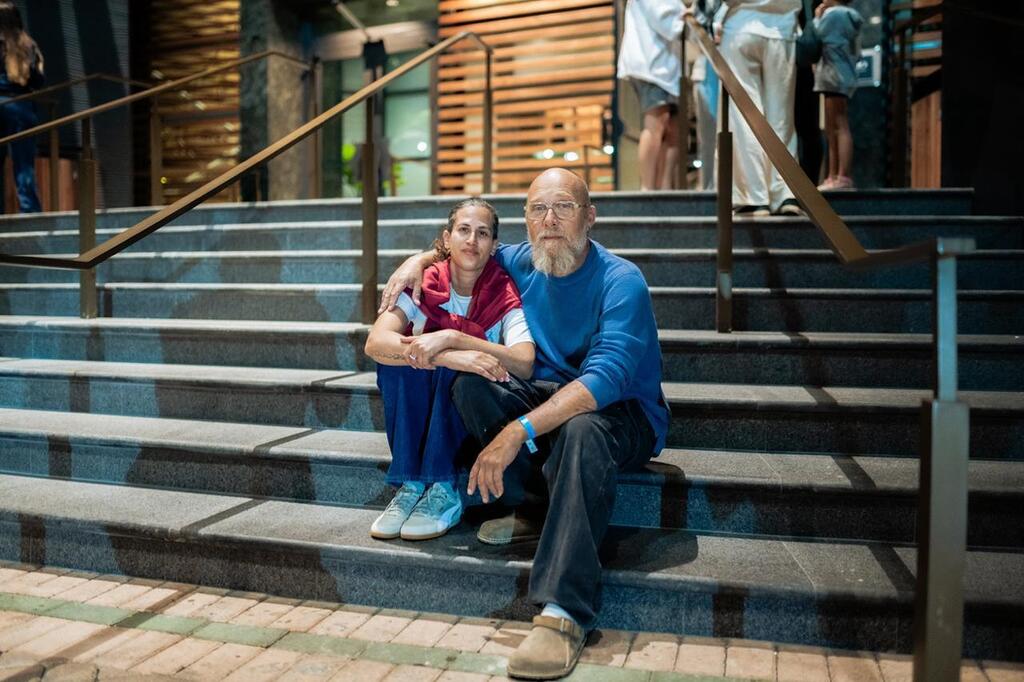
Liron and Zuli Mor. Starting a new life
(Photo: Nir Davidzon)
Liron: “A family of eight is definitely something else. It’s a powerful force; having meals together, the conversations, the house always full. Someone who’s helped guide us once said that no matter how big our 'blanket' is, it’ll always be a little too short, and everyone will pull it toward their side. That’s probably the biggest challenge, trying to meet as many of the needs in the house as possible, from the youngest to the oldest. The ages are different, the needs are different, and resource-sharing is delicate."
Zuli: “At 53, I started life from scratch. Since October 8, our dream has been to regain calm and stability. We wished that the most challenging scenario would involve a child with a fever, leading to a small argument about who stays home to take care of him, but not nightmares and trauma triggers. Today, we have that stability — schools, after-school activities, a daily routine, a sense of rootedness. It might not be a full return to routine, but it’s a clear step toward a new life."
As for the trip to the U.S., he adds: “A real community has been formed here. All six kids are always happy to go on a Lehosheet Yad trip. No questions asked. Everyone here speaks the same language. There isn’t a family that hasn’t been affected. Someone in each of the families here was either abducted or murdered. When I sit with a stranger and say there were terrorists in my home, I don’t know if they really get what that means. But here, they do.
“And the team here is amazing. So many people are helping. And there's Avraham Atar (the organization’s founder) who is at the helm. He had a vision, and he made it happen. I don’t think even they realize how much good it does. For the kids, it gives a sense, maybe missing from daily life, of understanding and normalcy. Here, they’re no different from any other child. And the beauty is not just the tragic bond of captivity or loss, but the friendships, the games, the conversations, the connection that forms between everyone."
Liron: “Even before the trip, the volunteers and service members were part of our lives, at birthdays, for example. They’re meaningfully present every day. I know I can turn to them with anything, and they’ll move mountains. At the last memorial for Smadar and Roee, it was the organization’s volunteers who watched the kids. That says it all."
We keep talking about the present, the future, about October 7, and the tension between the desire to return to normal, private life versus the need to keep telling the story so it’s never forgotten. “At first I wanted to go out on the street without being recognized,” Zuli says, “but there must not be a single person in Israel who doesn’t know who Abigail is. We have a responsibility. I tell that to the kids too; we’re writing history on our own flesh. We are part of it."
Connection / Almog Meir Jan
For Almog Meir Jan, who was rescued from Gaza in Operation Arnon after roughly eight months in captivity, the trip to the U.S. was a rare chance to meet others who share his fate. “For me, connection is healing,” he says. “If they can open up and share, and so can I, it brings closure. I found myself talking a lot with Yosef Haim Ohana. He asked about the rescue, and I told him everything. We talked about what I’m doing now, the lectures, the way I tell my story. I told him about my father, who died on the day of my rescue."
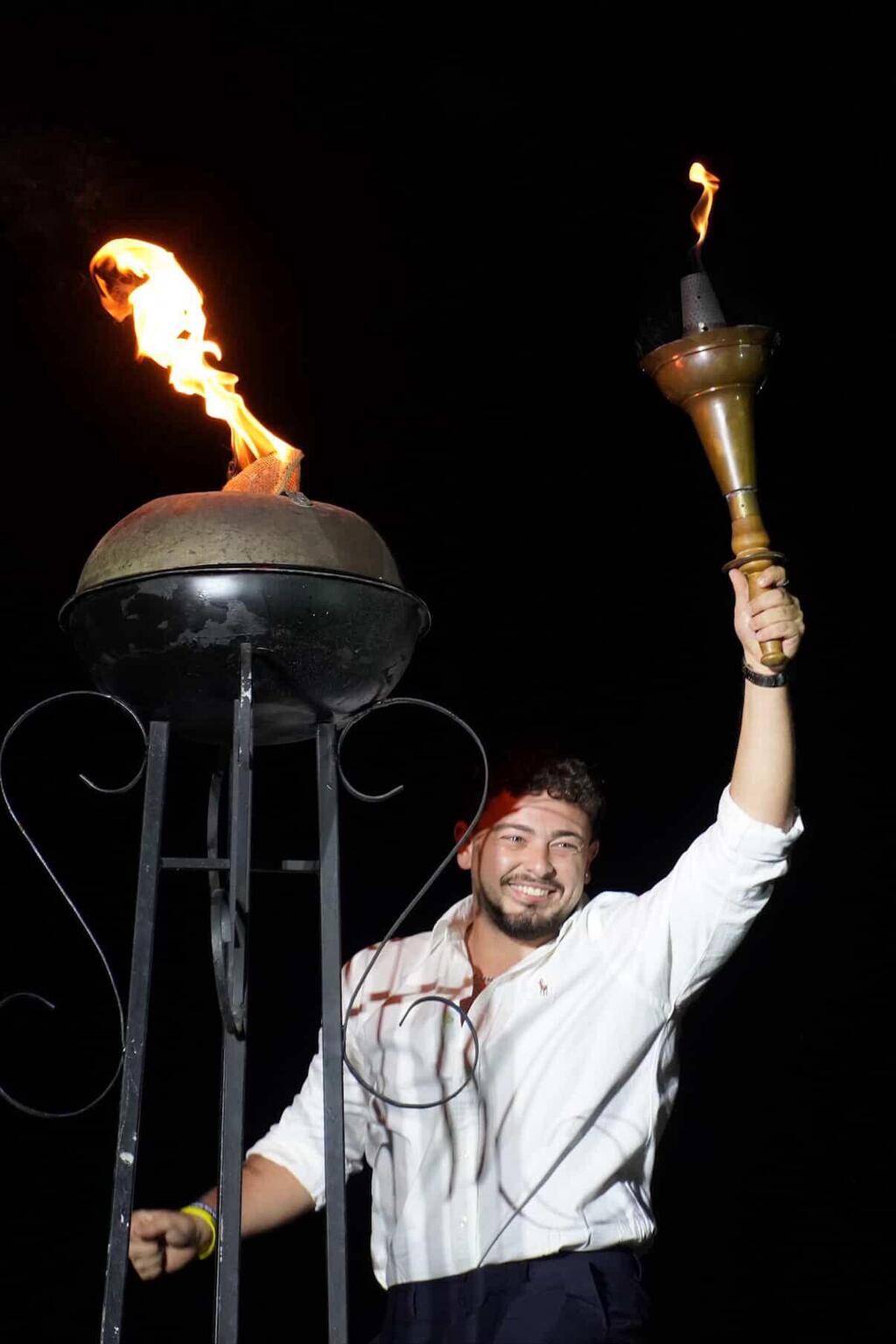
Almog Meir Jan
(Photo: Asaf Angel)
In the very first moments after Jan returned to Israeli soil, he asked about his father Yossi. “They told me he was fine. And two hours later, my mother and the psychologists came to tell me he had died,” he recalls. “That moment, there’s nothing else like that."
Is there acceptance, despite the sense of loss?
“There’s definitely a sense of loss. In captivity, the one thing I kept telling myself over and over was, ‘I have to fix my relationship with Dad.’ I succeeded in a way, but not how I wanted. Still, I believe he protected me during the rescue. And I was lucky enough to say Kaddish for him and accompany him to his final resting place. That gives me strength."
Tell us about how you’re coping.
“The tools that helped me survive captivity are the same ones I live with today: perspective, gratitude and the ability to come to terms with reality. Understanding that you can’t control what's happening outside, but you can control what happens within yourself. Captivity was extremely challenging. Maybe my personality helped ease it a little, but there were some very hard moments. Since the living hostages returned home, I’ve felt much more at ease. My biggest fear in terms of triggers and post-trauma was the fact that Hamas had power over you; they could release a video of a hostage and break you. Now, they no longer have that. It’s a huge relief.
“I also know that after my rescue, other hostages suffered much more because their conditions worsened. I told myself back then that it was better we all hold on for two years and share the suffering than have someone suffer because of me. At the same time, I know that the rescue gave strength to an entire nation. It restored faith in our army. It gave people hope."
Trust / The Wenkert Family
When asked how she is doing, Niva Wenkert, mother of Omer Wenkert, pauses. “How am I doing is a question I find myself asking a lot", she says. “To say the truth, I don’t always have answers. There really is no routine to return to. You can’t just say ‘He's back’ and carry on where we left off. This is a brutal cut to life. And even after his return, not everyone came back. It’s not over."
She describes a complex feeling that’s hard even to name. “It's like survivor’s guilt. I knew the concept before, but feeling it, that’s something completely different. And now, I’m mostly searching where I'm heading. Honestly? I’m not okay. I don’t know what I want or where I’m heading."
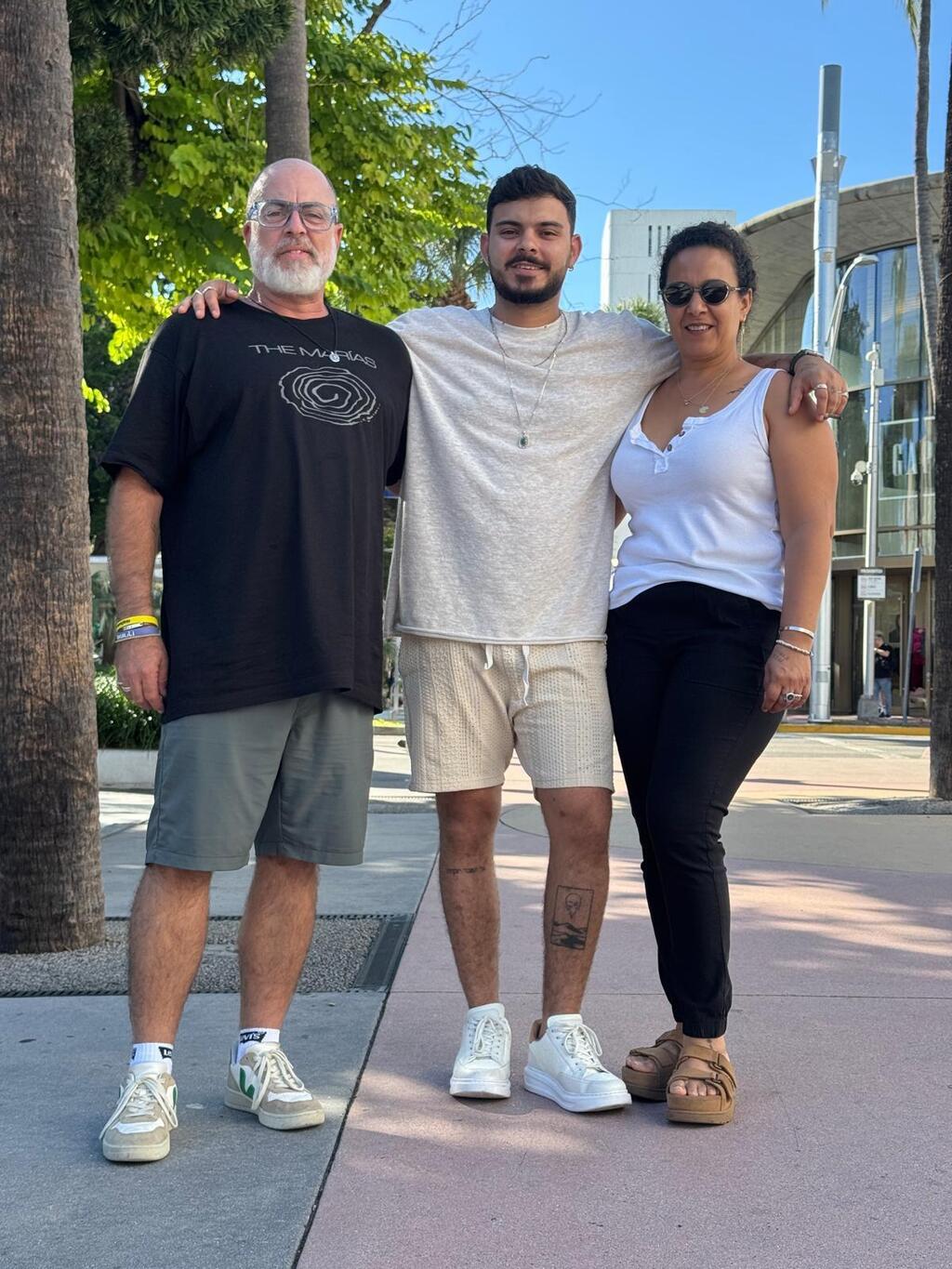
Omer Wenkert with parents Niva and Shay
Alongside trying to function again, there’s also an attempt to rebuild the family. “There are other children at home whom we barely saw during the struggle", she says. “They understood, but that didn’t make it any simpler. Now it's about restoring my family, my life, who I was."
“Before October 7 I felt serene and stable,” she explains. “Then everything got shattered. On one hand it was a brutal blow to our lives. On the other, I see this as an opportunity. A chance to start over. It could be meaningful, even magical, but it’s hard. The trauma of those two years is always present. Sometimes I feel emotionally numb. On other times, something trivial like a child laughing, an innocent moment, can bring tears to my eyes."
“The Lehosheet Yad community gave me back faith in people. They do good, as simple as that. They don’t try to look good, that's who they are. They’re always checking in, asking what you need or might be missing, always with a smile. You don’t feel like a guest, you feel at home. What moves me most are the kids. Seeing these children who were in captivity smiling, laughing, enjoying themselves, that's incredible. These are moments words can’t explain. Even amid joy, the pain doesn’t disappear. It’s always there, just in a different shape. But within this community, it seems possible to carry the pain, together."
Her son Omer also struggles to hide his feelings. “There’s so much strength on this trip,” he says. “I enjoy being with my family, but also being surrounded by people who were also kidnapped and held captive. We have so much in common and it means so much. Deep conversations emerge, things hard to explain to someone who didn’t live through it."
He recalls that in earlier trips with the association he already felt the connection, but this time it’s intensified. “For the first time I met Or Levy,” he says, “and we sat and spoke for hours late into the night. The connection happens immediately. My partner looked from the side and said: ‘You have a different language. I didn’t understand half of what you said.’ And that’s true. Sometimes it’s a look, a gesture, a glance. You don’t always need words. It helps greatly to talk and share. In the end it feels less like a group and more like a family. It’s the kind of place where you feel protected. If something comes up, a trigger, a bad feeling, there’s at least one person here who understands exactly what you’re going through."
There is a purpose / Rotem Calderon and Tom Engel
Twenty‑one-year-olds Rotem Calderon and Tom Engel have known each other since childhood. Rotem is the son of Ofer Calderon and brother of Sahar and Erez, three who were kidnapped into Gaza and have since been released. Tom is the son of Ronen Engel z"l and Karina Engel, and the brother of Mika and Yuval, who were also kidnapped. Their friendship deepened over the years, especially after October 7.
They are the only ones in their families who weren’t in the kibbutz on that fateful Saturday and weren’t kidnapped. About two months ago they moved in together in Tel Aviv, each learning how to rebuild a routine. “We’re pretty much in the same place,” they say. “There aren’t many who understand us like we understand each other."
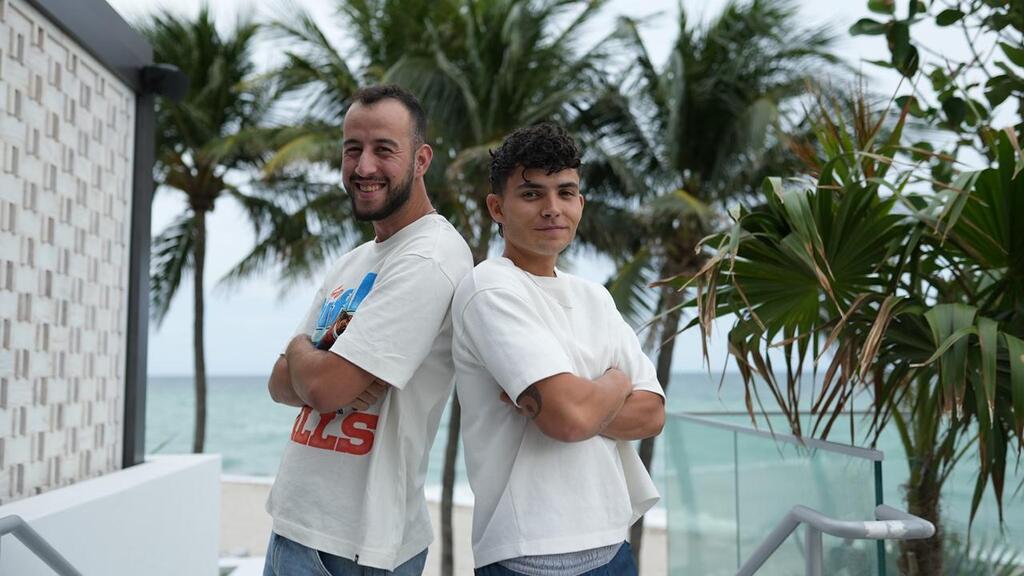
Rotem Calderon and Tom Engel
(Photo: Nir Davidzon)
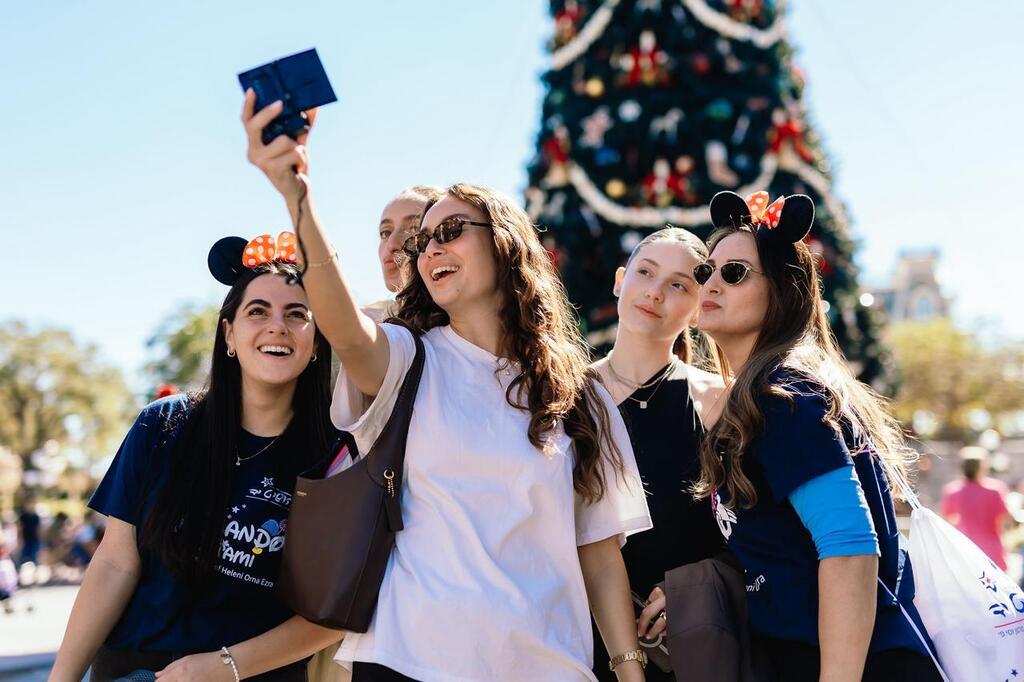
Selfie, Gaya Calderon
(Photo: Asaf Angel)
They are both also learning to live alongside the trauma. For Tom, closure only came recently, when his father Ronen was laid to rest in Israel. “They returned Dad to us, but he never really came back,” he says. “That pain will stay with me all my life. But we must learn to live with it, to go on, find a routine, meet friends. That’s what he would have wanted."
The night before our conversation, Tom caught everyone’s attention when he played darbuka at the talent contest. We’re used to seeing him in news coverage and on TV screens during the struggle to bring back the hostages. But now he seems different: he’s playing music, smiling, even though there’s sadness in his eyes. You can see the effort to reclaim a love for life. “Learning, growing, feeling that there’s a reason to live,” Rotem says. “It’s happening slowly, day by day."
They arrived on this trip as a surprise, a few days after everyone else, and without their extended families being told. “This journey is important for us,” they conclude. “It allows us to disconnect and take care of ourselves. To find ourselves again, and we are grateful for the opportunity."
A moment to breathe / Danielle Aloni
Danielle Aloni is here too, with her daughter Emilia. On Simchat Torah they visited Danielle's sister Sharon Cunio at Nir Oz and were kidnapped, along with other family members. Danielle and Emilia were released on the first deal, while the last of the relatives, brothers Ariel and David Cunio, returned only in October with the ceasefire.
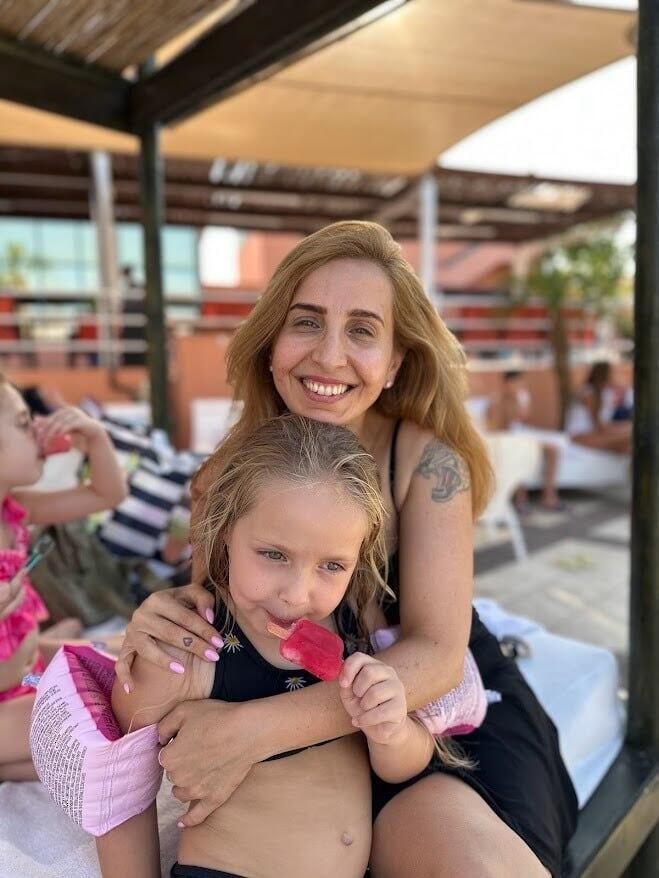
Danielle Cunio and daughter Emilia.
( (Archive) )
“This trip came just at the right time for me,” Danielle says. “After a long period of constant stress which involved the release of family members, the return of living hostages, and the pain for those who didn’t return, the body finally relaxed but it was overwhelming. I needed to break loose, to breathe."
“This journey is emotionally intense", she adds. "The parks were full of triggers that made things hard for Emilia. Only those who know us well understand why fear overwhelmed her, and why my nights are still filled with panic attacks. Every dark ride, every sudden noise, every shift of light triggered her anxiety. I saw her become hyper-alert, her pulse racing, hands covering her ears, real distress. It breaks your heart to realize the fears she carries inside, fears you don’t always see on the outside and therefore can’t fix immediately."
“On the other hand, among all that hardship there were also moments of courage. She tried, she confronted her fears, and sometimes even came out with the feeling: ‘I am a hero. I made it through.’ As a mother, I'm always walking a fine line, neither forcing her, nor shielding her from every experience. Part of recovery is exposure, confronting the fear, taking a step forward. And in the end, despite everything, we had a family experience of release, of togetherness, of deep breaths after such an intense year."
“What’s special here is that there’s no need to explain anything. Everyone understands you. Every time I think of Lehosheet Yad, my heart expands. I’m grateful for the supportive, embracing community they created with so much thought and endless work from the organizers and dozens of volunteers. Maybe I regret the tragic circumstances that brought us here, but I’m thankful and privileged to belong to this family."
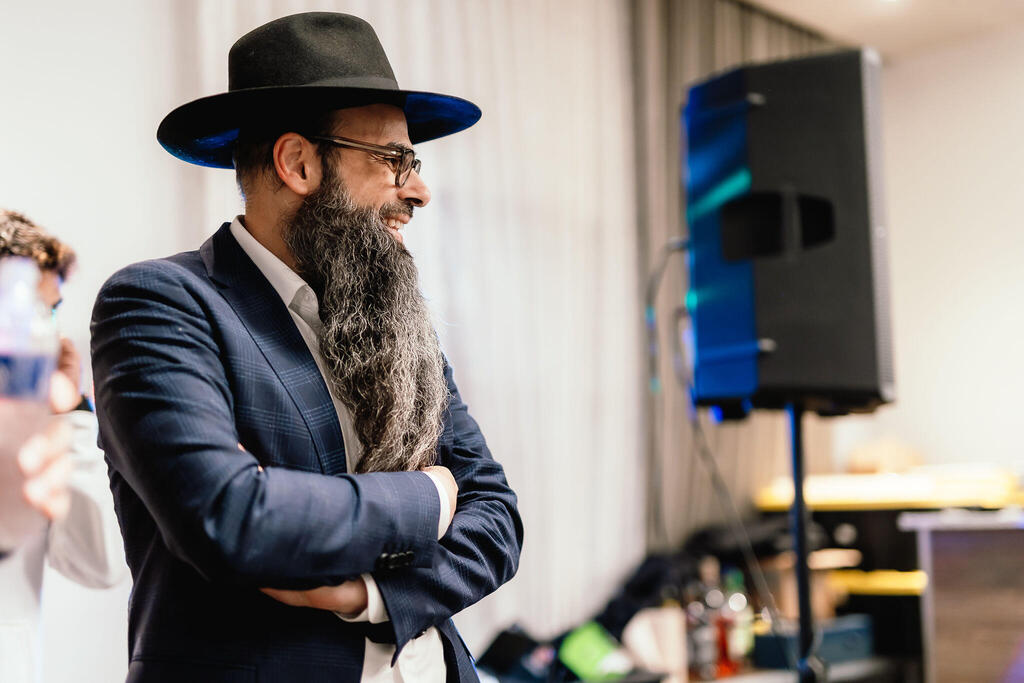
Avraham Atar
(Photo: Asaf Angel)
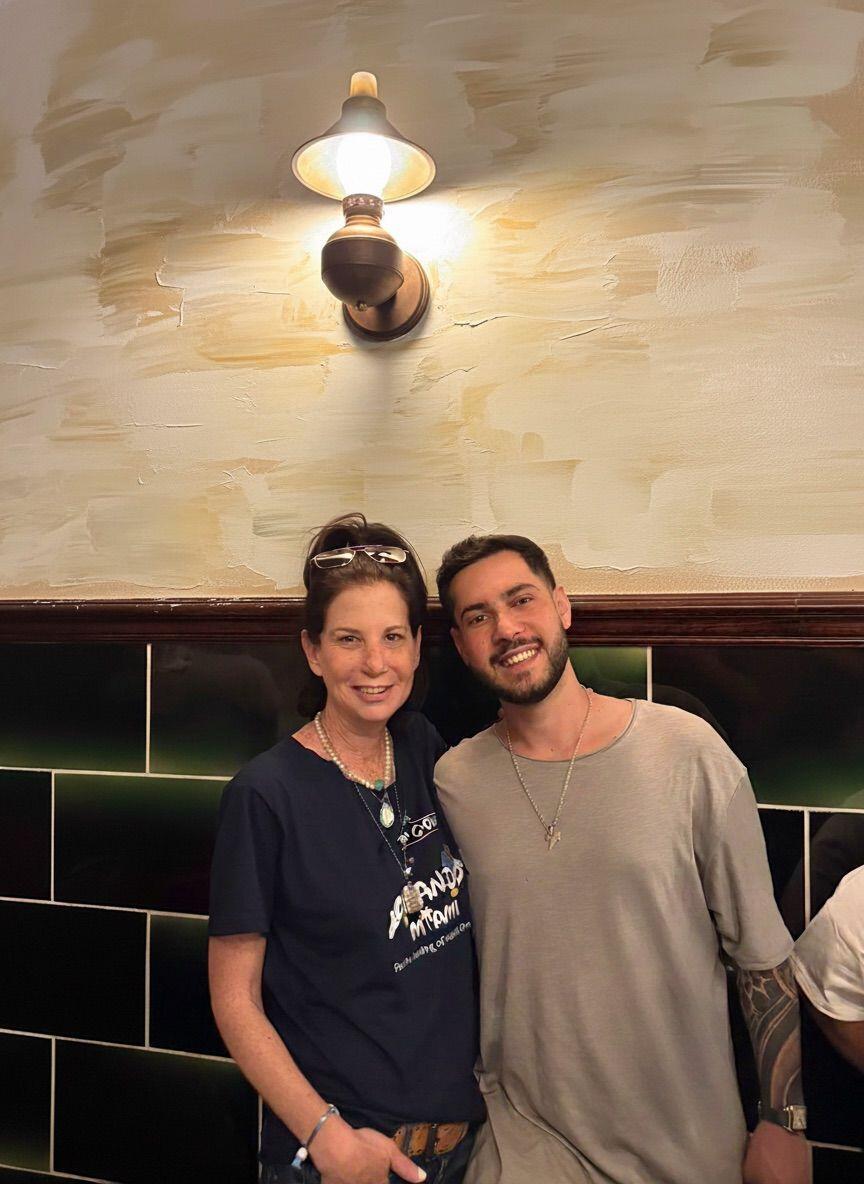
Gilat Biran and Eliya Cohen
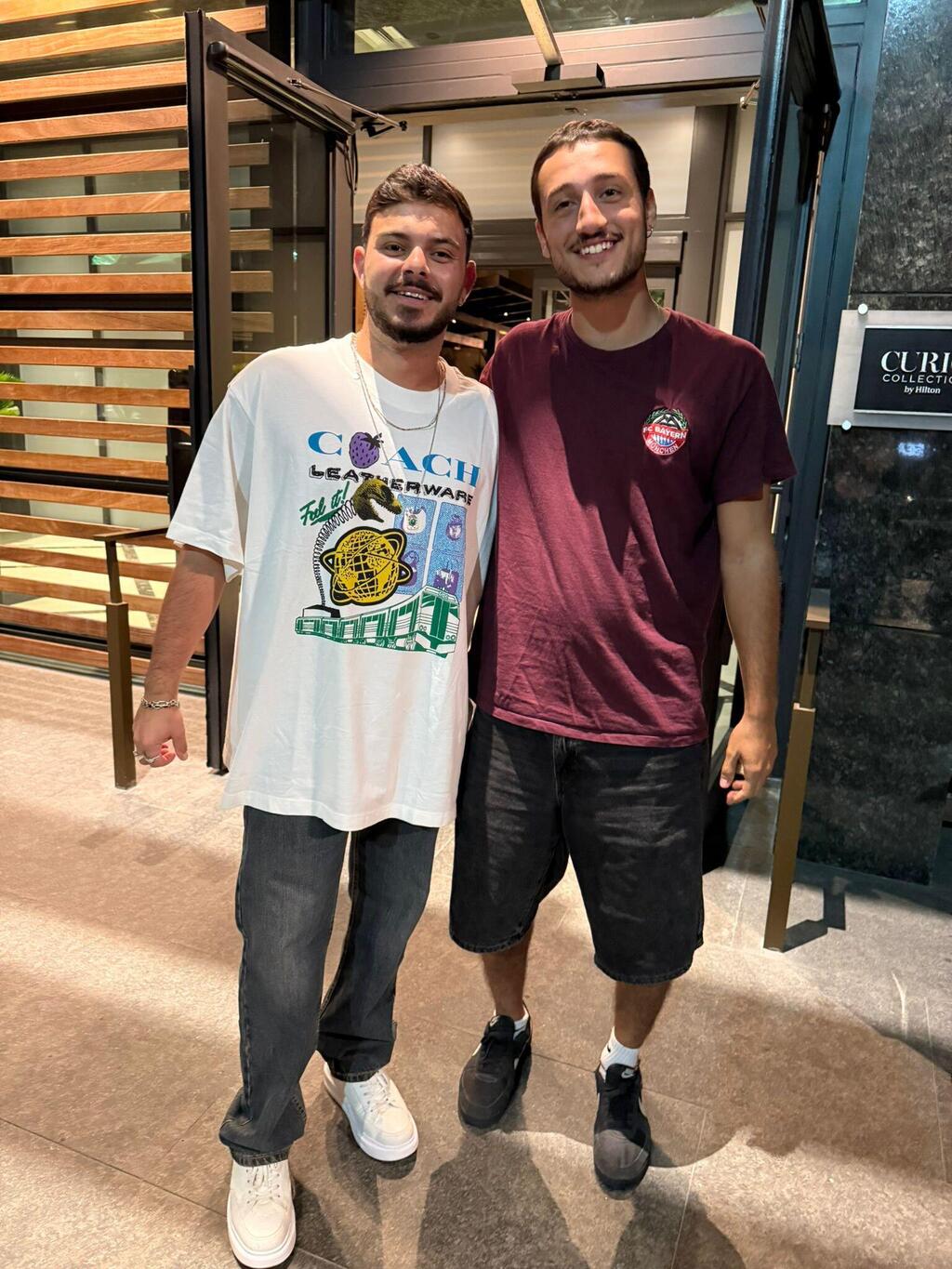
Liam Or and Omer Wenkert (left)
(Photo: Asaf Angel)
The amusement parks in Orlando shine and colorful, almost too sweet. Roller coasters, music, cartoon characters and children’s joyous cries. But beneath the noise and sparkle, triggers surfaced: dark rides that recalled tunnels, loud noises, crowds, fireworks. Small moments when the body remembered. Some couldn’t board certain rides, some had to leave midway, some felt their heart racing unexpectedly. Amid it all, each person tried to find their “safe place”—sometimes a mother’s hand, a friend’s laugh, or simply the knowledge that they weren’t alone.
“Between the smiles in the parks and the painful silences at night, despite all the joy and the children’s and mothers’ laughter, you couldn’t ignore the pain. It looked back at you through their eyes,” says the founder of the association, Avraham Atar. “I’ve accompanied these families for almost two years, day after day, and I see up close the rupture captivity left behind.
"They try to return to routine, they thirst for life, but every simple step becomes a shattering emotional challenge. I’m sure people see the smiles in the photos and assume they’re OK. But when you’re by their side, you feel the quiet cry, the longing for those who will never return, the fears that haven’t healed yet. We’re here to constantly remind them they’re not alone."
Gilat Biran, from the association's team of the “Back to Life” project, adds: “This journey allows them to put their heart into it without having to explain too much. To be who they really are. I hope we’ll continue gaining partners who understand that the rehabilitation of these families is for life, and that so other families, other survivors, can find a moment of serenity, a hug, a breath. This isn’t a luxury. It’s a need."
The power of not knowing / Chen Avigdori
On November 25, the Avigdori family marked two years since the release of mother Sharon and daughter Noam, who had been visiting relatives at Kibbutz Be’eri when they were abducted to Gaza. Since then, Chen Avigdori, the father, has been deeply involved in the struggle to bring the remaining hostages home and has taken an active role in helping families rebuild after captivity.
The following story describes him as well as the essence of this community, better than anything else. It started at the beginning of the theme park tour in Orlando, when Avigdori realized I wasn’t a big fan of the genre. I didn’t need to explain why I was not drawn to the kind of thrill and fear these rides are built to deliver. “We’ve had enough of that,” I said. “Why seek it out?", I explained.
Chen understood and immediately offered: “Let’s meet tomorrow at Avatar. Just Avatar. It’s beautiful. It’s not scary. I’ll be with you.”
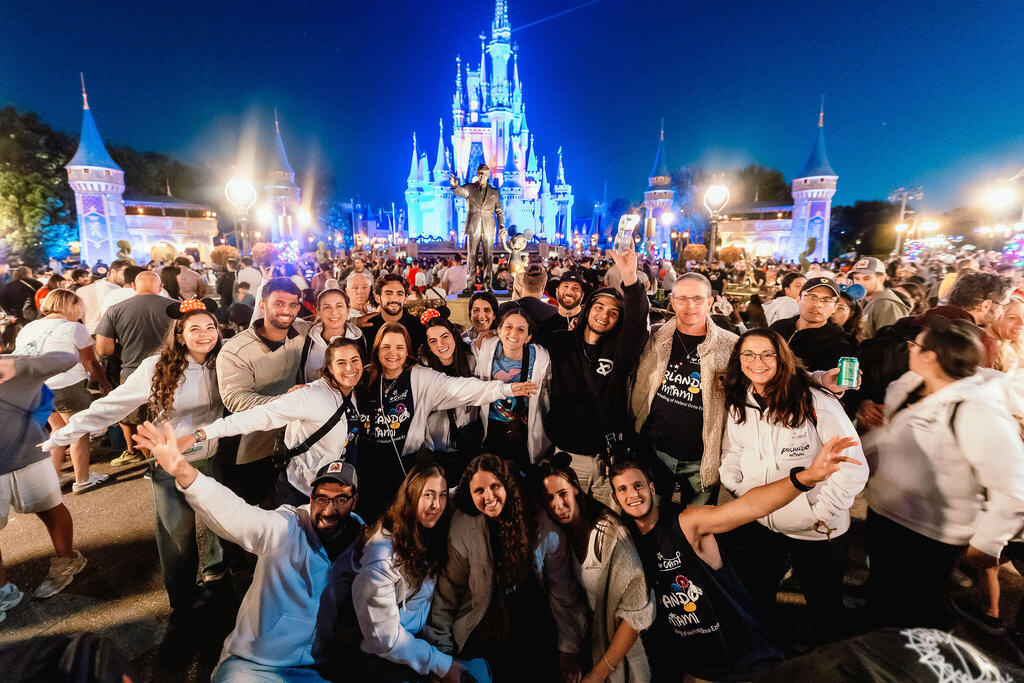
(Photo: Asaf Angel)
There was something in his calm, reassuring voice, his knowledge of the place and the rides, and mostly his kindness, that convinced me. The next day, we met at the entrance to the Avatar ride - a flight simulator across the fictional planet Pandora. Floating as an “Avatar” between trees and valleys, into the skies and down alongside waterfalls was beautiful. And yes, it was scary too. There were drops and twists that had me shutting my eyes tight.
Then, we headed to TRON Lightcycle Run, a high-speed coaster. Chen was on my left, Or Levy on my right. I asked 20 questions: how high, how fast, how many turns? They answered each one with patience and confidence. “Personal growth,” Chen said with a smile. Or reassured me: “You’re okay. We’re okay. Let’s go up together."
The fear was real. But the closeness, the friendship, the genuine moment we created around it, that outweighed the fear. Then came the roller coaster. Then another ride, where only a minute before it started to spin, I realized I didn’t even know what it was supposed to do.
“It’s good to know you don’t always need to know,” Or said, as Chen strode ahead confidently and excitedly to the next ride, and we followed. That’s how it is when someone sees and understands what you’re going through alone. What scares you. What frees you.
The writer was a guest of 'Lehosheet Yad,' an organization that supports children and families released from Hamas captivity as part of the “Back to Life” project. Donations to the organization can be made through its secure website or by phone: 03-9090500.