


It was late morning when two teenage boys climbed a hill and approached a group of senior Israeli figures touring the West Bank to examine reports of rising Jewish nationalist violence.
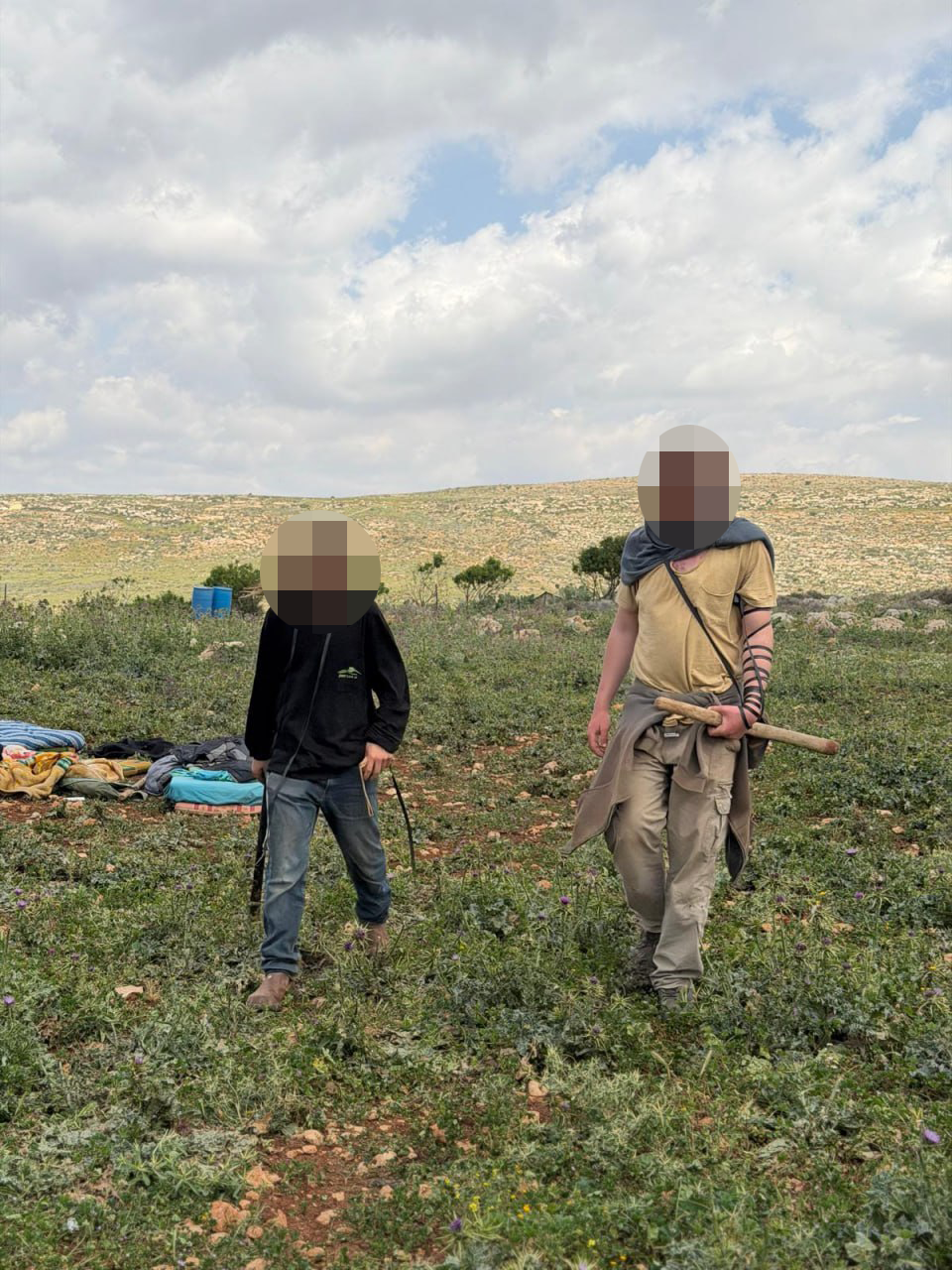
One of the youths, about 16, was tall and broad, with the beginnings of a blond beard on his chin and cheeks. The other, around 11 or 12, was smaller and thin, also blond. Both wore large knitted kippahs, with long, thick sidelocks hanging beneath them. Tefillin were strapped to their foreheads and left arms, and each carried a thick stick.
The group they approached included four retired major generals, a former head of the Shin Bet internal security service and a journalist. They had gone out to see for themselves whether, and to what extent, reports of a wave of Jewish nationalist attacks in the West Bank reflected reality.
The tour was organized by former senior defense official Yaakov (Mendi) Or and a group that includes more than 100 former senior figures from the security establishment, police and intelligence community. Human rights organizations assisted with guidance and documented information. The visit took place near the Allon Road in the eastern slopes of the Samaria hills, toward the Jordan Valley.
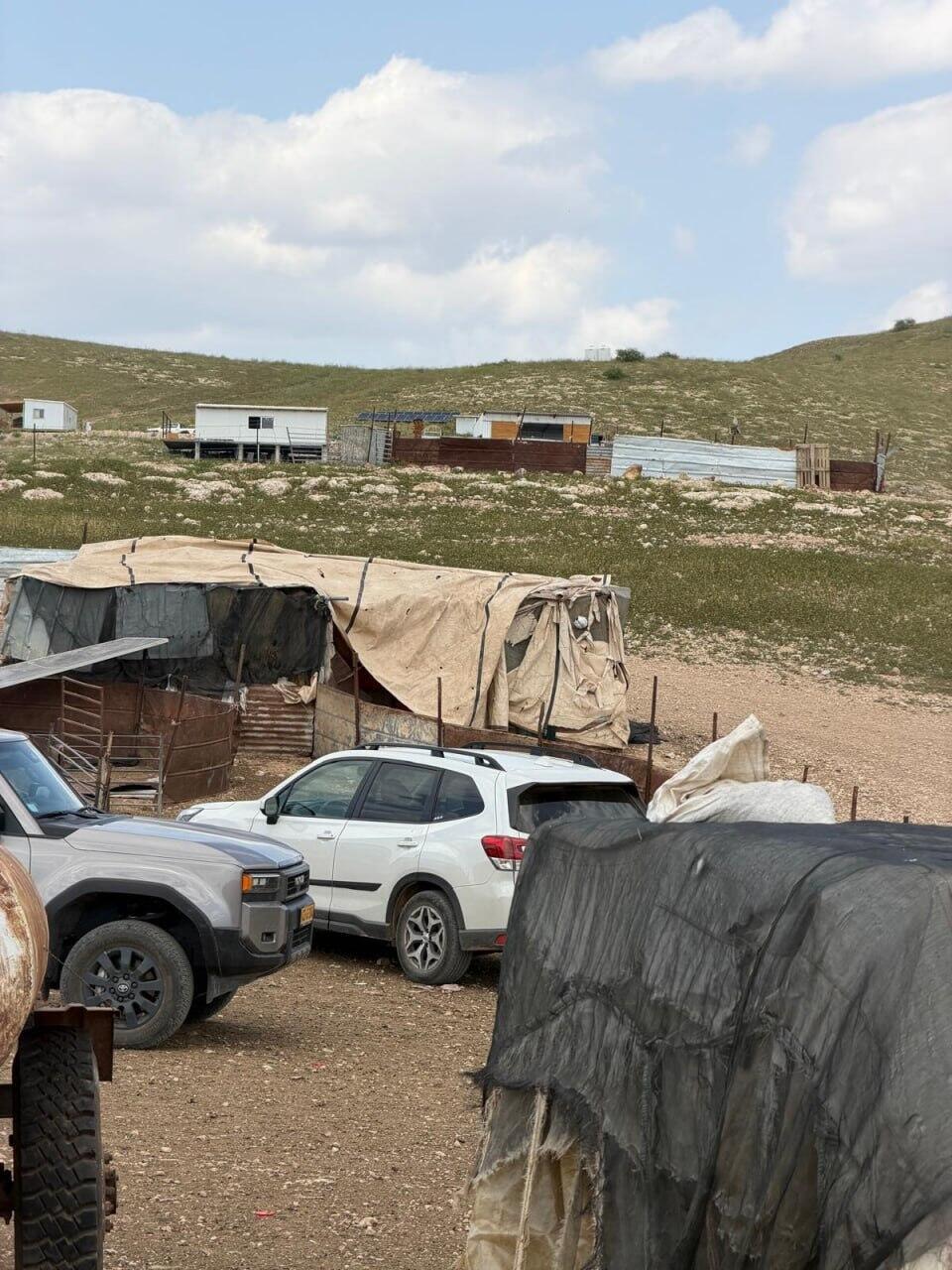
In a Bedouin encampment in the wadi below, goats grazed and a dog barked. The group was accompanied by three Israeli human rights activists who had volunteered to stay overnight at the herders’ compound, hoping their presence might deter Jewish extremist attackers who had already raided the site on one night the previous month. They were also there to document incidents so the military and police could not claim a lack of evidence.
One activist said that during the night he saw one of the boys walking through the encampment and even entering several animal pens “as if he owned the place.” The Palestinians did not dare confront him, knowing it was a provocation meant to trigger threats or violence.
Palestinian herding communities in the Jordan Valley area have learned over the past two years that even pushing away a young provocateur — let alone striking him or throwing stones — can lead to a nighttime attack by dozens of Jewish extremist assailants on the encampment and its residents.
The military often arrives relatively quickly at such incidents, both by day and night, but the response varies by unit. In many cases, regular reserve battalions try to restrain the attackers, detain some of them and hand them over to police, while also detaining Palestinians who are later released if no serious injuries or fatalities are involved.
In other cases, however, reservists who share ideological views with the perpetrators may stand aside and not interfere, and at times even assist them. Similar incidents have occurred in regular units stationed in the West Bank, where commanders and soldiers have deviated from military norms for religious-nationalist reasons. The military chief of staff recently removed a reserve battalion from operational duty for additional training following such concerns.
The two youths, who had by then come closer, appeared to have spent the night on a nearby hill overlooking the Bedouin encampment, just dozens of meters away. Mattresses, sleeping bags, remnants of a campfire and a kettle were visible at the site.
When asked why they had come, the older boy remained silent. The younger one replied: “God gave us this land, and it is ours.” Attempts to continue the conversation yielded similar responses, reflecting a firm reliance on a divine mandate as an answer to moral and practical questions.
(Photo: Ron Ben-Yishai)
Participants in the tour said the exchange reinforced their sense that they were witnessing a form of Jewish nationalist violence driven by religious and ideological motives.
Descriptions they had heard in recent years from military officers, journalists and eyewitnesses, they said, appeared to match what they saw on the ground. Palestinian villages and herding communities were being encircled to restrict movement and exert economic pressure, they said.
The operational bases for such activity are established settlements or farms approved by the government. From these, small groups — typically one or two families with young children, along with several single men — set up outposts a few hundred meters from Palestinian communities. Sometimes this follows militant attacks, but increasingly it occurs without a direct security trigger, as military activity has significantly reduced such violence.
These outposts are quickly equipped with caravans, water tanks, generators and small livestock pens with dozens of sheep and goats. Funding and logistics are often provided by settlement organizations such as Amana or by local councils funded by taxpayers.
The military typically informs those involved that outposts built on private land or without authorization will be dismantled, but enforcement is often delayed until sufficient forces can be assembled to confront dozens of activists expected to resist evacuation. In the meantime, a small force may be deployed to guard the outpost.
Within days or weeks, another outpost may be established on the opposite side of a Palestinian community, expanding control over land and grazing areas.
From these outposts, youths such as those encountered during the tour maintain a near-constant presence on surrounding hills overlooking Palestinian communities. Their presence alone conveys a sense of threat, alongside what activists described as “provocation patrols” along the edges of or inside villages.

(Photo: Gil Yochanan)
At times, they enter the heart of communities on foot or using all-terrain vehicles provided to outpost residents for security purposes by Finance Minister Bezalel Smotrich.
Members of the delegation said what they witnessed was deeply unsettling. Some described it as a phenomenon with far-reaching and destructive implications, not only for Israel’s international standing but also for its future as a society and state.
They said the activity appeared systematic, organized and funded, with a long-term strategic aim of removing much of the Palestinian presence from the West Bank and asserting Israeli control.
Some participants linked what they saw to a plan outlined by Smotrich in 2017, which envisions Palestinians who remain living in limited autonomous enclaves around major population centers. They said the policy is being advanced and funded through his roles in the Defense Ministry and as finance minister, with the backing of Prime Minister Benjamin Netanyahu and other senior ministers.
As the group left the area, participants said the experience left them with a sense of alarm about the long-term implications. Some warned that if such trends continue, they could shape the future reality between Israelis and Palestinians for generations.