

In the moments before sunrise on October 7, the dance floor at the Re’im parking lot of the Nova music festival was still full of color, music and thousands of young people who had come to celebrate. But within hours, the dance floor became the site of the largest massacre of that day, as many partygoers hid or fled for their lives.
The parking lot later became an improvised memorial project. Today, more than two years later, it is one of the most visited places in Israel, if not the most visited.
Gallery
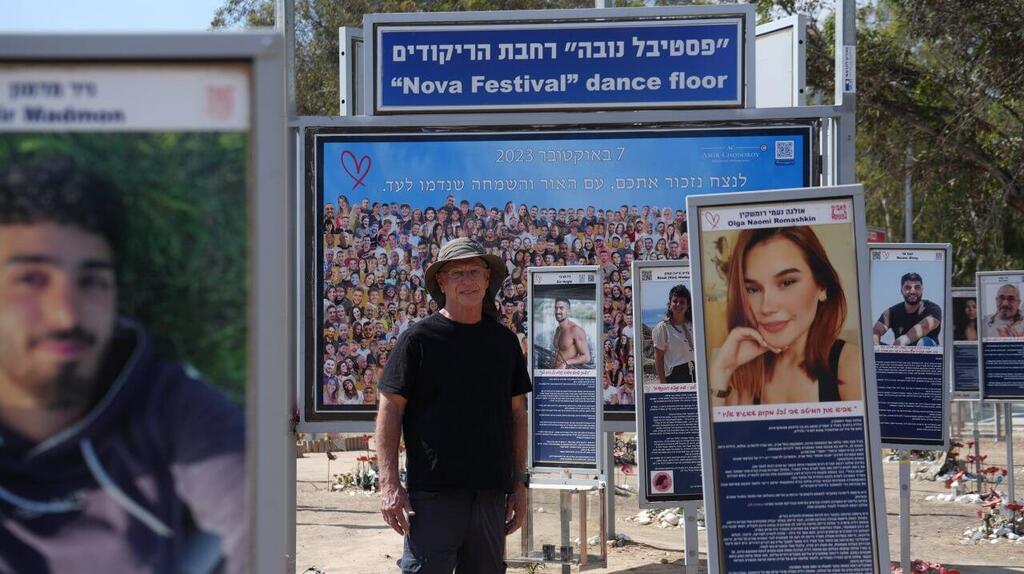
Amir Chodorov at the memorial site: 'I learned everything I could about the victims'
(Photo: Tomer Shunem Halevi)
Among the signs, photographs and flags, thousands of visitors come each day, bereaved families, students, tourists and soldiers, trying to grasp the scale of the disaster and remember those who were there.
The site’s 'project manager'
“I got into this almost by chance,” says Amir Chodorov, who later became known as the “project manager” of the Re’im memorial site. “I realized that the victims here did not belong to one group. They were not all soldiers, not all kibbutz members, not all from the same city. If we don’t bring them together, they may not be remembered.”
Chodorov served for 25 years in the Israeli Air Force, was a fighter pilot and commanded squadrons. He was discharged in 2000 and has worked in art in recent years. After the massacre, he came to the Gaza border area and has barely left since.
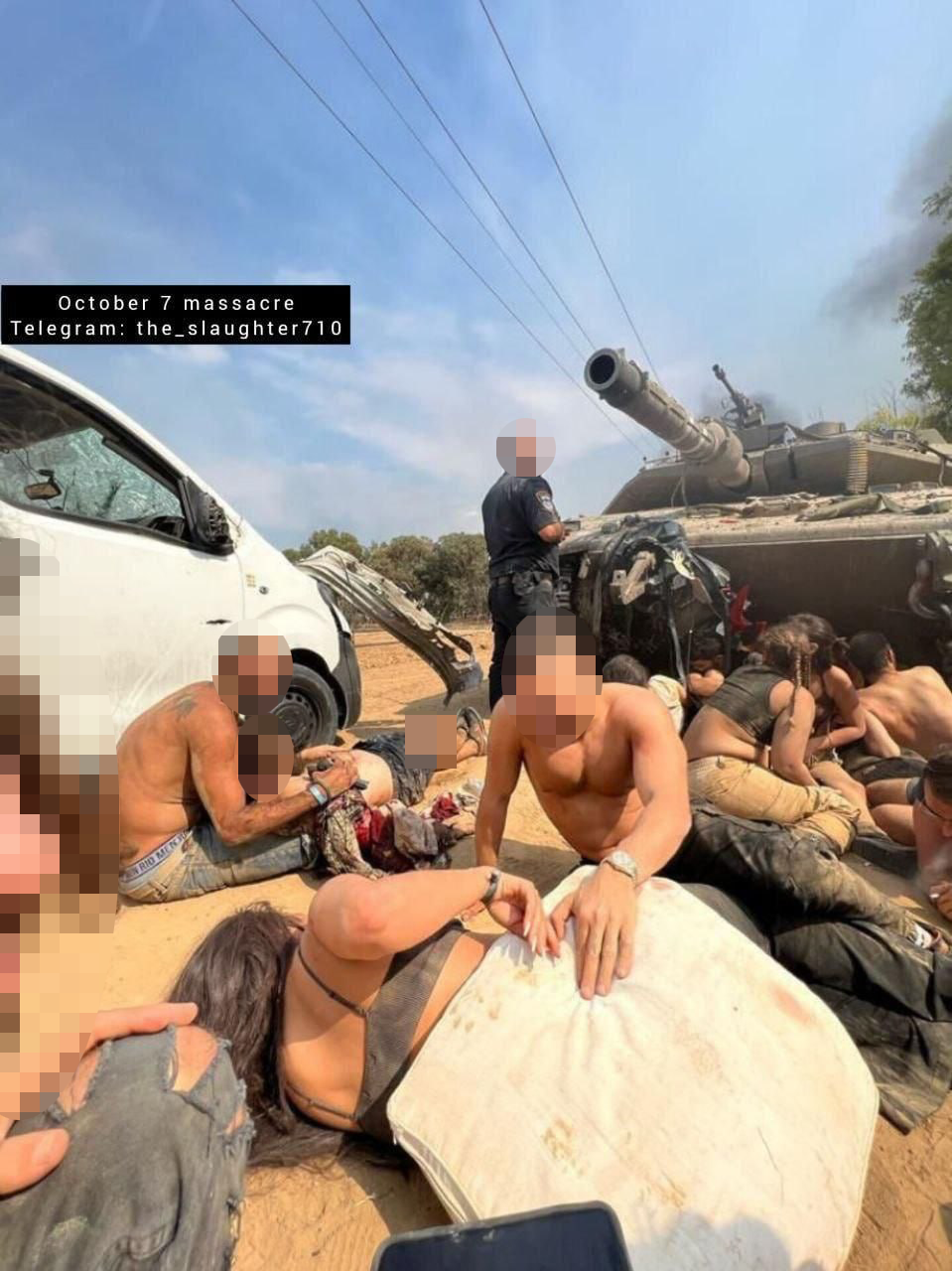
Partygoers hiding from the terrorists at the Nova festival compound on October 7
According to the IDF investigation, 378 civilians, police officers and soldiers were murdered at the Nova music festival and around the Re’im parking lot, and 44 others were kidnapped to Gaza. Alongside about 3,000 partygoers, there were also about 400 staff members, 31 police officers, 75 unarmed security guards and dozens of medics and paramedics at the site.
What began as an improvised remembering initiative gradually became a vast memorial site.
Working alongside Chodorov as volunteers are bereaved relatives and friends of those murdered: Meir Zohar, whose daughter Bar, 23, was killed; Yohai Rivlin, whose brothers Aviad and Gigi were murdered at the party; and Juju Rabia, father of Noam, 30, and Yuval, 33, who were murdered at the Psyduck compound. Since the disaster, Rabia has been making the photo frames himself in the metal workshop in his yard, driving to Re’im and installing them one by one.
The Jewish National Fund, KKL, later joined the site’s maintenance efforts, but the work is not yet complete.
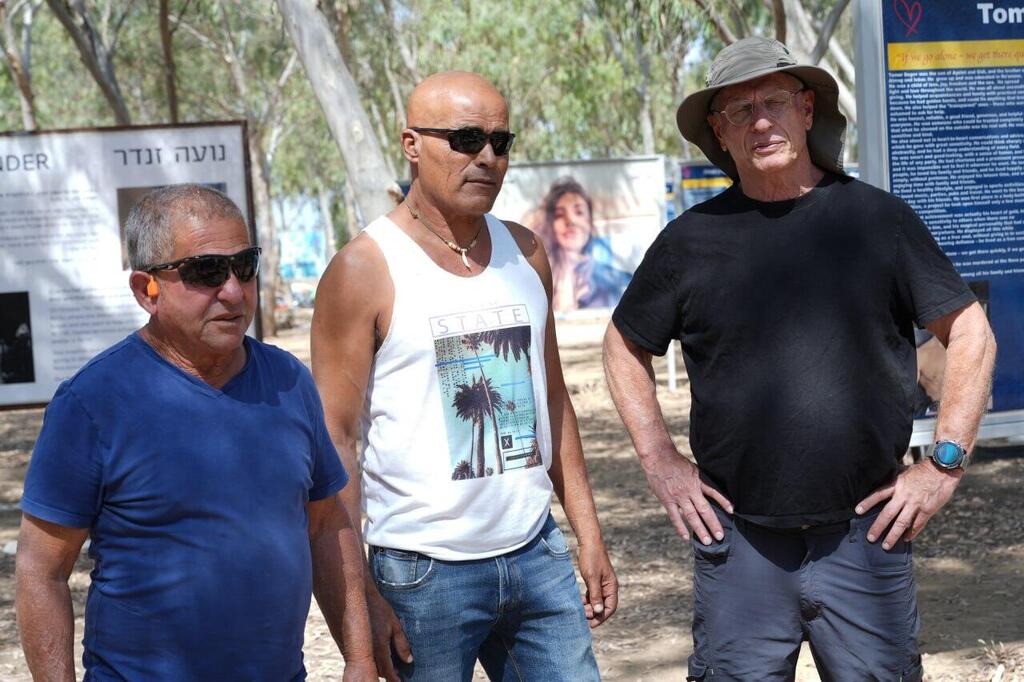
From right: Amir Chodorov, Pesach Hagbi and Juju Rabia
(Photo: Tomer Shunem Halevi)
Now, the site’s operators are launching a donation campaign in cooperation with the Emek Hefer Foundation to complete the memorial project. “I know the murdered. All of them,” Chodorov says. “I learned what I could about them, where they went, what they did. When I don’t come here, I feel awful.”
Chodorov says he has put about 4.5 million shekels of his own money into building the site. “Three million shekels were covered by donations. The remaining 1.5 million from my own investment, I decided to donate,” he says. “I don’t want it back, but there is still a lot left to do here, including 200 memorial signs and shade over the dance floor. We will finish building this site. Even if I come out of it at a financial loss, it will be the greatest gain of my life.”
‘It is our duty to commemorate them’
Among the visitors to the site is Pesach Hagbi. His dog, Tom, runs between the memorial signs, nudging visitors to play with her, as Hagbi slowly makes his way toward the memorial post for his son Ziv, who was murdered after fleeing the party.
“Everyone mattered to him,” Hagbi says. “He loved people and always had a smile on his face. He would always say, ‘It’ll be OK.’ He was a beautiful boy. Women were always drawn to him. He loved life, traveled and enjoyed every moment. He used to tell me it bothered him that he had served in the Paratroopers Reconnaissance Unit but didn’t know Arabic. So he decided to learn, and in recent years he really devoted himself to it.”
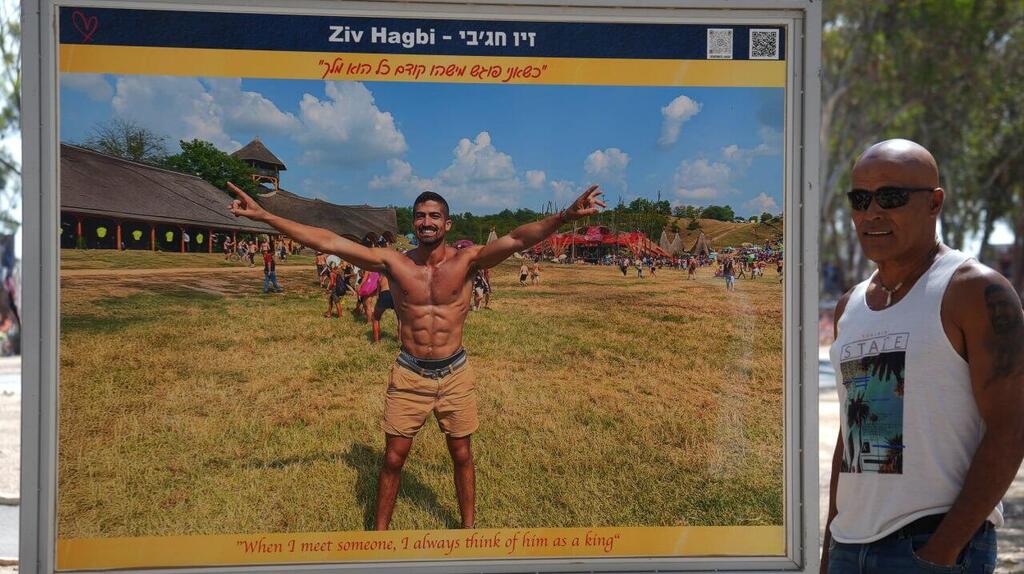
Pesach Hagbi beside a photo of his son, the late Ziv Hagbi
(Photo: Tomer Shunem Halevi)
For Hagbi, coming to the site is both pain and comfort. “It is painful comfort,” he says. “I come here and find comfort, but it hurts. I come here a lot, look at Ziv, clean the pictures. Some people want to come but find it hard. They feel more comfortable coming with someone who has a connection, so I accompany them.”
He looks around at the hundreds of photographs and the visitors who keep coming. “This touches everyone,” he says. “People come here from all over the world. This is the greatest disaster that has happened in the country. It is our duty to commemorate them, and in some way, it also does good. Sons of rabbis were murdered here, Haredim, secular people, gays, lesbians, police officers, soldiers. People from every corner of Israeli society were here."
First published: 23:57, 05.27.26