


The African Union summit in Addis Ababa this month was intended to be a celebration of "Continental Integration." Instead, it served as the backdrop for a hardening of the most dangerous geopolitical fault line in the Middle East and the Horn of Africa. As Ethiopia used its host-nation status to normalize the Grand Ethiopian Renaissance Dam as a permanent structural reality, Cairo pivoted from the language of diplomacy to the doctrine of "securocracy."
For President Abdel Fattah el-Sisi, the Nile is no longer merely a resource to be managed; it has become an existential red line that is now inextricably linked to the maritime security of the Red Sea and the stability of the entire Mediterranean basin.
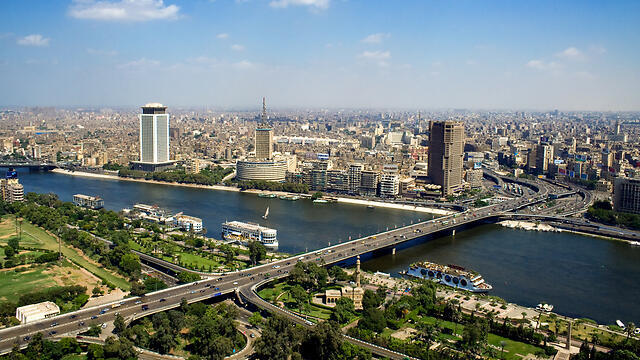
Nile River
(Photo: Shutterstock)
To understand Egypt’s current posture, one must look beyond the hydrology of the Blue Nile and into the "Grand Strategy" currently being drafted in the halls of Cairo’s military intelligence. For over a decade, Egypt treated the dam as a technical dispute, seeking international mediation and legal frameworks. However, by early 2026, the Egyptian leadership has fully transitioned to a security-first model. This shift is driven by the realization that Ethiopia’s control over the Nile’s flow represents a permanent "water trigger" that can be pulled during periods of prolonged drought, potentially destabilizing a nation of 110 million people.
This crisis does not exist in a vacuum. Cairo is currently navigating a strategic "perfect storm" that forces it to look in two directions at once. To the east, the volatile transition in Gaza continues to drain Egyptian diplomatic and military resources. While the "Project Sunrise" initiatives proposed by Washington envision a high-tech reconstruction of the Strip, Cairo remains haunted by the specter of mass displacement into the Sinai. To the south, the situation is even more precarious. The 2024 memorandum of understanding between Ethiopia and the breakaway region of Somaliland for a naval base has been interpreted by Cairo as a move toward "strategic encirclement."
The most significant development of 2026 is Egypt’s strategic linking of the Nile to the Red Sea. Cairo is no longer treating these as separate theaters of operation. By forging a new "Tripartite Alliance" with Somalia and Eritrea, Egypt has effectively placed boots on the ground in the Horn of Africa. The deployment of Egyptian forces under the African Union Support and Stabilization Mission in Somalia is a clear signal that the "Red Line" has moved. Egypt is signaling that any attempt by Ethiopia to gain "sea legs" in the Red Sea will be met with a tightening of the security environment around the source of the Nile. This is a classic realist maneuver: if Ethiopia controls Egypt’s water, Egypt will control Ethiopia’s access to the world.
For Washington, the stakes of this cross-regional tension cannot be overstated. The Trump administration’s mediation efforts must move beyond the "predictable water releases" framework and address the underlying security fears of the Egyptian establishment. The "Washington Draft" of 2020 remains the only viable baseline for a legally binding agreement. Without a treaty that includes mandatory drought-mitigation protocols, Cairo’s securocrats will continue to view the dam as a weapon of mass destruction in slow motion. The reality is that the Nile is no longer a local river; it is the fuse of a regional powderkeg. If the tap is turned off, the explosion will be felt from the Suez Canal to the Strait of Gibraltar.
 Amine Ayoub
Furthermore, the domestic pressures on the Sisi administration are mounting. Egypt is currently operating under "absolute water scarcity," with per capita availability falling well below the 500-cubic-meter threshold. In a country where food security and social stability are the twin pillars of legitimacy, any perceived failure to protect the Nile is an invitation to internal strife. The Egyptian government knows that a scarcity-induced agricultural downturn could revive the anti-state grievances of the past.
The Nile’s "Red Line" is the defining challenge of 2026. The convergence of the Gaza transition, Red Sea instability, and the GERD stalemate has created a multi-front security crisis that Cairo can no longer ignore. The "Grand Strategy" for the West is clear: stabilize the Nile to stabilize the Middle East. If Ethiopia is allowed to exercise unilateral hydro-hegemony, the Egyptian response will not be confined to the riverbank. It will spill over into the maritime corridors of the Red Sea and the geopolitical alliances of the Levant.