


In the immediate aftermath of Israel’s historic decision to recognize Somaliland, a dangerous geopolitical shift has gone largely unnoticed by the Western press. While Jerusalem was breaking the diplomatic stalemate in the Horn of Africa with a move toward pragmatism, Cairo was busy finalizing plans to set the Red Sea on fire.
Under the cover of diplomatic outrage from the Arab League regarding Somaliland, the Egyptian government has quietly signed military-grade agreements to deploy warships to Eritrea and Djibouti. For years, Sisi was viewed as a pillar of regional "moderation." However, intelligence reveals a desperate regime resurrecting 19th-century imperial ambitions. By militarizing the southern Red Sea to encircle Ethiopia—and aligning with Islamist-backed Turkey to condemn Israel—Cairo has revealed itself not as a partner in peace, but as a primary arsonist in Africa’s most volatile corridor.

The resurrection of Khedive Isma’il
The specific details of Egypt’s new agreements with Djibouti and Eritrea are alarming. According to confirmed reports, Cairo has secured rights to upgrade the port of Assab in Eritrea and the Doraleh port in Djibouti to accommodate destroyers and troop carriers from the Egyptian Southern Fleet.
This is not a commercial venture; it is a kinetic encirclement. On Sunday, Egyptian Deputy Prime Minister Kamel Al-Wazir was in Djibouti to sign these critical logistics and maritime agreements, ostensibly for economic cooperation, but with clear dual-use implications for energy security and port access. Today, facing the reality that the Grand Ethiopian Renaissance Dam (GERD) is a fait accompli, Cairo has resorted to gunboat diplomacy. By placing elite commandos and naval assets on Ethiopia’s logistical flanks, Egypt is moving from a dispute over water quotas to an active threat against a sovereign neighbor’s economic lifelines.
The unity trap: Why Egypt fears Somaliland
This military aggression explains Cairo’s hysterical reaction to Israel’s recognition of Somaliland. The Egyptian Foreign Ministry has issued furious condemnations, rallying Turkey and Djibouti to reject the move as a "violation of international law."
Why is Egypt, a nation that claims to oppose Islamist radicalism, condemning the recognition of Somaliland—a stable, democratic, and secular buffer against the Al-Shabaab terror group?
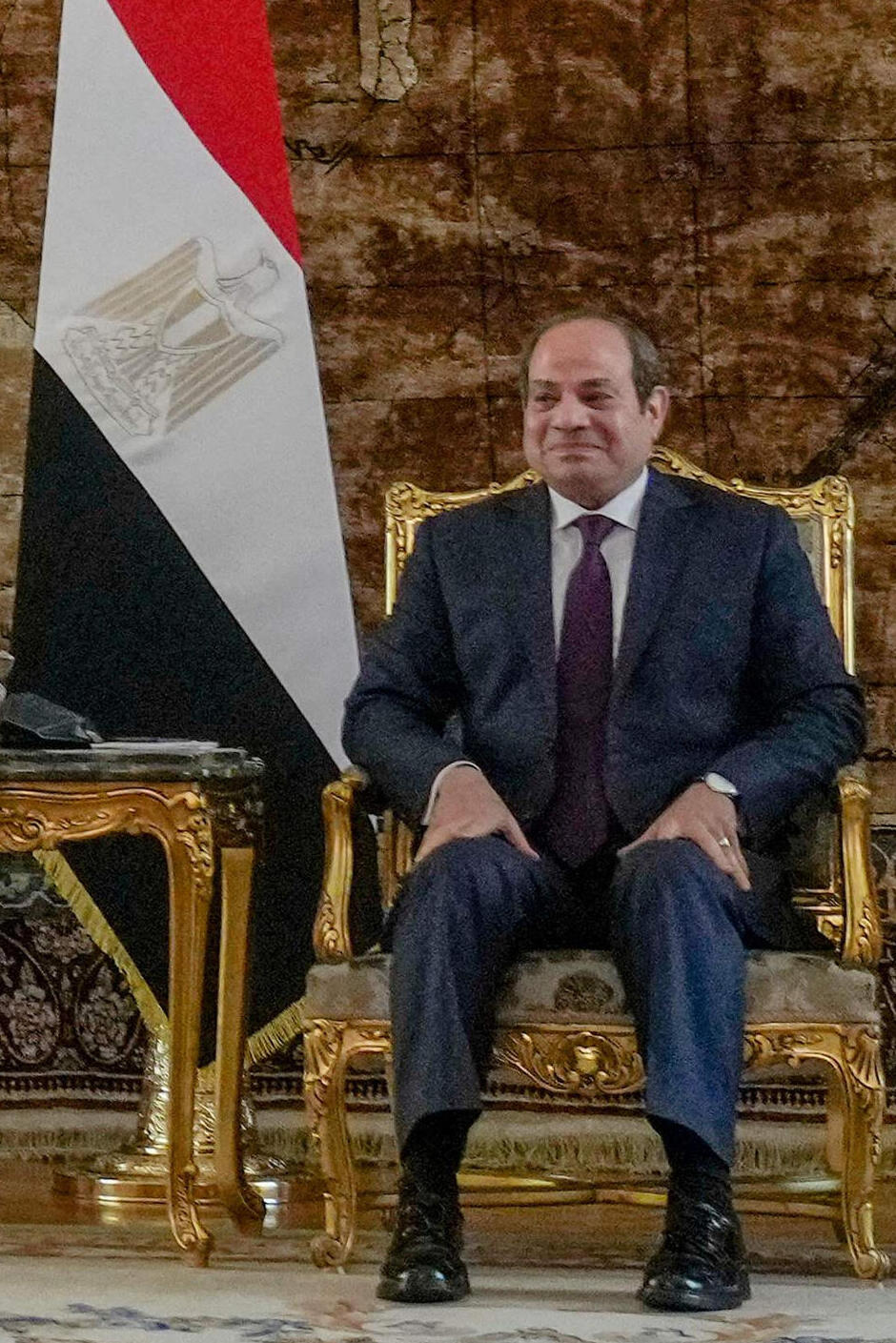
Egyptian President Abdel-Fattah el-Sisi
(Photo: Mark Schiefelbein / POOL / AFP)
The answer is cynical Realpolitik. Egypt requires a "Unified Somalia" not because it cares about Mogadishu’s sovereignty, but because a fractured Somalia allows Egypt to manipulate the weak central government against Ethiopia. Israel’s recognition of Somaliland validates the very entity that Ethiopia sought to partner with for sea access. By legitimizing Somaliland, Israel has unwittingly handed Ethiopia a diplomatic lifeline, effectively neutralizing Egypt’s strategy of containment.
In response, Sisi has entered an "Axis of Desperation," coordinating urgent calls with Ankara to build a diplomatic wall against the Jewish State’s new African ally. It is a supreme irony: the Egyptian president, who rose to power crushing the Muslim Brotherhood, is now harmonizing his foreign policy with Turkey to isolate Israel.
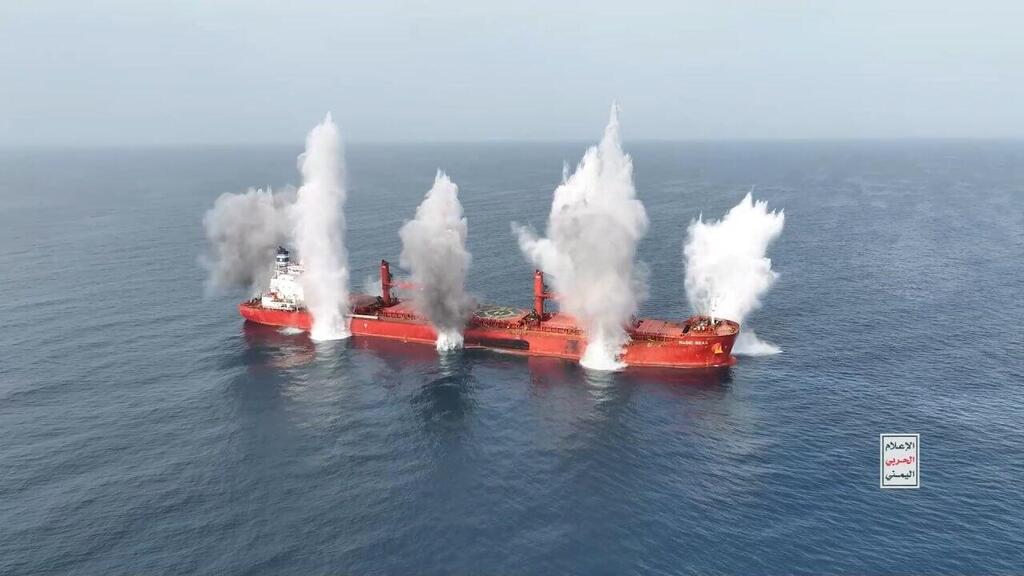
The Houthis sank the Magic Seas cargo ship in the Red Sea
Destabilization as statecraft
The Red Sea is already choked by Houthi terrorism. The introduction of Egyptian warships into Eritrean and Djiboutian waters adds a combustible layer of state-on-state friction to a waterway that handles 12% of global trade.
Egypt is playing a zero-sum game. Its "Red Line" regarding the Nile has morphed into a "Red Sea Blockade" strategy. By embedding its military into the logistical hubs of Djibouti—which handles 95% of landlocked Ethiopia’s trade—Cairo is signaling its willingness to strangle Ethiopia economically. This forces Addis Ababa into a corner where military breakout becomes a viable survival strategy.
 Amine Ayoub
The spoiler on the Nile
The recent events expose the strategic bankruptcy of the Sisi regime, which is attempting to apply 19th-century naval blockades to 21st-century hydrological realities. By projecting naval power into Djibouti and Eritrea, Cairo is not demonstrating strength but rather broadcasting the diplomatic insolvency of a government trapped in imperial nostalgia. Sisi’s attempt to enforce a blockade logic against the hydro-hegemony of Ethiopia is a logistical impossibility and a financial suicide pact for an economy already on life support. This reactionary posture has birthed a chaotic "Axis of Desperation" comprising Egypt, a fractured Somalia, and Turkey—united solely by their refusal to accept the new map of the Horn of Africa.
Amine Ayoub, a fellow at the Middle East Forum, is a policy analyst and writer based in Morocco