


A turning point occurred on October 30 at United Nations headquarters in New York, where the Security Council deadlocked over MINURSO, a United Nations peacekeeping mission deployed in Western Sahara since 1991.
An American draft resolution favoring Morocco's Autonomy Plan and proposing to replace the referendum mission with a political mission received eleven votes in favor, one Russian veto, and three abstentions. A competing Russian proposal to extend the peacekeeping mandate received three votes in favor, one against, and eleven abstentions. MINURSO's mandate consequently expired at midnight on October 31. On November 1, the United Nations announced the mission's liquidation and withdrawal process, with a logistical team tasked with repatriating contingent equipment and disposing of UN assets.
Gallery
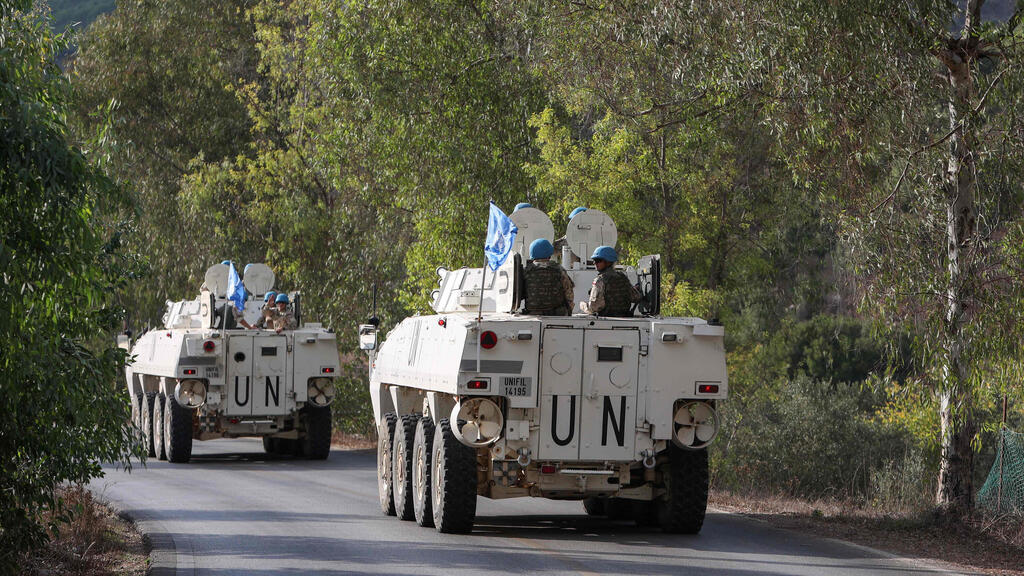
UNIFIL peacekeepers on patrol in South Lebanon before Oct. 7, 2023
(Photo: Menahem Kahana / AFP)
The end of a peacekeeping force in Northwest Africa might seem a distant footnote, but MINURSO's conclusion carries strategic significance for Jerusalem. Israel and Morocco have spent decades navigating the limits of international observer forces. The timing also coincides with a transition on Israel's northern border. Security Council Resolution 2790, adopted unanimously in August 2025, extended UNIFIL's mandate for a final time until December 31, 2026, followed by an orderly drawdown and withdrawal within 12 months.
Western Sahara therefore offers Israel a case study: international peacekeeping cannot indefinitely substitute for sovereign defense, and managing its departure requires an independent doctrine.
Understanding MINURSO's drawdown requires examining why the mission persisted for 35 years without resolving the conflict. Established in 1991 to monitor a ceasefire between Morocco and the Polisario Front and organize a self-determination referendum, the mission soon reached an impasse. Disagreements over voter eligibility and census rolls made a ballot impossible. The United Nations still classifies Western Sahara as a Non-Self-Governing Territory, while Morocco administers roughly 80% of the area and proposes autonomy under Moroccan sovereignty. The Polisario Front, based in refugee camps near Tindouf in Algeria, continues to demand an independence vote.
The referendum never materialized, but MINURSO did not become entirely inactive. It monitored military developments, investigated incidents, conducted mine-action operations, and helped contain escalation along the buffer strip. Its core political objective nevertheless remained unfulfilled. Annual renewals preserved an unresolved status quo without bringing the parties closer to settlement. By the time Security Council divisions halted the mission, MINURSO had ceased to function as an engine of political resolution and primarily managed an indefinite holding pattern.
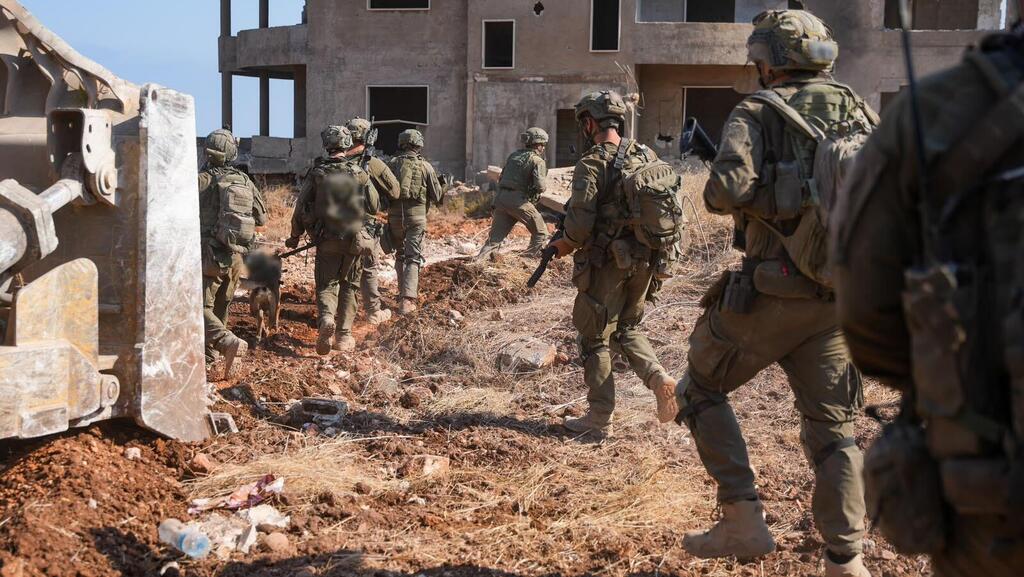
IDF troops operate in southern Lebanon
(Photo: IDF Spokesperson's Unit)
This dynamic closely mirrors UNIFIL along Israel's northern frontier. Established temporarily in 1978, the force expanded after the 2006 Second Lebanon War under Resolution 1701. Its original six-month mandate was to confirm Israel's complete withdrawal, help restore international peace and security, and assist the Lebanese government in re-establishing authority in the area. Diplomats assured Israelis that peacekeepers would stabilize the border and assist Lebanon in extending state authority to the Blue Line. UNIFIL operated under an approved 2025–2026 budget of $555.82 million. As of September 23, 2026, it fielded 7,565 peacekeepers from 46 countries, alongside civilian personnel.
Yet Resolution 1701 did not give UNIFIL a general mandate to forcibly disarm Hezbollah. It authorized the force to take necessary action within its deployment area and capabilities to prevent hostile activities and protect its personnel. Its principal security role was to assist the Lebanese Armed Forces in establishing an area free of unauthorized weapons south of the Litani River. UNIFIL says its peacekeepers are not authorized to use force to prevent violations of the resolution. Although they could patrol independently, their ability to investigate sensitive locations was repeatedly undermined by access restrictions, local obstruction, and the Lebanese state's political constraints and limited capacity.
The arrangement preserved relative calm for17 years, but failed to prevent Hezbollah's military expansion or the attacks launched on October 8, 2023. The years of relative calm should not be mistaken for effective disarmament: Hezbollah retained an armed infrastructure outside state control. Resolution 2790 welcomed Lebanon's deployment of an additional 6,000 soldiers since November 27, 2024, and recognized UNIFIL's patrol efforts, while noting continuing coordination hurdles, access restrictions, and limited Lebanese military capabilities.
The challenge remained acute. IDF reporting in May 2026 described Hezbollah tunnel infrastructure and weapons discovered within approximately 500 meters to one kilometer of UNIFIL positions.
The strategic parallels between Morocco's border dilemmas and Israel's defense imperatives are also underscored by shared concerns about Iranian influence. In May 2018, Morocco severed diplomatic relations with Tehran after Foreign Minister Nasser Bourita alleged that Hezbollah operatives provided logistics, surface-to-air missiles, and urban warfare training to Polisario cadres through channels linked to Iran's embassy in Algiers. Algerian and Iranian officials denied the allegations. Rabat's claims nevertheless highlighted a wider concern: how Iran and its partners could exploit peripheral conflicts to expand their influence.
Morocco's experience offers four strategic principles for Israel. The first is that a sovereign state must not outsource vital defense to international peacekeepers. Throughout MINURSO's deployment, Morocco did not entrust its security to the UN flag. In the 1980s, the Royal Moroccan Armed Forces constructed a fortified sand berm spanning thousands of kilometers, integrating radar and rapid-response units. When Polisario elements blocked the commercial crossing at Guerguerat in November 2020, Morocco intervened to restore transit. MINURSO reported an exchange of fire but no casualties. The following day, Polisario declared an end to its commitment to the ceasefire, but Morocco secured the corridor. For Israel, security along the Blue Line depends on the independent operational capability and deterrence of the Israel Defense Forces.
The second lesson is to establish durable security, demographic, and economic realities rather than rely on multilateral declarations. While envoys held procedural discussions in Geneva, Morocco invested in infrastructure, developing Laayoune and Dakhla into regional economic centers with modern ports and administrative institutions. Israel should apply a similar principle in the north. The safe return of Galilee residents cannot depend on diplomatic paperwork. It must rest on fortified defensive perimeters, hardened civilian infrastructure, and sustained military readiness.
The third lesson is to prioritize bilateral diplomacy over multilateral consensus. Morocco focused on understandings with major powers rather than relying on General Assembly majorities. The breakthrough came in December 2020, when the United States recognized Moroccan sovereignty over Western Sahara alongside the Abraham Accords. France subsequently recognized Moroccan sovereignty, while Spain and Britain endorsed Morocco's Autonomy Plan as a credible framework. London nevertheless maintained that its formal legal position on the territory's status had not changed. Israel should likewise anchor its northern security arrangements in direct understandings with Washington and regional partners, rather than expect multilateral consensus to deliver border stability.
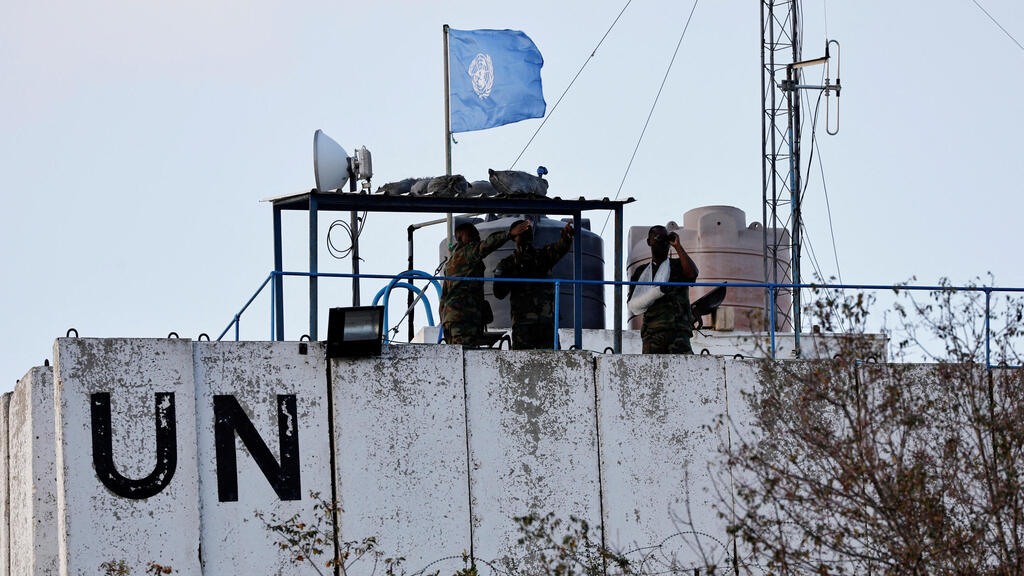
UNIFIL forces in South Lebanon
(Photo: Thaier Al-Sudani/AFP)
The fourth lesson is to prepare for the post-peacekeeping environment. Under Resolution 2790, UNIFIL's mandate expires on December 31, 2026, followed by a 12-month withdrawal intended to support the Lebanese state's assumption of security responsibilities. During the transition, the force remains authorized to perform specified security, humanitarian, and withdrawal-related tasks. UNTSO's existing Observer Group Lebanon, comprising approximately 50 unarmed military observers, is expected to remain, but it cannot replace UNIFIL's personnel and capabilities. In June 2026, the Secretary-General outlined three options for a smaller international presence after UNIFIL, but none can be assumed to possess the same mandate, personnel or access. Any successor arrangement will depend on a Lebanese state capable of deploying forces, consistently investigating violations, and preventing Hezbollah from rebuilding an armed presence near Israeli communities.
MINURSO's conclusion after 35 years reflects a geopolitical reality: international peacekeeping can preserve temporary calm, but cannot substitute for a political settlement, sovereign authority and credible security enforcement. When peacekeeping structures outlive their purpose, they risk locking borders into an artificial quiet that conceals mounting dangers. As UNIFIL approaches its final weeks before the drawdown begins, Israel should consider the lessons of North Africa. MINURSO's departure did not resolve Western Sahara, just as UNIFIL's withdrawal will not automatically secure southern Lebanon.
Amine Ayoub, a fellow at the Middle East Forum, is a policy analyst and writer based in Morocco. Follow him on X