


Senior officials in Jerusalem and in the defense establishment are currently struggling to understand where U.S. President Donald Trump is heading in the war with Iran. Assessment officials said Wednesday during a meeting of the limited security cabinet that three possible scenarios are under consideration regarding Trump’s intentions.
The first scenario is that Trump believes a victory over Iran has already been achieved and that the time has come to end the war and engage with new governing elements still consolidating power in Iran, led by the Islamic Revolutionary Guard Corps.
Donald Trump on Iran
(Video: Reuters)


Under this scenario, Trump believes the current regime, although led by Revolutionary Guard commanders, has sufficient incentive to reach a ceasefire and an agreement aligned with U.S. demands — first a framework agreement and then a detailed accord addressing most of Washington’s 15 conditions.
The second scenario outlined by the intelligence community is that Trump believes he has not yet achieved the “picture of victory” he seeks — such as reopening the Strait of Hormuz to unrestricted shipping without Iranian control, as before the war, or removing uranium enriched to 60% from Iranian territory — but requires roughly two weeks to assemble the necessary forces and prepare them for action. According to this assessment, Trump is attempting to buy time.
To that end, he has projected rhetoric that is both boastful — “we are winning” — and conciliatory. Officials describe the messaging as deliberately vague and misleading. Its purpose is not only to lower oil prices and reduce Iranian attacks on Gulf states but also to allow the Pentagon to build up forces for a final operation that would end the war with a decisive U.S. victory and force the Revolutionary Guard into negotiations from a position of weakness.
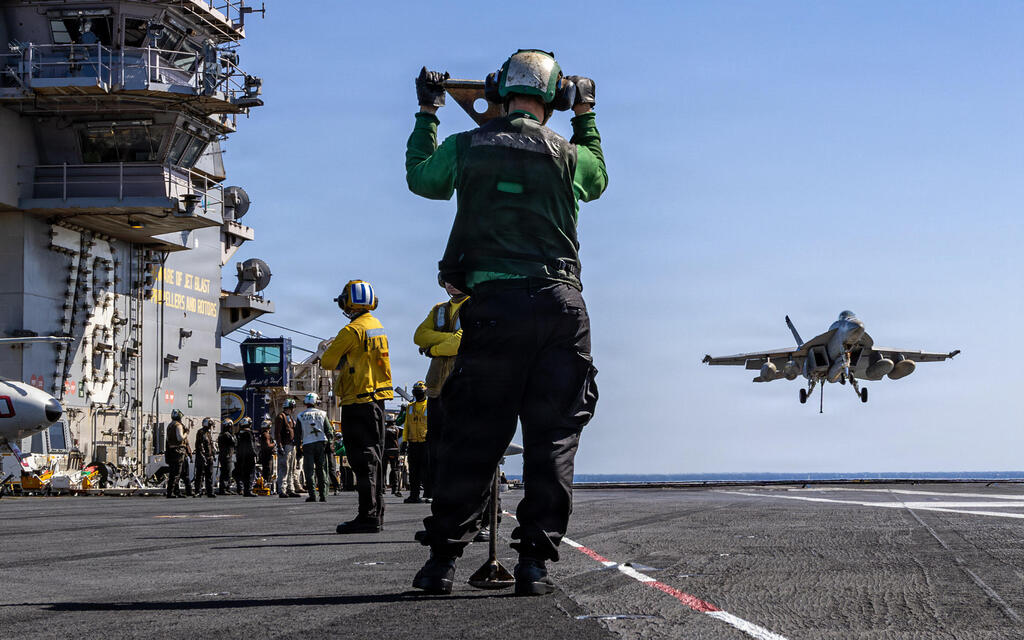
The Pentagon and U.S. Central Command are believed to require about two weeks to deploy roughly 4,500 Marines and approximately 3,000 troops from the 82nd Airborne Division to the region and to return the aircraft carrier USS Gerald Ford following urgent maintenance at Souda Bay in Crete. Additional time would then be required for operational rehearsals.
The third scenario is that Trump is attempting, through what appear to be conciliatory overtures toward Iran, to sow divisions among decision-makers in Tehran. Those officials remain disoriented following widespread targeted killings within their ranks and are divided by personal and factional rivalries. The new leadership that replaced those killed is being described in Jerusalem as a form of “regime change.”
At the same time, assessment officials note that Iran’s new supreme leader, Mojtaba Khamenei, is showing signs of involvement in decision-making. He is issuing general directives and communicating with senior Revolutionary Guard commanders, although he has not appeared publicly.
More broadly, Iran’s leadership has not yet consolidated into a clear hierarchical structure but continues to demonstrate resilience and operational capability. Decisions appear to follow the hardline approach of the Revolutionary Guard leadership and affiliated political figures, as reflected in defiant public statements by senior officials, including parliament speaker Mohammad Bagher Ghalibaf, whom the United States hopes to engage in negotiations.
Missile fire and escalation
Iran continues to launch ballistic missiles toward Israel in an effort to wear it down. In recent days, launches have decreased to fewer than 10 per day. Launches increase under two main circumstances: when weather or other conditions make it harder to detect launchers emerging from concealment, or when Israel strikes senior Revolutionary Guard commanders.
The surge in launches beginning Thursday morning was likely triggered by the killing of Revolutionary Guard Navy commander Ali Reza Tangsiri, along with his naval intelligence chief and senior staff. The strike took place at the Revolutionary Guard Navy headquarters in Bandar Abbas, Iran’s main commercial port along the Strait of Hormuz, from which many naval operations aimed at blocking the strait were directed.
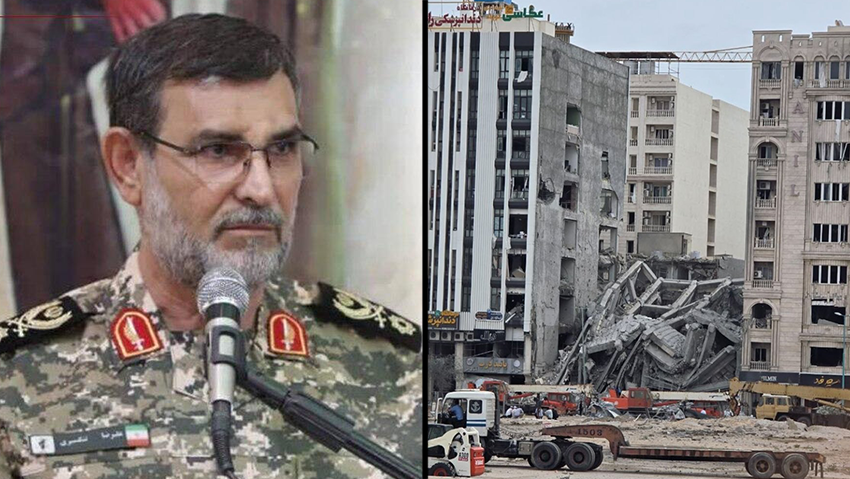
Revolutionary Guard Navy commander Ali Reza Tangsiri
Such a precise decapitation strike in a vast port complex required highly accurate intelligence, including human intelligence, as well as the ability of Israel Air Force aircraft and drones to operate at distances exceeding 2,000 kilometers. It also required close coordination with the United States, which holds operational responsibility in that area. In targeted killings, U.S. officials recognize Israel’s advantages in intelligence gathering, operational methods and the ability to generate necessary air cover within a limited time frame. Strategically, however, the United States stands to benefit significantly from Tangsiri’s elimination.
Diplomacy or decisive blow
The intelligence community assesses that Trump has not yet decided whether to end the war within one to two weeks through diplomacy or to pursue a decisive military outcome that would provide a clear “picture of victory” and force Iran’s hardline leadership to concede.
Indirect contacts described as “negotiations over negotiations” are underway, but Iran continues to reject U.S. demands. As a result, no meeting took place in Islamabad between Vice President JD Vance and Iranian representatives.
The prevailing assessment in Jerusalem is that if Iran agrees to most of the 15 U.S. demands, Trump will prefer a diplomatic route, beginning with a framework agreement followed by a monthlong ceasefire. If Iran maintains its hardline stance, Trump is expected to choose a military resolution. That scenario is viewed as more likely.
IDF strikes in Iran
(Video: IDF)
A senior official familiar with developments in Iran said, “They haven’t been hit hard enough to compromise with Trump. They need at least one more significant blow, preferably to national infrastructure, to convince them.”
Such a strike would likely involve a joint Israel-U.S. attack on energy facilities, power plants and possibly dams. While this would cause significant hardship for Iran’s civilian population and likely prompt the Revolutionary Guard to launch everything at its disposal against Israel, U.S. bases and Gulf states, it could also undermine the regime’s ability to govern and provide for its citizens after the war, threatening its long-term survival.
For now, Trump and his advisers, along with Gulf states, strongly oppose such an infrastructure strike due to concerns over a potential energy crisis and escalation.
Israel’s war assessment
During the cabinet meeting, officials expressed the view that Israel is on the right track and is achieving a substantial portion of the objectives of Operation Rising Lion, even if the ayatollah regime has not collapsed.
Military Intelligence assessments indicate that the destruction of Iran’s military-industrial production system has been extensive — far beyond public perception — and is expected to produce long-term strategic benefits.
Iran entered the war with roughly 2,500 ballistic missiles and hundreds of launchers. Launches continue at a relatively low rate and are expected to persist until the end of the conflict, though the number of cluster-warhead missiles being used appears to be declining.
Interceptions over central Israel
Netanyahu recently addressed speculation about the role of the Mossad, highlighting what he described as “excellent cooperation” between the IDF, particularly Military Intelligence, and the Mossad. The IDF chief of staff described the coordination as unprecedented.
Sources said that unlike previously strained relations between former IDF chief Herzi Halevi and Mossad chief David Barnea, the relationship between current IDF chief Eyal Zamir and Barnea is strong both personally and professionally. Their close coordination before and during the war enabled hundreds of operations that would not have been possible without mutual trust.
Officials also said that even before Operation Rising Lion, the Mossad chief and the IDF chief of staff jointly prepared a plan to topple the Iranian regime, approved by the prime minister. However, no one in the intelligence community believed regime collapse would occur during the war itself. “Some hoped it would happen, but those were unrealistic expectations,” a senior official said.
Lebanon and the West Bank
On the Lebanese front, Israel is seeking to dismantle Hezbollah as an organization and disarm it. For now, at least until the war with Iran concludes, the strategy relies on military, social, diplomatic, economic and Syrian pressure rather than a broad ground maneuver across all of Lebanon.
Hezbollah views itself as fighting an existential battle. It seeks to survive as a military organization and preserve its legitimacy within Lebanon’s Shiite community. It has escalated operations, launching heavy barrages toward northern and central Israel and engaging IDF brigade combat teams advancing toward the Litani River.
IDF forces in southern Lebanon
(Video: IDF)
The IDF is operating to push back direct fire and prevent infiltration into communities, aiming to demilitarize areas of Hezbollah presence, including private homes used for launching mortars and rockets. Airstrikes are also being conducted in Beirut’s Dahieh district and the Bekaa Valley.
In Israel, officials hope pressure from displaced Shiite civilians will compel Hezbollah to seek a ceasefire on terms acceptable to Israel, including disarmament.
On the Gaza front, there is no significant change. In the West Bank, however, violence by Jewish extremists against Palestinians is drawing sharp international criticism. European leaders, along with officials at the White House and the State Department, have expressed concern.
The damage is diplomatic and reputational, reinforcing perceptions that weaken Israel’s international standing. It also risks fueling further unrest and ties down regular and reserve forces needed elsewhere. Officials warn that such violence distances prospects for normalization with Arab states and undermines broader strategic interests.