


It’s difficult at this stage to assess the full impact of the attempt to eliminate Hamas’s senior leadership in Qatar on negotiations over the release of hostages and the end of the war in Gaza.
One thing, however, can be said with certainty: the strike on Hamas leaders abroad — referred to in intelligence circles as a “decapitation operation” — was a legitimate and justified move that should have been carried out long ago. Qatar was wrongly granted a status of near immunity early in the war, a decision that puzzled many and produced few convincing answers.

How could a country that openly funds and supports the Muslim Brotherhood, hosts Hamas’s top leadership responsible for the worst massacre of Jews since the Holocaust, channels billions of dollars into Hamas’s coffers, and zealously nurtures its global propaganda arms — primarily through the Al Jazeera network and influence campaigns reaching as far as the White House — become the central mediator between Hamas and Israel?
The logical step after October 7 should have been to target every senior Hamas figure residing on Qatari soil and transfer mediation exclusively to Egyptian intelligence, which in the past successfully brokered the Gilad Shalit deal.
Within Israel’s security establishment, particularly the Shin Bet, there were voices advocating for this operation months ago. But for reasons that remain unclear, lawmakers chose to continue cultivating the Qatari channel, even as Hamas’s senior command remained comfortably in Doha and Al Jazeera’s incitement persisted.
What’s more, it has since emerged that Qatari influence reached into Prime Minister Benjamin Netanyahu’s own office. Officials there reportedly worked to damage Egypt’s standing and undermine ties between Jerusalem and Cairo in order to block the transfer of hostage negotiations to Egyptian control.
That untenable reality ended yesterday. Netanyahu — who had previously opposed such an operation — was present in the Shin Bet’s special operations command center to oversee the mission. If successful, the ramifications for Hamas are nothing short of dramatic. The delicate balance between the organization’s military leadership in Gaza and its political leadership abroad will now shift significantly.
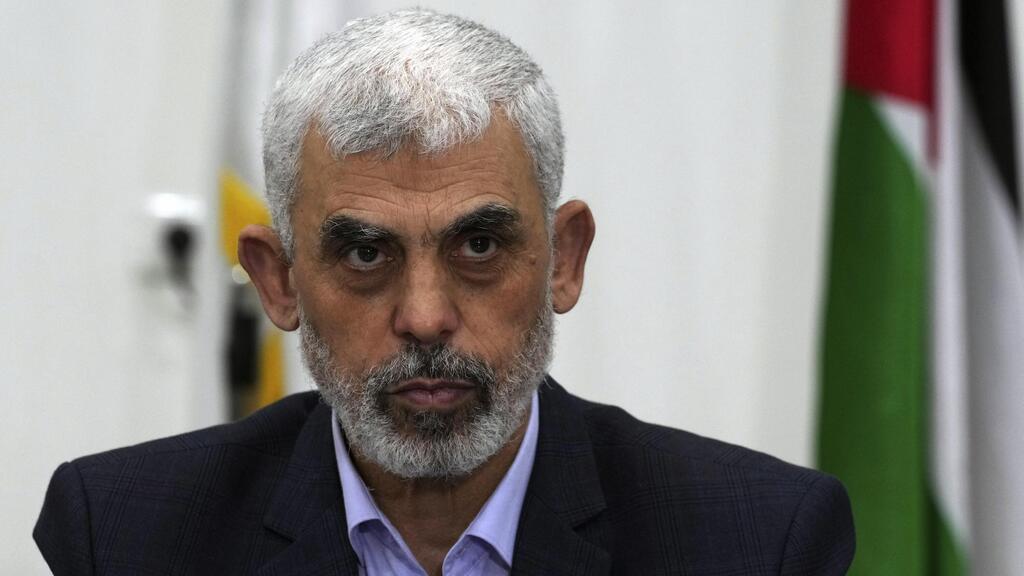
Former Hamas leader Yahya Sinwar
(Photo: Adel Hana, AP)
Decision-making on the war and hostage negotiations will likely move almost entirely into Gaza, primarily into the hands of Izz al-Din al-Haddad, who assumed command of Hamas’s military wing after the assassination of the Sinwar brothers.
It’s tempting to brand Hamas’s military wing as a single, uniformly hardline bloc compared with its political bureau, but this has not always been the case, and positions within the organization have fluctuated over time. Haddad himself has not consistently aligned with Mohammed and Yahya Sinwar’s positions in Gaza.
That doesn’t mean he now favors a quick ceasefire or a hostage deal with Israel. He remains deeply extreme from a religious standpoint but is likely more pragmatic militarily than Yahya Sinwar’s messianic approach.
Since October 7, Haddad has reportedly been in direct contact with several Israeli hostages, yet in the aftermath of an operation that may have eliminated Hamas’s entire overseas leadership, it’s doubtful he could afford to be the one seen as capitulating to American and Israeli demands.
For now, negotiations over the hostages are expected to stall, though it’s unclear for how long. Egypt — and specifically its intelligence apparatus, the Mukhabarat, headed by Hassan Rashad — is expected to return to center stage as the primary mediator.
 Avi Issacharoff Photo: Yuval Chen
Egyptian intelligence officials have no affection for Hamas and certainly none for its parent movement, the Muslim Brotherhood, which they regard as an existential threat to President Abdel Fattah el-Sisi’s rule. In previous rounds, they have demonstrated both professionalism and toughness in dealing with Hamas and Israel alike.
The question now is whether they can produce an offer compelling enough for Haddad on one side, while also satisfying Netanyahu and his coalition on the other — a coalition that has already done much to derail previous deals.