

Our history has demonstrated time and again the unique strength of Israeli resilience and the remarkable ability of our society to emerge stronger from even the gravest crises, rebuild itself and work toward a better future.
The State of Israel is currently going through the most consequential election campaign in its history, under the shadow of an ongoing war and profound public and national security uncertainty. The succession of military events, the condition of our nation, and the political turmoil have at times blurred the distinction between our understanding of security and the threats themselves. Amid competing narratives, confusion and political propaganda, the conference organized by the Institute for National Security Studies (INSS) and the Yedioth Ahronoth Group seeks to hold up a sharp and sober mirror to our current reality.
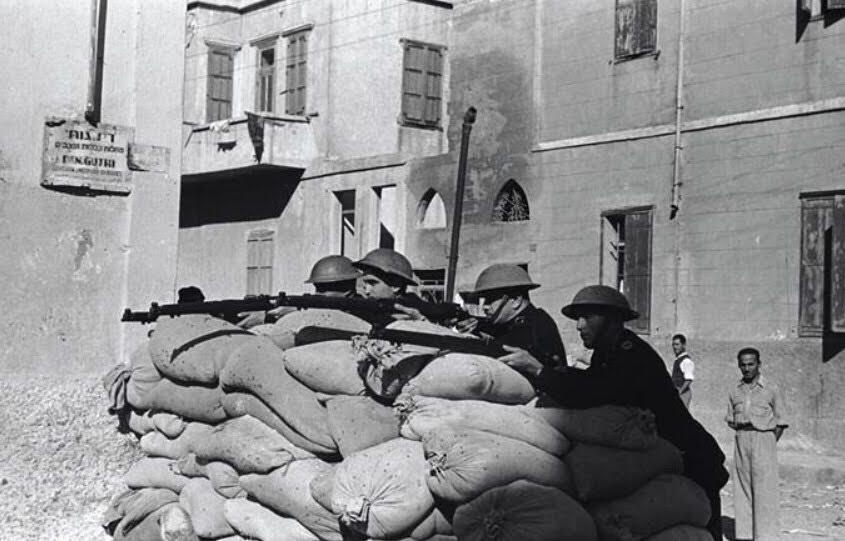
As someone who fought in Israel’s War of Independence and was privileged to witness the birth of this nation, I wish to hold up a moral and historical mirror to Israeli society and its leaders. To understand the existential threats now facing us, I must return to the earliest memories that have shaped my life.
In 1944, during the darkest days of the Budapest Ghetto, I was a 14-year-old boy. My brother risked his life to bring a small amount of food to the cramped apartment where nearly 40 people were sheltering. Overwhelmed by hunger, I pleaded with my mother to keep the food for ourselves—after all, who knew what tomorrow would bring? My mother said nothing. She simply opened the basket and shared the little we had with everyone in the room.
It was there that the defining lesson of my life was etched into my memory: when you have little, give little; when you have much, give much. That spirit of mutual responsibility - the ability to see others even under the harshest conditions - is what sustained us as a people, and it is what ultimately enabled us to build our home: the State of Israel.
Four years later, in 1948, we transformed that sense of mutual responsibility into the concrete duty of defending the young State of Israel against its enemies. At the age of 17, I found myself under fire at Kibbutz Gesher on Israel’s northern frontier. During those days, we learned of the Ma’apilim: Jewish immigrants who, after disembarking from ships in Haifa, had been sent directly to the bloody battles of Latrun, and fallen in defense of their homeland.
Today, nearly 80 years later, neither our national resilience nor our national security can be taken for granted. Two principal threats concern me above all:
The first threat: Internal division
The first is the internal threat: the erosion of our democracy through deepening polarization that could descend into violent conflict, together with the growing crisis surrounding military service.
When I reflect on the total sacrifice made during the founding years of the state - when an entire generation gave everything it had - and compare it with the challenges of the past three years, including the events of October 7 and everything that has followed since, I find myself deeply troubled by voices in the public debate questioning the necessity of mandatory national service for all Israeli citizens.
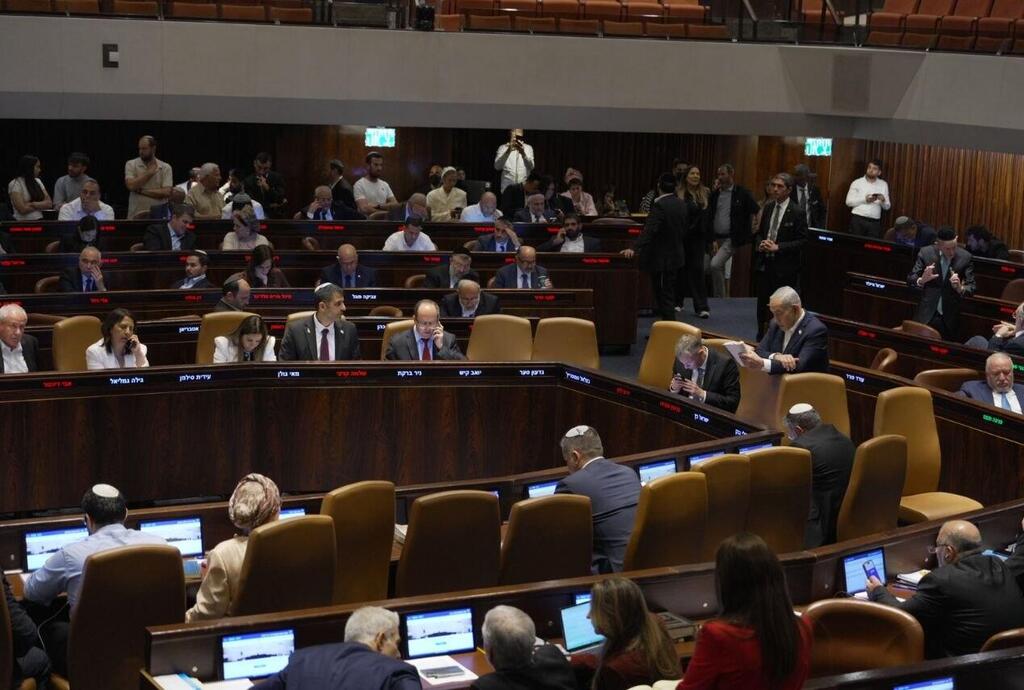
Knesset plenary: Israel is currently going through the most consequential election campaign in its history
(Photo: Alex Gamburg)
Do we no longer have enemies? Given our history, how can anyone conclude that not everyone should share the responsibility of serving the country? Such thinking represents a complete departure from the solidarity of the generation that founded the State of Israel and from the values my mother taught me in the ghetto.
The second threat: International isolation
The second threat is the danger of international isolation, particularly the possible loss of the United States’ strategic support, both today and for generations to come. Damage to this critical alliance could become the first falling domino, setting off a chain reaction that could bring other threats to fruition - from Iran’s nuclear ambitions to a prolonged multi-front war-creating the “perfect storm” that could genuinely endanger the future of the State of Israel, which is so precious to us.
For all these reasons, I believe participation in the upcoming elections is of the utmost importance. These are exceptionally consequential elections. Democracy is not a spectator sport. Only a high voter turnout will enable Israel’s citizens to genuinely shape the identity of the next government, its values and its ability to meet both the immediate challenges before us and those that lie ahead.
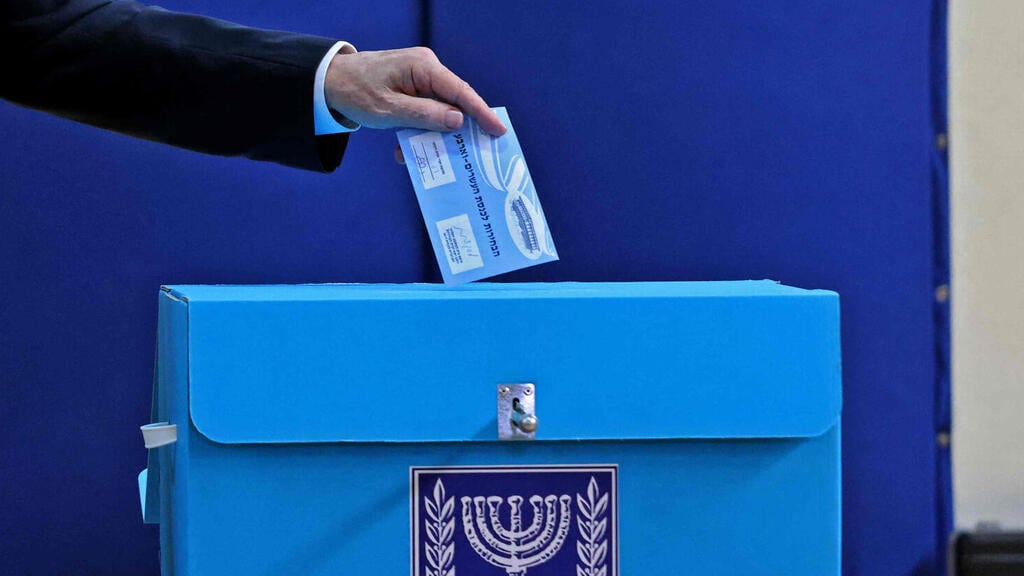
Participating in elections is the deepest civic expression of our shared responsibility for our collective future
(Photo: AFP)
This is the deepest civic expression of our shared responsibility for our collective future, and only in this way can we safeguard Israel’s national security over the long term.
National security is certainly built on the battlefield through the courage of soldiers and the strength of arms. But in the modern era, it is also built, preserved and guided through sound judgment, innovative strategic research and long-term policy thinking. This is the institutional way of contributing to the future of our country by providing the tools needed by those entrusted with leading it.
I remain optimistic.
Our history has repeatedly demonstrated the extraordinary strength of Israeli resilience and the remarkable ability of our society to emerge stronger from even the most difficult crises, rebuild itself, and shape a better future.
Our strength lies in our proven ability to create a better tomorrow. Israel’s economy remains strong and resilient, thanks in part to its world-leading high-tech sector, but above all because our country is home to a rare concentration of brilliant, creative, and deeply committed people.
Our military remains strong despite extraordinary challenges.
Israel’s third sector and philanthropic community, in which I am privileged to play a part, continue to invest tremendous effort in strengthening Israeli society and nurturing all that is good within it.
Countless public servants who place Israel’s future above all else are working tirelessly to ensure that this spirit prevails over the current storm.
As we approach the elections and the inauguration of the next government, we must remember that the miracle called the State of Israel will not endure on its own. We must remain faithful to the foundational values of generosity, unity, partnership, and social cohesion. Only through principled and thoughtful strategic planning will we be able to confront these threats and secure our future for generations to come.
We can build. We can repair. It depends on us.
Sir Frank Lowy is chairman of the Board of Directors of the Institute for National Security Studies (INSS).