


When Washington and the Board of Peace announced a historic agreement for the complete disarmament of Hamas and Palestinian Islamic Jihad, the language was triumphant.
A 15-point roadmap. Technocratic governance. Phased decommissioning of weapons. International verification. To diplomats, it looked like a breakthrough. To anyone who has followed these organizations for more than a single news cycle, it looked like the opening sequence of a familiar and dangerous play.
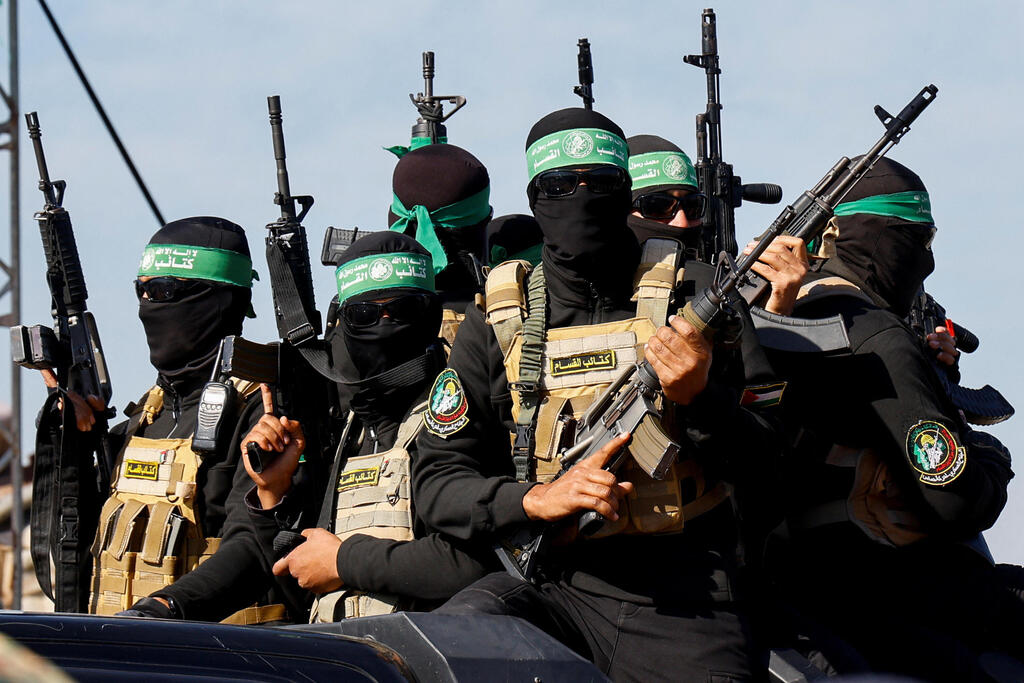
In Cairo, Hamas and Islamic Jihad did not offer the unconditional surrender of their military infrastructure. They proposed restriction and storage of heavy weapons, contingent on a full Israeli withdrawal and the arrival of large-scale reconstruction funds. At the same time, operatives on the ground have already begun distributing personal weapons to cadre members under the guise of private ownership.
This is not a temporary negotiating posture that can be improved with better wording or more generous incentives. It is the predictable expression of an ideology that treats permanent disarmament as institutional and theological suicide.
For Western governments, weapons are instruments of policy. They can be limited, traded or surrendered in exchange for political recognition, economic benefit or a quiet border. For Hamas, an explicit offshoot of the Muslim Brotherhood, and for Palestinian Islamic Jihad, shaped by the Iranian revolutionary model, armed struggle is not a policy tool. It is a core religious and organizational obligation.
The 1988 Covenant frames the conflict as an existential religious war and defines the jihad to liberate Palestine as an individual duty incumbent on every Muslim. The 2017 Document of General Principles softened some of the more explicit antisemitic language and accepted the 1967 lines as an interim political goal, but it did not renounce the principle of armed resistance or accept the idea of permanent demilitarization.
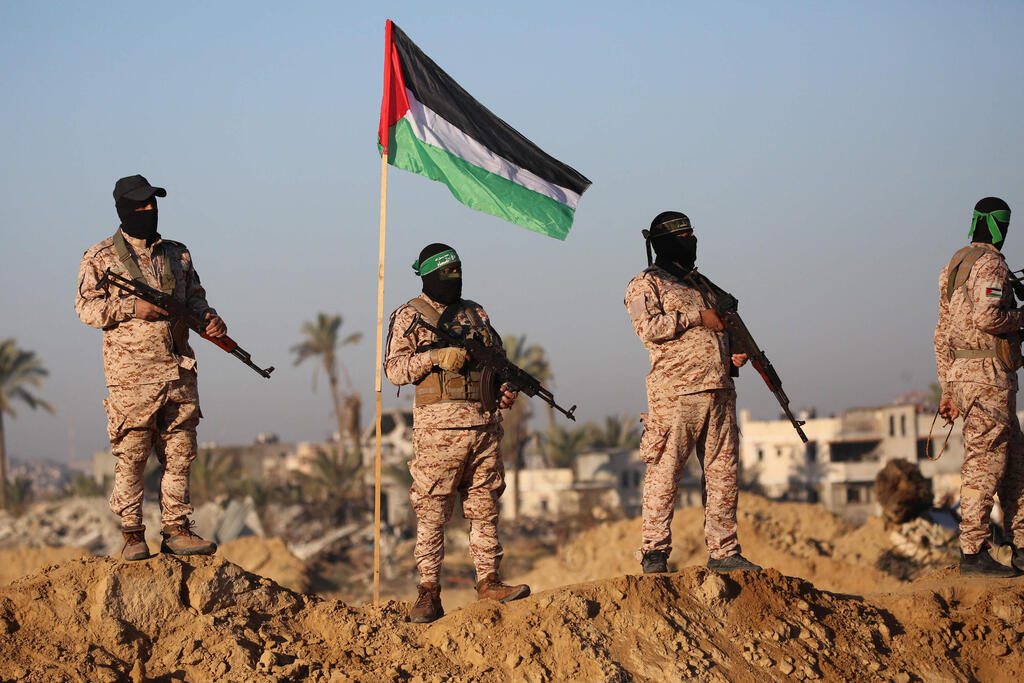
Armed Hamas operatives in Khan Younis, Gaza
(Photo: Bashar TALEB / AFP)
Weapons are not bargaining chips. They are the physical means by which the organization continues to justify its existence.
When these groups face overwhelming military pressure or diplomatic isolation, their doctrine supplies a ready mechanism for survival: the hudna, a temporary tactical truce. A hudna is not a step toward genuine peace. It is a calculated pause designed to relieve military pressure, allow rearmament, restore organizational cohesion and create the appearance of moderation for international consumption.
The historical record is consistent. Each time Israel or the international community accepted paper commitments of restraint, the organizations used the interval to rebuild.
The Oslo process was supposed to produce a demilitarized Palestinian entity maintained by a strong police force. Instead, those security structures became conduits for illegal arms and platforms for terror campaigns.
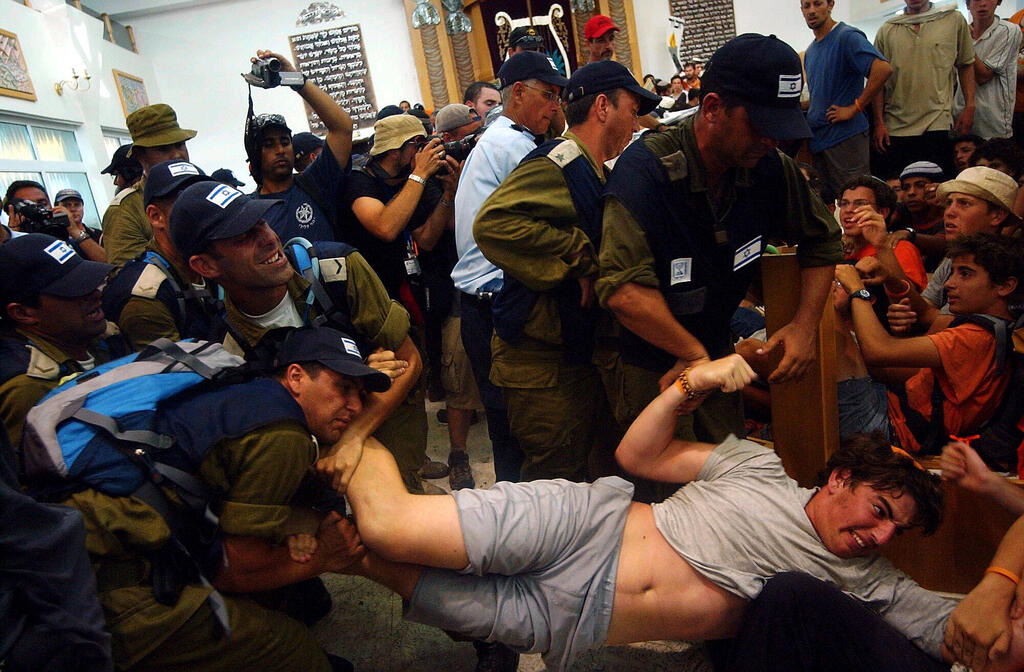
Israeli security forces remove Jewish residents and activists from a synagogue in the settlement of Neve Dekalim in the Gaza Strip during Israel's 2005 disengagement, which saw the evacuation of all Israeli settlements and military installations from Gaza
(Photo: Alex Kolomoisky)
The 2005 disengagement removed every Israeli soldier and civilian from Gaza under the assumption that international oversight and economic incentives would foster stability. Within two years, Hamas had executed a bloody coup against the Palestinian Authority, turned the Strip into a fortress and spent the next decade and a half constructing an underground military city whose sole purpose was the destruction of the Jewish state.
October 7 was not an inexplicable eruption of madness. It was the logical outcome of a strategic conception that believed Hamas could be economically deterred, politically rationalized or gradually moderated through calibrated diplomacy and Qatari cash.
The proposals currently circulating around the Board of Peace suffer from the same structural blindness. Storing weapons inside a dense urban environment honeycombed with tunnels does not neutralize them. It conceals them. Transferring formal control to a technocratic committee or an international stabilization force does not dismantle the command structures, the production capacity, the recruitment pipelines or the ideological underground that can reactivate those weapons the moment conditions change. Israel has watched this exact sequence before. The ending has never been different.
From a strict national-security perspective, half-measures are not cautious. They are the most dangerous option available. Genuine demilitarization of Gaza requires three non-negotiable elements that no jihadist organization will voluntarily accept.
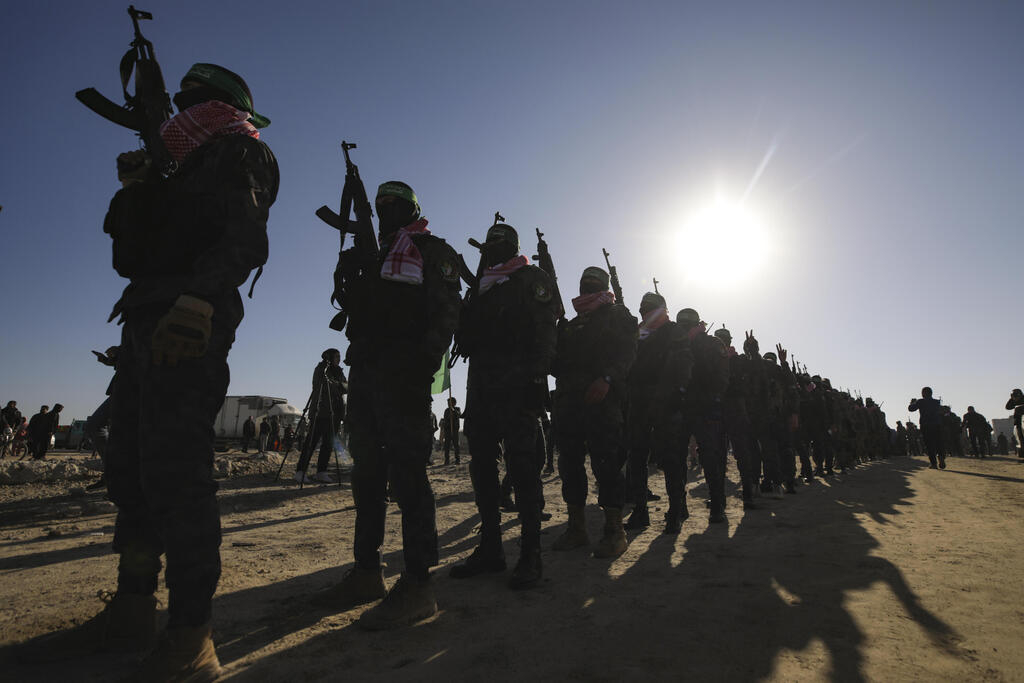
(Photo: AP/Jehad Alshrafi)
First, the physical destruction of capability. Production sites, rocket and missile stockpiles, anti-tank systems and the underground tunnel network must be systematically eliminated, not catalogued, photographed and placed under temporary supervision. Anything short of destruction leaves the infrastructure intact for future mobilization.
Second, the dismantling of command-and-control structures. An organization that retains its leadership cadres, its organizational memory, its administrative influence and its ideological framework remains a latent military force even if its visible arsenal is temporarily constrained. A disarmed Hamas that continues to exist as a coherent hierarchical entity is simply a threat in dormancy.
Third, the preservation of unrestricted operational freedom for the Israel Defense Forces. Israel cannot outsource its security to an international force whose mandate will inevitably be limited by politics, or to a newly formed Palestinian administrative body whose legitimacy and effectiveness remain unproven. Any arrangement that conditions Israeli freedom of action on the good-faith implementation of Hamas’ commitments recreates, almost precisely, the vulnerability that produced the worst massacre of Jews since the Holocaust.
The debate over Gaza is often presented as a dispute about borders, reconstruction timelines, the composition of a future administration or the sequencing of withdrawals. At its core, it is a contest between two incompatible understandings of power and time.
 Amine Ayoub
Radical Islamist movements operate on a civilizational timeline and treat diplomacy as an arena in which to exploit the impatience, risk-aversion and electoral calendars of democratic societies. Western and international actors are frequently eager to declare turning points, sign documents and move the story into the implementation phase. Israel does not have the luxury of that impatience.
If Israel allows the desire for a diplomatic achievement and the international applause that accompanies it to override the requirements of physical security, it will once again purchase a temporary quiet at the price of the next massacre.
Hamas and Islamic Jihad will not disarm because their doctrine forbids it, their identity depends on it and their long-term strategy requires the preservation of the means of violence. Real demilitarization will be achieved through the methodical, uncompromising elimination of their military infrastructure and organizational capacity by the IDF, or it will not be achieved at all.
There is no third option that the last thirty years have not already tested, refined and found catastrophically wanting. The only question left is whether Israel will recognize the pattern in time.
- Amine Ayoub, a fellow at the Middle East Forum, is a policy analyst and writer based in Morocco. Follow him on X: @amineayoubx