


The Houthis pose a serious threat and a military problem that is far harder to solve than much of the Israeli and international media coverage might suggest. In 2024 and 2025, the United States tried three times, unsuccessfully, to suppress the group through air campaigns. After the third effort, the massive March-April 2025 bombing campaign known as Operation Rough Rider, Washington concluded that it could not defeat the fanatical Shiite Islamist rebels from the air alone.
President Donald Trump therefore declared victory, said the Houthis had promised him they would stop attacking American ships and withdrew US forces from the arena, even though the campaign had not significantly degraded their ability to block the Bab el-Mandeb Strait, strike Saudi and Emirati oil infrastructure with missiles and drones, or launch ballistic missiles nearly 2,000 kilometers toward Israel.
Gallery
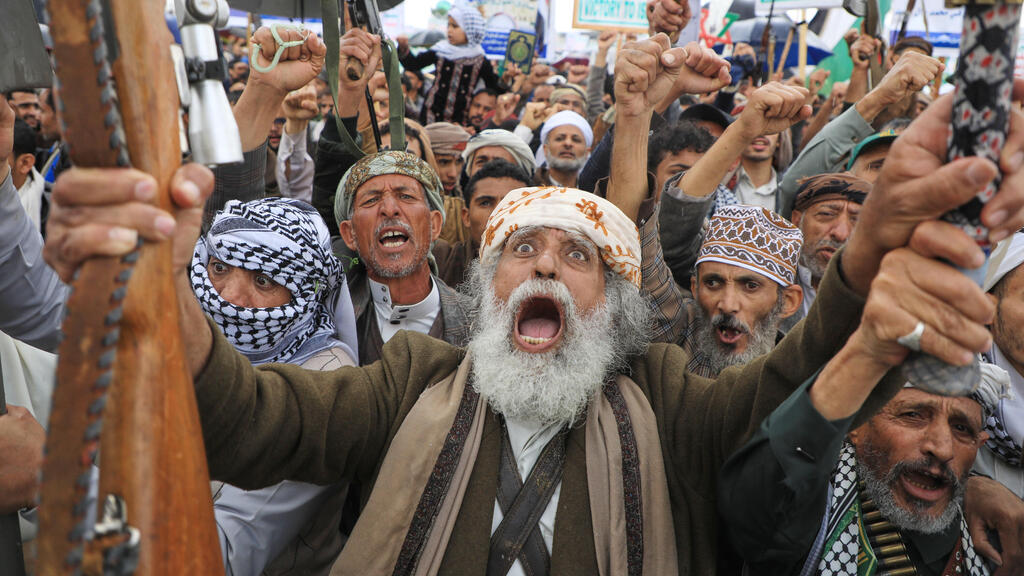
Houthi supporters rally in Sanaa, Yemen, on March 13 in a show of support for Iran
(Photo: AP Photo/Osamah Abdulrahman)
The IDF, meaning the Israeli Air Force primarily, achieved somewhat more. It killed a significant part of the Houthis’ political and military leadership in an airstrike and hit the port of Hodeidah, their main maritime supply artery on the Red Sea coast. Israel achieved a degree of deterrence, but it did not destroy the Houthis’ military capabilities, despite claims by Defense Minister Israel Katz. The group stopped firing at Israel only after the ceasefire in Gaza took effect.
The American approach
In Washington, the Houthis, or Ansar Allah, are generally viewed as an Iranian proxy operating in northern Yemen. US officials believe the problem they pose may be resolved after the midterm elections, either if the United States delivers what it sees as a final blow against Iran or if Tehran returns to negotiations with Washington and reaches an agreement over the Strait of Hormuz and the suspension of its nuclear program.
That is why Trump responded only partially to a request from Saudi Crown Prince Mohammed bin Salman, who appealed to him about a week ago for American help in suppressing the Houthi fire directed at Saudi oil facilities and cities along the Red Sea coast. Trump appears to have learned from the failed American campaigns of recent years. Their military results were limited, while the cost of the interceptor missiles fired from US warships and the offensive munitions launched from aircraft was enormous. Those expensive weapons failed to suppress drones and missiles that cost only a fraction as much as the systems used to intercept or destroy them.
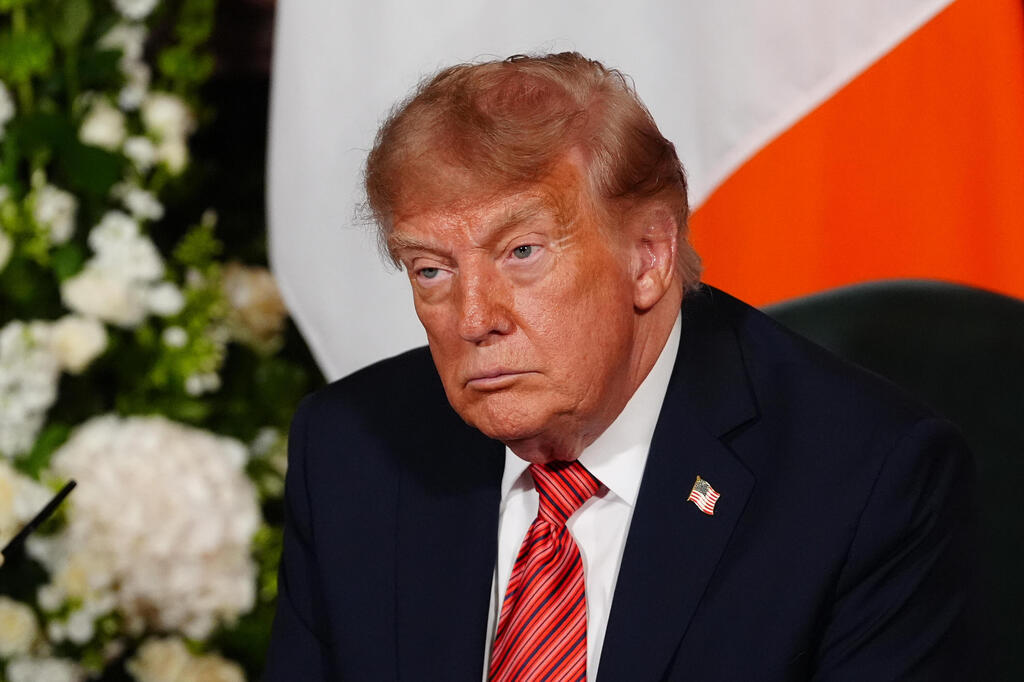
US President Donald Trump
(Photo: AP Photo/Julia Demaree Nikhinson)
Trump therefore directed the Saudis, through US Central Command, toward Israel in an effort to improve Saudi targeting intelligence and the operational methods used by the Royal Saudi Air Force. He also refrained from sending additional Patriot and THAAD batteries to Saudi Arabia, knowing that the United States needs to build up its stocks of interceptors and air-defense batteries ahead of a possible major confrontation with Iran, which is likely to come after the US midterm elections. The intelligence support Saudi Arabia already receives from CENTCOM and Israel, however, is not enough.
What it would take to stop the Houthis
Ansar Allah is a fanatical Shiite militia. Its fighters move around in pickup trucks, much as ISIS did when it conquered large parts of the Middle East. The Houthis’ ideological motivation, mobility and relentless battlefield initiative resemble the qualities that once made ISIS so dangerous.
Stopping the Houthis and removing the threat they pose would therefore require reliable ground forces with religious motivation at least as strong as theirs, capable of conducting a major ground maneuver with air support from Western air forces. That is how Shiite and Kurdish militias in Iraq and Syria broke ISIS, with support from American, British, French and Jordanian air power. A similar approach may be the only way to defeat the Houthis.
It is important to note that the Houthis are currently cooperating with another Iranian proxy, the Shiite militias belonging to Iraq’s Popular Mobilization Forces. They now operate a joint war room in Baghdad. The Houthis supplied targets to the Iraqis, who then launched drones that shut down the flow of oil through Saudi Arabia’s east-west pipeline and struck the port of Yanbu.
The Houthis do not follow Tehran’s orders in every respect, but their blockade of the Bab el-Mandeb Strait serves both their own interests and Iran’s. For the Houthis, it is part of their effort to lift the Saudi air blockade imposed on them. For Iran, it also disrupts oil supplies to the global market.
More broadly, the Houthis and their Iraqi Shiite militia partners are likely to pose a growing threat to Egypt as well. Egypt is already losing millions of dollars every day because traffic through the Suez Canal has been crippled since the Houthis established themselves around Bab el-Mandeb, while insurance companies have sharply increased rates for vessels that need to pass through the strait into the Red Sea and onward to the Suez Canal and Eilat Port.
Houthis enter Mokha chanting ‘Death to America, death to Israel’


The strike on the Saudi oil pipeline reaching Yanbu on the Red Sea also prevents Riyadh from sending its oil through an Egyptian pipeline running from the Red Sea coast to the Alexandria area on the Mediterranean, from where it continues to Europe. That pipeline, known as SUMED, still carries between 2 million and 4 million barrels of Saudi oil a day to Europe.
Egypt is therefore one of the biggest losers from the current situation. That is why the Saudi crown prince traveled there in an effort to persuade Egyptian President Abdel Fattah el-Sisi to join the fight against the Houthis. Egypt has fought in Yemen before. In the 1960s, it became involved in the civil war there and even used chemical weapons, without achieving particularly impressive results.
For Israel, the Houthis threaten more than freedom of navigation to Eilat. They made effective use of the year-long ceasefire that followed the failure of the US campaign and have rebuilt their ability to threaten Israel with ballistic missiles and drones. More recently, their cooperation with Iraqi Shiite militias has also improved their ability to threaten Israel from the east.
In recent weeks, the Houthis have demonstrated a remarkable ability to move forces roughly 2,500 kilometers south along the Red Sea coast, capture the city of Mokha from government forces and take control of Bab el-Mandeb and the islands in the strait.
The army of Yemen’s internationally recognized government, which tried to defend its territory along the Red Sea coast and inside Yemen, collapsed almost immediately. That happened despite the fact that the government army, based in Aden, has an air force and forces heavily equipped with weapons and armored vehicles supplied by Saudi Arabia.
Those forces scattered in the face of Houthi attacks mounted from pickup trucks and ambushes laid for government units as they moved through the area searching for them. The failure of Yemen’s government army marks another Saudi defeat in its long-running effort, together with a coalition, to fight the Houthis.
The Mecca agreement signed by Saudi Arabia with Pakistan and Turkey, which was supposed to function as a defense arrangement, has also failed to deliver what Riyadh had hoped. Pakistan and Turkey issue condemnations when the Houthis attack western Saudi Arabia with drones and ballistic missiles, but beyond that they do little.
Egypt also appears reluctant to send ground forces into Yemen. At most, Cairo may assist the Saudi air force as much as it can, perhaps even by deploying Egyptian fighter jets in exchange for hundreds of millions of dollars in Saudi support for the Egyptian economy.
Israel’s role
Israel, by contrast, can help Saudi Arabia deal with the Houthis. One area is intelligence. Israel can generate targeting information using advanced capabilities, including artificial intelligence, making it an important intelligence partner in the fight against the Houthis.
Israel can also help Saudi Arabia defend against the drones and cruise missiles the Houthis launch at its territory. The Israeli Air Force demonstrated that capability during Operation Roaring Lion, when it intercepted almost 1,000 Iranian drones launched toward Israel. Working together with the Americans, the Air Force succeeded in shooting them all down.
Saudi Arabia has advanced fighter aircraft and intelligence platforms in significant numbers, but it has difficulty operating the system effectively. One reason is that acceptance into Saudi pilot training is largely limited to people close to the royal family and those considered especially loyal. The leadership of the air force is likewise based not necessarily on selecting the best officers, but the most loyal.
Israel cannot spare an Iron Dome battery for Saudi Arabia, even if Riyadh were to reverse its position and agree to normalize relations with Israel without requiring Israel to advance the establishment of a Palestinian state, contrary to the Saudi royal family’s current demand.
The IDF needs every Iron Dome, David’s Sling and Arrow 3 battery ahead of a possible future confrontation with Iran. Israel therefore cannot allocate even part of that array to Saudi Arabia, as it reportedly did in the United Arab Emirates, where, according to foreign reports, an Iron Dome battery was deployed and used to intercept Iranian missiles and drones.
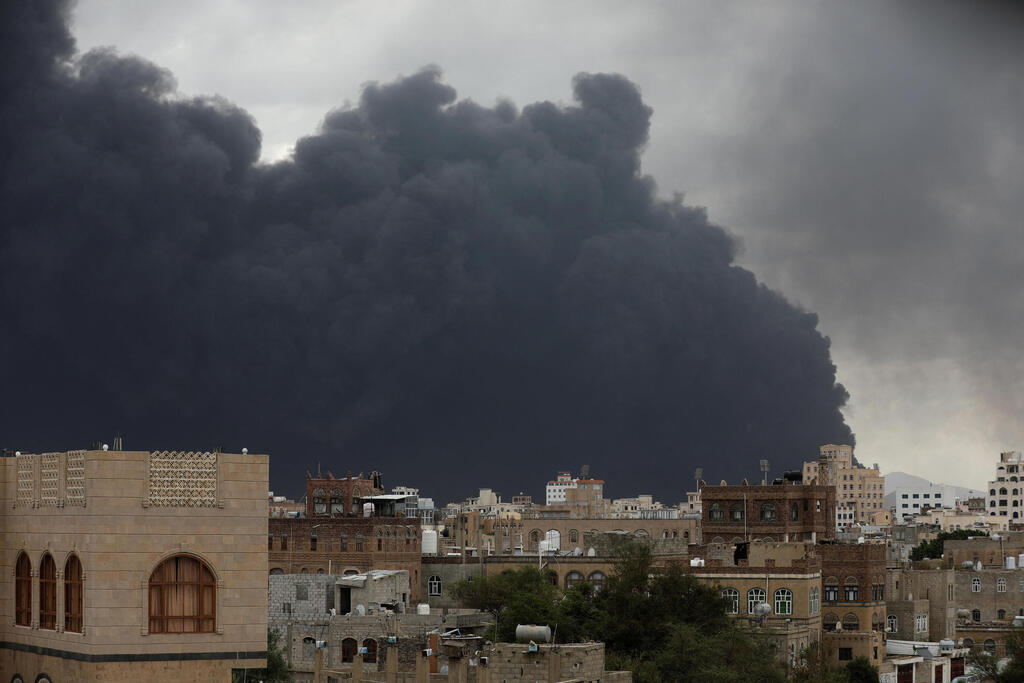
Israeli airstrikes in Sannaa
(Photo: REUTERS/Khaled Abdullah)
At most, Israel can provide detection systems and advise Saudi Arabia on how to deploy its detection, interception and strike capabilities more effectively. Israel can also teach the Saudis how to attack the underground facilities where the Houthis manufacture ballistic missiles, cruise missiles and drones from components smuggled to them from Iran.
The qat-chewing, sandal-wearing fighters often seen in photographs from Yemen are only the photogenic front line. The more dangerous element is the Yemeni military personnel loyal to deposed ruler Ali Abdullah Saleh. Their network also includes engineers, production workers and underground facilities that manufacture weapons and transfer them to tribes loyal to the Houthis, which then hide them in caves until the time comes to launch them.
Israel can help Saudi Arabia locate those underground facilities, their entrances and the tribes’ caves, and seal them, if not destroy them. But its ability to help goes no further than that, and even this is unlikely to be enough to defeat the Houthis.
Ground forces would still be needed to force them to retreat, disperse and return to Saada province in northern Yemen, where the movement originated before expanding southward, capturing Sanaa and taking control of other parts of the country.
For effective ground forces to emerge, Saudi Arabia would first have to stop fighting the force backed by the United Arab Emirates in southern Yemen. That force has demonstrated its ability to fight both the Houthis and other armed groups in Yemen. It was once part of the coalition that succeeded in containing the Houthis, but that coalition fell apart because Saudi Arabia pursued its own political agenda in the country.
Israel hopes an international coalition will eventually be formed that includes European countries harmed by Houthi control of Bab el-Mandeb and by disruptions to Saudi oil exports. But forming such a coalition, and making it effective, will take time.
Until then, the Houthis will remain a problem, in part because they are still able to receive smuggled navigation components and parts needed to operate missiles and drones from Iran. Small vessels crossing the Gulf of Oman and trucks traveling through Iraq continue to bring the Houthis what they need.
As long as that supply line remains open, the problem will not be solved.