

Iran reported that an Iranian commercial vessel was hit early Sunday off Qeshm Island in the Strait of Hormuz. One person was killed and three others were wounded. Earlier, the United Kingdom Maritime Trade Operations agency reported that a vessel had been struck by an unidentified projectile while transiting the strait.
After nearly seven months of war, at varying levels of intensity, the United States appears in recent weeks to have succeeded in breaking Iran's grip on the Strait of Hormuz while nearly bringing Iranian oil exports to a complete halt, according to The Associated Press. That is expected to accelerate the country's economic decline. At least, that is what U.S. President Donald Trump hopes.
But the war launched by the United States and Israel on Feb. 28 — and which was intended to last only a few weeks — remains far from over, and the stalemate is exacting a heavy price on both sides. An agreement reached in June quickly collapsed, and there has been no diplomatic progress since. Low-intensity fighting continues, and the United States still appears to lack a clear exit strategy.
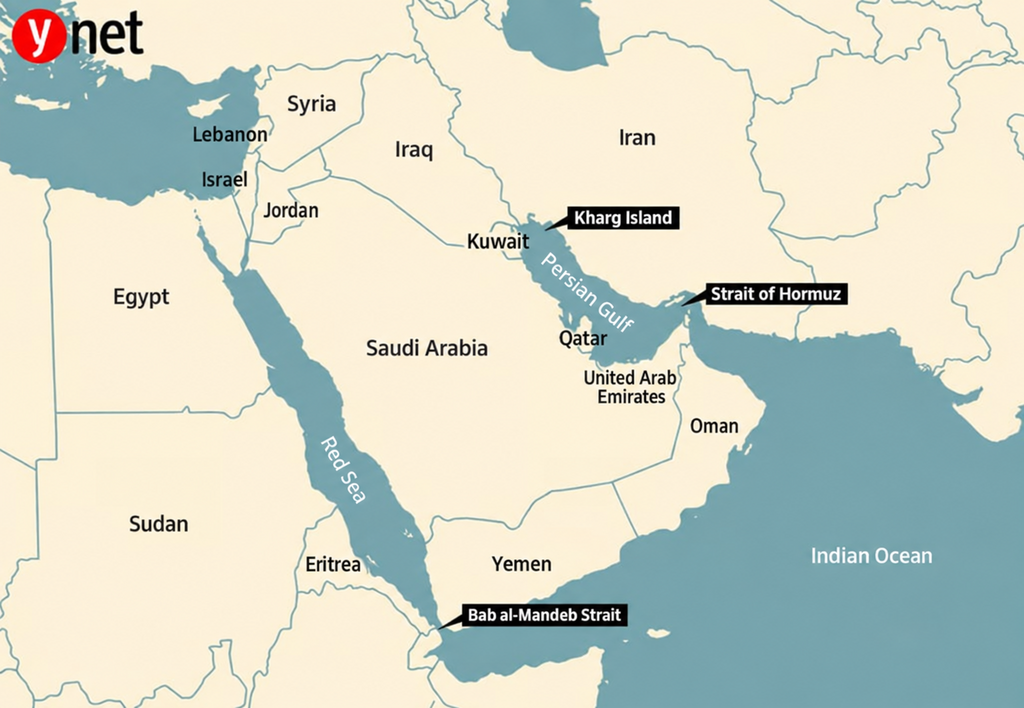
The growing economic pressure on Iran has yet to spark an uprising, and if its leaders are pushed into a corner, they could opt for military escalation rather than capitulation. At the same time, the Houthis, Iran's proxies in Yemen, have stepped up attacks against Saudi Arabia, driving oil prices higher again, and captured the strategic city of Al-Mokha on the Red Sea coast, giving them control over the Bab el-Mandeb Strait.
Trump has acknowledged that gasoline prices are likely to remain high at least through the November midterm elections.
"Unfortunately, the U.S. is not winning in the war with Iran despite its limited success in loosening Iran’s grip over the strait and the devastating impact on Iran’s economy," Mona Yacoubian, a Middle East expert at the Center for Strategic and International Studies in Washington, told AP.
"Iran shows no sign of backing down and instead has demonstrated that it is prepared not only to fight back but to escalate wherever it can. The war is likely to drag on, with no clear winner."
Has Iran lost its leverage?
Iran effectively closed the Strait of Hormuz — through which a fifth of the world's traded oil and gas passed before the war — in the opening days of the conflict, using the damage to the global economy as leverage. At the same time, it continued exporting its own oil, primarily to China.
In recent weeks, the balance of power appeared to shift. The U.S. blockade has nearly brought Iranian oil exports to a complete halt, while the U.S. military has helped Gulf states increase their exports. But in recent days, an escalation on another front could lead to another significant development in the complex conflict.
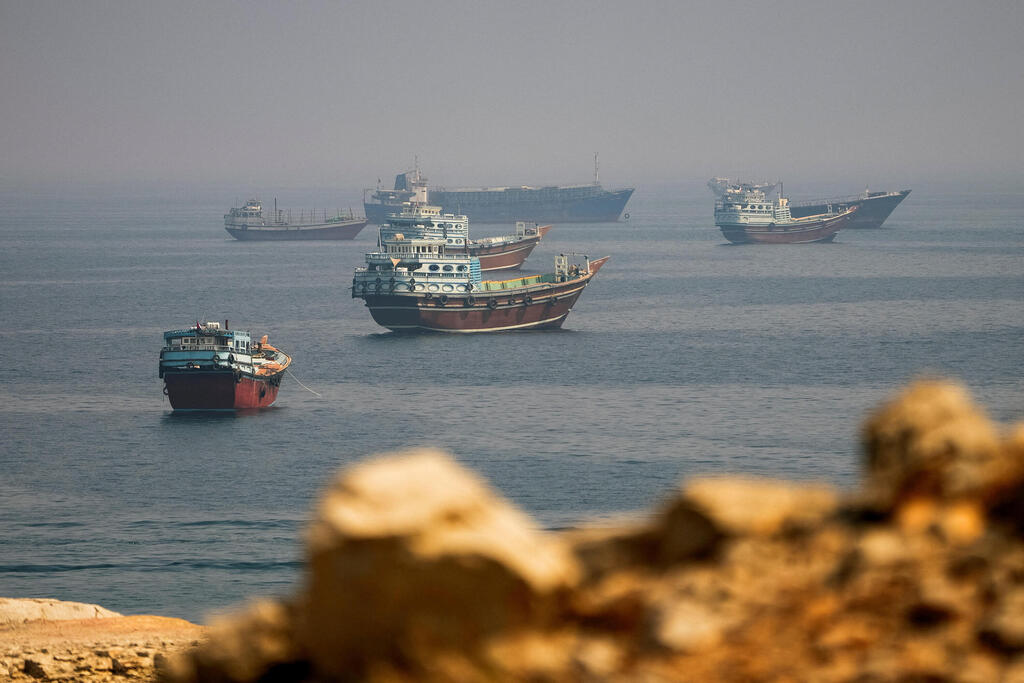
Vessels in Hormuz, late August
(Photo: REUTERS/Stringer)
The tightening blockade and new U.S. sanctions are already taking a heavy toll on Iran's economy, driving up prices and creating even longer lines at gas stations. So far, however, the pressure has not led Iran's leaders to offer concessions over the Strait of Hormuz, its nuclear program or its support for proxies across the region.
Iran continues to attack ships in the strait, prompting limited U.S. strikes on its coastal areas, followed by Iranian retaliation in the form of missile attacks on Arab countries hosting U.S. forces.
At the same time, the Houthis this week launched a wave of attacks on Saudi oil facilities as part of a conflict that has lasted more than a decade but has escalated in recent weeks.
Saudi Arabia has few options
The Houthis' rapid advance threatens the main shipping route through the Red Sea. Against the backdrop of the complicated situation in Hormuz, drone attacks attributed to pro-Iranian militias operating in Iraq led to the closure of a major oil pipeline running across the kingdom. It is a nightmare scenario for Saudi Arabia, and it has already sent shock waves through markets around the world.
The Saudis' most important ally, on which they have long relied, was described by AP as unpredictable and, at times, unreliable. Trump appears reluctant to expand a war that is hurting his popularity and that of the Republican Party ahead of the congressional elections. For Iran, the rebels' advance and the shutdown of the oil pipeline increase the global economic pressure generated by the conflict.
Michael Ratney, a former U.S. ambassador to Saudi Arabia, said the latest developments are “incredibly frustrating” for the kingdom.
“Despite their antipathy for the Iranians, this is a war they had never asked for, they had great trepidation about. And once it started, all of their … worst-case scenarios started coming true.”
Until now, Saudi Arabia has managed to avoid some of the worst consequences of the war in the Gulf by pumping its oil across the Arabian Peninsula to the Red Sea. From there, it can be exported to Europe through Egypt via the SUMED pipeline and the Suez Canal, or to Asia along a route through the Bab el-Mandeb Strait and onward to the Indian Ocean.

The Houthis in Sanaa
(Photo: AP)
But tensions with the Houthis flared again in July, leading the rebels to declare a blockade of Saudi ships and resume large-scale attacks against them for the first time in four years. Over the past two days, the Houthis have seized the port city of Al-Mokha and an island in the Red Sea, significantly improving their ability to block Saudi oil shipments through Bab el-Mandeb.
Saudi Arabia said Friday that it had shut down the oil pipeline carrying crude from major oil fields in the country's east to the Red Sea in the west following drone attacks launched from Iraq. Regional officials recently told AP that the Houthis had helped Iraqi militias carry out the attacks.
Saudi Arabia fought the Houthis beginning in 2015, but its allies made little progress on the ground. The conflict killed about 150,000 people and pushed Yemen to the brink of famine before a ceasefire was reached in 2022. The Houthis' latest gains are increasing pressure on Riyadh to respond, but all the options available to it carry significant costs and uncertain outcomes.
Saudi Arabia could step up its own attacks and try to push back the Houthis, but that would prolong the confrontation and lead to heavier Houthi attacks on Saudi energy infrastructure. It is a course the kingdom has pursued before, but the Houthis now possess more sophisticated weapons than they did in the past, while the Saudis likely have fewer interceptor missiles following the U.S.-Iran war.
The Saudis could also try to reach a diplomatic solution with the Houthis or their patrons in Tehran. But the Houthis are demanding an end to the Saudi-led blockade, which would allow them to grow significantly stronger over the long term, while Iran has little interest in stabilizing the region without securing major concessions from the United States.
Left to face the fight alone
For decades, Saudi Arabia and other Gulf states have relied on U.S. security guarantees. Those guarantees have eroded under Trump, who also refrained from taking military action during his first term in response to a 2019 attack attributed to the Houthis that temporarily knocked out half of Saudi Arabia's oil production.
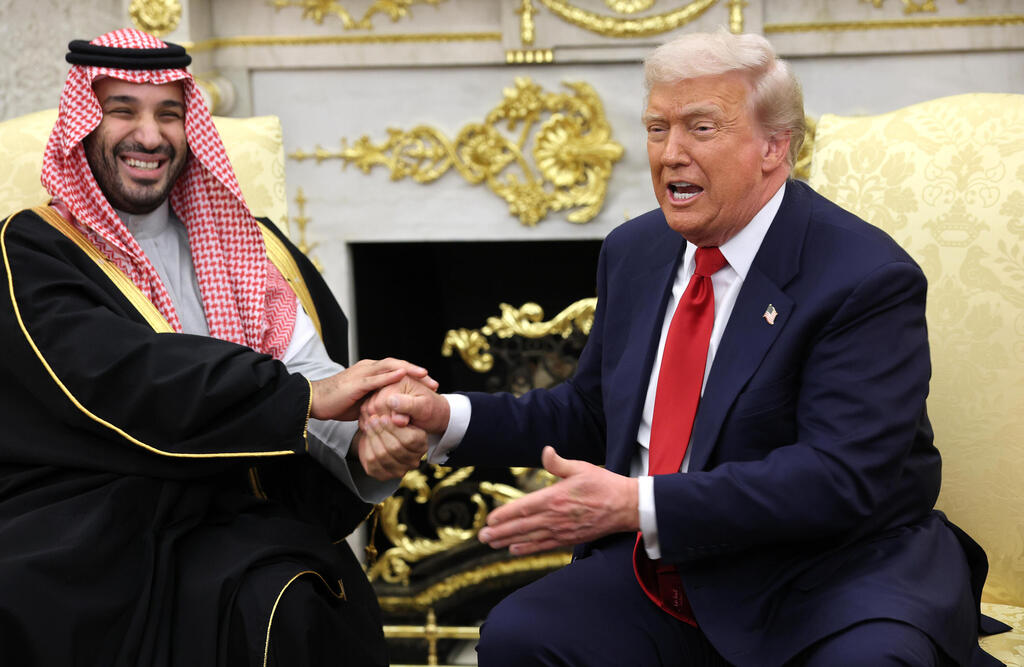
Trump and bin Salman
(Photo: Win McNamee/Getty Images)
The United States began airstrikes against the Houthis in January 2024 under the Biden administration, and they continued until January 2025. Trump launched an air campaign against the rebels in March last year in response to attacks on ships in the Red Sea linked to the war in Gaza.
But U.S. forces are now deployed around the Strait of Hormuz, and the prolonged fighting has placed a significant strain on the U.S. military and depleted its stocks of advanced interceptor missiles.
The war is also unpopular in the United States and has eroded support for Trump after he promised to keep the country out of Middle East wars. Opening another military campaign in Yemen could further complicate matters for Republicans in closely contested House and Senate races.
Trump said Saturday that Iran was "probably" behind the attack on the Saudi oil pipeline. Asked about his recent conversation with Saudi Crown Prince Mohammed bin Salman, Trump said: "He's a good friend of mine, and all I can say is everything is going to work out great."