


For years, Saudi Crown Prince Mohammed bin Salman (MBS) has operated under a simple assumption: that money, oil, and strategic utility would be enough to make the world forget. Forget the bone saw. Forget the consulate in Istanbul. Forget the journalist who walked in and never walked out. Last week, a Paris appeals court decided that the world would not forget. A French investigating judge has been assigned to examine the murder of Jamal Khashoggi, acting on complaints filed by Reporters Without Borders and the anti-impunity organization Trial International. For MBS, this is not the end. But it is the beginning of something he cannot simply buy his way out of.
The facts of the Khashoggi killing have never seriously been in dispute. On October 2, 2018, Khashoggi, a Saudi journalist and Washington Post columnist, entered the Saudi consulate in Istanbul to obtain documents related to his upcoming marriage. Inside, a team of fifteen Saudi operatives was waiting for him. He was killed within minutes, his body dismembered. Turkish intelligence recorded the entire operation. The CIA subsequently concluded, with high confidence, that MBS personally ordered the assassination. Fifteen operatives, one journalist, one crown prince's command.
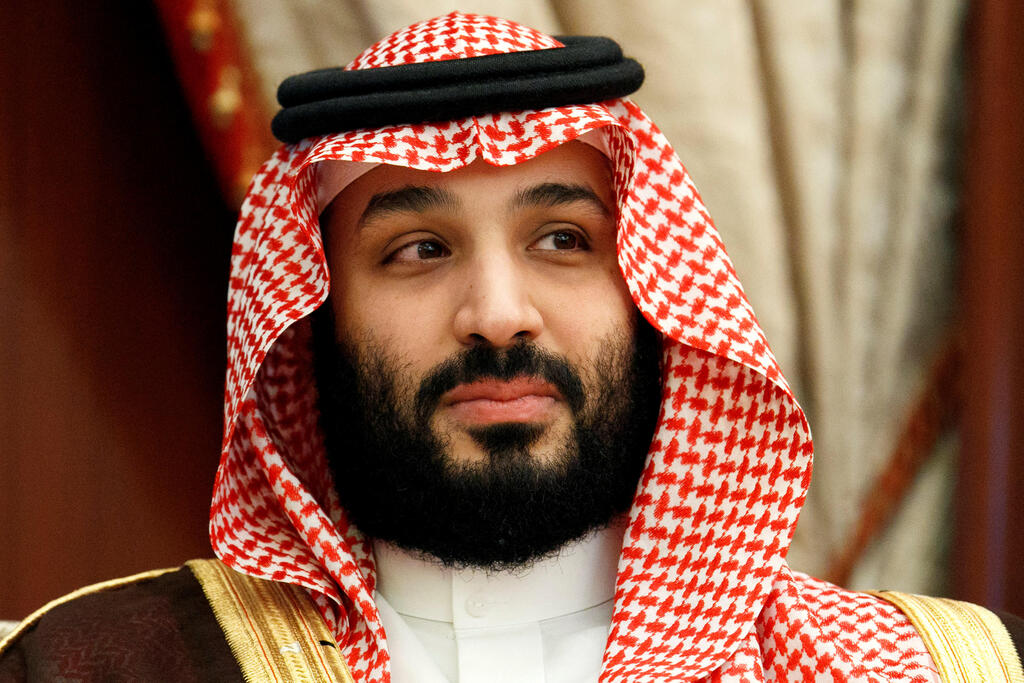
What followed should have been a reckoning. Instead, it became a masterclass in how autocrats survive scandal by waiting out the news cycle. Saudi Arabia initially denied everything, then claimed Khashoggi had died in a fist fight, then acknowledged a killing but called it unauthorized. A Saudi court eventually handed down sentences that were subsequently commuted. No one of genuine seniority faced real punishment. MBS himself was never charged in any jurisdiction that could reach him.
The rehabilitation proceeded with remarkable speed. By 2022, Emmanuel Macron was shaking MBS's hand in Jeddah. Joe Biden, who had promised to make Saudi Arabia a pariah, flew to Riyadh and offered a fist bump heard around the world. The Abraham Accords process, backed by Washington, placed Saudi normalization with Israel as the ultimate regional prize, with MBS rebranded as a visionary modernizer, the man who opened cinemas, let women drive, and promised a post-oil future. The murder of a journalist receded into the background noise of great-power pragmatism.
The French complaint was filed in July 2022, timed deliberately to coincide with MBS's visit to Paris. The French prosecutor's office resisted opening an investigation for years, citing jurisdictional and procedural arguments that critics viewed as politically motivated. The appeals court last week overruled those objections. A judge specializing in crimes against humanity will now formally investigate. MBS will not be arrested. He will not appear in a Paris courtroom next Tuesday. But a file bearing his name now sits in the French judicial system, and it will not close quietly.
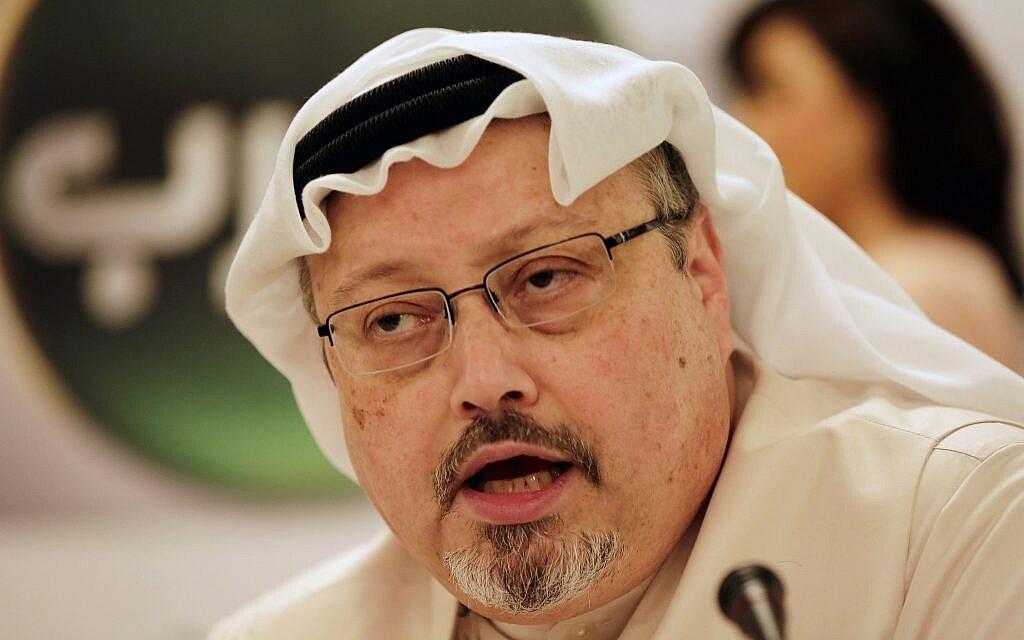
Saudi journalist Jamal Khashoggi
(Photo: AP)
What makes this legally significant is the doctrine of universal jurisdiction, which France applies to certain grave crimes regardless of where they occurred or the nationality of those involved. France has used this tool before, including against perpetrators of the Rwandan genocide. The Khashoggi case does not fit the genocide framework, but the complaints allege torture and forced disappearance, categories that French law treats with particular seriousness. The investigating judge now has the authority to issue international letters rogatory, seek testimony, request documents, and in principle issue an international arrest warrant, though the latter step would be diplomatically explosive.
The deeper issue is what the French decision reveals about Israel's most consequential strategic bet.
For Israel's security establishment, Saudi normalization is not primarily a diplomatic achievement. It is a force multiplier. A formal agreement with Riyadh closes the Arab world's last major front against Israeli legitimacy, unlocks intelligence-sharing frameworks that already exist informally, and anchors a Sunni coalition capable of sustaining pressure on Iran without requiring Israeli military action to carry the full weight alone. Every Israeli security planner understands that the Iran threat cannot be managed indefinitely by Israeli airpower alone. Saudi Arabia, with its financial depth, its regional influence, and its ability to strangle Iranian proxies at the funding source, is the partner that changes Israel's strategic equation in ways that no European ally can replicate.
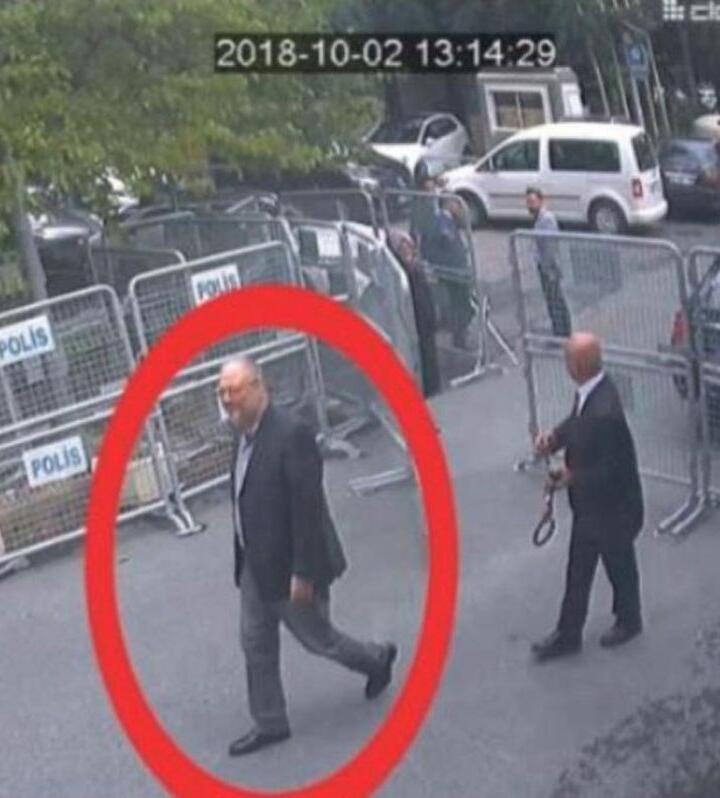
Washington Post columnist Jamal Khashoggi walks into the Saudi Embassy in Istanbul
(Photo: Reuters)
That deal, if it comes, will be signed with MBS. Not with a Saudi institution, not with a reformed future monarchy, but with this specific man, the one whose name now appears on a Paris judge's docket. Israeli officials have made the rational calculation that his cooperation on Iran, on Hamas financing, on regional stabilization, outweighs the discomfort of his domestic record. They are not wrong that the calculation is rational. They may be wrong that it is stable.
A crown prince who governs by demonstrated impunity is also a crown prince who can reverse course without warning, who faces no institutional constraint on his decisions, and whose survival instinct has already shown it operates outside any legal or diplomatic boundary. The same ruthlessness that liquidated Khashoggi is the ruthlessness that could, under different pressures, decide that a public alignment with Israel has become a domestic liability. There is no Saudi parliament, no independent judiciary, no free press to resist that decision. The guarantee Israel is purchasing is only as durable as MBS's personal calculation on any given day.
The French investigation does not resolve this. But it reintroduces into the public record a question that Israel's security planners prefer to keep private: what exactly is the foundation of the partnership being built? A normalization agreement grounded in shared strategic interests is one thing. A normalization agreement grounded in one man's unaccountable will is structurally different, and the Paris courtroom is now forcing that distinction into daylight.
 Amine Ayoub
Khashoggi was not a revolutionary. He was a columnist, a former Saudi insider who had grown increasingly critical of the direction MBS was taking the kingdom. He was engaged to be married. He needed a piece of paper. The brutality of what was done to him inside a diplomatic facility, on the orders of a man who now attends G20 summits and hosts golf tournaments, is not a footnote. It is a data point about the kind of partner Israel is staking its strategic future on.
MBS will continue to build his towers in the desert. The planes will keep landing in Riyadh. The deals will keep being signed. But somewhere in the Paris justice system, a judge is now reading a file that the crown prince spent years trying to ensure would never exist. Israel should read it too.
- Amine Ayoub, a fellow at the Middle East Forum, is a policy analyst and writer based in Morocco.