

Nikolay Mladenov, who was appointed to oversee U.S. President Donald Trump's Board of Peace, has worked for many months, with the assistance of Qatar, Turkey and Egypt, to advance an agreement with Hamas that would enable the implementation of his 20-point plan. Israel, for its part, continues its wave of targeted strikes and ground operations aimed at destroying Hamas infrastructure.
The military pressure created by the targeted assassinations has pushed Hamas to engage with the mediators and agree to a framework that apparently allows it to continue to exist, but in a different form from the way it operated until now.
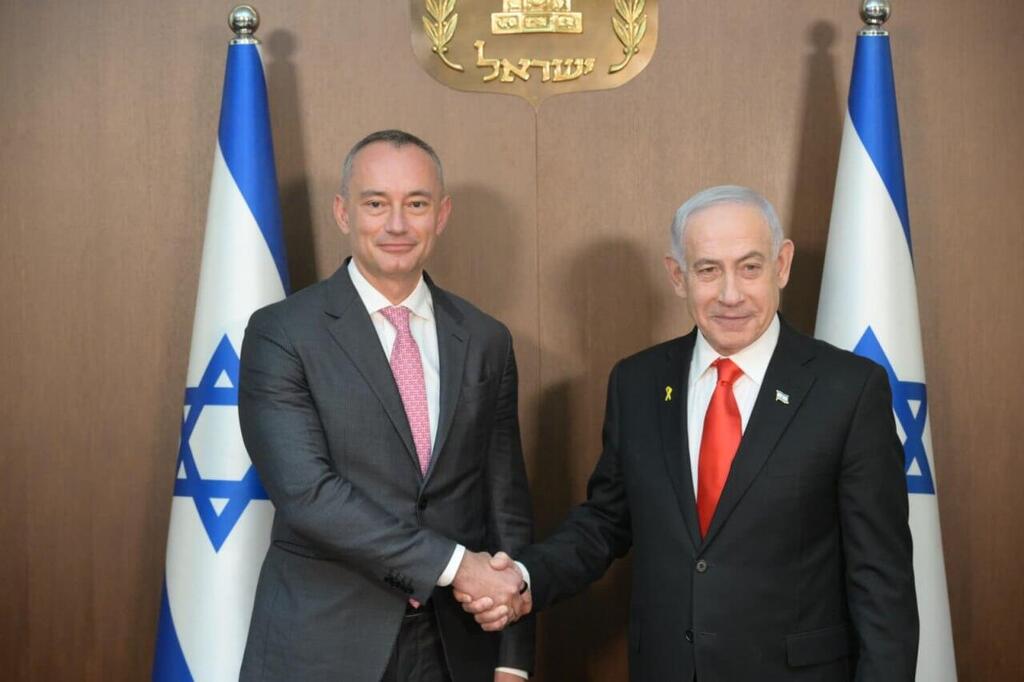
Nikolay Mladenov and Benjamin Netanyahu
(Photo: Amos Ben Gershom/GPO)
Under the proposed agreement, Hamas relinquishes civilian control, in the complex reality of the current situation in which most of the Gaza Strip is destroyed, closed off and disconnected, while civilians are living under extremely difficult conditions. Hamas is effectively handing over the “hot potato” to other Palestinian actors. Meanwhile, it remains on the sidelines, commits to handing over the heavy weapons in its possession, which are very limited in number, and transferring its small arms to Palestinian actors.
Hamas will not change its nature. It will retain weapons stockpiles in underground compounds, continue receiving funding from Qatar in order to pay its operatives, allow reconstruction funds to begin flowing into the Gaza Strip and a significant portion of those funds will make its way into Hamas accounts.
Khalil al-Hayya, who after surviving an Israeli assassination attempt in Qatar on September 9, 2025, established a personal relationship with Steve Witkoff, will continue using the direct channel to push for the implementation of Mladenov’s plan and will rely on it in an effort to persuade President Trump to advance the agreement. Israel is required to halt its targeted operations, withdraw from the territory it currently holds and allow a comprehensive reconstruction plan to proceed. Hamas is effectively entering a form of hudna — a pause in hostilities for the purpose of rebuilding, strengthening its capabilities and planning the next campaign.
“Calm will be met with calm,” the directive that Netanyahu introduced into our lives, primarily in relation to Yahya Sinwar’s Hamas, may once again become a tangible and not necessarily calculated risk.
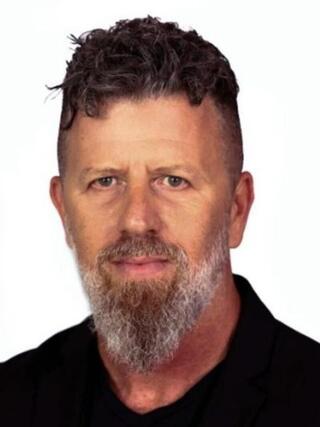 Doron Hadar
“For silence is filth, sacrifice blood and soul for the sake of the hidden glory.” This is what Ze’ev Jabotinsky wrote in 1932 for the anthem of the Betar movement, as criticism of the policy of containment and restraint adopted by the Jewish community in those years. The Israeli government failed to create a governing alternative at the point when Hamas was at its weakest, and it now faces a genuine dilemma.
The right solution, in my view, will require a declarative refusal to accept the situation, operational action to introduce changes and conditions during the implementation of the agreement, maximum vigilance and restraint in cases of violations. Alongside this, there may also need to be readiness to pay a price in the form of destabilizing the front and the calm. Israel will have to act on multiple levels, including beneath the surface, in order to create a genuine governing alternative that will work to eradicate Hamas.
- Lt. Col. (res.) Doron Hadar, former commander of the IDF Crisis Management & Negotiation Units