

As Israel’s political factions celebrate their respective “victories” following the High Court of Justice’s ruling barring retired judge Asher Kula from the Sde Teiman leak probe, a far more consequential reality is emerging—one that may soon shape the country’s strategic environment in ways few imagined.
Had anyone suggested on October 8, 2023, that the war in Gaza would conclude with a U.S.-supervised arrangement in the enclave—bolstered by Turkish, Egyptian and Qatari involvement—and, above all, with a UN Security Council resolution affirming the Palestinians’ right to self-determination and potential statehood, such a scenario would have been dismissed as fantasy. And yet, this is precisely the trajectory unfolding today.
Gallery
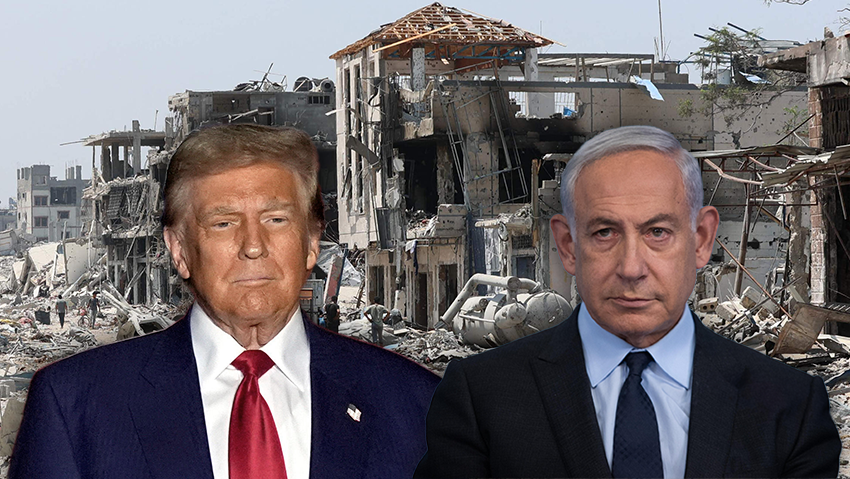
US Donald Trump and Prime Minister Benjamin Netanyahu
(Photo: Omar AL-QATTAA / AFP, AP Carlos Osorio, Alex Kolomoisky)
Israel vowed “never again.” Never again ignore the threats at its doorstep. Never again to deceive itself with delusions of stability.
There may indeed be broader geopolitical designs at play, and it is possible that future developments will reveal a different picture than the one currently taking shape. But based on what is already known, Israel must confront reality. Silence is no longer a virtue—it is a liability.
This is especially true in the context of American policy. If the president advancing this emerging framework were anyone other than Donald Trump—whose wartime support for Israel has been both significant and sincerely appreciated—the reaction from Israel’s political right would have been thunderous.
Yet the uncomfortable truth is that President Trump is steering a course that echoes Shimon Peres’s old vision of a “New Middle East,” a model rooted in economic integration while downplaying the ideological and religious forces that have historically driven the conflict.
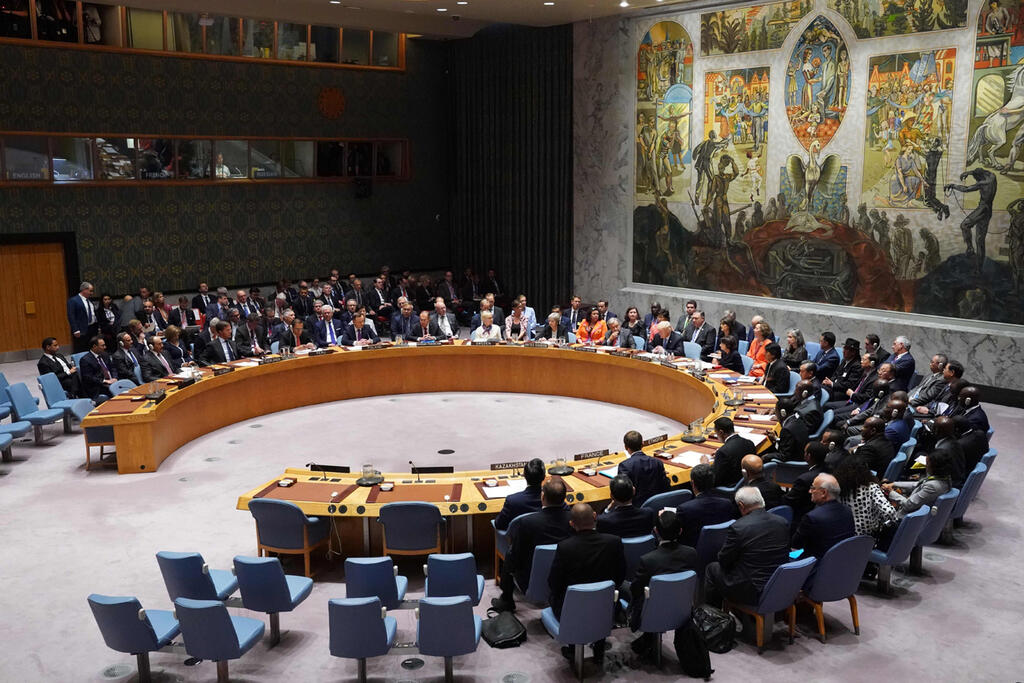
The UN Security Council
(Photo: AFP)
Can Israel genuinely expect Turkey and Qatar—longstanding sponsors of Islamist movements—to dismantle Hamas?
Is it realistic to assume that an international force in Gaza will grant Israel the operational flexibility needed to respond to future threats?
What will prevent humanitarian aid or reconstruction funds from flowing—again—into terror infrastructure?
Equally troubling is the prevailing narrative in Israel that the Security Council resolution is merely “declarative.” This misconception is dangerous. Security Council resolutions are not symbolic gestures; they are binding instruments of international law that can form the basis for diplomatic pressure, sanctions or punitive measures should Israel be deemed non-compliant. Unlike presidential policies, such resolutions do not expire with electoral cycles. They endure.
 Dr. Ruth Kabessa Avramzon Photo: Courtesy
A resolution affirming Palestinian self-determination and explicitly referencing statehood is not a technical detail. It is a legal and political precedent—one that may become a cornerstone for future international action against Israel.
Israel may have struck a blow against one manifestation of the regional threat, but the core danger remains. Gaza has become a symbol of global jihad—and unless terror capabilities are dismantled at their root, the region will continue to incubate both Sunni and Shiite radicalism. The ideological engine behind these movements has not disappeared; it is regrouping.
Today, Israel risks projecting confidence while ignoring inconvenient truths. The growing complacency—particularly among segments of the political right that have historically been alert to such risks—resembles, uncomfortably, the silence of the lambs.
There is ample reason for concern. There is ample reason for scrutiny. Above all, there is an urgent need for honest answers—before events on the ground crystallize into irreversible geopolitical realities.
- Dr. Ruth Kabessa Avramzon is an expert in governance and public management and chair of Mothers for Israel.