


When American diplomatic messaging regarding Western Sahara multiplied late last month, observers across Middle Eastern capitals searched for signs of retreat. On paper, Washington continues to recognize Rabat's sovereignty over the territory. Yet senior administration officials have now been emphasizing that the five-decade conflict remains unresolved and that no swift end is in sight.
To a casual observer, this sounds like superpower hesitation or backtracking. In reality, it represents something far more strategic. Washington has not abandoned its policy or altered its ultimate destination. Instead, it has shifted from reaffirming recognition to the high-stakes mechanics of diplomatic settlement.
Gallery
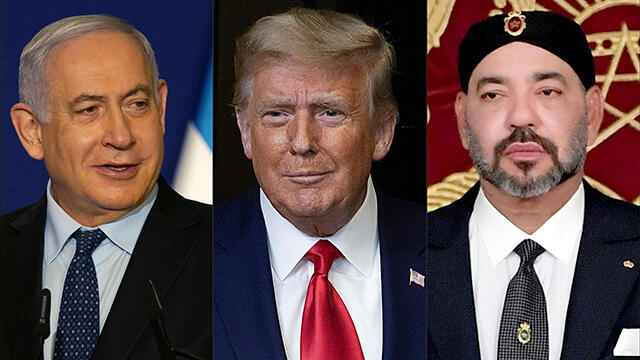
Prime Minister Benjamin Netanyahu, US President Donald Trump, King Mohammed VI of Morocco
(Photos: AFP)
For Israeli policy, understanding this operational shift is essential. For Israel, the lesson is immediate: strategic recognition can strengthen an ally's position, but durable regional architecture depends on what happens after the announcement, when partners must translate diplomatic commitments into institutions, security arrangements and political incentives.
The misconception begins with the timeline. Washington's sharp emphasis on the conflict's unresolved nature emerged in September. But the seeds were planted weeks earlier. On August 1, President Donald Trump sent King Mohammed VI an explicit message. He unequivocally reaffirmed American recognition of Moroccan sovereignty over Western Sahara, calling Morocco’s autonomy proposal the only basis for a just and lasting solution. Crucially, that same message contained an urgent warning: any other path would merely prolong the status quo, and the conflict must end now.
September did not bring a reversal of American policy. It revealed what Washington intends to do with that policy. The question was no longer whether Washington would recognize Moroccan sovereignty, but whether that recognition could be converted into a political settlement.
That strategy gathered momentum on September 16, when Washington, Rabat and Jerusalem participated in high-level talks. The September 16 agreement to upgrade diplomatic missions and appoint ambassadors marked another major step in the relationship. The same trilateral meeting also reaffirmed U.S. and Israeli recognition of Moroccan sovereignty over Western Sahara, emphasizing that alternatives to autonomy would prolong instability. For Rabat and Jerusalem, this provided public confirmation of strategic alignment anchored in the Abraham Accords framework.
Yet in the days that followed, top American officials introduced a noticeable change in operational emphasis. On September 25, Deputy Secretary of State Christopher Landau noted that, while the United States supports development under Moroccan sovereignty, the existing status quo cannot be maintained indefinitely. Two days later, Massad Boulos, Trump’s adviser on Arab affairs, told France 24 that American recognition remains firm, but acknowledged that there was no imminent solution. Boulos revealed that three rounds of negotiations had taken place involving Morocco, the Polisario Front, Algeria and Mauritania, and that Washington was awaiting Polisario feedback.
To critics, these sequential statements appeared to create a contradiction. If the United States recognizes Moroccan sovereignty and views autonomy as the sole foundation for a settlement, why treat the dispute as an urgent problem requiring international mediation? The answer lies in a fundamental distinction: Washington has separated two distinct questions: what it believes the final political framework should look like, and whether the primary regional actors have actually reached an enforceable agreement. They have not done so as yet.
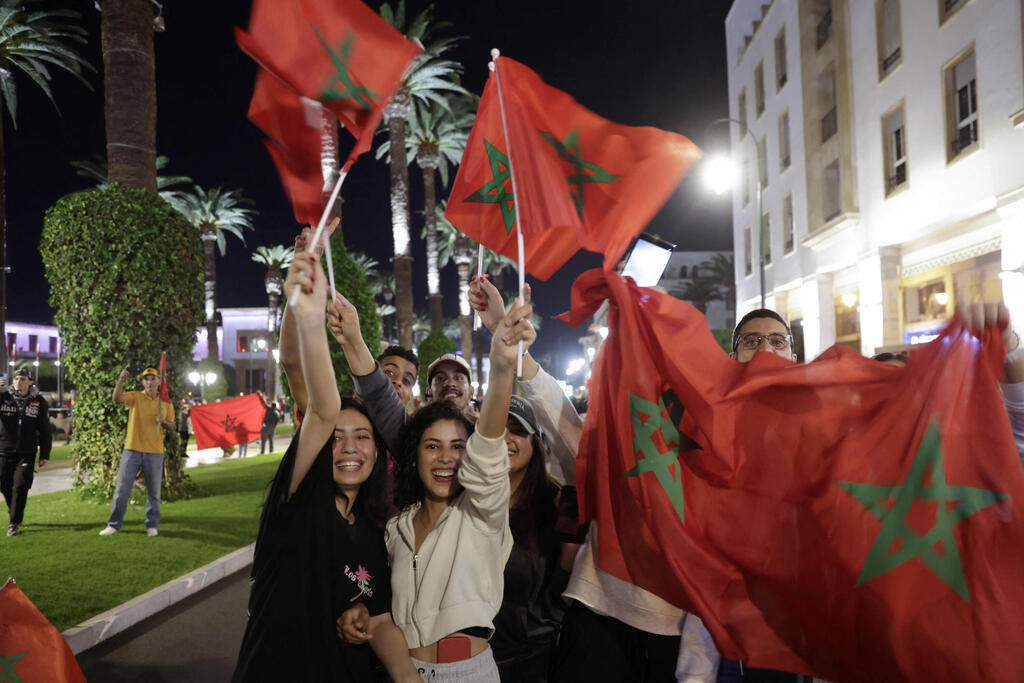
Moroccans celebrate UN Security Council that calls for the country to have sovereignty of Western Sahara
(Photo: Abdel Majid Bziouat / AFP)
This is the central insight of the current American push. There is a profound difference between saying, "We recognize Morocco's sovereignty," and saying, "The dispute is over." The first is official American policy. The second is not yet a political reality. Recognition is policy, but a lasting settlement requires diplomacy. Washington has not changed its position on Western Sahara; it has changed the operational question it is trying to answer. The focus has moved from "Will America recognize Rabat's claims?" to "Can America convert that recognition into a stable, negotiated regional order?"
Making that leap requires navigating the crucial gap between American policy and United Nations doctrine. Washington explicitly designates Morocco's autonomy proposal as the only viable basis for a resolution. However, the United Nations Security Council operates under a broader diplomatic mandate. UN Security Council Resolution 2797, extending the UN mission through October 31, 2026, frames Morocco’s proposal as a serious basis for discussion, but ultimately calls for a mutually acceptable political solution. Bridging the gap between Washington's strong preference for autonomy under Moroccan sovereignty and the UN framework's requirement for a mutually acceptable political settlement is where active diplomacy occurs.
That reality helps explain Washington’s willingness to engage Algiers directly. In mid-September, Boulos traveled to Algiers for meetings with President Abdelmadjid Tebboune. While public readouts emphasized broader bilateral cooperation and regional security, the timing aligns with the Sahara negotiations. Washington is not shifting toward Algeria's position or endorsing Polisario's claims. Rather, American diplomats recognize a simple truth: Algeria is an essential party to the regional equation. Bypassing Algiers entirely will not resolve the conflict.
Instead of relying purely on coercive pressure, Washington will need to create stronger incentives for Algeria to participate constructively in a negotiated political framework. Simultaneously, American negotiators must establish conditions under which the Polisario Front views autonomy under Moroccan sovereignty as preferable to endless isolation. At the same time, Morocco will have to demonstrate to the international community that its proposed autonomy is substantive, durable and politically meaningful, rather than merely symbolic.
For Israeli foreign policy, this North African dynamic offers vital lessons extending beyond Rabat. Morocco is no longer a distant player; the relationship has evolved into a strategic partnership. Yet Israel now finds itself in an unusual strategic triangle: Jerusalem and Washington both recognize Moroccan sovereignty, while Washington simultaneously tells the region that formal recognition does not mean the diplomatic job is finished.
Israel should resist viewing American nuance as a retreat. In Middle Eastern diplomacy, there is a constant impulse to treat every official statement as a scoreboard where phrases signal victory or concession. But Washington’s posture is sophisticated. Core American recognition remains intact. What has increased is the administration's determination to force a real political outcome before frozen regional tensions escalate into conflict.
Israel has repeatedly experienced its own harsh version of the difference between international recognition and durable security. Formal declarations and strong foreign support are indispensable assets, but they do not automatically eliminate underlying security threats or resolve regional rivalries. A strategic architecture becomes stable only when key actors perceive clear incentives to preserve it. Declarations transform environments, but cannot manufacture political consent on the ground.
The latest UN reporting suggests that this shift is no longer merely rhetorical. A report submitted by Secretary-General António Guterres on October 1 describes negotiations that are beginning to examine the practical architecture of a possible settlement, including Morocco's expanded autonomy proposal, transitional arrangements, international guarantees and consultation mechanisms. Nothing has been agreed, but the diplomacy is increasingly moving from the question of principle to the question of implementation.
 Amine Ayoub
As the October 31 deadline for the UN Security Council mandate approaches, Washington faces a decisive test of statecraft. The Trump administration must determine how much diplomatic capital it is willing to expend, how far it can push regional actors without jeopardizing interests in North Africa, and what flexibility it expects from Rabat.
If Washington successfully combines recognition and sustained diplomacy to turn a frozen dispute into a binding political settlement, it will establish a template for conflict resolution. If stalled, it will expose recognition's clear limits.
The ultimate test of diplomacy is not how bold a presidential declaration sounds when issued, but whether it survives compromise. Washington stands firmly behind Rabat. But by acknowledging that recognition alone has not solved the problem, American policy has entered a demanding phase.
Trump has already answered the question of sovereignty. The harder question is whether Washington can turn that recognition into a settlement that Morocco can accept, Algeria can live with, Polisario can enter, and the United Nations can endorse. That is where presidential recognition ends and diplomacy begins.
- Amine Ayoub, a fellow at the Middle East Forum, is a policy analyst and writer based in Morocco. Follow him on X: @amineayoubx