

Egyptian Foreign Minister Badr Abdelatty arrived in Doha on March 15, 2026, at the start of a diplomatic tour framed around "regional developments" and solidarity with the Qatari Emir in the aftermath of Iranian aggression. The visit, executed under presidential directive from Abdel Fattah El-Sisi, unfolds against the backdrop of a two-week-old military confrontation between the United States, Israel and Iran—a conflict already reshaping energy markets and destabilizing the region.
Cairo's diplomatic class presents this mission as essential coordination. In reality, it represents strategic regression masquerading as statecraft. The Foreign Ministry's insistence that Egypt's security is bound to Qatar's through ties of Gulf solidarity ignores a fundamental truth: Egypt's actual survival depends not on the diplomatic rituals of Doha but on energy partnerships in the Eastern Mediterranean and explicit alignment with Israel's emerging role in U.S. regional strategy.
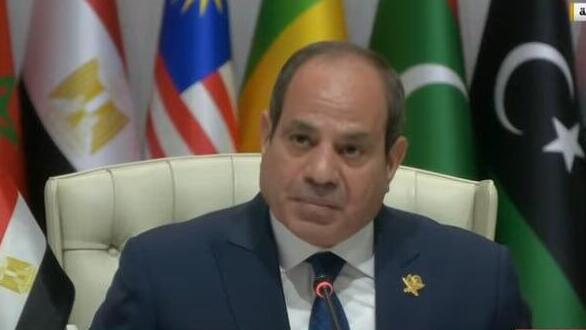
Egypt's "Ssolidarity tour" is a relic of a failed diplomatic era—one where Arab states sought validation through symbols rather than security through transactions. The path forward requires Cairo to abandon the performance of Gulf diplomacy and embrace the hard logic of energy alignment and Mediterranean strategic integration.
The illusion of shared interests with Qatar
The Egyptian Foreign Ministry's repeated invocation of "inseparable" interests with Qatar and the broader GCC ignores decades of documented Qatari conduct. Doha has functioned as the preeminent financial backer of movements explicitly designed to destabilize Egypt: The Muslim Brotherhood, Hamas, and assorted Sunni jihadist networks whose stated objectives include undermining Egyptian state authority.
This is not ancient history. It is ongoing policy. Qatar continues to bankroll networks that threaten Egypt's territorial integrity and regime stability. Yet Cairo approaches this same regime seeking "consultation" on regional security as if Doha's interests and Egypt's align.
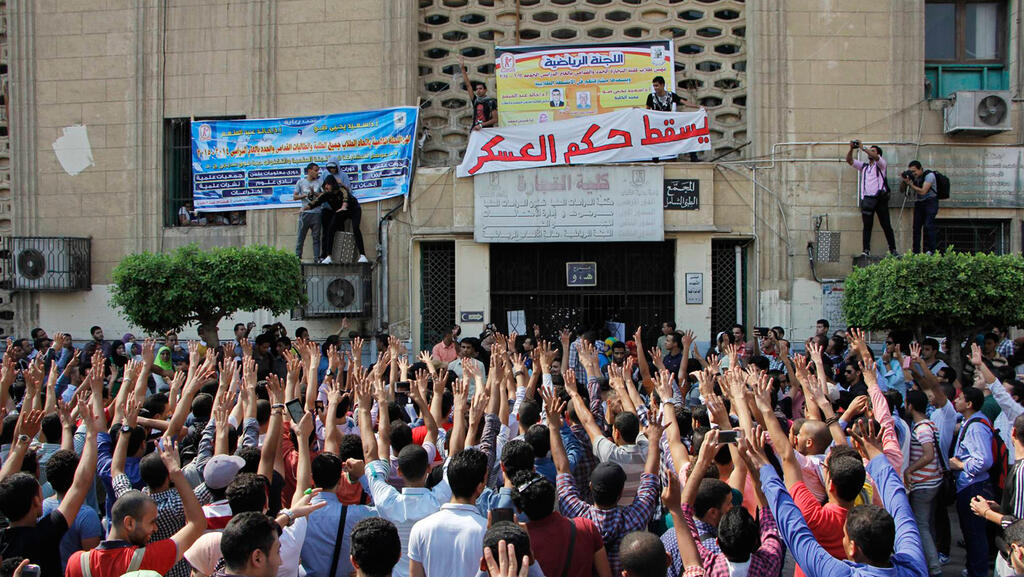
The Muslim Brotherhood supporters protest in Kahir
(Photo: AP)
The contradiction becomes more acute when examined against recent developments. On March 16, 2026—coinciding with Abdelatty's visit to Doha—the U.S. State Department designated the Sudanese Muslim Brotherhood (SMB) and its armed wing, the al-Baraa Bin Malik Brigade (BBMB), as Foreign Terrorist Organizations. This designation carries direct implications for Egypt: the SMB represents an ideological and operational extension of Egypt's own Muslim Brotherhood, now operating as a Sunni-Shia hybrid force trained by the Iranian Revolutionary Guard Corps (IRGC).
The irony is impossible to ignore. While Egyptian diplomatic delegations visit Doha seeking reassurance, they ignore the fact that Qatari financial networks have historically provided the infrastructure through which Tehran now operates to encircle Egyptian territory and destabilize the Red Sea. Qatar's soft power has become the enabling mechanism for Egyptian insecurity.
Yet Cairo's diplomatic response is to deepen engagement with the very actor facilitating this threat.
The real architecture: Energy transactionalism
Beyond the performative diplomatic circuit of Gulf capitals, a far more consequential security architecture is already operational in the Eastern Mediterranean. Egypt and Israel, despite their characterization as cold adversaries, have concluded a commercially sophisticated arrangement that functions as a genuine force multiplier for regional stability.
The arrangement is transactional in nature and powerful in its implications: Egypt imports Israeli offshore natural gas and utilizes its underutilized LNG terminals to liquify and export that gas to European markets starved by the ongoing Iran-U.S. conflict. This partnership serves multiple strategic functions simultaneously. It provides Egypt with revenue and European leverage while supplying Israel with regional infrastructure access and territorial extension of its security footprint.
This is not charity. This is not ideological alignment. This is the mechanics of survival in a resource-constrained environment where traditional energy corridors have become militarized and unreliable.
The broader geopolitical context makes this arrangement's significance clear. Brent crude has already spiked toward $120 per barrel as Iranian production disruptions and shipping insecurity ripple through global markets. In this environment, the Egypt-Israel energy axis ceases to be a peripheral commercial transaction. It becomes the foundation of Egyptian economic resilience and, by extension, regime stability.
The strategic implications extend further. Israel's recent integration into the U.S. Central Command area of responsibility has already created operational benefits that extend to Egypt. Coordinated responses to Iranian missile and drone attacks now operate through mechanisms that, while officially clandestine, provide Egypt with sophisticated military-technical support it cannot generate independently.
But these arrangements remain subordinated to a diplomatic framework oriented toward Gulf capitals. This is the strategic error Cairo must correct.
Breaking free from inter-Arab dependency
Egypt's diplomatic posture has long been shaped by a sense of diminished regional standing relative to the Gulf states. Decades of economic dependence on Saudi and Emirati capital transfers have created a psychological orientation toward Gulf decision-making. This dependency has manifested in repetitive "solidarity tours"—performative exercises designed to maintain Cairo's seat at tables where actual regional decisions are made.
The 2026 war has exposed the bankruptcy of this framework. The region's primary threats no longer emanate solely from Tehran. A burgeoning "Islamist axis," anchored by Turkish regional activism and Qatari financial networks, has emerged as a distinct destabilizing force. This axis operates to fill vacuums created by a weakened but still dangerous Iran. Traditional Gulf-centric diplomacy cannot address threats that originate partly from within the Gulf itself.
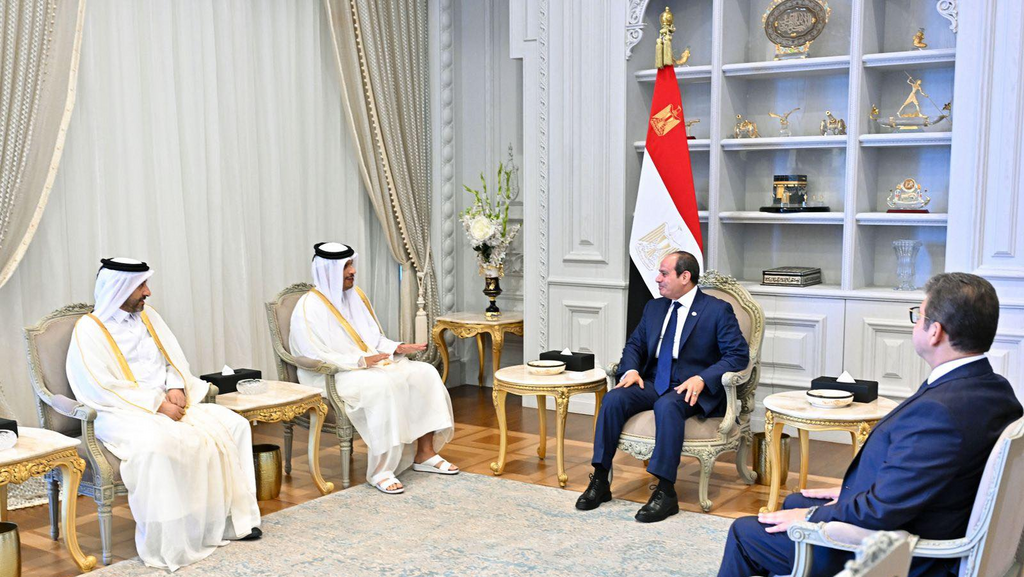
Abdel-Fattah el-Sisi alongside Mohammed bin Abdulrahman Al Thani
Egypt requires a fundamentally different strategic orientation—one that positions the state not as a supplicant to Gulf capitals but as a principal actor in a Mediterranean security architecture. This reorientation centers on what might be termed the "3+1 Framework": a structured alliance of Israel, Greece, Cyprus and the United States, anchored by Egyptian participation.
This Eastern Mediterranean alliance offers Egypt tangible strategic goods that Qatari diplomacy cannot provide:
Energy Infrastructure: Direct access to Israeli offshore gas reserves, Greek hydrocarbon systems, and unexplored Eastern Mediterranean fields. This diversifies Egypt away from Gulf energy dependence and creates revenue streams independent of traditional petro-state patronage.
Water Security Architecture: Desalination technology and water management expertise from Cyprus and Greece, reducing Egypt's vulnerability to Nile Basin water politics and regional drought dynamics.
Integrated Intelligence and Cyber Defense: U.S. technological sophistication combined with Israeli operational expertise in domains where Egypt currently maintains significant vulnerabilities.
Maritime Security Framework: Coordinated naval operations extending from the Eastern Mediterranean through the Red Sea, enabling Egypt to defend critical shipping lanes and resource corridors without dependence on Gulf naval capabilities or uncertain international security arrangements.
Qatari diplomacy offers only capital, and increasingly that capital subsidizes entities that undermine Egyptian security interests.
Strategic imperatives for US policy
The Trump administration must abandon the diplomatic fiction that Egyptian-Qatari engagement enhances American interests or regional security. Instead, Washington should adopt an explicit operational framework designed to reorient Egyptian strategy toward Mediterranean integration:
First: Condition future assistance on formal 3+1 integration
U.S. military and economic aid to Egypt must be explicitly linked to Cairo's formal participation in the Eastern Mediterranean security framework. Egypt should be incentivized—through both positive benefits and implicit pressure—to move its cooperation with Israel from clandestine channels into transparent strategic partnership. This visibility itself functions as a deterrent to Iranian and Islamist regional activism.
Second: Dismantle the Doha-Khartoum-Tehran pipeline
Following the U.S. designation of the Sudanese Muslim Brotherhood as a terrorist organization, Washington must pressure Egypt to deploy its border security apparatus against SMB/IRGC networks operating in Sinai and the Eastern Desert. Cairo should be explicitly encouraged to recognize that Qatari financial flows into the region constitute a fundamental threat to Egyptian sovereignty. U.S. intelligence support should be mobilized to identify, track, and eliminate these funding mechanisms.
Third: Implement the gateway act infrastructure
The U.S. must accelerate the development of the India-Middle East-Europe Economic Corridor (IMEC) framework, with particular emphasis on positioning Egypt as the primary LNG processing and export hub for gas from Israel, Cyprus, and the broader Eastern Mediterranean. This single policy change would permanently reconfigure Egypt's economic leverage, decouple Cairo from Gulf financial dependencies, and create durable incentive structures aligned with U.S. strategic interests.
The choice between symbols and survival
Abdelatty's March 15 visit to Doha represents an investment in diplomatic symbolism rather than strategic substance. It is a ritual designed to comfort a diplomatic establishment that views regional status through the lens of Gulf validation. It provides psychological reassurance to those still nostalgic for an era of Egyptian regional dominance that has permanently passed.
But symbols do not generate security. Solidarity tours do not deter Iranian missiles or fund defense systems. Qatari consultation mechanisms do not address the fact that Doha itself bankrolls entities seeking to destabilize Egypt.
The actual path to Egyptian security lies eastward—toward Mediterranean energy partnerships, toward Israel's technological sophistication, toward the explicit U.S. strategic commitment that a 3+1 framework would represent. It requires Cairo's diplomatic establishment to choose transactional realism over the theatrical comfort of Arab solidarity.
The intelligence is clear. The threat environment is acute. The opportunity is finite. Egypt must choose between trading in symbols and investing in strategy.
The time for solidarity tours has passed. The era of energy partnerships and hard strategic alignment has begun. Cairo must move forward accordingly.
Rami Al Dabbas is a writer/commentator known for opinion pieces on Middle East politics, critiques of Islamist movements, advocacy of political realism and engagement and a controversial presence on social media.