

In September 2025, Trump’s envoys presented Israel with the U.S. president’s plan to end the war in Gaza. Its first stage required the release of all living hostages and the return of the bodies of those killed.
In the frantic discussions between the countries that followed, Israel made clear that its latest intelligence indicated that the head of Hamas’ military wing in Gaza, Izz al-Din Haddad, intended to evade full implementation of this fundamental condition. The American response was unequivocal: “We understand your assessment. It may certainly be justified. Our request of you is simple: Do not read intelligence reports in the coming days. Our intelligence is more reliable. It is ‘human intelligence.’ These are the leaders of the mediating countries, Egypt and Qatar, and they are convinced that Hamas will not torpedo the agreement.”
Given Washington’s confidence, Israel agreed to put Hamas to the test. It was a welcome move. In October, all the living hostages were indeed released, and the last body was returned to Israel at the end of January 2026.
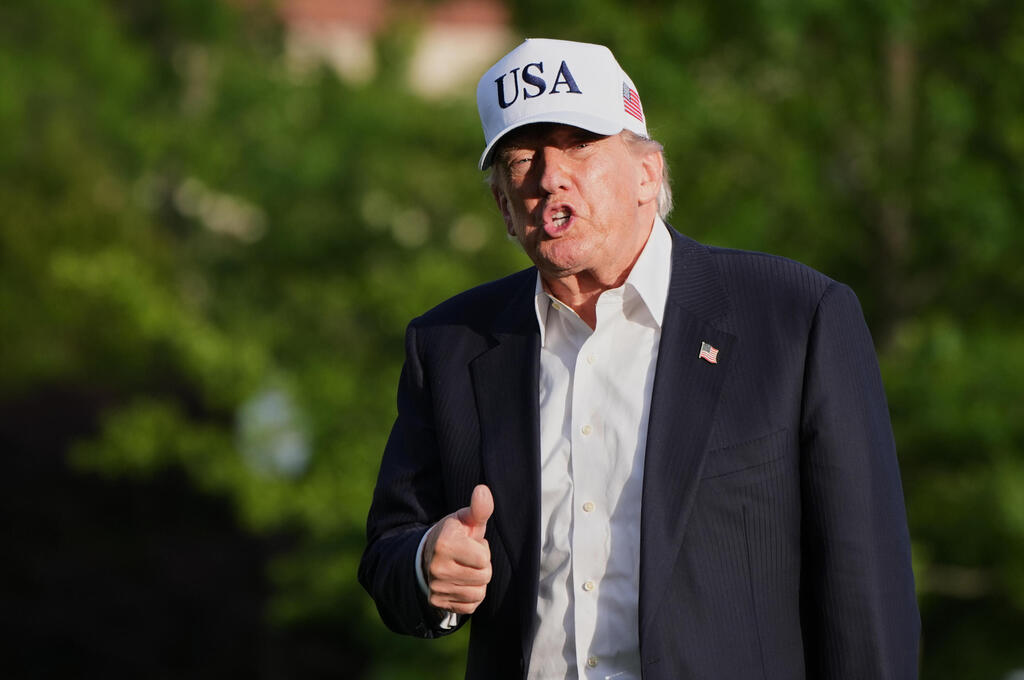
President Donald Trump’s 'Gaza peace plan' is very dear to him
(Photo: Jacquelyn Martin/ AP)
President Trump’s 20-point plan for rebuilding the Gaza Strip gave Haddad and his fellow leaders of the murderous terrorist organization an unexpected lifeline. After thousands of Hamas terrorists had already been eliminated, including its most senior leaders — Ismail Haniyeh, Yahya and Mohammed Sinwar, Mohammed Deif, Salah Arouri and many others — the message was clear: Israel would not allow those responsible for the largest massacre of Jews since the Holocaust to escape its reach, however long it took.
Then came Article 6 of Trump’s plan, which paved a surprising new escape route for the terrorists. It stated: “After all hostages are released, Hamas members who commit to peaceful coexistence and to decommission their weapons will be granted amnesty. Hamas members who wish to leave Gaza will be provided safe passage to receiving countries.”
But Haddad decided to gamble everything. His willingness to give up the hostage card in exchange for the parallel release of hundreds of Palestinian murderers, the resumption of massive humanitarian aid and a halt to the fighting turned out to be a one-time show of flexibility. In the months since, it became clear not only to Israel but also to the United States that Hamas remained determined to preserve its jihadist identity.
This time, even the authentic “human intelligence” Trump received from the mediating countries left no room for doubt: Hamas was not even considering transforming itself, as the PLO once did, into a political movement. Its leaders, headed by Haddad, were clinging to the areas still under their control — about half the Strip — and focusing on deepening their grip over the population and rebuilding the military capabilities and formations severely damaged during the war.
Fortunately, Trump’s ambitious vision succeeded in freeing the hostages. But it was not enough to free 2 million Gazans from the chains of Hamas tyranny. Once again, it became clear that fanatics willing to sacrifice their own lives for the goal of destroying Israel have no intention of considering the fate of the millions of miserable people in the Gaza Strip.
The fact that many countries, including Muslim and Arab states, enlisted to help implement the American initiative for rebuilding Gaza changed nothing. Hamas dragged out the talks meant to reach understandings on disarming the Strip, effectively casting doubt on the ability of the “Peace Council,” launched by President Trump with great fanfare, to implement its groundbreaking vision.
Long overdue
Haddad should have been made to answer for his crimes long before October 7. The attacks he led over decades of unrestrained terrorist activity reflected his violent, fanatical and brutal nature. He carried out diverse missions skillfully and earned the esteem of Hamas leaders.
Over time, Haddad was brought into the innermost circle of secrecy and, as documents found during the war showed, was a full partner in preparing the massacre. After October 7, Haddad regularly kept several hostages near his hiding places to make it harder for the IDF to kill him, and that is how he survived nearly two years of fighting. His successful elimination delivers justice for generations of Israeli victims.
Where do we go from here? Trump’s “Gaza peace plan” is very dear to him. He believes its implementation will change the fate of this battered and tormented region for the better. Hamas’ veto challenges him, but does not diminish his determination to bring his vision to life.
This is how his approval of the deadly Israeli strike on the hideout of Hamas Gaza’s No. 1 leader should be understood, even though the ceasefire Trump moved heaven and earth to advance remains in effect. It is an unequivocal American statement: We will continue implementing the 20-point plan, but we will change the order of operations.
 Tzachi HanegbiPhoto: Shilo Shalom
Since the plan’s central anchor, the disarmament of Hamas, cannot now be carried out, Gaza’s initial reconstruction will begin in areas under IDF control. This will be “the new Gaza.” Large areas will be cleared of ruins and infrastructure will be built for Gazans who move to live there, free from the terror of Hamas’ brutal regime. Israel will be given a free hand to renew its military activity in the territory still controlled by the terrorist organization, in coordination with the United States.
In the first stage, intensified strikes against Hamas will likely be carried out from the air. Later, as IDF resources are shifted away from the Iran and Lebanon fronts, ground operations may also become possible. Of course, the way the confrontation with Iran ends will also affect Hamas’ ability to withstand pressure, though question marks remain over the steps the U.S. president will take.
Still, the experience accumulated over long years of fighting requires avoiding overestimating the significance of eliminating Haddad. Over decades in which its senior figures were targeted, Hamas has proven its resilience. Preselected successors immediately stepped into the shoes of commanders and leaders who were eliminated, and the same happened during the Swords of Iron war. The conclusion is not to avoid eliminating mass murderers and their operatives, but to internalize that this action alone does not guarantee victory in the campaign.
First published: 09:01, 05.19.26