


On September 29, King Mohammed VI appointed Fatima Ezzahra El Mansouri as Morocco’s first woman prime minister and tasked her with forming a government.
Her Authenticity and Modernity Party, or PAM, won the September 23 parliamentary election with 97 of 395 seats. That is the largest bloc, but it is far short of the 198 seats required for a majority. Her first government will therefore be built through negotiation, compromise and coalition discipline before it can be built through policy.
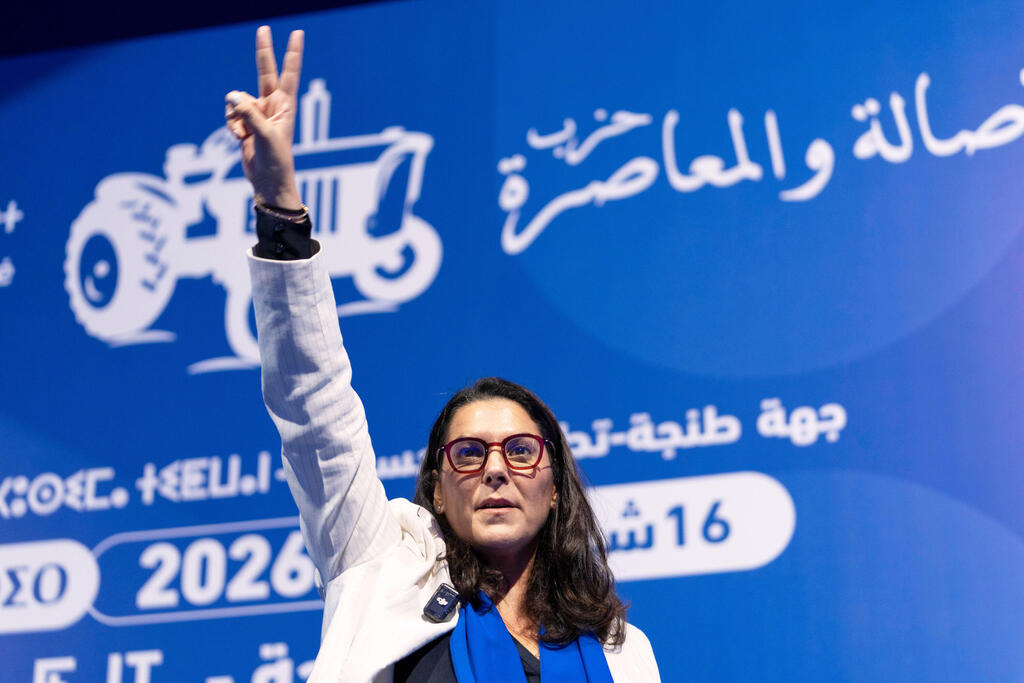
Fatima Ezzahra El Mansouri
(Photo: AP Photo/Mosa'ab Elshamy)
This distinction matters. Mansouri may enter office with an ambitious vision for a more effective Moroccan state, but much of her immediate political capital will be spent bargaining over ministries, priorities, budgets and coalition discipline.
Reuters reports that PAM had ruled out continuing with the National Rally of Independents, or RNI, during the campaign after the parties traded blame over policy shortcomings. Yet after the election, Mansouri said there would be no “red lines” in coalition talks.
RNI won 66 seats and Istiqlal won 65, meaning those three parties together would comfortably cross the parliamentary threshold. RNI, however, was still considering whether to join another government with PAM, with internal opposition reported on September 29.
That is the real beginning of the Mansouri era. Before the delivery state comes the delivery coalition.
The phrase “delivery state” captures an important Moroccan challenge. Morocco has invested heavily in infrastructure, industry and social protection. Yet pressure is growing to convert national projects into improvements citizens can directly feel.
Official Moroccan statistics show that unemployment stood at 13 percent in 2025. Youth unemployment among 15-to-24-year-olds reached 37.2 percent, while unemployment among women reached 20.5 percent. The World Bank continues to identify weak job creation, low female labor-force participation, regional disparities and water scarcity as structural challenges.
For Mansouri, these problems create a political contradiction. The reforms that could strengthen her government are also those that can create friction inside a coalition. A performance dashboard exposing missed targets can threaten ministerial autonomy. An apprenticeship account linking training money to employment outcomes can challenge institutions. A water strategy shifting investment toward efficiency can create winners and losers. Structural reform is not only technical. It rearranges political interests.
That makes coalition design part of economic policy.
One answer would be a government agreement built around measurable outcomes rather than portfolio distribution. Coalition partners could agree on national delivery targets, with ministries assigned benchmarks for employment, service access, project completion and investment. Parliamentary oversight could focus on whether those targets are met. The model would not eliminate bargaining. It would give bargaining purpose.
Morocco’s constitutional model makes this experiment distinctive. The king retains authority over foreign policy, defense and other strategic portfolios, while the constitution requires the head of government to come from the party that wins the largest number of seats. The arrangement separates strategic continuity from elected government, leaving the monarchy as the central anchor of national strategy.
For Israel, this is crucial. A change of government in Rabat does not automatically mean a change in the strategic relationship with Jerusalem. Morocco’s ties with Israel are increasingly embedded in state-to-state channels.
On September 16, Israel and Morocco announced plans to elevate their diplomatic missions to embassies, appoint ambassadors, expand flights and advance investment and trade agreements. Those developments predated Mansouri’s appointment and underscore institutional continuity beyond a single cabinet.
The Abraham Accords therefore do not need to be reinvented with every election. Their durability depends on making cooperation normal, practical and useful. Morocco can maintain its regional positions while pursuing cooperation with Israel where interests overlap. The relationship becomes stronger when measured not only by diplomatic statements but by functioning institutions.
The most promising areas are practical. Water is one. Morocco’s prolonged drought and growing water stress have made efficiency, reuse, desalination and agricultural resilience strategic priorities. Israeli firms and researchers have experience in drip irrigation, wastewater reuse, desalination, leak detection and agricultural technology. Moroccan institutions bring local knowledge, infrastructure, workforce capacity and access to African markets. A joint innovation framework could focus on specific municipal or agricultural problems and judge projects by measurable savings in water, energy and operating costs.
Food security is another. Morocco’s agriculture is vulnerable to climate shocks, while Israel has developed technologies for production under water constraints. Joint research could focus on drought-resistant agriculture, controlled-environment farming, efficient irrigation and post-harvest systems. The objective would be projects that can survive political cycles because farmers, municipalities and companies have a direct interest in them.
Cybersecurity offers a similar opportunity. Morocco’s expanding digital economy and dependence on interconnected infrastructure create new vulnerabilities. Cooperation with Israeli cybersecurity companies and research centers could concentrate on protecting hospitals, utilities, ports, financial systems and municipalities. The value would come from institutional capability, not ceremony.
The same logic applies to apprenticeships. Morocco does not simply need more graduates. It needs stronger bridges between classrooms and employers. An apprenticeship account could give young people portable training credits usable across accredited vocational institutions and participating companies. Employers could receive incentives tied to successful placement rather than enrollment alone. This would connect public spending to employment results and give coalition partners a common metric.
The political challenge is ensuring that such reforms are owned by the coalition rather than by PAM alone. A reform identified as one party’s project can become vulnerable whenever coalition tensions rise. A reform jointly administered and publicly measured can acquire broader institutional protection.
This is especially important because voter participation fell sharply. Turnout in the September election was about 38 percent, compared with roughly 50 percent in 2021. The decline does not explain every political attitude, but it signals a credibility problem for elected institutions. The answer is not necessarily to copy another country’s democratic architecture. It may be to make participation consequential by improving the connection between government promises and everyday outcomes.
 Amine Ayoub
That is where Mansouri’s experience matters. As a former housing minister and mayor of Marrakech, she comes to the premiership with experience spanning national policy and local administration. Her record gives her a perspective on the gap between plans in Rabat and delivery in cities. But governing a coalition is different from running a ministry or municipality. Her first political test will be whether she can convert an election victory into a functioning parliamentary majority.
The monarchy is also central to understanding foreign-policy continuity. Whatever shape the coalition takes, Morocco’s strategic relationship with Israel rests on decisions and institutions that extend beyond day-to-day party competition. That does not make the relationship immune to debate, particularly over the Palestinian issue. It does mean practical cooperation can increasingly be tested by whether it survives domestic political change.
For Israeli leaders, the emerging picture is less about waiting for a new Moroccan doctrine and more about watching how the government is constructed. A stable coalition could give Mansouri room to pursue economic and social reforms. A fragile coalition could force her to prioritize short-term accommodation over structural change. Coalition negotiations will reveal how much political space exists for ambitious reforms.
Morocco’s next phase will be decided twice: first at the negotiating table among political parties, and then in the ministries that must turn agreements into results. Mansouri is the face of historic change, but her legacy will depend on whether she can turn fragmented parliamentary power into coherent performance.
For Israel, that offers a practical lesson. The Abraham Accords are strongest when they become ordinary. A Moroccan government able to deliver better water systems, stronger vocational pathways, more resilient infrastructure and more competitive businesses also creates a wider foundation for sustained cooperation with Israel.
The next chapter between Morocco and Israel is therefore unlikely to be defined by a dramatic diplomatic reset. It may be defined by something more durable: whether two countries can turn an established political relationship into practical capacity, while Morocco’s new government learns whether coalition politics can support the reforms its voters increasingly demand.
- Amine Ayoub, a fellow at the Middle East Forum, is a policy analyst and writer based in Morocco. Follow him on X: @amineayoubx