



The assault on the Druze minority of Syria's southern Sweida province by Sunni jihadist militias—operating under the tacit approval and at times active support of the new Syrian regime—presents Israel with a multidimensional test: strategic, moral and diplomatic.
The first is a test of principle. Can the Israeli government uphold its long-standing commitment to the Druze community within its own borders by protecting their kin across the frontier? For a government that has repeatedly affirmed its bond with the Druze—culturally, strategically and historically—inaction carries consequences beyond the battlefield. It would signal a moral rupture to a deeply loyal minority.
Presidential palace in Damascus bombed


The second challenge lies in the terrain of deterrence. With jihadist forces operating openly near the basalt ridges of southern Golan, Israel’s forward defense doctrine is now being measured in real time. That doctrine, articulated repeatedly by Prime Minister Benjamin Netanyahu and Defense Minister Israel Katz, calls for a demilitarized zone in southern Syria—free of both regime forces and militia fighters—extending dozens of miles from the border. Its core premise is to prevent exactly what occurred on October 7 in southern Israel: a surprise breach, mounted by armed extremists in light vehicles.
The operational architecture of this doctrine relies on layered defensive zones east of the Golan’s 1974 armistice demarcation line, reinforced by a land barrier and a declared sphere of military influence stretching as far as 52 miles inside Syrian territory. Sweida sits within that zone. The movement of regime tanks, APCs and artillery into the area is not merely a local escalation; it is a strategic provocation, especially in light of the repeated warnings from Jerusalem that Israel claims protective interest in the safety and dignity of the region’s Druze population.
The third test is the most complex: whether Israel can simultaneously deter the new Syrian regime while navigating an evolving relationship with it. This regime is led in practice by Ahmad al-Sharaa—also known in the past as Abu Mohammed al-Golani—who has rebranded himself from commander of the jihadi Nusra Front into a would-be national leader. The question is whether Israel can shape his behavior through calibrated pressure, while also leaving room for future arrangements in line with U.S. aspirations for non-aggression pacts and regional de-escalation. Full normalization, as some in Washington imagine, is far off. But realpolitik demands that Israel engage al-Sharaa with clarity about its vital interests—and the red lines it will not allow him to cross.
According to Israeli assessments, the events in Sweida began as local clashes between Bedouin jihadist militias and Druze factions. Damascus did not intervene to stop the violence; it exploited it. The regime used the chaos as a calculated opportunity to reassert dominance over a region that has long resisted central control.
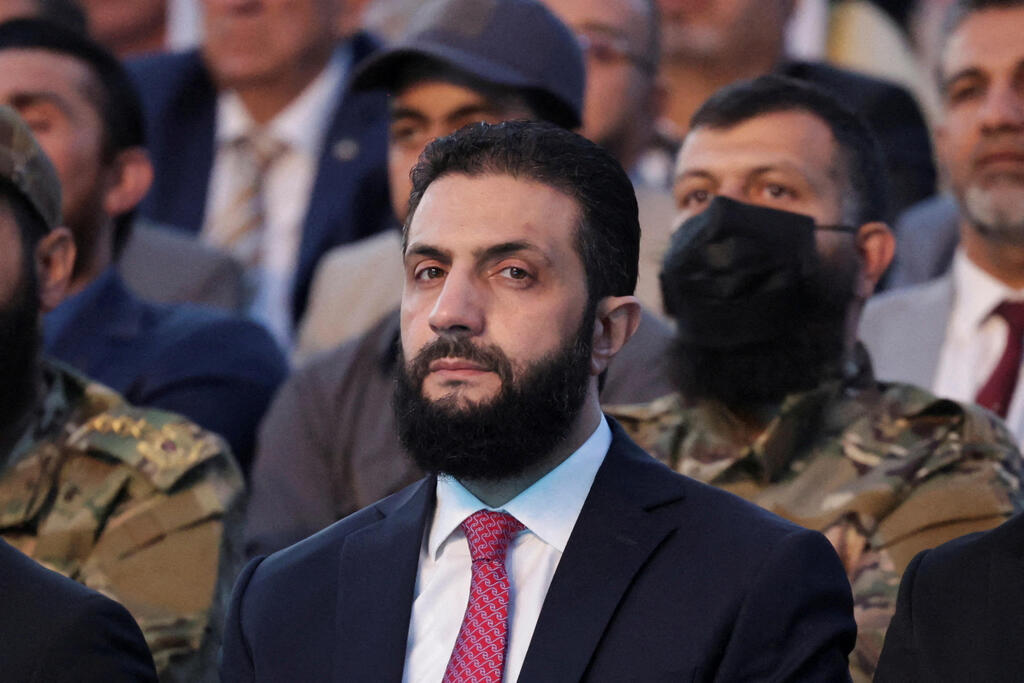
But this regime is not Assad’s in the traditional sense. Its security forces now comprise remnants and reconstituted fighters from ISIS and al-Qaeda—militants al-Sharaa brought with him from Idlib as he set out to extend his rule over the entirety of Syria. These are not merely rogue actors; they are now the regime’s enforcers, cloaked in the pretense of state authority.
Al-Sharaa’s forces have committed atrocities under the guise of law enforcement—massacres, public humiliations and desecration of Druze holy sites. Tanks and armored vehicles seized from Assad’s military were redeployed southward along the Damascus–Daraa highway, bolstering the assault on a province home to over half a million Druze.
An earlier attempt to negotiate integration between Druze militias and the regime failed. Distrust ran deep, especially given the regime’s inability—or unwillingness—to curb the jihadist factions targeting Druze communities. Al-Sharaa has now chosen coercion over compromise, pressing for full capitulation—until Israel entered the equation.
Signals, not escalation: Israel walks a line
When Israeli intelligence observed regime armored columns moving south, the response was deliberately restrained. Orders were given for action, but not confrontation. Forces on the Damascus–Daraa highway were not attacked outright. Instead, drones were dispatched to strike near Sweida, signaling that Israel would not permit further advances into Druze territory.
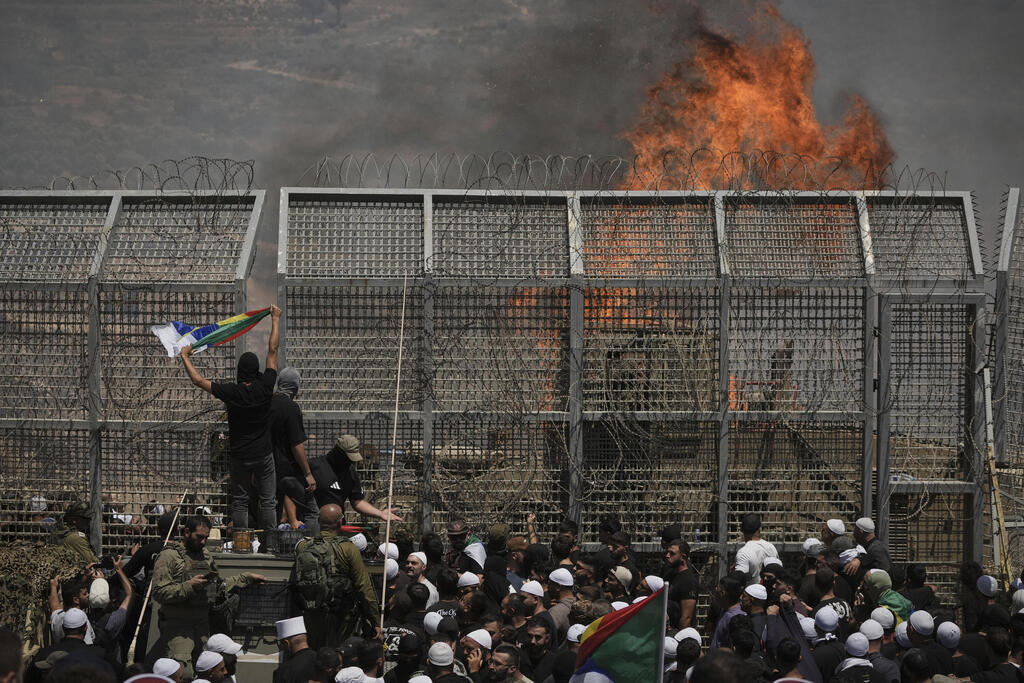
Israeli Druze making their way to Syria
(Photo: AP Photo/Leo Correa, REUTERS/Khalil Ashawi)
No fighter jets were deployed initially—a move likely shaped by concern for U.S. sensitivities and the geopolitical calculations involving Turkish President Recep Tayyip Erdoğan, who has positioned himself as patron of Syria’s new order. But the drone strikes proved insufficient. Regime forces continued their campaign. The next step came swiftly: Israeli jets struck regime positions in Sweida and the headquarters of the new General Security Service in Damascus. Yet even these strikes were calibrated, targeting entrances, not the building itself. The message: Israel is warning, not severing ties.
Get the Ynetnews app on your smartphone: Google Play: https://bit.ly/4eJ37pE | Apple App Store: https://bit.ly/3ZL7iNv
This balancing act is not only about geopolitics. With Likud primaries and potential elections looming, both Netanyahu and Katz are attuned to domestic pressures, including the expectations of thousands of Druze voters within the party.
Still, restraint came at a cost. Hundreds of Israeli Druze crossed the border to aid their Syrian kin, catching Israeli forces off guard.
A fragile hold and a tenuous future
The regime’s declared ceasefire has not held. A senior official under al-Sharaa denounced the violence, but few take the statement at face value. It appears both Israel and Damascus may have lost control of their respective proxies: Israeli Druze crossing the frontier, and regime-affiliated militias pressing their assault.
Druze storming the border near Majdal Shams
With a ceasefire now in place, al-Sharaa’s next move remains unclear. In a recent assessment, IDF placed the 98th Division and forces currently stationed in Gaza on alert for possible deployment into Syria, should air and artillery strikes, along with U.S. and Arab diplomacy, fail to halt the escalation.
With hostilities now subsiding, one additional problem now confronts Israel: how to extract roughly 1,000 of its Druze citizens from Syrian territory.
At a time when Israeli attention is focused on hostages and the Gaza campaign, the north is becoming a new axis of volatility. Yet amid the complexity, a narrow window remains—through Washington, perhaps—to contain the crisis before it transforms into a broader regional reckoning.