


We always fail — always — in the same place. Because what you see from there is not what you see from here. For us, it was the largest strike across Lebanon since the start of Operation Roaring Lion. Within 10 minutes and across multiple areas simultaneously, the IDF completed a blow against about 100 targets, a wide-ranging strike on Hezbollah terrorist organization headquarters and military infrastructure across Beirut, the Bekaa Valley and southern Lebanon.
Wonderful. This terrorist organization must be destroyed, as much as a terrorist organization can be destroyed. The problem is that this happened last Wednesday, after the ceasefire with Iran had already taken effect.
True, there was no ceasefire with Lebanon. But globally, the powerful strike — as presented and acknowledged by Israel — was perceived very differently. French President Emmanuel Macron immediately issued a condemnation, saying he expressed “France’s full solidarity in the face of the indiscriminate attacks carried out by Israel.” The headline in Britain’s Guardian read: “The deadliest 10 minutes in decades: Lebanese fury over Israeli strikes that killed hundreds.”
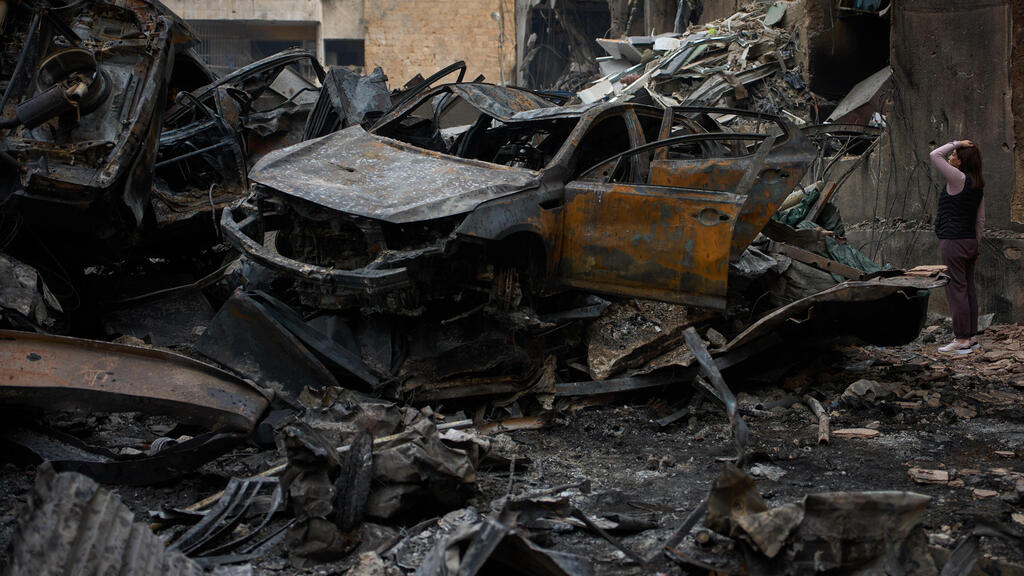
Destruction after Israeli Air Force attack on Beirut
(Photo: Emilio Morenatti/AP)
And the shockwaves did not stop with the familiar coverage we have grown used to. Just Saturday, the BBC ran the headline: “Beirut still in shock, trying to recover after deadly Israeli strikes.”
It does not matter whether, after everything the Lebanese have endured, they are truly in shock from another attack on Hezbollah headquarters. What is clear is that almost every media outlet in the free world seized the opportunity to portray Israel, as usual, as an aggressive and destructive actor. According to The Guardian, “civilians were the main victims.” The BBC did us a favor, claiming that only a third of the 300 killed were — children, women and the elderly.
It may be that there was no alternative to that massive strike. But as is often the case here, even when the military arm does its job, the diplomatic arm is paralyzed. What was the purpose of the strike, and why at such a highly sensitive moment, when a ceasefire on the main front had just taken effect?
There were rumors, of unclear origin, that Hezbollah operatives were planning a violent coup, and that Israel had, in effect, saved Lebanon from sliding into massive bloodshed and civil war. Perhaps. But there is a concern that this is a story we told ourselves. If it is true — then it should be announced publicly to the world. And if there was no such thing, then spreading the rumor itself harms Israel.
Only one thing did not happen: there was no serious Israeli explanation for the attack, which triggered waves of international criticism.
We can tell ourselves — and heaven knows I do this time and again — that the world is hypocritical. After all, those who condemn us for this strike, and for every action Israel takes against terrorist organizations, are exactly those who usually struggle to utter even a single word of condemnation against those same terrorist groups.
Exposing that hypocrisy is important. But it does not absolve us of the need to act. The entire world is not against us. There are many fair-minded people, and many sitting on the fence, who do want to hear and to know. Perhaps we can give up on the BBC and The Guardian — they are lost. But there are still media outlets, from The Telegraph to Fox News to The Wall Street Journal, that show far more fairness and understanding toward Israel. Should we give up on them as well?
Israel is right. Confronting the axis of evil is a moral and national obligation. But when undertaking such an operation — one that may have faded from the headlines here but continues to dominate global public opinion — there is also a need for the old rule: be smart, not just right.
We have grown accustomed to dismissing the word “hasbara” (public diplomacy), which Israel’s detractors have turned into a term of ridicule for anyone trying to present the Israeli position. But that dismissal is unnecessary. Because this is public diplomacy. Without it, even the military arm is harmed.
And when the diplomatic arm is completely paralyzed, there is a real concern — more than a concern — that even the most justified operation may do more harm than good. That is exactly what happened to Israel during two years of war against Hamas: victory in battle, defeat in the broader campaign. There is no reason to accept that defeat.