


The claim that last night’s UN Security Council decision was the product of a plan devised by Prime Minister Benjamin Netanyahu is untrue, and so is the claim that the war could have ended on its first day in precisely the same way. Still, the decision represents a significant step in the internationalization of the Israeli-Palestinian conflict and a move that could open the door to regional normalization — and there is room for optimism.
The resolution lays out a framework that includes an armed international force in Gaza, limited involvement for a reformed Palestinian Authority and a vague reference to a possible path toward a Palestinian state. Its language is deliberately evasive, yet it marks the first time the Security Council has ordered an armed deployment into territory captured in 1967 to serve as a buffer between Israelis and Palestinians. It also establishes a governing authority in Gaza that is neither Israel nor the PA, one that would operate without relying on Israel’s approval — a profound shift.
(Photo: AP Photo/Alex Brandon)
None of this resembles the vision promoted by Israel’s current right-wing government since it took office, especially after Oct. 7. Netanyahu has consistently rejected PA involvement, dismissed any diplomatic mention of a Palestinian state and framed the war’s goal as “total victory.” Had such a proposal been presented to him on Oct. 8, his response would likely have been a thunderous rejection.
American officials from both the Biden and Trump administrations have made clear that Hamas never agreed to release all the hostages and the bodies of those killed without a full Israeli withdrawal from Gaza. The current deal, they say, became possible only because of sustained military pressure and what they describe as the personal commitment of President Donald Trump and his envoys. A senior international official in regular contact with Hamas leaders recently described the group as “battered and in distress.”
At the same time, it is false to portray the outcome as a carefully engineered Israeli achievement that Netanyahu and Ron Dermer planned from the start. On the very day the Security Council adopted its decision, Washington announced it would sell F-35 jets to Saudi Arabia despite Israel’s objections, raising questions about Israel’s ability to maintain its qualitative military edge once Turkey and Saudi Arabia have the aircraft. Netanyahu quickly distanced himself from the matter, leaving the fallout to the security establishment.
The same U.S. administration has stated that no Palestinians will be expelled from Gaza and made clear that no annexation will take place in the West Bank, a long-standing aspiration of Israel’s political right.
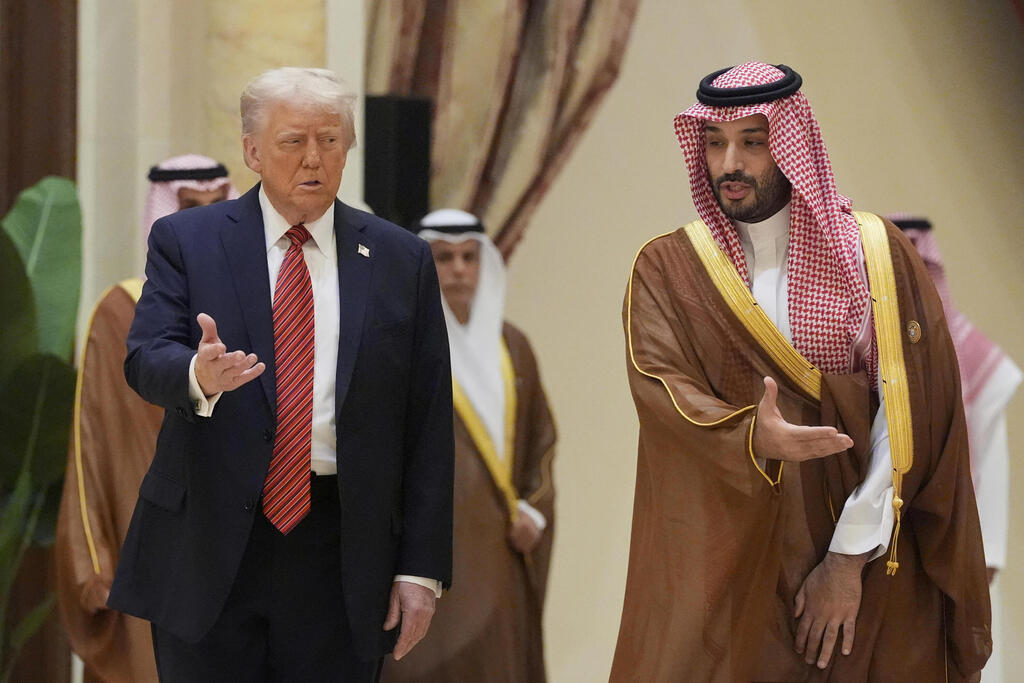
Netanyahu still hopes for the beginning of a normalization process with the Saudis, even if only for a pre-election photo. But Saudi officials have said that Israel’s standing in the kingdom has “significantly” deteriorated and that recognition requires a “real and tangible” path to a Palestinian state. Their trust in Netanyahu, they have hinted, is minimal. Any step forward would likely come as a gesture toward Trump at the order of Crown Prince Mohammed bin Salman, despite Netanyahu, not because of him.
What happened at the Security Council is therefore not merely another diplomatic document. It is a fundamental shift — the beginning of a new international role in managing the Israeli-Palestinian conflict and an attempt to reshape the regional landscape. For all the complications and all the political discomfort it may cause Jerusalem, it may also be a reason to look ahead with cautious optimism.