

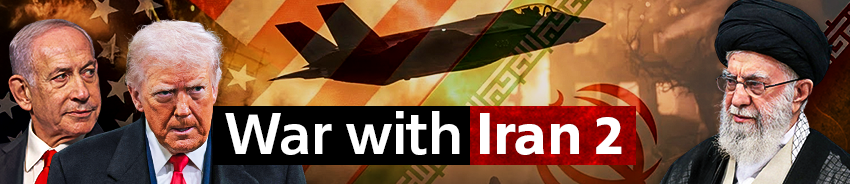
Four days have passed since the elimination of the modern-day Hitler. Israel and the United States are in the midst of remarkable cooperation. The skies over Tehran have been subdued. An entire world is waiting for one nation to walk free. To say these are historic times is not an exaggeration; It is a reflection of reality. And as with any historic event, it is appropriate to draw comparisons between then and now — between events similar in essence but different in era. Not merely for intellectual curiosity, but because comparison sharpens insight. It sheds light on processes that unfold over years, and it teaches what states, communities and nations can undergo within a given span of time.
Eighty-one years have passed between the fall of the Nazi regime and what may, one hopes, lead to the end of the ayatollah regime. If there is one comparison that highlights the difference between eras, it is Europe’s response to the two developments. The European circumstances are not identical, of course. Hitler directly attacked Europe. Khamenei only threatened it. And Europe is not a single entity - it has East and West, geographically and in identity. Still, there is something astonishing in analyzing the reactions of those who claim to uphold human rights to actions meant to secure them.
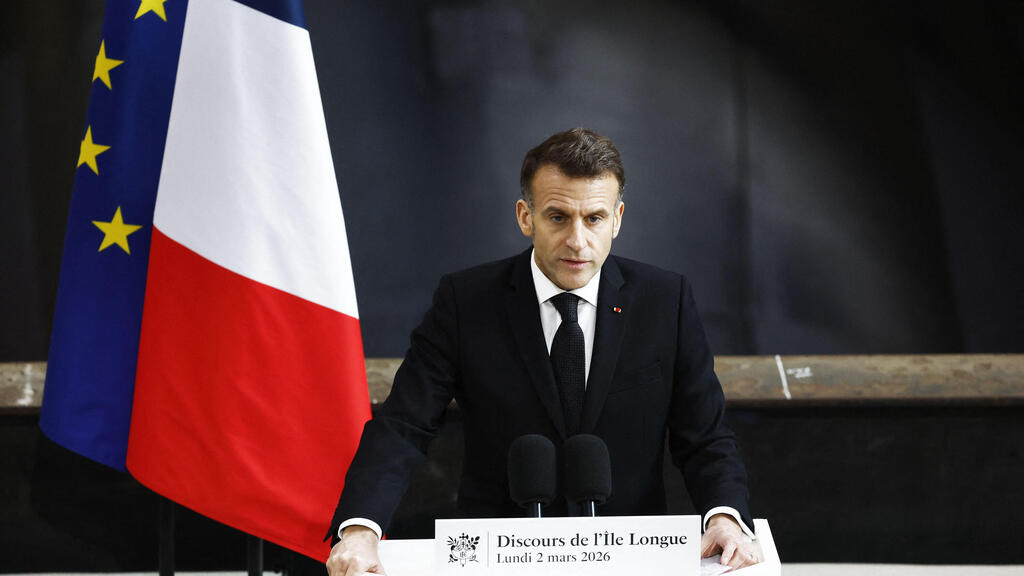
French President Emmanuel Macron quickly condemned the American-Israeli strike
(Photo: Yoan Valat / POOL / AFP)
By way of illustration: following the strike in Iran, British Prime Minister Keir Starmer emphasized that his country was not part of the operation. He called for restraint and a diplomatic solution. His deputy, David Lammy, also refrained from expressing support for the strike or recognizing that it was consistent with international law. The British focus, they said, was defensive. A similar narrative was maintained after the attack on British bases in European Cyprus. After Hitler’s defeat, by contrast, Winston Churchill, one of the leaders of the Allied powers, declared Victory in Europe Day over Nazi Germany.
Alongside Britain’s cool response, French President Emmanuel Macron quickly condemned the American-Israeli strike, saying it carried “serious consequences for global peace and security.” While he expressed readiness to assist France’s allies, in context his remarks felt more like lip service than a willingness to jump into the fire. Charles de Gaulle, by contrast, viewed the fall of the Nazi regime as the happiest moment in France’s history. He welcomed the destruction of the “Nazi monster” and oversaw the execution of French collaborators.
Sentimental differences were also evident elsewhere. Norway’s foreign minister, for example, argued that the use of military force in Iran without a United Nations mandate was troubling. In 1945, five years after Nazi occupation, Norway celebrated Hitler’s defeat. King Haakon VII returned from exile and began purging the remnants of the old regime.
 Gadi EzraPhoto: Avigail Uzi
These examples are, of course, not exhaustive. The full absurdity would exceed the space available, but the lesson is clear. Europe’s leaders then saw the destruction of the Nazi regime as a moral victory. Today they view an action with a similar purpose as a cause for concern. The reason is that the overriding objective has changed — not the securing of a human rights regime, but the avoidance of war at any cost. This, in fact, is Europe’s story. A troubling one, showing how in less than a century priorities can be inverted. What was once a lofty goal has become a side dish to the main course — an illusion of quiet.
As for us, the lesson is no less important. As then, so now, Israel stands on the right side — morally and politically. Only this time we are also on the stronger side. That obliges us to act with precision, but above all to remember that strength and values are not self-evident. They are not a gift from heaven, but an asset to be preserved and cultivated. Nations can change. What ultimately secures them is not only military might, but steadfast adherence to their identity. We practiced that when we were weak. It is vital that we remember it today as well.