


The U.S. military strikes executed on September 5 and September 8, 2026, against Iranian oil tankers near Kharg Island and the port of Jask mark a severe escalation in the Persian Gulf. While these operations significantly impair Tehran's maritime crude exports and project formidable American naval power across the Strait of Hormuz, they simultaneously create an acute strategic risk transfer for Israel.
In Western capitals, choking Iran's primary economic artery is viewed as a decisive operational success. However, Israel must examine the predictable secondary effects of this campaign.
US military strikes Iranian oil tankers in the Persian Gulf
(Video: CENTCOM)


Faced with degrading export capabilities and an overwhelming concentration of American strike groups in the Gulf, the Islamic Republic faces compelling strategic incentives to avoid a direct, symmetric confrontation with the United States military. Tehran understands that engaging American warships in open water carries catastrophic risks for its remaining naval fleet.
Consequently, Iran's strategic doctrine highly favors asymmetric target substitution, shifting the retaliatory burden toward high-value, vulnerable Western-aligned strategic assets where direct American naval protection is minimal. That primary vulnerability sits off the Israeli coast in the Levant Basin.
Jerusalem cannot afford to view the naval conflict in the Persian Gulf as an isolated regional skirmish. The kinetic actions off Kharg Island generate an elevated risk environment for Israel's offshore natural gas infrastructure, specifically the Leviathan, Tamar and Karish production fields.
Together, these three offshore installations represent the critical backbone of the national energy grid, supplying approximately seventy percent of Israel's domestic electricity generation while sustaining vital regional export agreements that anchor strategic energy cooperation with Jordan and Egypt.
In previous rounds of hostility, Israeli authorities adopted a conservative risk-management posture, temporarily shutting down production at specific platforms to mitigate the catastrophic dangers of direct kinetic impacts.
While understandable as short-term safety measures, recurring proactive shutdowns inflict severe economic damage, cost billions of shekels and temporarily force reliance on expensive, highly polluting alternative fuels.
More critically, routinely suspending offshore operations under threat creates a dangerous structural vulnerability. It demonstrates to Tehran that it can achieve significant economic disruption and energy coercion against Israel without successfully penetrating sovereign air defenses.
The operational logic driving Iranian regional strategy relies on calculated target substitution and calibrated escalation below the threshold of full-scale regional war. With its primary oil export terminals near Kharg Island and Jask under direct military and economic pressure, the regime in Tehran faces mounting internal and external imperatives to establish a visible counter-deterrent.
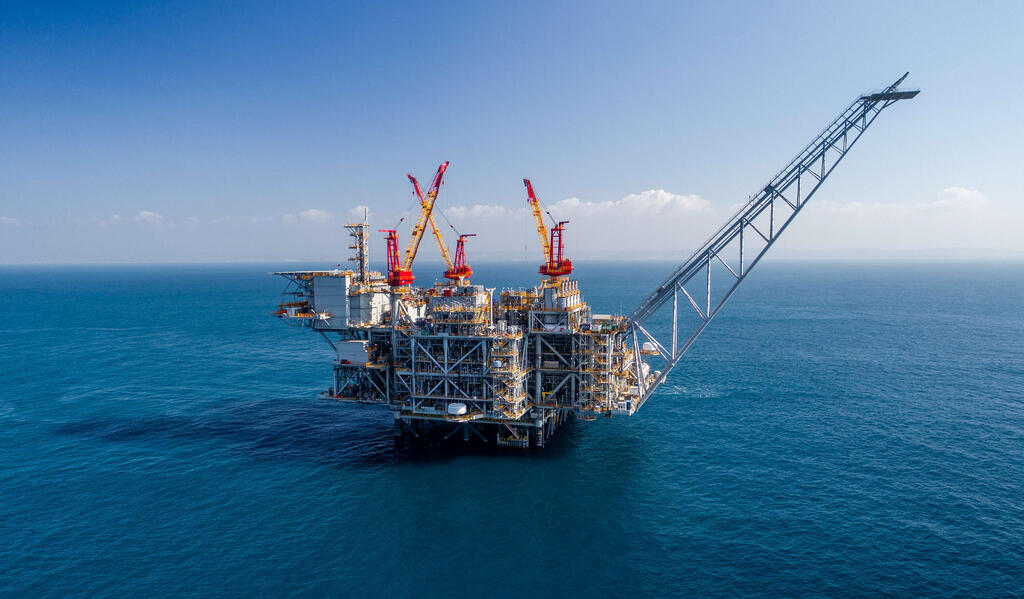
Attempting to sink a major U.S. surface combatant or strike American bases in the Gulf carries a high probability of triggering overwhelming retaliatory strikes directly against core Iranian command infrastructure.
Conversely, targeting Israeli offshore energy platforms through regional proxy networks presents a far more attractive strategic calculation.
Utilizing Hezbollah's inventory of precision-guided cruise missiles, long-range loitering munitions or covert naval assets allows Tehran to inflict severe structural and financial costs on Israel while maintaining a degree of tactical ambiguity.
Jerusalem must actively disrupt this decision-making framework before it manifests as physical strikes against maritime production platforms off the coasts of Haifa or Ashkelon, establishing an unequivocal baseline that holds the regime in Tehran directly accountable for any proxy aggression against Israeli energy assets.
This maritime threat vector is evolving beyond traditional aerial saturation attacks and shore-to-sea missile salvos into the subsea domain. On September 8, 2026, naval forces belonging to the Islamic Revolutionary Guard Corps seized a U.S. autonomous underwater vehicle operating near the Strait of Hormuz, underscoring Tehran's aggressive focus on acquiring and analyzing advanced uncrewed subsea systems.
The proliferation and reverse-engineering of autonomous underwater technology pose a direct threat to the underwater pipelines, seabed manifold assemblies and submarine fiber-optic cables that link Israel to regional energy networks and global communications.
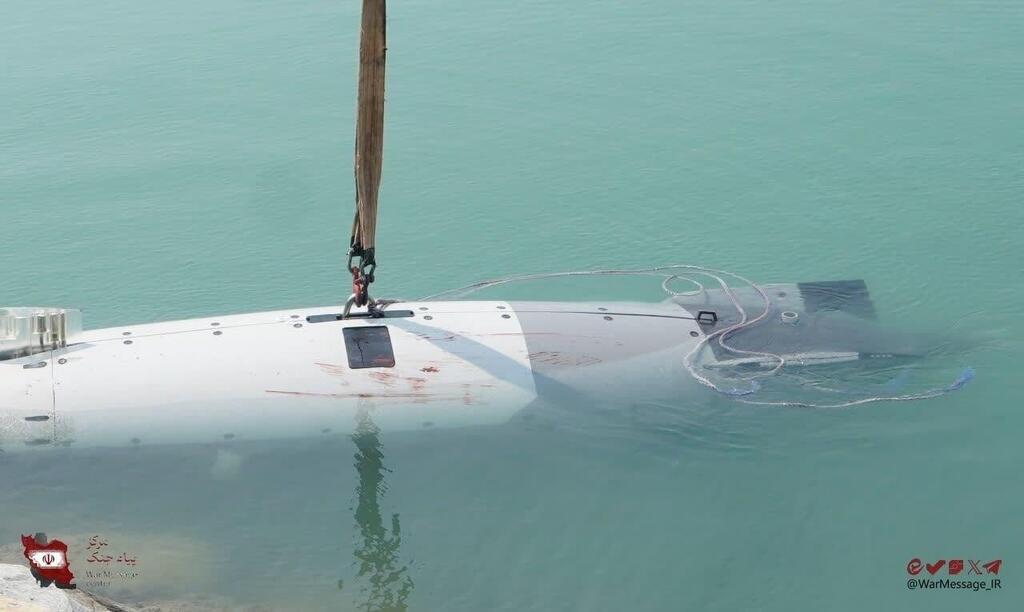
A Dive-LD autonomous underwater vehicle
A successful subsea sabotage operation conducted against deep-water gas extraction infrastructure situated hundreds of meters beneath the Mediterranean surface would create unprecedented engineering challenges, potentially disrupting natural gas flows for extended periods.
While the Israeli Navy has integrated naval Iron Dome systems on Sa'ar 6-class corvettes to secure the aerial domain, subsea infrastructure protection requires a major operational expansion. Protecting sovereign marine wealth against covert subsea interdiction, underwater explosive devices or autonomous submersibles demands accelerated investments in deep-water acoustic surveillance arrays, autonomous subsea patrol platforms and specialized seabed counter-drone capabilities.
To safeguard its national security and economic independence, Israel must transition from a reactive defense posture to an explicit doctrine of forward deterrence in the maritime domain. Treating platform shutdowns as standard operating procedure grants adversaries an inexpensive tool of strategic leverage, effectively allowing proxy forces to impose an economic blockade on Israel's energy sector at minimal operational cost.
A robust national security posture requires establishing clear, credible operational boundaries. Jerusalem must formally communicate that any kinetic or covert attack on Israeli offshore gas fields, whether launched from Iranian territory or executed by regional proxies, will be treated as a direct attack on sovereign critical infrastructure. Such an attack must carry a guaranteed, proportional retaliatory mandate against Iran's own domestic energy, industrial and maritime export facilities.
By raising the projected cost of targeting Levantine gas above any tactical or political benefit Tehran hopes to extract, Israel can break the cycle of asymmetric target substitution and re-establish credible strategic deterrence across the Levant.
Translating this deterrence framework into operational reality requires strengthening regional maritime defense architecture. The recent signing of the landmark $3.4 to $3.5 billion Achilles' Shield agreement between Israel and Greece represents a transformative milestone, providing a sophisticated multi-layered air and missile defense architecture designed to safeguard shared strategic interests.
However, given the rapid escalation of maritime threats, Jerusalem and Athens must view this agreement as a foundational pillar rather than a final destination. The logical and urgent next step is operationalizing this partnership into an active, permanent Anti-Access and Area Denial framework extending across the Eastern Mediterranean from the port of Haifa to Crete.
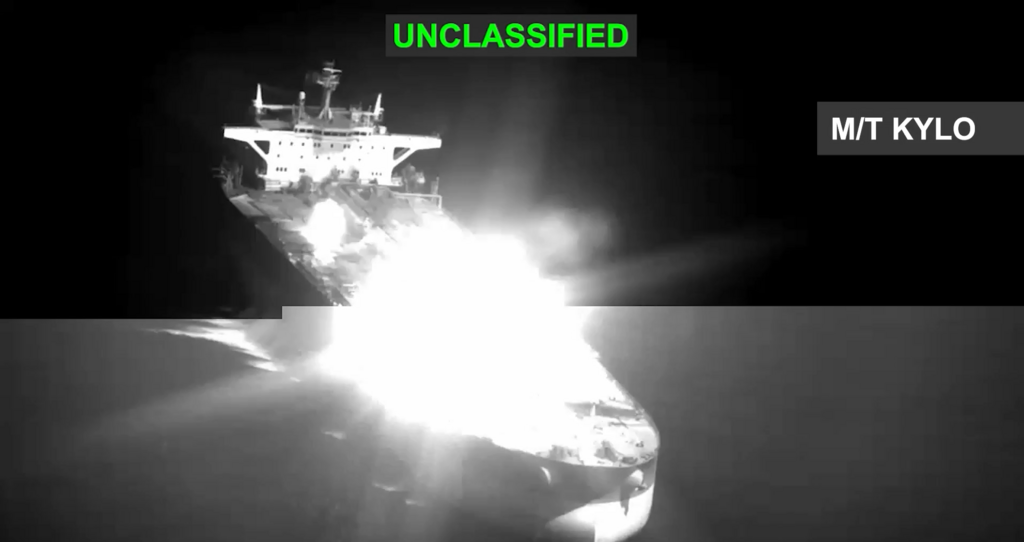
US military strikes Iranian oil tankers in the Persian Gulf, September 5, 2026
(Photo: CENTCOM)
By establishing joint maritime security patrols, integrating real-time subsea domain surveillance networks and coordinating regional air defense umbrellas with Greek and Cypriot partners, Israel can help secure the entire Levantine maritime corridor.
A visible, combat-ready regional coalition provides an effective operational counterweight to Iranian subsea and aerial threats, ensuring the unhindered flow of energy and commerce throughout international waters.
This proactive stance directly reinforces broader Western strategic objectives and aligns with key principles of American security policy, emphasizing peace through strength and responsible regional burden-sharing.
While Washington maintains heavy naval deployments to counter Iranian escalation in the Persian Gulf, global strategic demands require regional partners to assume primary responsibility for defending their immediate operational environments.
 Amine Ayoub
By taking decisive ownership of Eastern Mediterranean energy security, Israel proves itself an indispensable regional security anchor rather than a passive consumer of allied protection. Securing assets like Leviathan and Karish is not merely a domestic operational necessity; it is a direct contribution to broader European energy stability and regional market resilience, underscoring the enduring strategic value of the U.S.-Israel defense partnership amidst growing global instability.
The security architecture across the Middle East is being rapidly redefined. As American forces degrade Iranian maritime assets in the Persian Gulf, Jerusalem must anticipate and neutralize the resulting asymmetric threat transfer into the Mediterranean.
Tactical American successes in Hormuz cannot be allowed to breed strategic vulnerability off the Israeli coast. A cornered regime in Tehran will inevitably seek softer targets to demonstrate operational reach and restore shattered prestige.
Israel's offshore gas platforms represent that exact target unless Jerusalem acts with decisive foresight. By expanding deep-water subsea defenses, transforming the Achilles' Shield agreement into an active maritime defense shield and enforcing an explicit doctrine of forward retaliation, Israel can safeguard its economic lifeblood and project unyielding strength.
The distant smoke off Kharg Island is not a signal to relax; it is an urgent directive to fortify its coastlines and its sovereign energy independence without hesitation.
- Amine Ayoub, a fellow at the Middle East Forum, is a policy analyst and writer based in Morocco. Follow him on X: @amineayoubx