

1. The chairman of the U.S. Joint Chiefs of Staff, Gen. Dan Caine, said this weekend, according to CNN, that "we must find an off-ramp from the war with Iran."
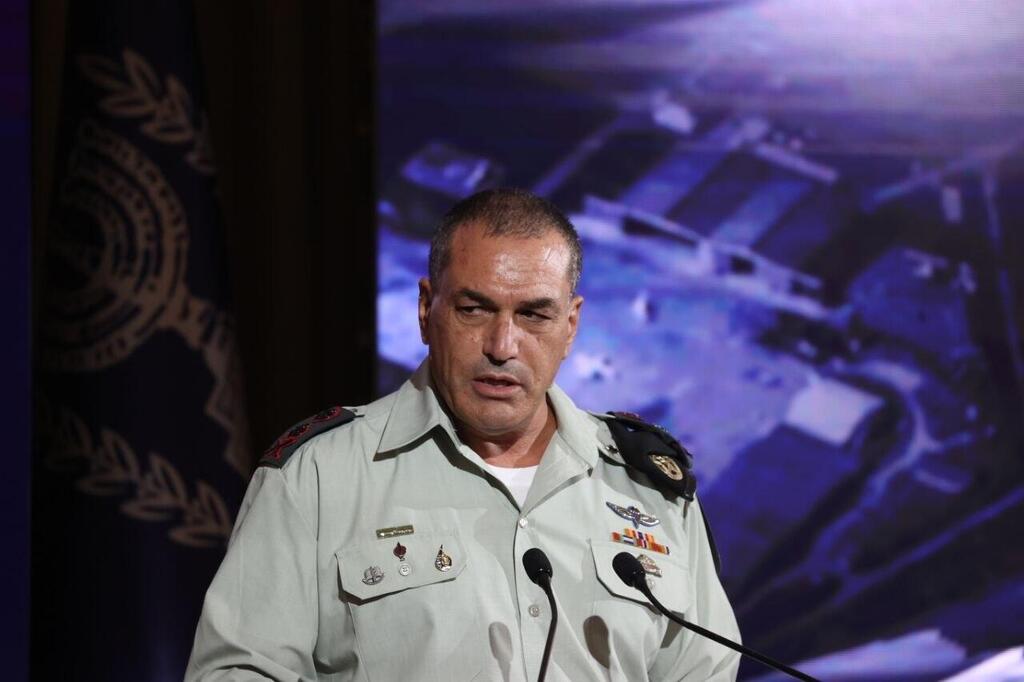
Where is our chief of staff, Lt. Gen. Eyal Zamir? Why haven't we heard him—or any other member of the IDF General Staff—stand up to Prime Minister Benjamin Netanyahu and say, "Enough"?
I thought about that on Thursday when we learned that Maj. (res.) Harel Birenstock and Sgt. Maj. (res.) Tamir Vaknin had been killed in southern Lebanon. Alongside that report, which noted that 40 Israeli soldiers have been killed since the current round of fighting began on the northern front, came news of another round of talks with Lebanon in Rome.
It is a farcical process that the Trump administration imposed on both sides despite having no real chance of producing an agreement.
Who will explain to Netanyahu and his circle that there is no way to guarantee Israel's security by remaining inside parts of Lebanon and Gaza? Explosive-laden attack drones have effectively eliminated any possibility of defeating enemies who continue to grow stronger around us.
We are the only ones still pushing for another round of fighting with Iran.
Perhaps once Netanyahu vacates the prime minister's residence and leaves behind the public funds placed at his family's disposal, his successors will apply some common sense and find a way to reach agreements with our neighbors.
2. These are decisive days for many members of Knesset, who are about to find out whether they will keep their seats.
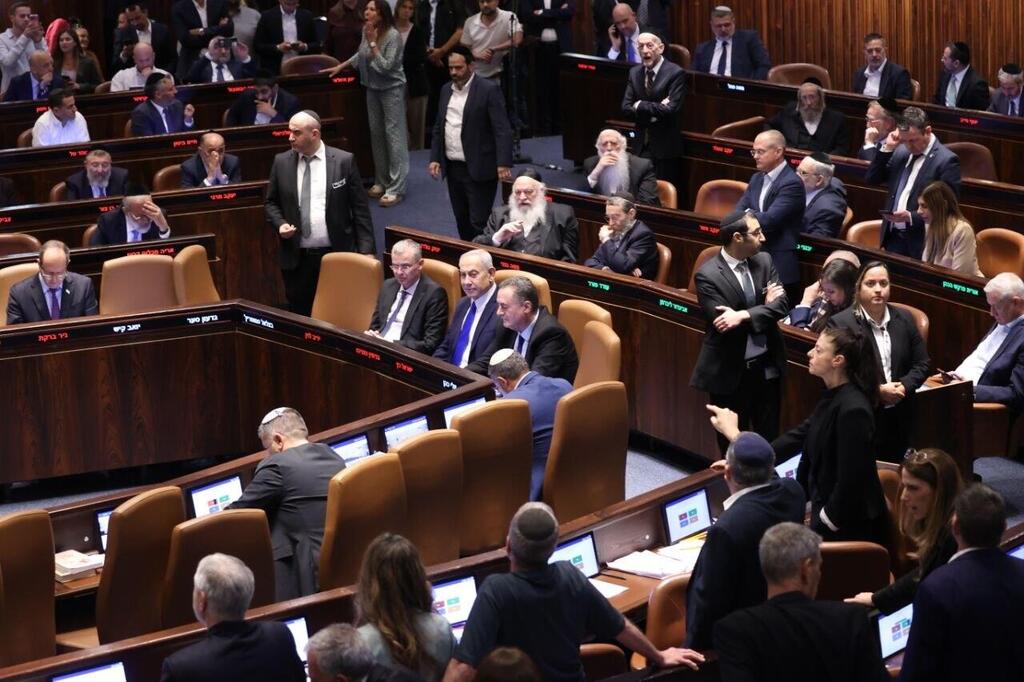
The Knesset plenum
(Photo: Alex Kolomoisky)
Without any irony, a Knesset membership card comes with quite a few benefits. The same goes for the many new candidates, whether running independently or under the banner of newly formed parties. It is becoming increasingly crowded.
The most striking feature of this political game of musical chairs is that Likud has become the primary target for dismantling and rebuilding.
To my colleagues in the media, I would offer something I learned in Washington, home of the National Institutes of Health (NIH). Researchers there advise journalists not to become emotionally attached to laboratory animals before they are euthanized.
The same principle applies to politicians. Do not become emotionally invested in covering them. They brought their fate upon themselves.
3. The time has come to establish citizen patrols to defend democracy.
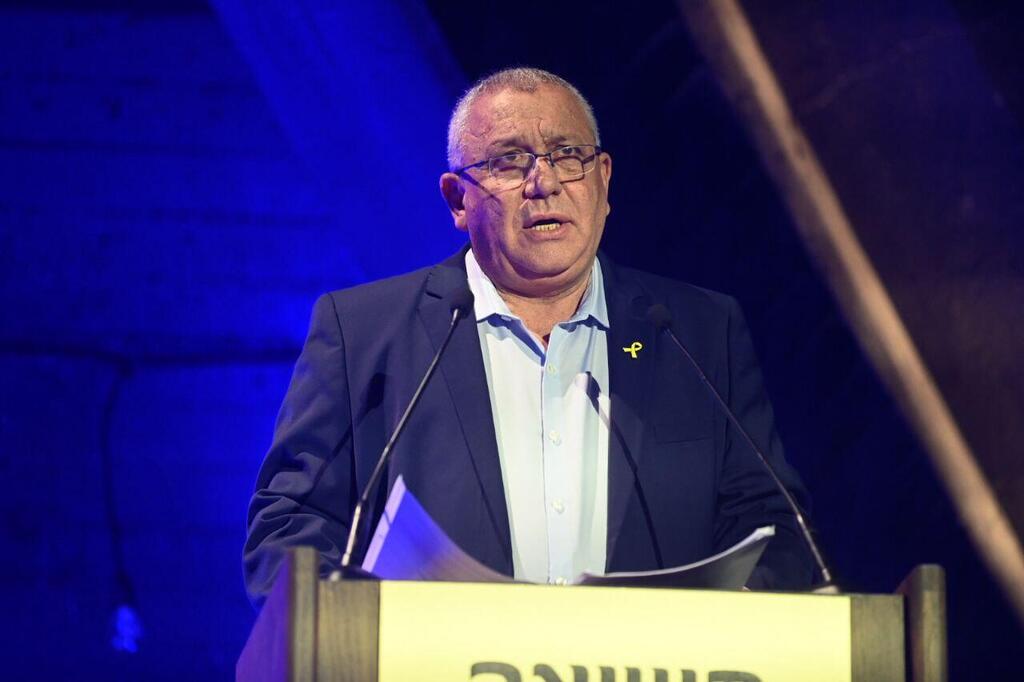
Gadi Eisenkot
(Photo: Yair Sagi)
I thought about that after reading about the man who tried to physically confront Gadi Eisenkot.
This is not merely another political attack.
Benjamin and Sara Netanyahu have built a system that will eventually be exposed and will bring down even those who were once willing to defend them at any cost.
They respected no one and treated no institution—including the public purse—as off-limits.
4. A few days ago, I visited the Israeli art wing at the Tel Aviv Museum of Art, where I saw two concrete slabs displaying photographs of Yarden Morag, a member of the Bat Ayin Underground, a Jewish extremist group, in an installation by artist Porat Salomon.
The inscription beneath the first slab quotes Morag asking: "Maybe we made a mistake somewhere."
On the second slab, he clarifies: "I mean in the eyes of Heaven."
In doing so, he makes clear that his remorse is directed toward God—not toward the laws of the state.
Incidentally, on Friday I visited the home of the late artist Uri Lifschitz, whose son is committed to preserving his father's legacy.
His widow, Dorit, recalled that former prime minister Ariel Sharon, who had commanded Uri in the Paratroopers Brigade, used to visit with his wife, Lily.
"And they always paid full price for every artwork they bought," she said.
Those were different days. Different leaders.
5. Also at the Tel Aviv Museum of Art, I read a poem by Shva Salhoov that begins:
"Zion, at the opening of my letter I ask how you are.
How are you feeling? Is everything all right?
And how are your prisoners, your Palestinians, your Jews?
Tell me, how are the children?
And how are those who destroy you, Zion?
Zion, will you not ask after my well-being?
I am not feeling so well.
My right hand is withering.
Grief burns within me. Don't ask."
The hundreds of children and adults filling the museum's galleries gave me a genuine answer to the question of whether there is still hope for repair in this country.
There is.