


The practical payoff of the Abraham Accords materialized in the remote desert, arriving with a lethal payload. Along the fortified defensive wall stretching across the Western Sahara, senior Polisario Front commander Lahbib Mohamed Abdelaziz made a fatal miscalculation. He underestimated the tangible reality of diplomatic agreements signed between Rabat and Jerusalem.
He failed to grasp that normalization extended beyond trade delegations and civilian airline routes. The definitive response arrived without prior warning via an advanced loitering munition manufactured by BlueBird Aero Systems, an Israeli defense contractor. Abdelaziz is dead, and the fundamental rules of engagement have permanently transformed.
Gallery
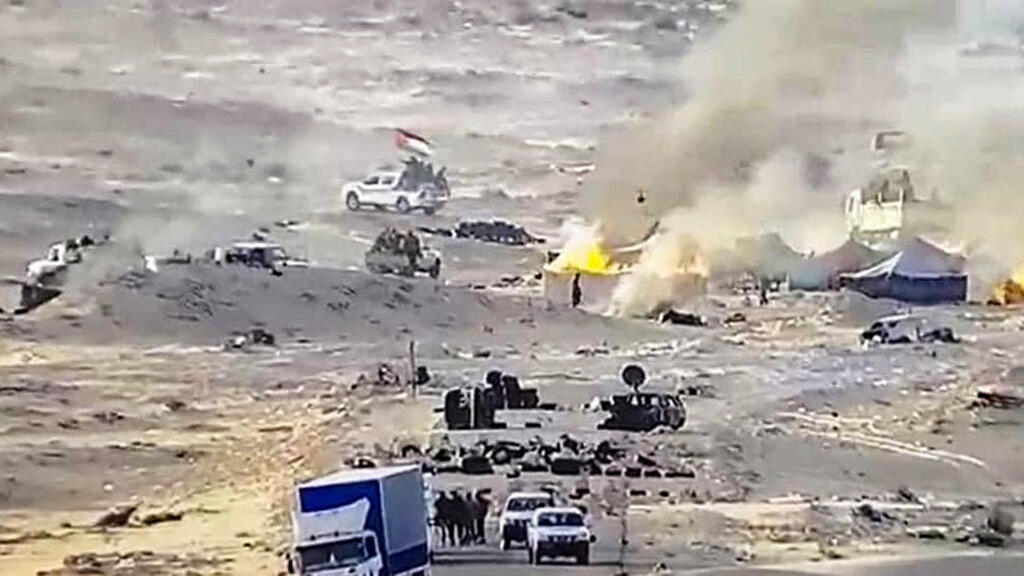
Morocco, Western Sahara: Polisario tents on fire
(Photo: AFP / ROYAL MOROCCAN ARMY FACEBOOK PAGE)
The strategic evolution
The Western Sahara dispute has simmered for half a century in total international obscurity. Morocco maintains control over the vast majority of territory. The Polisario Front operates primarily from the Tindouf refugee camps located across the Algerian border. Supported by Algerian diplomatic cover and military provisions, the separatist group routinely stages rapid guerrilla attacks against Moroccan outposts positioned along the defensive sand wall. Algeria maintains intense focus on the region. Algiers directed significant financial resources, advanced weaponry, and political capital into the Polisario movement for decades. The Algerian leadership views the separatist cause as a vital strategic asset designed to encircle Morocco. This arrangement cultivated a comfortable asymmetric environment. Polisario fighters possessed the ability to probe Moroccan defenses, retreat quickly into the expansive desert terrain, and absorb relatively minimal operational costs. The Moroccan wall held firm, but merely holding territory never equated to decisive victory. The geopolitical landscape shifted dramatically when Morocco normalized relations with Israel.
The Abraham Accords, brokered by the United States government in late 2020, were initially marketed to the global public as a groundbreaking diplomatic and economic achievement. The ensuing years delivered bilateral tourism, substantial business investments, and open borders. However, the less publicized dimension of this normalization process involves a robust security architecture that quietly assembled itself in the background. This exact security framework just made its devastating operational debut in the Sahara. Moroccan military forces acquired specialized BlueBird systems as a direct component of a rapidly deepening bilateral defense technology partnership. Israeli defense companies discovered a highly receptive partner in Rabat, establishing profound institutional links.
The technological catalyst
Morocco represented a sovereign client willing to invest heavily, possessing an operational requirement, and maintaining a military culture compatible with complex Israeli systems integration. BlueBird Aero Systems occupies a precise and highly lethal niche within the defense industry. The corporation manufactures the Ninox and SpyX reconnaissance drone families. More importantly for the North African theater, it produces the Twin Thunder loitering munition. This man-portable system was explicitly designed to neutralize the exact tactical challenge Morocco faces along the desert wall. The system targets dispersed, highly mobile enemy units operating across featureless terrain. These hostile actors lack fixed infrastructure and avoid engagement by conventional artillery fires.
These autonomous weapons dictated the battlefield in Nagorno-Karabakh during the 2020 conflict, and they transformed the ongoing war in Ukraine. The underlying military principle is both elegant and brutal. A compact fully autonomous aircraft circles a designated target sector. Ground teams operate the platform through high-definition optical sensors, and guide the explosive payload onto a target with unmatched precision. The target receives zero warning and gets no second chance at survival. The strike that eliminated Abdelaziz represented a masterclass in precision targeting, enabled by the seamless fusion of Israeli unmanned aerial systems and sophisticated intelligence infrastructure.
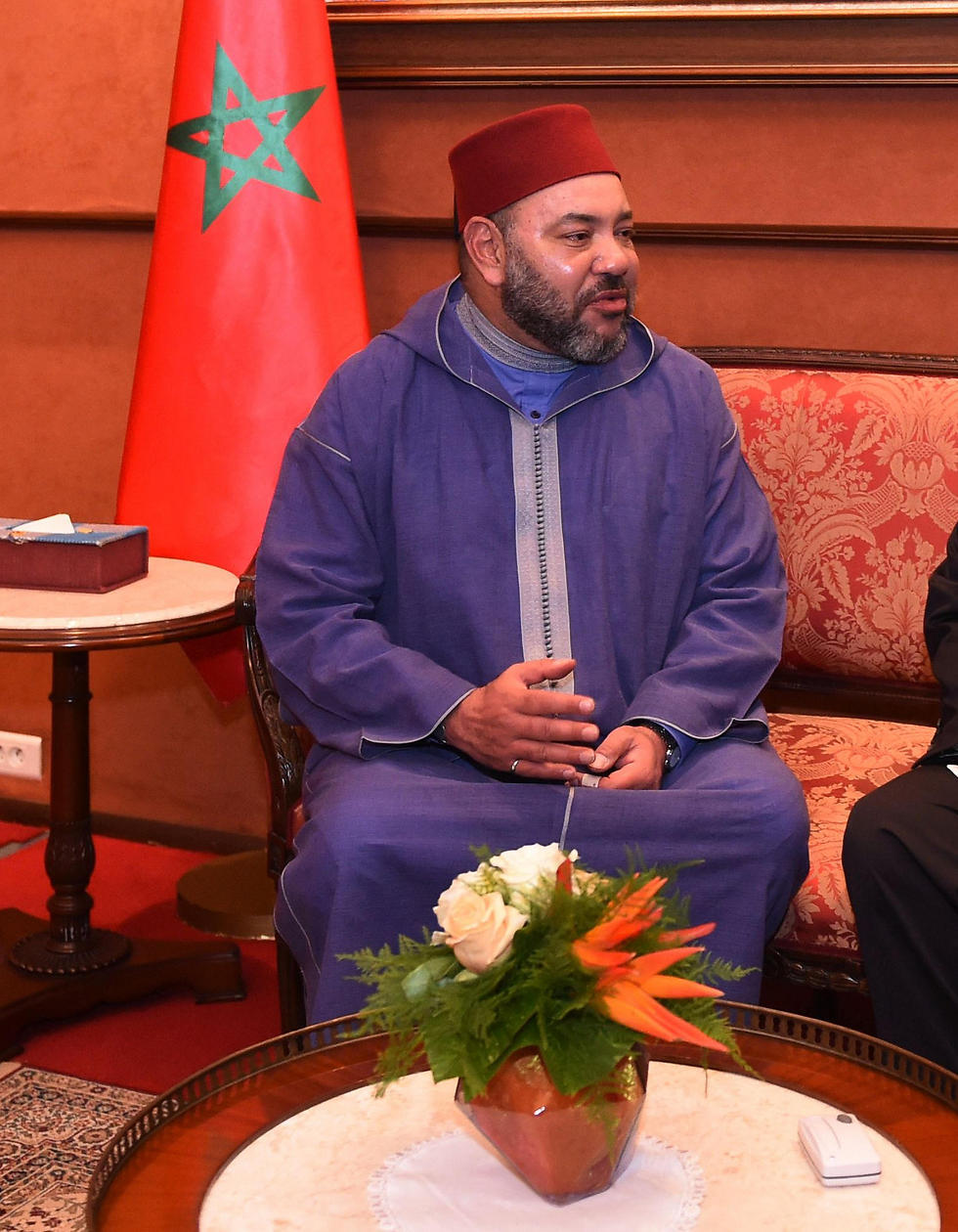
King Mohammed VI of Morocco
(Photo: AFP)
This framework requires continuous surveillance feeds, encrypted data links, strict target identification protocols, and highly trained human operators. These components stitch together to form a lethal kill chain measured in mere minutes. Lahbib Mohamed Abdelaziz served as a senior operational commander possessing decades of institutional knowledge that the Polisario Front will find difficult to replace. His elimination represents a strategic milestone far more significant than a single battlefield casualty. It definitively proves the newly acquired capacity of Moroccan armed forces to reach deep into territories that Polisario commanders previously considered safe sanctuaries. Militant commanders who previously maneuvered across the region with reasonable confidence now understand their extreme vulnerability. They realize that Israeli-enabled targeting matrices completely neutralize that geographical advantage.
Strategic implications for regional security
The cost of senior leadership exposure has escalated dramatically and irreversibly. Every commanding officer embedded within the Polisario military structure confronts a grim binary choice. They must choose between providing effective operational leadership, which requires electronic communication and troop meetings, or prioritizing personal survival. The resulting strategic logic proves deeply uncomfortable for the government in Algeria. Algiers constructed its long term Polisario investment upon a fundamental assumption that proxy warfare conducted in a remote desert environment would remain fully insulated from high technology attrition. The Abraham Accords completely shattered the Algerian assumption. Algeria currently faces a newly empowered Moroccan military partner utilizing advanced Israeli drone technology, comprehensive signals intelligence cooperation, and specialized training pipelines.
Morocco uses these integrated tools to systematically degrade the operational capacity of a militant proxy force that Algeria cannot openly defend. This dynamic reveals the actual substantive core of Middle Eastern normalization. It transcends the traditional symbolic diplomatic handshakes and the customary photo opportunities orchestrated at the White House. It constitutes a highly functional security alliance characterized by shared hardware, integrated software, and common tactical doctrine. Furthermore, the defense export model championed by the State of Israel serves strategic purposes rather than purely commercial interests. When an Israeli combat system performs exceptionally in active conflict zones against actual adversaries, the demonstration value substantially exceeds any corporate sales brochure.
The successful drone strike in the Sahara serves as a proof of concept for a broader geopolitical proposition. Israeli defense technology, delivered through normalized diplomatic relationships, possesses the unique capability to permanently restructure the military balance in conflicts where hostile actors previously operated with near impunity.
 Amine Ayoub
This proposition holds profound strategic relevance from the Persian Gulf to the broader Maghreb and across Africa. Regional nations observing this precision strike are drawing immediate, concrete conclusions. So are the hostile proxy militias they continuously face. A domestic political argument remains deeply embedded within this narrative.
Critics of the Abraham Accords frequently argued that normalization produced substantially more diplomatic symbolism than tangible strategic substance. The recent Sahara strike provides a forceful, direct rebuttal to that skepticism. Moroccan forces operating fully integrated Israeli weapons systems successfully eliminated a senior military commander of an Algerian-backed militia. That is definitively not symbolism. That represents undeniable operational output. The bilateral accords function perfectly.
The defensive wall firmly holds the line. The BlueBird confidently commands the desert sky.
- Amine Ayoub, a fellow at the Middle East Forum, is a policy analyst and writer based in Morocco. Follow him on X: @amineayoubx