


This week, France joined the United Kingdom, Australia, Canada, Portugal, and several other countries in recognizing a Palestinian state. Proponents argue that such declarations “keep alive” the idea of Palestinian statehood. In truth, they do the opposite.
Hamas leaders openly celebrate these recognitions as vindication of their October 7 “armed struggle.” But beyond the obvious reward to Hamas, and the affirmation of its long-held stance that only violence can advance the Palestinian cause, the declaratory moves cause real damage to the very possibility of Palestinian independence.
(Video: UN)


By linking recognition to the Gaza war, countries around the world present Palestinian statehood not as a solution but as a punishment. Naturally, this angers Israelis and further erodes what little desire exists for a Palestinian state. It also fractures the legitimacy of the very idea by making it appear the outcome of terror and animosity toward Israel and the U.S., rather than compromise and a political process. It is also futile: when British or French officials are asked what practical effect recognition will have, they admit the move is largely symbolic.
Actually, 'recognizing Palestine' has long become diplomatic virtue-signaling and nothing more than that; Most of the UN member countries already recognize Palestine.
Yet a state has not been born, mainly as a result of three enduring and interconnected realities. First, Palestinian leaders have avoided historic compromises, most notably on the so-called ‘right of return’ for Palestinians living in Arab countries, descendants of refugees from 1948.
It is a demand which, if implemented, would end Israel as a Jewish state. Significantly, Western European leaders have made their support for recognition conditional on Hamas being deposed. However, they have said nothing about a fundamental reason for the continued failure of past peace talks: the inability of Palestinian leaders to relinquish their demand that Israel open its borders to the point of disintegration.
Second, no credible solution has ever been offered to Israel’s security concerns. Those have only deepened since the Second Intifada in the early 2000s. Third, the Israeli right - especially the far right - has successfully capitalized on the previous points to push the narrative that a two-state solution equals the annihilation of Israel and push for annexation.
Benjamin Netanyahu, a prime minister who once embraced Yasser Arafat, called him a friend and declared support for Palestinian statehood (even after the Intifada), now rules out the idea completely.
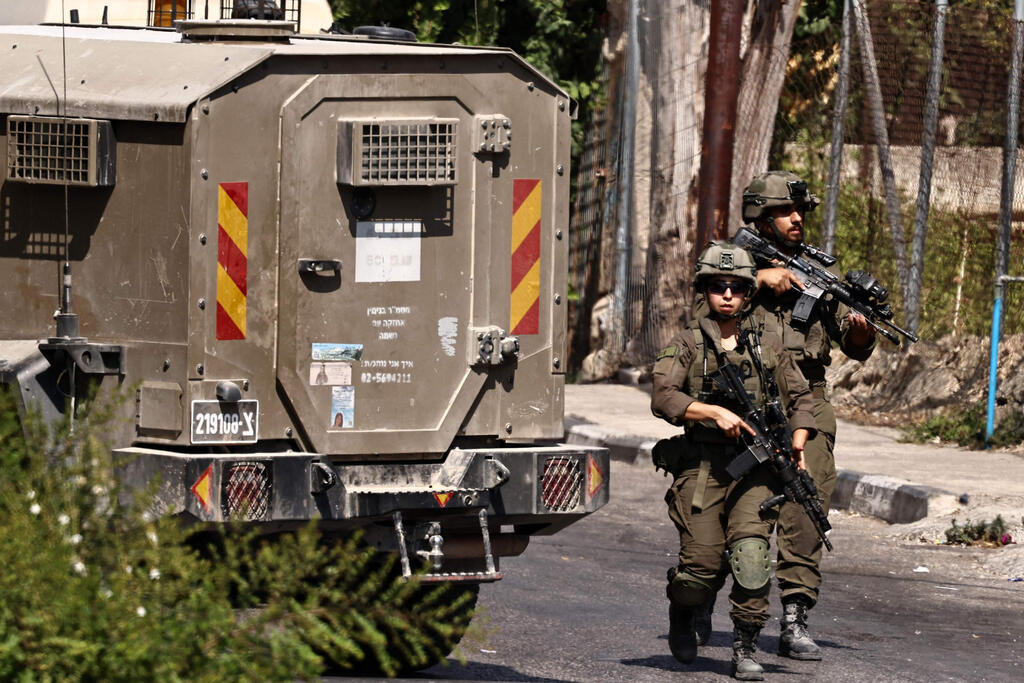
Security is key, and events on the ground constantly reinforce Israeli fears. Only last week, the IDF uncovered dozens of ready-made rockets hidden in a paramilitary installation near Ramallah, under the Palestinian Authority’s jurisdiction. The plan was clear: replicate Hamas’s Gaza model, firing at Tel Aviv and Israel’s coastal cities, from a few miles away.
After Israel’s 2005 withdrawal from Gaza, including the forced evacuation of all settlements, it took Hamas less than two years to seize control of the strip.
This set the stage for the atrocities of October 7. It’s a manifestation of a long-overlooked fact: the Palestinian society remains locked in a violent struggle between Hamas’s fundamentalist Islamism and Fatah’s more secular nationalism. How can negotiations with Israel succeed when, according to polls, the more popular side, Hamas, denies Israel’s right to exist and only two years ago attempted its own pilot in ethnic cleansing of Israelis?
Neither London, Ottawa, Paris, nor Madrid offers serious answers to these dilemmas. They have chosen to weaponize Palestinian statehood, turning what should be the outcome of a future peace agreement into a diplomatic slap. In doing so, they inflict harm on the cause itself, sacrificing substance for populist gains in their own political arenas.
The tragedy is that the two-state solution remains the least-worst option. It cannot be implemented in the near future, but all other alternatives are terrible: a one-state Islamist model along the lines of Hamas and radicals chanting ‘death to the IDF,’ or annexation that would either erase Israel’s Jewish majority or create a formalized discriminatory regime, a country neither democratic nor Jewish.
(Photo: David Rubinger)
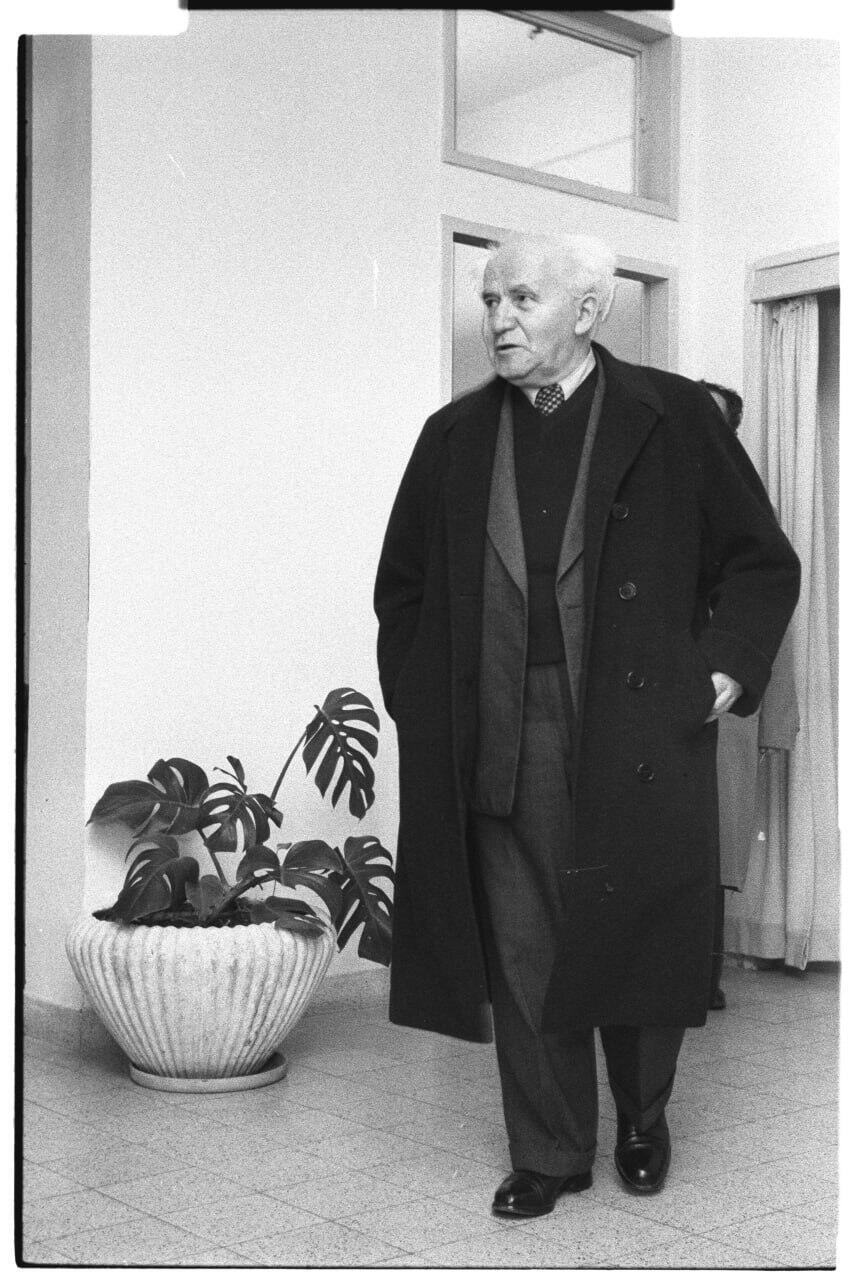
Israel’s founding fathers understood this well. In 1949, during a Knesset session, many years before Israel occupied the West Bank, David Ben-Gurion warned: ‘And suppose, militarily, we could conquer all of Western Eretz Israel. And I am also certain of that. And then what would happen? We would have a single state. But this state would want to be a democratic state, with elections and representation - and we would be a minority…. When the question arose of the whole Land without a Jewish state, or a Jewish state without the whole of the Land — we chose a Jewish state without the whole of the Land.’
Ben-Gurion’s reasoning remains sound today. Indeed, President Trump showed clear vision with his first-term 'Deal of the Century'. It included a two-state solution and offered a path forward in the region. The Palestinians rejected it immediately.
 Nadav Eyal
The two-state framework demands hard work - negotiations, compromises, security guarantees. It cannot be conjured by the pampering gestures of leaders in domestic distress like Emmanuel Macron or Keir Starmer, who reduce statehood to a slogan and hand a win to fundamentalists in Gaza and Radicals around the world.
By constructing recognition as a symbolic punishment to Israelis, these governments make a peace settlement harder to achieve, not easier.