

It’s 4:00 a.m. in Jerusalem on the 17th of Tammuz, and I’m lying in bed with a cup of hot coffee before the fast begins. I do this every year—not out of religious fervor but to stave off the caffeine withdrawal headache I inevitably get by midmorning. But today it’s not the coffee that’s keeping me up—it’s the war. Not just the one in Gaza, but the one in people’s heads. The one being fought on our Instagram feeds and on the podiums of the United Nations. The one that Hamas named, with chilling intentionality, the “Al Aqsa Flood.”
Now, if you’ve followed Middle East politics for more than a few weeks, you’ll know that names really matter here. Names aren’t just labels; they’re weapons. They create emotional gravity. So, when Hamas chose to call their massacre on October 7, 2023, the “Al Aqsa Flood,” they weren’t just referencing a place. They were framing a global story.
Gallery
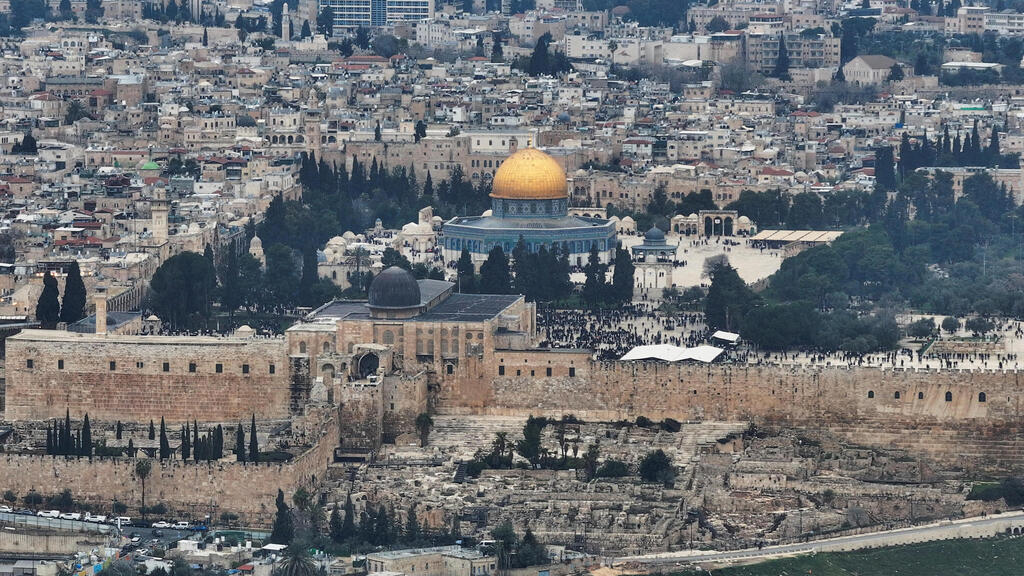
An aerial view of Jerusalem’s Old City shows the silver-domed Al Aqsa Mosque in the foreground and the gold-domed Dome of the Rock shrine behind it, both located on the Temple Mount, a site sacred to Muslims and Jews
(Photo: REUTERS/Ilan Rosenberg)
In Islamic tradition, Al Aqsa is the silver-domed mosque on the southern edge of the Temple Mount in Jerusalem—relatively modest, architecturally unremarkable and, most importantly, not the golden-domed building you see in every poster of Jerusalem from Gaza to Kuala Lumpur. That building is the Dome of the Rock, a shrine built over the Foundation Stone—the exact site of the Holy of Holies in the ancient Jewish Temple. Muslims identified it as the location of “Solomon’s Temple” until the 1960s, and it was never called Al Aqsa. Arguably our enemies do not hold much respect for either the Dome of the Rock or the Al Aqsa Mosque, as they have repeatedly threatened to destroy Jerusalem, along with their holy shrine and mosque, in a nuclear attack.
Over the last two decades, aided by the Qatari-funded propaganda machine of the Al Jazeera news channel, Hamas and their allies have engaged in what can only be called a rebranding campaign. They’ve deliberately blurred the lines between the two sites and chosen the more impressive building as their icon. The Dome of the Rock has become the de facto image of “Al Aqsa” in global consciousness. And that’s no accident. Because controlling the image of Al Aqsa is the first step in controlling the narrative of the conflict.
When Hamas chose to call their massacre on October 7, 2023, the “Al Aqsa Flood,” they weren’t just referencing a place. They were framing a global story.
But here’s the mistake—perhaps a fatal one—that Hamas made. By naming their war for Al Aqsa, they’ve anchored their cause to a geographic symbol. And symbols, once chosen, have consequences. Because now, if Israel were to reassert full, sovereign and respectful control over the Temple Mount—not by evicting worshippers from the real "Al Aqsa" mosque, but by rebalancing access and ownership of the Dome of the Rock shrine and the location of our holy Temple—it would pull the rug out from under Hamas’ core claim.
You say this war is about Al Aqsa? Then what does it say if the State of Israel ends it with sovereignty over the place you built your myth around?
Let me be clear. I'm not suggesting bulldozers or provocations. What I’m suggesting is strategic clarity. A move that reclaims both the narrative and the geography—by distinguishing the actual Al Aqsa Mosque from the misbranded Dome of the Rock, and by offering Muslims continued access to their holy site while restoring Jewish presence to ours.
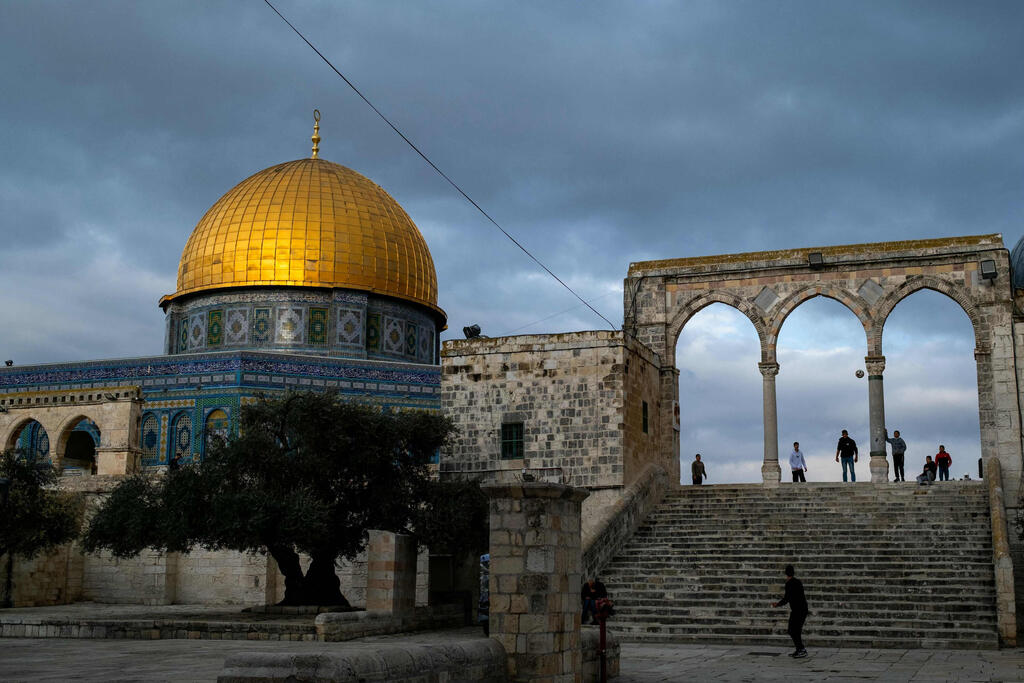
The Dome of the Rock
(Photo: Jewel SAMAD / AFP)
It’s a diplomatic and symbolic maneuver that Hamas can't easily spin. You can’t declare victory in the “Al Aqsa Flood” when your opponent ends up repossessing the keys to the Dome of the Rock, your shrine that you recently rebranded “Al Aqsa", and the site of our holy Temple.
And let’s not forget what’s at stake here. The Temple Mount isn’t just another patch of real estate. According to Jewish tradition, it holds 80% of the spiritual essence of Jerusalem. With our holy mountain out of bounds, we’re operating at 20% holiness. Spiritually speaking, we’ve been managing the capital of the Jewish people like a franchise without the rights to our flagship store.
I have a personal interest here. On April 5th, 2023, Israeli soldiers entered the real Al Aqsa Mosque to remove weapons that were being used to threaten Jews praying at the Western Wall below. As a so-called response to this act of self-defense, Hamas terrorists murdered my wife, Lucy, and our two daughters Maia, 20, and Rina, 15, two days later. They announced their “Al Aqsa Flood” campaign on April 7, 2023, exactly six months before the October 7 massacre.
Get the Ynetnews app on your smartphone: Google Play: https://bit.ly/4eJ37pE | Apple App Store: https://bit.ly/3ZL7iNv
This war will not end in Gaza. Not really. It will end in our hearts and minds—in what people believe happened, through what people believe was won. In the greatest irony of all, by tying their war to a misnamed shrine, Hamas has given Israel a clear path to define victory—not just militarily, but morally and spiritually.
Sometimes wars are won with Iron Domes. Sometimes, they can be won with Golden Domes. And sometimes, the path to peace runs through the very place where history, faith, and identity converge.
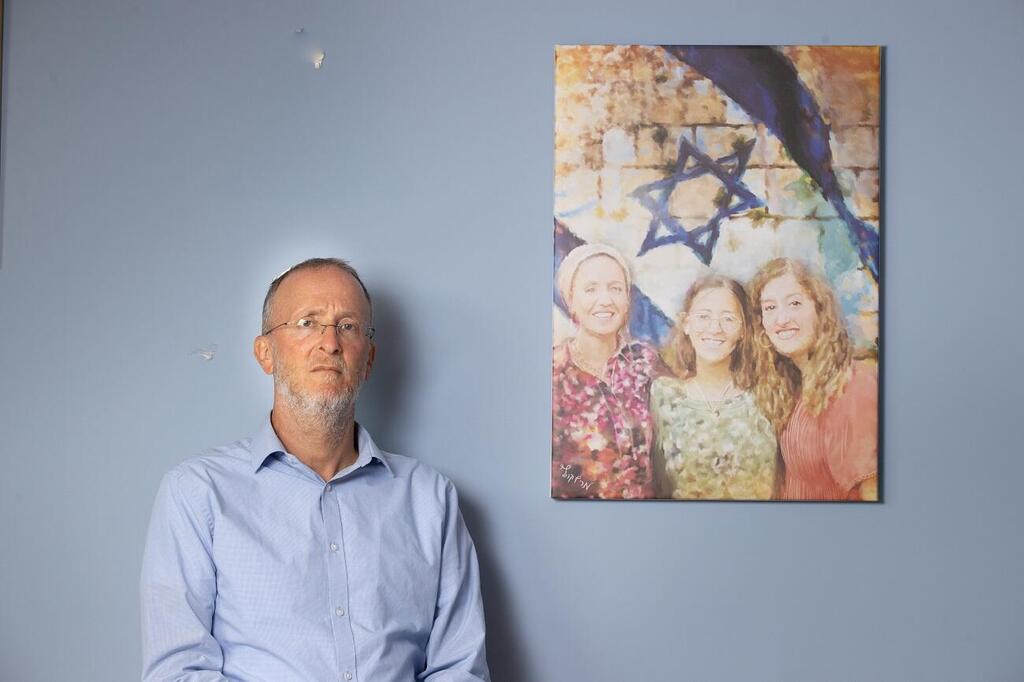
Rabbi Leo Dee stands beside a portrait of his late wife Lucy and daughters Maia and Rina, who were murdered in a terrorist attack in April 2023
(Photo: Alex Kolomoisky)
Because when you strip away the politics, the propaganda, and the pain, what remains is this: The possibility of redefining Jerusalem not as a flashpoint, but as a meeting point. A place where Jews return not to exclude, but to restore; not to conquer, but to reconnect—with their past, their purpose, and their promise.
Victory in this war won’t just be measured in territory or security. It will be measured in the stories we tell about its gains and losses. Perhaps the most powerful story we can tell is that we returned to our holiest place not out of vengeance, but out of vision. That we answered terror not with destruction, but with dignity. And that, out of the darkest flood, we reclaimed the moral high ground—not just the literal one.
Let us gather in prayer at the Kotel during these critical three weeks, when we mourn the loss of two holy Temples, to beseech Hashem for renewed sovereignty over our holiest place and the ultimate reunification of Jerusalem.
In the end, that's how we truly win. By reminding the world—and ourselves—that Jerusalem is not a battleground between religions but a beacon of faith for the benefit of all mankind.
- Rabbi Leo Dee is an educator living in Efrat. His book “Transforming the World: The Jewish Impact on Modernity” was republished in English and Hebrew in memory of his wife Lucy and daughters Maia and Rina, who were murdered by terrorists in April 2023.