

Adding to the growing body of data showing the collapse of Israel’s standing in American public opinion came an unusual warning over the weekend: Brad Sherman, a Democratic congressman and one of the last remaining pro-Israel figures of the old guard, posted a video featuring horrifying polls from July and made clear that, in his view, the Israeli public and its elected officials do not understand the scale of the danger or its immediacy. At his request, his remarks were translated and quoted in the Israeli media.
On the face of it, the leaders of the “change” camp, certainly those who see themselves as prime ministers, should have pounced on Sherman’s remarks as proof that even on an issue where Benjamin Netanyahu is considered to be “in a league of his own,” he has managed to drag Israel into the abyss. That is certainly true on the eve of Netanyahu’s trip to the UN General Assembly, which this year will be about as festive as Eeyore’s birthday party.
And yet, as of this writing, figures such as Gadi Eisenkot, Naftali Bennett and Avigdor Liberman have not responded to Sherman’s remarks. Yair Lapid tweeted, “We know how to fix this,” but preferred to keep the intriguing information to himself. Perhaps after the election he will deign to share it.
It is tempting to think this is merely another display of incompetence in the campaign, of which there is no shortage. But at least on this issue, the story seems deeper, and Sherman himself put his finger on the point: In the text he published, he referred specifically only to Minister Itamar Ben-Gvir — an “existential danger” — and to Israel’s ambassador to the United States, who in his view “does not understand the severity of the problem.” The rest of his message was directed at “most Israelis”:
“When I hear Israelis tell me that their actions are justified and because they are right they have no problem [with the collapse in public opinion], it shows an ignorance of Jewish history.”
And that is precisely why the leaders of the camp have nothing to offer: Most of the Israeli public simply is not there and does not want to hear it, as the hysteria surrounding a documentary film demonstrated. And leadership in present-day Israel means that if the public does not want to hear something, you do not tell it to them: not Bennett, who supports construction in E1 — a step that accelerated European sanctions — not Liberman, who himself declared that “there are no innocents in Gaza,” and not Eisenkot, who fought attempts to portray him as someone who had been prepared to “withdraw” in Gaza — meaning that he supported the vast destruction that turned Israel into a pariah.
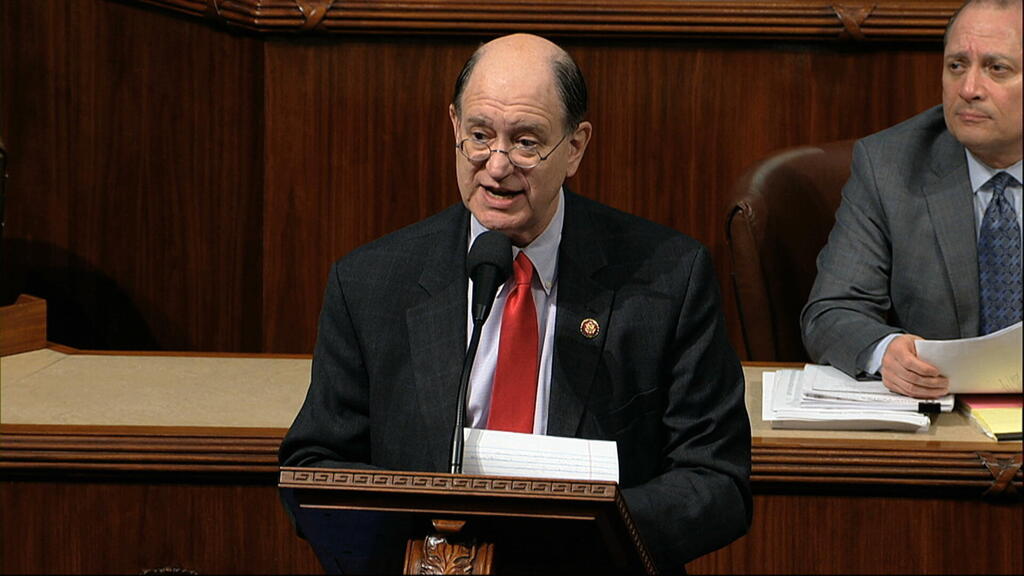
US Rep. Brad Sherman
(Photo: AP)
Even when it comes to Jewish terrorism and violence emanating from outposts and farms against Palestinians, the rhetoric is cautious and the approach passive: “soft right” does not deliver results. Not that anything else does, but that will not stop them from talking nonsense about “the Hungarian model.”
One can talk from this Yom Kippur until the next about “hasbara,” “Qatari money” and even dump everything on Ben-Gvir and, of course, Netanyahu. But the reality is that the trauma of October 7 joined other major events — above all the suicide bombings of the 1990s and the Second Intifada, and the wars that followed the disengagement — and created what is referred to abroad as “Planet Israel,” a planet that understands perfectly well how it is perceived from the outside and simply does not care, whether out of anger at hypocrisy and antisemitism or out of a survival instinct: “a people that dwells alone” as both a worldview and a source of pride.
The fact that it takes a member of Congress, rather than courageous Israeli leadership, to say this shows just how high and impenetrable the wall has become.