

The resumption of direct military confrontation between the United States and Iran provides further evidence that Tehran does not intend to easily relinquish the leverage over the Strait of Hormuz it gained during the war. After about a month without an American strike, U.S. forces overnight attacked two Islamic Revolutionary Guard Corps launchers on Larak Island, at the entrance to the strait, which U.S. Central Command said were intended to be used to lay sea mines. Within hours, the IRGC launched missiles at bases in Jordan where U.S. forces are stationed. The incident was preceded by another strike on a tanker in the strait.
Missile launches from Iran toward Jordan


These developments came after several days during which it appeared that optimism was returning to decision-makers in Washington. The U.S. success in clearing mines from the strait's main shipping channel, escorting an increasing number of vessels and restoring some oil traffic, together with the growing economic cost the naval blockade is imposing on Iran, fueled assessments that Tehran was losing momentum. However, American statements should also be treated with caution. Data from companies monitoring oil traffic through the strait point to volumes significantly lower than those reflected in official U.S. figures. This does not negate the achievement of partially reopening the strait, but it does warrant caution about premature declarations of victory.
The U.S.-Iranian confrontation is not a zero-sum game. The fact that the United States and Israel have so far failed to achieve their strategic objectives, including regime change, dismantling Iran's nuclear program and neutralizing its missile capabilities, does not make Iran the winner. Iran succeeded in closing the Strait of Hormuz and demonstrating its ability to inflict severe damage on its neighbors and the global economy, but it emerged from the period of high-intensity fighting with heavy economic and industrial damage, new leadership that is still struggling to establish itself and growing challenges to its ability to operate through its proxies.
Likewise, the fact that Iran is now losing momentum, that the strait has partially reopened and that the blockade is placing an increasing burden on it does not make the United States the winner. Iran still has the ability to escalate by attacking tankers or U.S. forces despite American efforts to degrade its detection and launch capabilities, lay additional mines and carry out acts of sabotage along the Gulf coast, or through its proxies in Yemen, Iraq and perhaps even Lebanon. Washington could therefore fall into the same trap Tehran did after closing the Strait of Hormuz: overestimating a temporary achievement, excessive confidence and assuming that time is necessarily on its side.
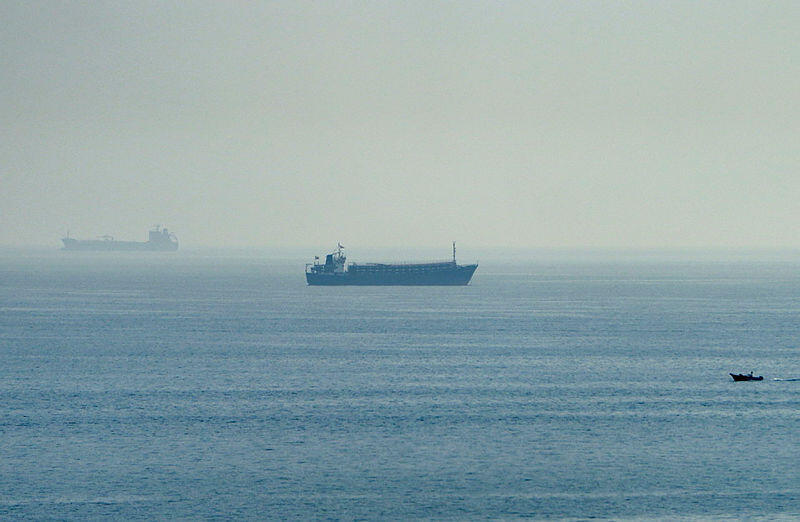
Strait of Hormuz
(Photo: REUTERS/Stringer)
Meanwhile, signs are mounting in Iran of an intensifying debate within the leadership between those who favor reaching an accommodation with the United States and those who oppose it. President Masoud Pezeshkian stressed that war is not always the solution, while Parliament Speaker Mohammad Bagher Ghalibaf argued that negotiating from a position of strength is not an expression of surrender. Former Foreign Minister Ali Akbar Salehi even proposed following the path of the Prophet Muhammad, who agreed to a compromise with his enemies under the Treaty of Hudaybiyyah and only after strengthening his position went on to conquer Mecca.
The debate also concerns the nuclear issue. Yousef Pezeshkian, the president's son and adviser, said that "our lives do not depend on uranium enrichment" and that its benefits should be weighed against its cost. Vice President Mohammad-Jafar Qaem-Panah said that had he known insistence on enrichment would lead to the leader's death, he would have given it up. The statements drew fierce reactions from radicals, who accused the pragmatists of surrender, sending messages of weakness and even serving the enemy. In any case, there is currently no evidence that Iran's leader, Mojtaba Khamenei, is prepared to adopt a conciliatory approach and show the flexibility needed to at least return to the framework of the memorandum of understanding with the United States, which collapsed shortly after it was signed in June.
This does not mean Iran is not continuing to pay a heavy price as a result of the ongoing naval blockade. Iran's leading financial daily warned this week that if tensions and the blockade continue, inflation could approach 100% by the end of the Iranian year in March. But the economic situation does not guarantee the economic collapse of the Islamic Republic, let alone its political collapse, as it adopts a survival economy centered on immediate economic relief for weaker segments of society. Moreover, even dramatic U.S. declarations about an "economic invasion day" do not guarantee the success of the economic campaign. The Wall Street Journal, for example, reported this week that Iranian businesses continue to operate in Dubai despite announcements about suspending economic and commercial ties between Iran and the United Arab Emirates. This is further evidence of the difficulty of quickly severing deep economic ties and the limits of American pressure on Tehran's trading partners.
 Dr. Raz Zimmt
 Even if Iran's leadership ultimately agrees to a compromise that allows the Strait of Hormuz to fully reopen, rather than merely allowing vessels to pass under U.S. military escort, this would not provide a genuine solution to the crisis in the Gulf. What appears at one moment to be a dramatic shift in the balance of power in favor of one side may prove within days or weeks to be only a temporary advantage. Meanwhile, Iran continues to retain the nuclear capabilities that survived the two military campaigns, and there is no solution in sight to the nuclear issue, which for Israel remains the top priority.
Dr. Raz Zimmt is director of the Iran and Shiite Axis Program at the Institute for National Security Studies (INSS).