


The war that broke out three years ago is not only the longest in Israel's history, but also one of the fiercest the modern Middle East has known. There have been deadlier and more protracted wars — the Iran-Iraq War, for example — but no conflict has spanned such a broad geographic area, involved so many actors and undergone so many dramatic twists and turns. The past three years have brought dramatic changes, including the collapse of the Assad regime and the Israeli-American campaign against Iran. Yet despite Israeli boasts about "reshaping the region," much has remained unchanged.
The Axis of Resistance — the Iran-led alliance of armed groups opposed to Israel — was and remains the primary threat to Israel. Neither before October 7 nor today has it faced an organized, moderate camp of Muslim states, much less a new coalition that includes Israel. The Axis of Resistance is based on the concept of muqawama, or resistance, which centers on waging asymmetric wars of attrition fueled by ideological fervor. By the eve of October 7, however, it had undergone a dramatic transformation, acquiring the capabilities and operational patterns of conventional armies, particularly Hezbollah, and developing a belief that it could paralyze Israel, seize its territory and ultimately defeat it to the point of destruction.
Gallery
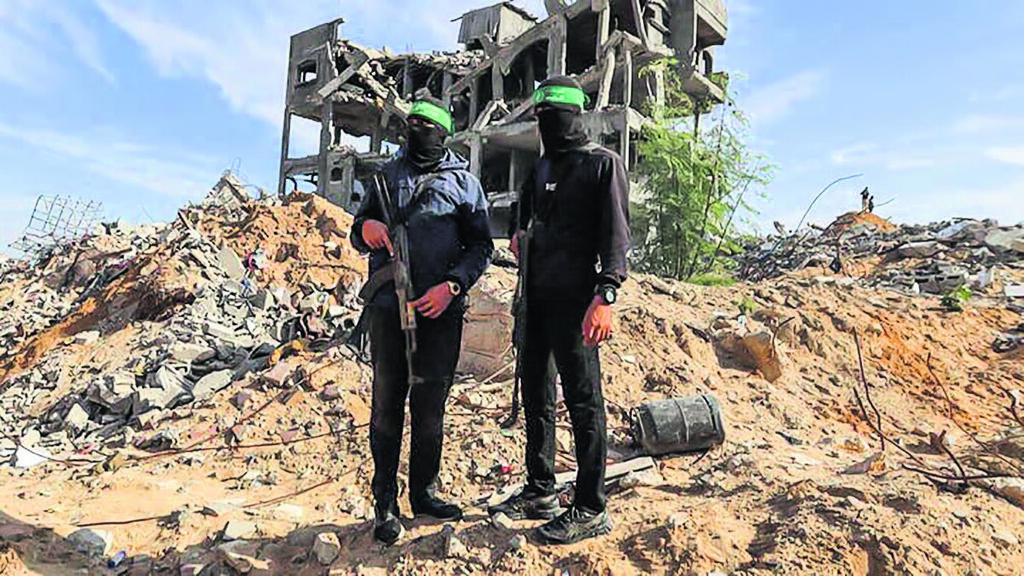
'Sinwar's prophecy is not a story that has ended, but one that continues to unfold to Israel's detriment'
The Oct. 7 attack infused the Axis of Resistance with optimism that its strategic vision was beginning to materialize. But everything that followed proved a bitter disappointment from its perspective. A battered Israel did not disintegrate and instead demonstrated resilience, contrary to the axis' assumptions about it. Its members, meanwhile, suffered severe blows: unprecedented destruction and bloodshed on every front, the widespread elimination of leaders and commanders, the loss of territory and an unprecedented strike against Iran, the leader of the axis.
The Assad regime, which had served as a key pillar of the alliance, fell. The concept of the "unity of the fronts" also failed to materialize, effectively saving Israel — above all because Hezbollah did not join Hamas' attack at full force.
The severe setbacks prompted many to write off the Axis of Resistance, both as a military force and as an ideological concept, particularly after Operations Northern Arrows and Rising Lion and following the fierce protests against the Iranian regime that erupted in late 2025. The blows weakened the axis but did not threaten its existence. Instead, they prompted a strategic reassessment that yielded several key lessons.
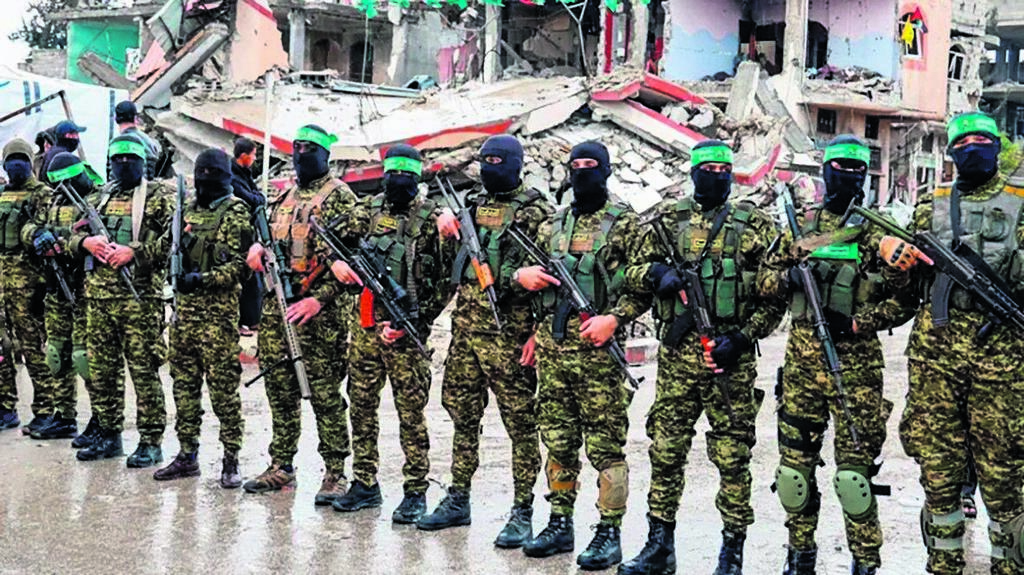
Hamas in Gaza Strip
Chief among them was the need to improve coordination among the axis' members. The fact that Yahya Sinwar surprised his partners with the timing of the attack prevented them from mounting a more effective joint campaign.
"On the eve of Oct. 7, there was fawda — chaos — within the Axis of Resistance over fundamental concepts, which to a large extent led to the failure of the original unity-of-the-fronts plan," researcher Musa al-Sada explains.
A second conclusion was the need for the armed groups to return to their roots, foremost among them asymmetric warfare based on artillery firepower, attrition and guerrilla tactics. This was accompanied by regret over their increasing transformation into conventional military forces, which had drawn the nonstate groups into direct confrontation with Israel, exposed their military inferiority and enabled Israel to inflict severe damage on them.
Hamas in Gaza
Operation Roaring Lion on the Iranian and Lebanese arenas is viewed by these groups as both vindication of that argument and a corrective. From their perspective, it marked a turning point after a prolonged series of defeats. In the spirit of sabr wa-sumud — patience and steadfastness — they believe the negative trend was halted and the enemy's inability to achieve a decisive victory was demonstrated. As evidence, they point to the continuing U.S. campaign against Iran and the grueling conflict between Israel and Hezbollah.
"What collapsed was not resistance as an idea, but the way it was put into practice," stresses Ali Zuaiter, a Lebanese researcher affiliated with Hezbollah. "You cannot eliminate an idea by assassinating senior figures who become myths. The assassinations do not leave a vacuum. They give rise to those who come after them."
For Israel, the three-year war presents a profound paradox. Its enemies have been severely battered and Israel itself has demonstrated unprecedented daring and capabilities — including the pager operation and the elimination of the leadership of the groups across the axis, including the top echelon of the regime in Tehran. It has seized territory on three fronts and is also annexing the West Bank without an official declaration. It has also forged an unprecedented strategic alliance with Washington, embodied in Operation Roaring Lion.
Yet Israel has neither achieved a decisive victory nor fulfilled the promise — one never previously defined as an objective in Israeli military campaigns — of eliminating its enemies, including the Iranian regime. This has necessitated calls for an ongoing war with no defined end, coupled with the promise that at some point "total victory" will be achieved, though what that victory would look like is either highly illusory or deeply unclear.
Despite the military achievements, none of the threats has disappeared and in some arenas they may even have intensified. The Iranian regime survived and is now led by a more radical elite dominated by the Islamic Revolutionary Guard Corps. It continues to produce missiles and may move to accelerate its nuclear program. Hezbollah and Hamas were battered but survived and remain dominant forces in Lebanon and Gaza, respectively. The Axis of Resistance as a whole is working to rebuild and continues to notch achievements, including the Houthis' recent successes.
Nor have the new regional alliances touted by Israeli leaders emerged, largely because of deep Arab mistrust and the difficulty Arab states face in publicly displaying security ties with Israel, alongside growing hostility toward Israel among their publics.
Moreover, Israel's international standing is more precarious than ever. It is perceived as a country that has lost the strategic balance that once characterized it, has taken on an extremist and at times messianic character and has become addicted to the use of force and the obsessive search for enemies and wars. As a result, Israel faces growing international isolation, which is explained to Israelis as the product of antisemitic tendencies or Western naivete.
Israel demonstrated unprecedented daring and capabilities, seized territory on three fronts and is also effectively annexing the West Bank without an official declaration. But it has not fulfilled the promise — never defined in previous campaigns — of eliminating the enemy, necessitating calls for an ongoing war with no defined end.
The groups aligned with Iran regard Israel's diplomatic deterioration as one of their greatest achievements in the war. An editorial published on Hamas' website this week illustrates the point: "The Palestinian issue is higher on the global agenda than ever before, recognition of a Palestinian state has expanded, normalization has been halted and Israel has been isolated, as reflected in the empty hall Netanyahu faced during his speech at the United Nations. Sinwar's prophecy is not a story that has ended, but one that continues to unfold to Israel's detriment."
The prevailing view within the axis, therefore, is that the Oct. 7 attack marked a turning point in the history of the conflict, a divine decree for which there should be no regret. The campaign may have involved severe blows and mistakes, but these were merely setbacks on a long journey that will end in victory and requires planning for the next stage of the struggle against Israel.
The axis' optimism also stems from Israel's deepening internal divisions. Israel's enemies take particular satisfaction in reports of increasingly severe net emigration, extremist rhetoric, the stifling of critical discourse that had been viewed as a source of strength, the erosion of social cohesion and a shared national vision, as reflected in the crisis over the military draft law, as well as dysfunction in the political and public spheres.
From the perspective of the broader region, these developments undermine Israel's claim to be "the only democracy in the Middle East" and herald its integration into the regional jungle.
Against this backdrop, it is essential to ask to what extent reliance solely on military force and battlefield successes offers a path toward improving Israel's strategic position. This approach appears to be a post-traumatic reaction to the absolute reliance on arrangements and containment before Oct. 7 — an approach embraced by decision-makers who remain in office today.
It is also necessary to ask whether the time has come to abandon illusions — foremost among them the belief that enemies can simply be made to disappear — and instead develop a more nuanced outlook and a balanced use of force that could save Israel from a strategic collapse whose likelihood is growing even as few recognize its approach.
Dr. Michael Milshtein is a senior researcher at the Moshe Dayan Center at Tel Aviv University.