


"You know what worries the Qataris?”
The speaker was a businessman, someone close to the Emirates. Every time I met him he was on his way to Doha or had just returned. “Check what’s happening with them in Texas. That’s the story. And it’s connected to everything — Hamas, the deal, Israel’s strike. Texas is weighing on them more than the war.” By “Texas” he meant an important public Texas university, A&M, which operates an entire campus in Qatar.
In February 2024 the university’s board of trustees — at an institution that has a larger student body than any other in America — decided to close the Qatar campus until 2028. It was an ugly expulsion tied to October 7. The attention focused on Qatar after the Hamas attacks reached the political map of conservative, red Texas. Formally, the trustees said the reason was “instability in the Middle East.” Before the decision a wave of negative media coverage swept the university and Qatari investments in it.
Gallery

The emir of Qatar and Yale University
(Photo: 1000 Words / Shutterstock.com; Ahmad Thamer Al Kuwari)
Serious allegations were published — ones Doha and the respected university emphatically deny. For example, claims that A&M had received about $1 billion to open the campus or that the Qataris hold intellectual property rights to all developments and research at the institution, including highly sensitive scientific work. A Washington research institute sent a letter in January 2024, before the decision, to U.S. lawmakers asserting that the Qataris have “ownership rights” to dual-use technology that might arise from the research institute, and even nuclear engineering capabilities.
The university’s decision was met with anger and disappointment in Doha. Officials there called it the product of a “disinformation campaign... it is deeply disappointing that a world-renowned academic institution such as A&M would fall victim to this campaign and allow politics to enter the decision-making process.” The university replied that there was no connection to a “disinformation campaign.” The Texas Tribune, a local paper, spoke with a professor named Joe Oura who is suing the university over events on the Qatar campus; he claims, among other things, that he was told not to renew a contract for a faculty member because she had written a pro-Israel comment on social media, which angered the Qataris (the professor in question was not ultimately fired).
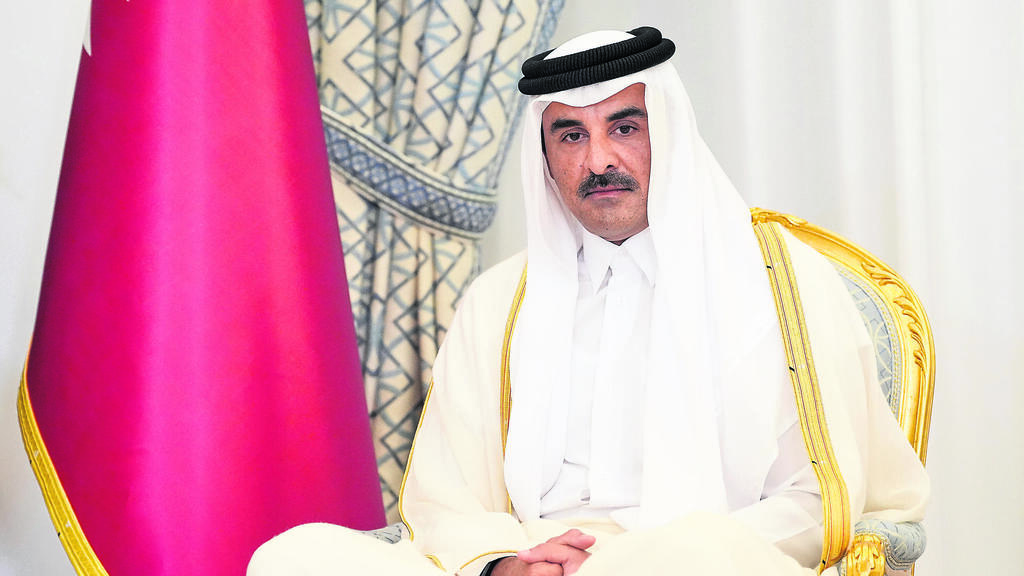
Qatari Emir Tamim bin Hamad Al Thani
(Photo: Alex Brandon/AP)
“The Qataris,” my Doha source told me, “see the Texas precedent as a dangerous event of possible international isolation. The media attention there is exaggerated, and they are worried. Israel struck Hamas leaders in Doha and failed. Qatar went ballistic. But it knows it must not overplay its hand; that raises the question of why it hosts Hamas at all.”
Obviously, exaggeration is inadvisable. Qatar is much less isolated than Israel at this stage. But the Qataris did not invest huge sums around the world to see it all blow up.
That brings us to this week’s events and the presentation of Trump’s plan in Washington. The reason Netanyahu apologized to the prime minister of Qatar and publicly pledged that the country would no longer be attacked — “it’s like the U.S. president apologizing to Pakistan after the killing of bin Laden,” a minister observed bitterly — is that the White House ordered/asked him to do so — but also because Doha is supposed to deliver. And what Doha must deliver is forcing a deal on Hamas.
If you read the text closely, you can discern the meaning of its conditions — and the reason for Netanyahu’s satisfaction. The formulations permit Israel to remain in Gaza along certain lines of withdrawal, indefinitely or until the Palestinians become a nation committed to fighting terror and devoted to religious tolerance. Whichever comes first.
A Mubarak-Arafat precedent
“Why would Hamas agree to this?” was the week’s popular question. The answers I heard from regional sources, in the Gulf and elsewhere, were varied. The moderate states, like Egypt and the United Arab Emirates, are impatient with Hamas and with the war. They don’t care much why Hamas would agree; Hosni Mubarak spat at Yasser Arafat on the podium at the signing of Oslo II in Cairo. That is the sentiment toward Hamas. What does Hamas gain? Gaza will not be occupied, the population will not be displaced, and it will continue to exist in the Strip.
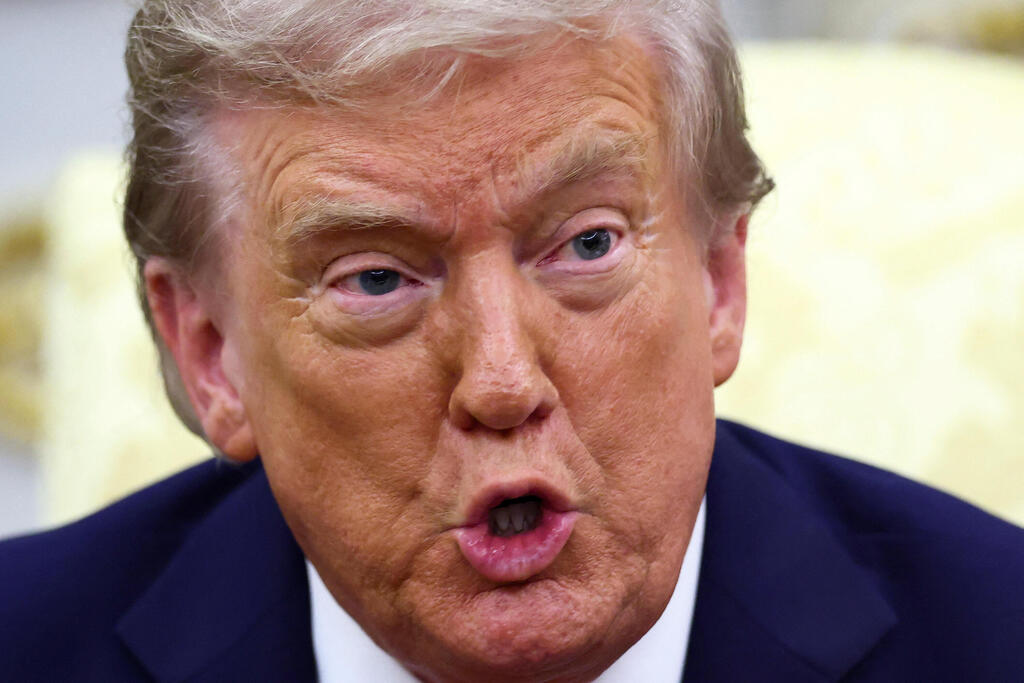
For Arab countires, US President Donald Trump's peace plan is a starting point
(Photo: Kevin Lamarque/Reuters)
But for other countries, the plan presented at the White House is only a starting point. It is a marketing pitch to the Israeli public. If you read the statements of the Arab countries after the Trump-Netanyahu summit, they do not adopt the 21 points word for word. There are many warm tributes to the U.S. president, to his vision and his commitment to bring peace. There is also, for example, language calling for a total Israeli withdrawal from Gaza — a demand that does not appear in the document Israel agreed to, but that is part of Hamas’ demands.
In other words, the Israelis thought it was the end of negotiations. The Arab states say: this is the beginning. In fact, even in Washington they say now the details must be worked into a “detailed agreement.”
The danger for Netanyahu is clear: any such agreement will be less comfortable for him than the current document. Jerusalem’s perception was that it was a win-win. If Hamas agrees, it essentially capitulates. Israel issues an ambiguous statement about a future outline for a Palestinian state and receives all the hostages immediately while the IDF remains in the Strip. A great achievement — one Netanyahu will rightly take credit for. If Hamas refuses — it is isolated, opposed even by Arab states, and a sweeping occupation of the Strip can proceed. Whether such an occupation is Israel’s interest is doubtful, but that is Dermer’s calculation for Netanyahu.
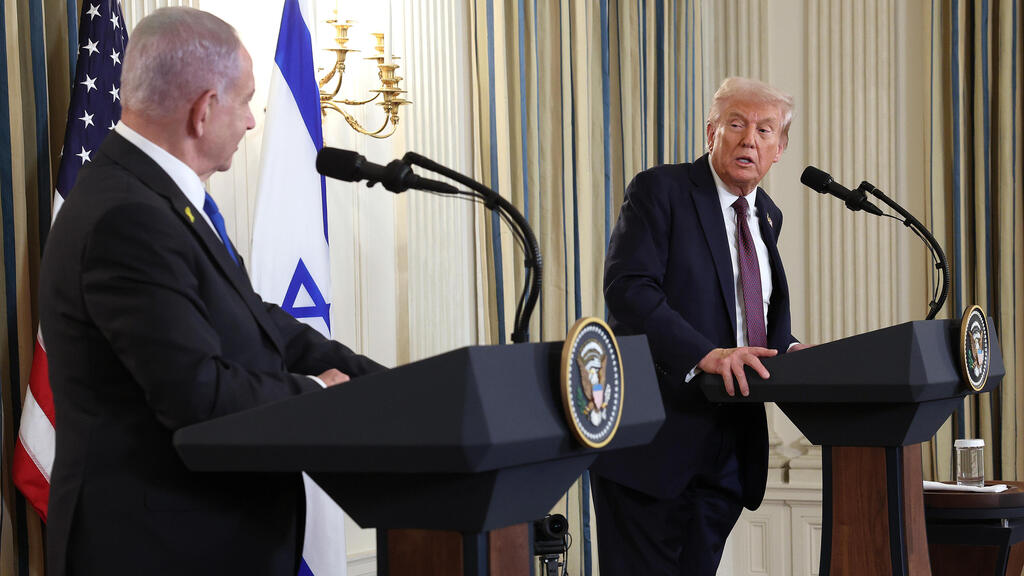
US President Donald Trump announces his peace plan during a White House news conference with Prime Minister Benjamin Netanyahu
(Photo: Alex Wong/Getty Images)
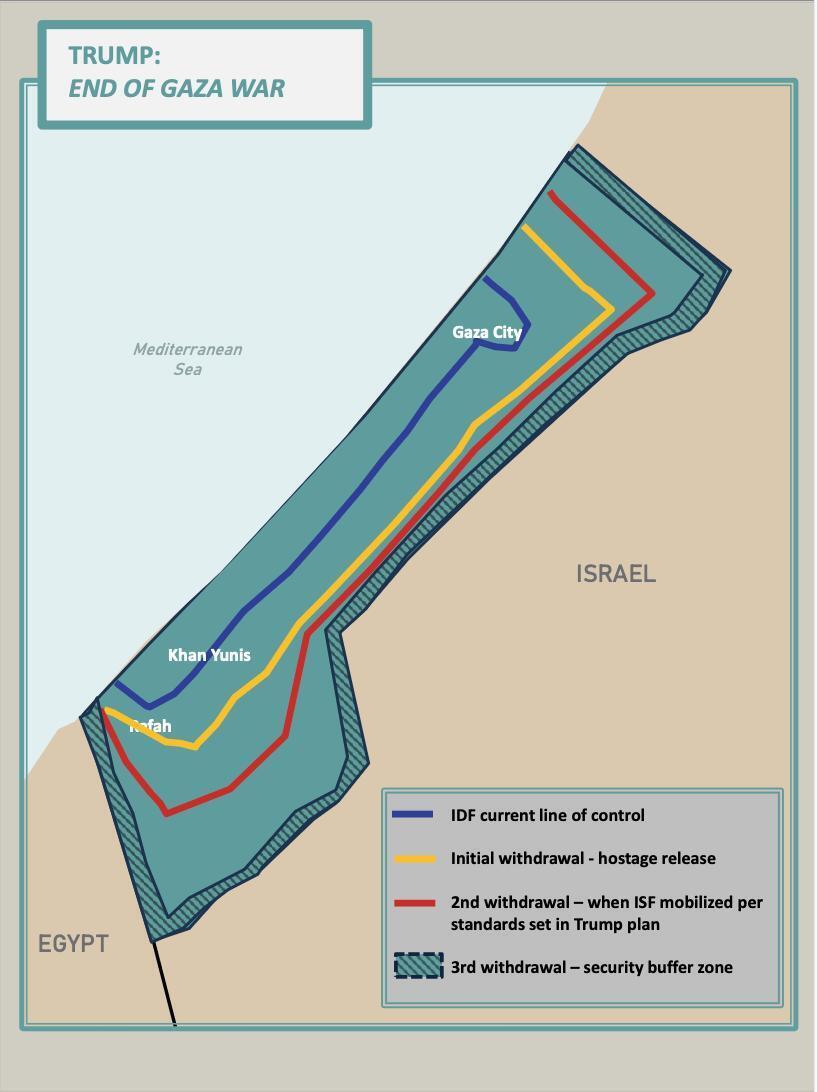
US President Trump's Gaza peace plan
(Photo:: The White House)
It is also possible real negotiations will begin, and at some point a third option might emerge, one that the White House will back to finish the war. Trump made clear he wants quick progress, an end. By the way, in the next two weeks decisions will be made on the Nobel Peace Prize winners.
And the Qataris? They preserved their powerful position in Washington this week and managed to secure an apology and compensation from Israel. If Hamas is not willing to make serious concessions, who knows, perhaps its leaders will be expelled from Doha; in that way Qatar could wash its hands of a matter that is starting to haunt it, and of its academic presence around the world.
The IDF cannot rest
The INSS survey cited here contains up-to-date data spanning two years of war. There is something very depressing about it and worthy of Yom Kippur, which we just passed. Over two years the level of trust among the Jewish public in the government has remained around 26%-30%. It rose briefly for a week or two during the crisis with Iran — and that was it. If you factor in the even lower trust level among the Arab public, you get a country that expresses wholesale distrust of its government while that government makes life-and-death decisions.
Personally, Netanyahu saw a modest rise: in October 2023 his approval stood at 28%. Today it is 36% among the Jewish public. From all the speeches, press statements, “absolute victory” and social videos, that is the change. Six out of 10 Israelis say the war has reduced their trust in the government. Seven out of 10 say they are dissatisfied with the government’s management of the war. “Together we will win”? Perhaps — but not with this government.
On the same question the Israeli public gives a mirror image of the IDF: six in 10 approve of the IDF’s conduct of the war, and that is even after including the Arab public, who surely think differently. It is interesting to note that twice as many Arab respondents think the IDF is managing the war well — despite all the accusations of genocide — than those who think the government is handling the war properly (9% versus 19%). Overall, after the abysmal failure of October 7, the IDF has largely restored its standing in Israeli public opinion.
The IDF cannot rest on its laurels. While confidence in it has remained very high throughout the two years — about 86%-90% — trust in its ability to investigate itself has collapsed. In October 2023 more than 65% of Israelis expressed confidence or strong confidence in the IDF’s ability to investigate itself and draw lessons. In September 2025 that figure was only 40%. Fifty-six percent of Israelis believe the IDF is not prepared to defend settlements in the West Bank against an attack similar to October 7.
And perhaps the most interesting and most understandable finding: as the war has dragged on, Israelis worried less about security threats. If in June 2024 less than half of Israelis said internal tensions in Israel were their chief concern, today that figure is 61%. The survey also found about 4% of Israelis who are not worried: neither about security threats nor about internal tensions. That is probably an electorate that feels this is a time of miracles.