


No one knows exactly how many Hamas fighters are waiting for the IDF inside Gaza City. Numbers are thrown around, anywhere from 3,000 to 12,000. For Hamas, the city is a historic symbol of resistance. “This is Hamas’s Masada, with all the differences,” a senior security official told me. In the same breath, he estimated that a third or more of the fighters will eventually flee. If he is right, Gaza will not be a Masada, nor the “breaking point” the Netanyahu government is seeking.
The public isn’t fully aware of the current policy: to let everyone escape, Hamas included. The exit routes from Gaza City toward the central camps, Al-Mawasi, and the new humanitarian zone outside Khan Younis remain open. People can leave by car — at a cost of thousands of shekels — or on foot. Hamas operatives can slip out as well, even with Israeli hostages. It’s easy to assume the IDF wants this, since the hostages’ presence in Gaza complicates operations.
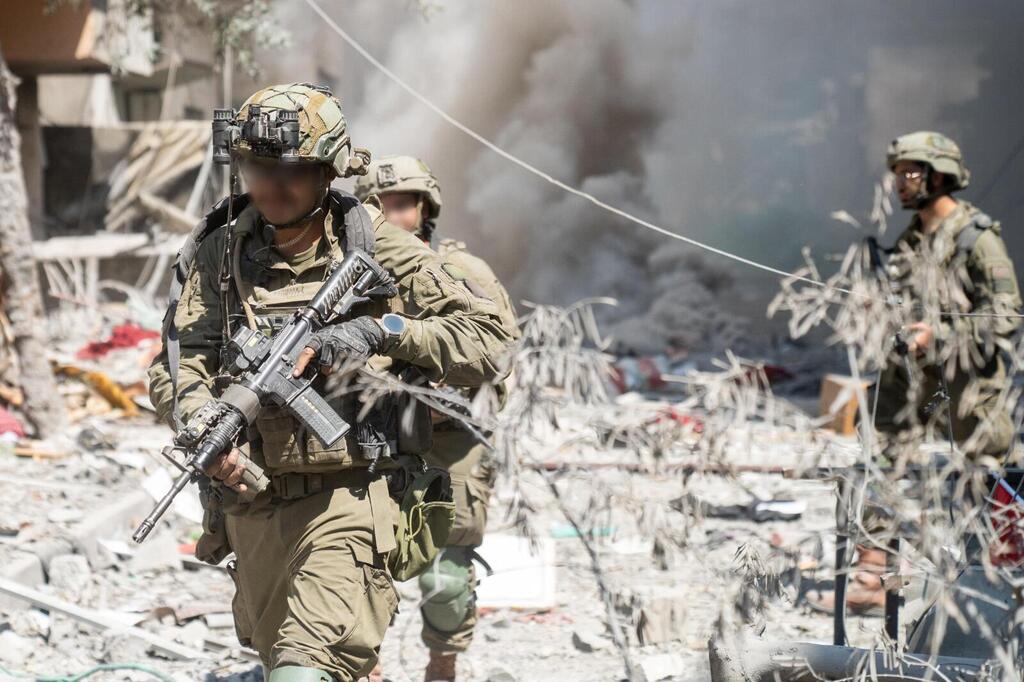
The chief of staff has drilled every commander on the order of priorities in the city battle, and they can recite it: “First, the hostages.” Hamas now has open routes to move them out before the full-scale fight begins. Perhaps the group doesn’t want to, preferring to sacrifice bargaining chips or even kill them. This is one of the reasons [IDF chief of staff Eyal] Zamir has repeatedly warned about the operation. Short of telling the government “you’re crazy, get off the roof,” he has done everything.
People around the prime minister expect the war to end this year. The reason lies in Washington’s political calendar: the 2026 midterms. Republicans don’t want Gaza to become a central issue in those elections. Israel’s friends there are saying: finish by then.
But the timelines don’t add up
Hundreds of thousands of civilians remain in Gaza City. Hamas is using force to slow their flight. The IDF cannot operate in areas still packed with civilians. Even if evacuation proceeds faster than planned, Gaza City could still take two or three months. The government hasn’t given the army a timed order. This is the first war in which the IDF is operating as though it has all the time in the world. In previous wars, the stopwatch was in the hands of the government, or Washington, or the UN. Not here.
And even if Gaza City ends earlier than expected, Hamas’s next stronghold is clear: the central camps. Around Netanyahu, people are already talking about the need to fight there to “finish Hamas once and for all.” That would be the ultimate victory. But to finish by the end of 2025? Not going to happen.
Netanyahu is hoping for a mythological moment: a besieged enclave with thousands of Hamas fighters, followed by quick negotiations, a remake of Beirut in 1982. A moment of triumph, maybe with hostages released. Few in the army think this is realistic. Hope is not a plan.
Behind the scenes, there is the sound of negotiations. Hamas wants to block the conquest of Gaza and may agree to improved IDF positions compared to where things stood after the March 2025 cease-fire. Qatar is feeling the heat. In Washington, people are asking why it hosts Hamas leaders at all. For now, Netanyahu’s government insists there’s “nothing to talk about.” Still, these are moments when breakthroughs happen. All it would take is for Donald Trump, Israel’s only reliable ally in the world (aside from Fiji’s prime minister), to wake up one morning and decide it’s time to end this, and the dynamic would change overnight.
Israel is no longer contesting casualty numbers. At the start of the war, a Defense Ministry team was tasked with nothing but verifying Palestinian casualties. Eventually, they were told: pointless.
A deep hole
“Something is not right with Netanyahu,” a longtime right-wing associate who has spent hours with him over the past two years told me. “The Netanyahu of three years ago would never have said ‘Sparta’ and ‘autarkic economy,’ even about the defense industry. He would have known it’s not just a speech for the accountant general but how it will be seen — abroad, on the markets, here.”
“It’s as if Netanyahu wanted to say: everything is lost anyway, so it doesn’t depend on me,” added another Likud figure. “Why even go there? He had just met the U.S. secretary of state, was about to meet Trump, the leader he’s met most often since his tenure began. And he rushes to declare we’re Sparta? Strange.”
The same day, the European Commission announced an initiative for harsh sanctions against Israel. A day later, Netanyahu appeared at the opening of Fiji’s embassy in Jerusalem, wearing a blue-and-white tribal robe. On its own, not unusual — leaders from Charles to presidents wear traditional dress at such ceremonies. But taken together — mounting isolation, an embassy from a tiny, remote nation, and a robe straight out of a bad “Game of Thrones” remake — the whole thing became grotesque, a symbol of where Israel has landed.

(Photo: GPO)
Three-quarters of Israelis are unhappy with the country’s foreign relations, according to a Reichman University survey. The Foreign Ministry is just barely managing to stall the sanctions avalanche in Europe. Gideon Sa’ar is running marathons of calls, cobbling together blocking coalitions one after the other. The problem isn’t “bad hasbara” or failed diplomacy. The problem is government policy — decisions, statements, and conduct on the ground in Gaza.
Beyond appearances, there is substance. Smotrich said this week that Gaza is “a real estate bonanza” and people are already discussing how to “divide the percentages” of its land. That is openly a plan for a war crime. And the realities are stark: innocents in Gaza, massive destruction, a humanitarian disaster.
Foreign diplomats say the protests in Israel for a hostage deal and to end the war are the country’s best weapon. “Together with the polls, they show the world the Israeli public does not sign off on this war.”
We’re at the threshold of a new year, and people — here and abroad — are trying to figure out how to get out of the black hole the coalition has dug. Conversations with diplomats, strategists, longtime donors, and officials make one thing clear: the hole is deep, and there is no way out without ending the war. History shows the same. In Lebanon, Israel was accused of genocide. During the Second Intifada, of war crimes. This time is worse. The war that was initially understood around the world, after the October 7 massacres and the need to rescue the hostages, has turned into a sword aimed at Israel’s legitimacy.
The main reason is the civilian toll. Tens of thousands killed, hundreds of thousands wounded. Israel no longer argues otherwise.
Politically, the issue is the war’s length. If it had ended a year ago, or even by early 2025, the fallout would have been much smaller. The wave of recognition of a Palestinian state, for example, might not have unfolded as it has. Until recently, Britain told its European counterparts it would not recognize. This week, it rushed to get ahead of France.
The prolonging of Gaza — now the longest war in Israel’s history — emboldens enemies. Those who accused Israel of genocide already on October 7 now see dividends. From mangoes rotting in orchards because European supermarkets won’t touch Israeli produce, to EU threats of suspending trade agreements, tariffs, exclusion from Eurovision, hostility toward Israeli tourists — let alone the collapse of incoming tourism — Israel is in its gravest diplomatic crisis. Dreams of Sparta have not helped.
“Make Netanyahu your Milosevic,” a Washington figure told me nearly a year ago, referring to the leader of Serbia during the Yugoslav wars. He didn’t mean hand him to The Hague. He meant Israel must hold Netanyahu responsible for the mistakes since October 7, telling the world: it’s him, not us.

(Photo: AP)
Again: the protests here are Israel’s best weapon. “Along with the polls, they show the world the public does not sign off on this war,” said a foreign diplomat. Take Dominique de Villepin, the former French prime minister. He is dominating French TV, accusing Israel of genocide and fully siding with the Palestinians. In an interview this week, he said: “Contrary to the will of much of the Israeli public, who continue to take to the streets against their government’s dangerous choices, Netanyahu insists on his blind logic.” That is the separation.
The protests are more for the hostages than against the war, but in general, they are loud opposition to the coalition and Netanyahu himself.
Prof. Eran Halperin of the Hebrew University describes a not-yet-published study on how Israelis voicing critical views of government policy affect audiences in Europe and the U.S. His conclusion: clear. Criticism damages the government’s image, but improves perceptions of Israeli society, seen as democratic and open.
Fundraising groups for causes in Israel, from the north to the Gaza border, report the same. The donors are Jews and Zionists. What encourages them is civil society’s strength, its mobilization, its persistence, its fight for the hostages. What discourages them is the government and its policies. Worse: they are embarrassed by it.
The basis for rebuilding Israel’s standing abroad begins with rejecting the current government’s policies. But that can only come with fundamental change. That means two things: ending the war and elections. In the meantime, Israel remains in Gaza.