

The recent appointment of Mojtaba Khamenei as Iran’s supreme leader following the death of his father, Ali Khamenei, has sparked debate not only within Iran’s political and clerical circles but also among international observers. A central issue concerns the religious title attributed to him by some foreign media outlets, which have referred to him as “Ayatollah.” Such a designation, however, raises serious questions about accuracy and legitimacy within the framework of the Islamic Republic’s own constitutional and religious standards.
Until very recently, Mojtaba Khamenei held the clerical rank of Hojjat al-Islam, a mid-level position in the Shiite clerical hierarchy. After his elevation to supreme leader by the Assembly of Experts, the regime quickly promoted him to a higher clerical status. Yet critics argue that this rapid elevation does not reflect the traditional scholarly process required to achieve the rank of Grand Ayatollah, which is widely considered the appropriate level of religious authority for Iran’s supreme leader.
Gallery
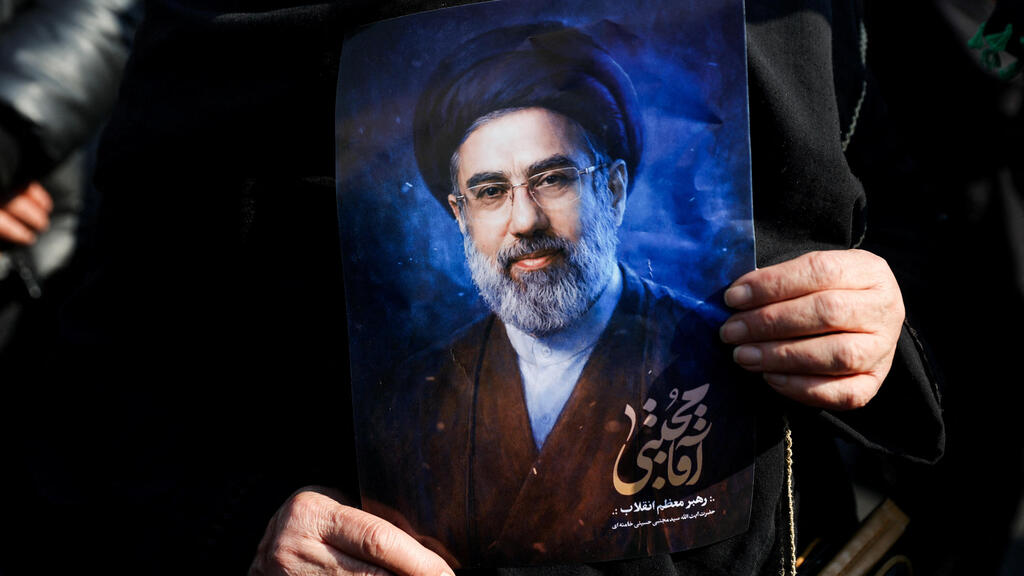
Rally in support of the new Supreme Leader, Mojtaba Khamenei
(Photo: Majid Asgaripour/WANA (West Asia News Agency) via Reuters)
Some international media outlets have reinforced the regime’s narrative. For example, reporting in The New York Times suggested that Mojtaba possessed full clerical credentials as an ayatollah upon assuming power. However, such claims are disputed by analysts who point out that Mojtaba has never produced the scholarly works or religious dissertations typically required for higher clerical recognition. In the formal structure of the Islamic Republic, the constitution expects the supreme leader to possess the highest level of religious authority, generally associated with the title of Grand Ayatollah.
The issue is more than symbolic. It reflects deeper tensions within Iran’s power structure. Since the 1979 revolution led by Ruhollah Khomeini, three primary forces have shaped the Islamic Republic: the clerical establishment, the population, and the powerful Islamic Revolutionary Guard Corps (IRGC). While the clergy initially held both political authority and social legitimacy, their influence has steadily eroded over time.
Under Ali Khamenei’s long rule, the balance of power shifted significantly toward the IRGC. The Guard expanded its influence across the military, political, and economic sectors, effectively transforming Iran into a system where military elites wield decisive authority while religious institutions increasingly play a symbolic role.
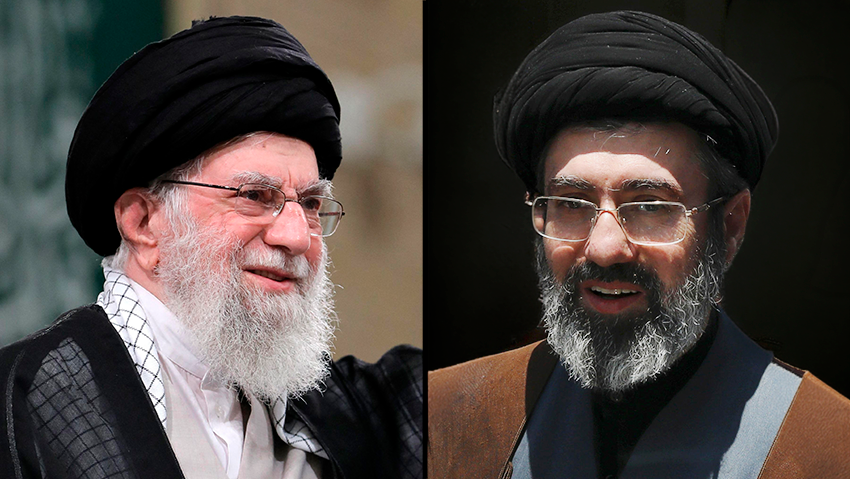
Ali Khamenei and Mojtaba Khamenei
(Photos: Vahid Salemi/AP, AFP Photo/ HO/KHAMENEI.IR )
This dynamic was visible during the presidency of Mahmoud Ahmadinejad. His cabinet included almost no clerics, highlighting how the political center of gravity had moved away from traditional religious leadership. Many within the clerical establishment have since complained that the Revolutionary Guard routinely overrides their authority and dominates strategic decision-making.
The selection of Mojtaba Khamenei further illustrates these tensions. Reports suggest that the IRGC exerted significant pressure on the Assembly of Experts during the succession process. The assembly reportedly delayed announcing the result of its vote, reflecting internal disagreements over the legitimacy of the decision.
Some senior clerics have quietly expressed concern over the growing dominance of the military establishment. According to reports by the opposition media outlet Iran International, influential religious figures have even discussed limiting Mojtaba’s authority or challenging the expanding power of the Revolutionary Guard.
The broader implications are significant. The Islamic Republic has long justified its rule through a claim to religious legitimacy and adherence to Islamic law. If the supreme leader himself is perceived as lacking the scholarly qualifications required by the system, that legitimacy could weaken further. Such doubts could deepen divisions within the clerical establishment and potentially encourage segments of the religious class to distance themselves from the regime.
For this reason, critics argue that international media should be cautious when adopting official titles promoted by the Iranian government. Misrepresenting clerical ranks may inadvertently reinforce the regime’s narrative and obscure the internal tensions shaping Iran’s political landscape.
Ultimately, accurately describing Mojtaba Khamenei’s clerical status is not merely a semantic issue. It highlights the broader contradictions within the Islamic Republic—between religious authority and political power, between the clergy and the military, and between official narratives and institutional realities. Recognizing these distinctions provides a clearer understanding of the evolving power struggle inside Iran’s ruling system.
Rami Al Dabbas is a writer/commentator known for opinion pieces on Middle East politics, critiques of Islamist movements, advocacy of political realism and engagement and a controversial presence on social media