

The recent escalation of tensions between Iran and the Gulf states has exposed a fundamental and deeply rooted fracture within the Arab world—one that goes beyond immediate geopolitics and touches the very core of regional identity, priorities and strategic thinking. At a moment when Gulf countries face direct security threats, the muted and largely symbolic response from other Arab states has raised urgent questions about the credibility of Arab solidarity and the future of collective regional action.
A crisis without collective response
In the face of Iranian missile and drone attacks targeting key Gulf countries such as Saudi Arabia, the United Arab Emirates, Bahrain and Kuwait, expectations of unified Arab support have largely gone unmet. Instead of coordinated political or military backing, Gulf states have encountered what many perceive as indifference, limited statements of concern, or calls for de-escalation devoid of tangible action.
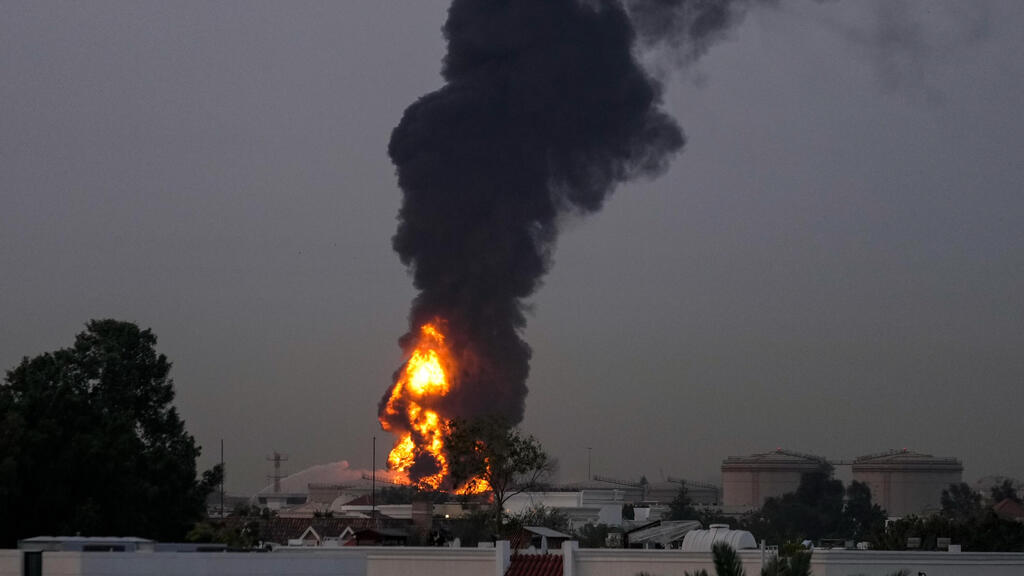
Fire and smoke rise after Iranian attack on Dubai International Airport
(Photo: AP)
This lack of meaningful engagement has generated growing frustration within Gulf leadership circles. From their perspective, the response of the broader Arab world has amounted to little more than rhetorical positioning—insufficient in the face of direct and escalating threats.
The burden of an outdated narrative
At the heart of this disconnect lies a long-standing political narrative that has shaped Arab discourse for decades: the framing of Israel as the central and overriding threat to regional stability. This narrative has been deeply embedded in political rhetoric, education systems, media messaging and public consciousness across much of the Arab world.
For many governments, this framing has also served a domestic function—deflecting internal pressures and unifying public opinion around an external adversary. However, the persistence of this narrative appears to be increasingly at odds with evolving regional realities, particularly the growing perception among Gulf states that Iran represents a more immediate and direct threat.
The reluctance of some Arab states to shift this narrative—and openly redefine Iran as the primary regional challenge—has contributed significantly to their limited response. Acknowledging such a shift would require not only political recalibration but also a fundamental rethinking of long-standing ideological positions.
Fear, fragmentation and strategic hesitation
Beyond ideology, several structural factors help explain Arab inaction. These include political fragmentation, differing national priorities, economic vulnerabilities and concerns about internal stability. Many Arab governments operate within fragile domestic environments where external conflicts can easily spill over into internal unrest.
Bahrain’s BAPCO oil facilities burn after Iranian drone strike


Additionally, there is a persistent fear of escalation. Direct confrontation with Iran carries significant risks, including potential retaliation, economic disruption and broader regional instability. As a result, some states have opted for caution, preferring diplomatic language over decisive action.
This combination of fear, division, and strategic hesitation has effectively paralyzed any meaningful collective response, leaving Gulf states increasingly isolated in confronting shared threats.
A growing Gulf reassessment
The perceived failure of Arab solidarity is prompting a significant reassessment within Gulf countries themselves. Increasingly, policymakers in the Gulf are questioning whether traditional alliances within the Arab framework can still be relied upon in times of crisis.
This reassessment is already translating into strategic shifts. Gulf states have begun to explore deeper security cooperation beyond the Arab sphere, strengthening ties with international partners and investing in independent defense capabilities. In some cases, this includes closer alignment with non-Arab actors, reflecting a pragmatic shift toward partnerships based on shared security interests rather than historical or ideological alignment.
Such developments suggest that the concept of pan-Arab unity, long a cornerstone of regional politics, may be losing its practical relevance in the face of changing geopolitical realities.
The limits of symbolic solidarity
While institutions such as the Arab League and the Organization of Islamic Cooperation continue to exist as platforms for dialogue, their effectiveness in addressing urgent security challenges has increasingly come into question. Criticism from Gulf officials highlights a growing perception that these bodies are unable—or unwilling—to translate declarations into concrete action.
The gap between rhetoric and reality has become particularly evident during recent crises. Statements condemning aggression or calling for restraint have done little to address the immediate security concerns of Gulf states facing direct attacks.
This pattern reinforces the notion that symbolic solidarity, without operational backing, is insufficient in an era defined by complex and rapidly evolving threats.
A region at a strategic crossroads
The current situation reflects a broader transformation underway in the Middle East. Traditional alignments and narratives are being challenged by new realities, forcing states to reconsider their priorities and alliances.
For Gulf countries, the conclusion is becoming increasingly clear: reliance on broad Arab consensus may no longer be viable as a cornerstone of security strategy. Instead, a more flexible, interest-based approach—focused on bilateral and multilateral partnerships outside traditional frameworks—is emerging.
At the same time, the reluctance of some Arab states to redefine regional threats highlights the enduring influence of historical narratives, even as their relevance diminishes.
Conclusion: The future of Arab solidarity
The failure of Arab states to meaningfully support the Gulf during a time of crisis is not merely a temporary lapse—it is indicative of deeper structural and ideological challenges within the Arab world. It reveals a region struggling to reconcile inherited political narratives with evolving security realities.
Unless there is a fundamental shift in how threats are perceived and addressed, the gap between rhetoric and action is likely to widen further. For the Gulf states, this means continuing to adapt to a landscape where self-reliance and diversified alliances take precedence over traditional expectations of Arab unity.
In this emerging order, the question is no longer whether Arab solidarity can be revived, but whether it can be redefined in a way that reflects the realities of a changing Middle East.
Rami Al Dabbas is a writer/commentator known for opinion pieces on Middle East politics, critiques of Islamist movements, advocacy of political realism and engagement and a controversial presence on social media.
First published: 23:19, 03.30.26